
How Long Does Top Coat Take to Dry on Nails? A Beginner’s Guide

If you’re asking how long does top coat take to dry, the short answer is: it depends on the formula. A regular top coat often needs about 15 to 20 minutes to feel dry to the touch, while quick-dry formulas can set much faster. Some quick-dry products are marketed as drying in just a few minutes. Traditional top coats are usually slower, especially if they’re applied thickly.
That’s why a manicure can seem ready and still dent a few minutes later. Nail polish often feels dry before it is fully hardened, so the surface can seem set while the layers underneath are still soft. If you want a deeper breakdown of polish timing in general, you may also find our guide on how long nail polish takes to dry completely helpful.
Quick Answer: How Long Top Coat Usually Takes to Dry
For beginners, the safest way to think about top coat drying is this:
- Regular top coat: often around 15 to 20 minutes to feel dry on the surface
- Quick-dry top coat: often 1 to 3 minutes for the surface, depending on the product
- Fully hardened: can take much longer, often several hours, even after the nails feel dry to the touch
Here’s a simpler way to read the timing:
| Term | What it means | Typical beginner takeaway |
|---|---|---|
| Dry to the touch | The surface no longer feels sticky | Better for a light check, but not ready for rough use |
| Fully hardened | The polish has set much more completely | Safer for normal hand use and less likely to dent |
| Regular top coat | Standard formula | Usually slower and easier to smudge |
| Quick-dry top coat | Faster-setting formula | Better if you need less waiting time |
If your top coat still feels soft after 20 or 30 minutes, that does not automatically mean something is wrong. It often means the coat was too thick, the room was humid, the color underneath was still soft, or the products were not compatible. In some cases, a regular top coat just needs more time; if it repeatedly stays tacky, it may be worth switching products rather than waiting the same amount every time.
Dry to the Touch vs Fully Dry: What the Difference Means
These two phrases are not the same, and that difference matters a lot for beginners.
Dry to the touch means the top layer feels set when you gently check it. It may no longer feel tacky. But underneath, the polish can still be soft enough to dent.
Fully hardened means the manicure has set much more completely. At that point, it is less likely to smudge, mark, or get a fingerprint impression.
A simple example: your nails may feel fine after 15 minutes, but if you press them into a bag strap, open a can, or zip up jeans too soon, the polish can still shift. That is why “feels dry” is not the same as “safe for anything.”
What Changes Top Coat Drying Time
Several small things can slow top coat down. When beginners understand these, it becomes much easier to avoid smudges.
Formula type matters
A standard top coat usually dries slower than a quick-dry version. That’s not a flaw by itself. Some regular formulas are chosen for shine, smoothness, or durability rather than speed.
Quick-dry products are built for convenience. The trade-off is that they may require more careful application, because they can set faster while you are still smoothing the nail.
Coat thickness matters
Thick top coat takes longer to dry than a thin one. This is one of the most common beginner mistakes.
A heavy coat can look glossy at first, but the extra product traps solvent underneath. That means the top layer may seem dry while the center stays soft. A simple rule of thumb: if the polish looks visibly raised, pools near the cuticle, or leaves a deeper dent than a light tap should, you probably used too much.
Humidity and room conditions matter
Warm, humid air can slow drying. A bathroom after a shower, a steamy bedroom, or a rainy day can all make polish feel tacky for longer.
Cooler, drier air usually helps polish set more evenly. You do not need a special setup, but avoiding very humid rooms can make a noticeable difference.
Layering speed matters
If you apply top coat before the color underneath is ready, the whole manicure can stay soft longer. The top coat may also drag the polish below it, which can create streaks or ridges.
If a manicure stays tacky after 10, 15, or 30 minutes, it is often not just because the room is humid. Common causes include a thick top coat, not waiting long enough between color and top coat, or using layers that do not work well together.
Regular Top Coat vs Quick-Dry Top Coat
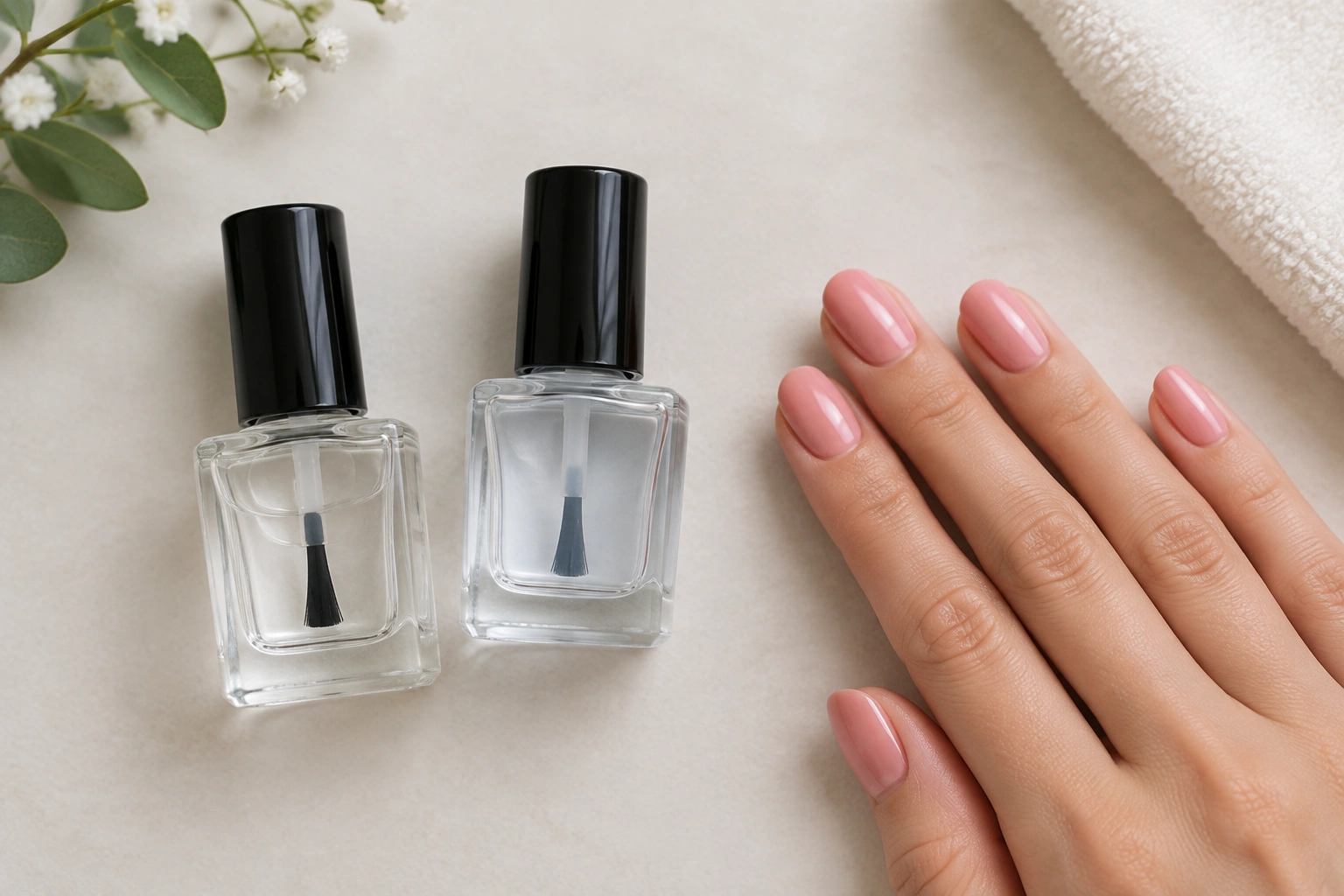
Both types can work well, but they suit different routines.
Regular top coat usually gives you more time to smooth the polish before it sets. That can be helpful if you are still learning to paint neatly. The downside is waiting longer before you can use your hands normally.
Quick-dry top coat is better when speed matters. Some brands market their quick-dry formulas as setting in just a few minutes, but those timing claims are manufacturer claims, not universal results. In real use, application thickness, humidity, and the layers underneath still affect the result.
If you often paint your nails right before bed, before work, or before leaving the house, quick-dry top coat is usually the more practical choice. If you prefer a little more working time and do not mind waiting, a regular formula may feel easier.
How to Tell When Your Top Coat Is Actually Ready
Beginners often want a simple test. The safest checks are gentle and minimal.
Wait for a realistic time cue first
Before you test anything, give the manicure at least the usual surface-dry window for the formula you used. For a regular top coat, that is often around 15 to 20 minutes. If you used a thick coat or the room is humid, wait longer.
Look for shine, but do not trust shine alone
A glossy finish does not mean the manicure is fully hardened. Many top coats stay shiny while the layers underneath are still soft.
Watch for soft marks
If a nail leaves a print in fabric, gets a dent from a hair tie, or shows a slight wave after brushing against something, it needs more time.
Check your coat thickness
If you remember applying a heavy layer, assume it needs longer. That is often a better guess than relying on the clock alone.
How to Make Top Coat Dry Faster Without Smudging
You do not need salon equipment to improve drying time. A few simple habits help a lot.
Apply thin coats
Thin coats dry more evenly and are less likely to trap wet polish underneath. If your top coat looks almost too thin, that is often better than a thick, heavy layer.
Let each layer settle
Give the color polish a little time before adding top coat. If the color is still moving around, the top coat may drag it and slow the whole process.
Use a quick-dry top coat if you need speed
This is the easiest upgrade if you regularly feel impatient after painting your nails. A fast-setting formula can shorten the waiting period and reduce accidental smudges.
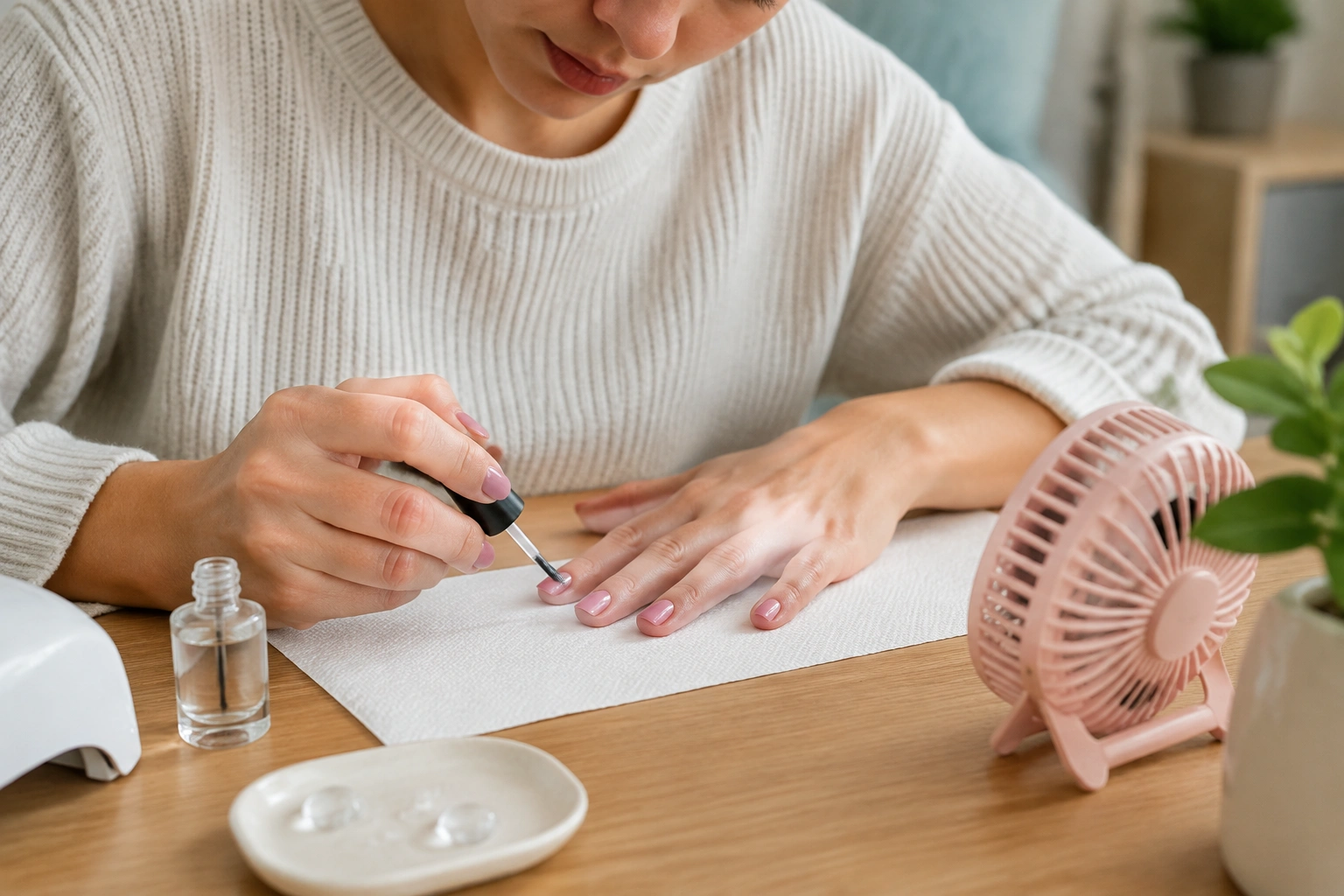
Try drying drops or a fan carefully
Drying drops can help the surface set faster. A fan can also make the top layer feel ready sooner. But both mainly speed up surface drying, not full hardening, so they do not make the manicure immediately safe for heavy use.
Keep hands still for the first few minutes
This sounds obvious, but it matters. The first 5 to 10 minutes after top coat are when most accidental dents happen. Resting your hands flat and avoiding grabbing things can save the manicure.
Common Mistakes That Keep Top Coat Tacky or Soft
A few habits make top coat seem like it “won’t dry,” even when the formula is fine.
Applying too much product
This is the biggest one. A thick top coat may stay tacky much longer than expected. It can also shrink, wrinkle, or dent more easily.
Rushing from one step to the next
If the base coat or color coat is still soft, the top coat can trap that softness. The result is a manicure that feels wet longer than it should.
Assuming a fan means the manicure is finished
A fan can help the top layer set, but it does not harden the whole nail instantly. You can still smudge the polish later if you bump it.
Using your nails as tools too soon
Opening packaging, pulling on clothing, or scraping labels can all mark a manicure that only feels dry on the surface.
Painting in a humid room
If you just showered or are in a steamy bathroom, expect slower drying. Moving to a drier room can help more than people realize.
How Long to Wait Before Normal Activities
Here is the practical part: when can you actually use your hands?
- Light checking: after the usual surface-dry time, if you are very gentle
- Typing or using a phone lightly: often after 15 to 30 minutes for a regular top coat, sooner for some quick-dry formulas if the nails no longer feel tacky
- Showering: best to wait at least 1 to 2 hours, and longer is safer if you used a regular top coat or a thick layer
- Putting on shoes or tight clothing: wait 1 to 2 hours or more, because friction can dent the polish
- Bedtime routines: ideally paint your nails at least 2 to 3 hours before bed so sheets and blankets are less likely to leave marks
- Opening cans, bags, or packaging: wait as long as you can, since these actions press directly on the nail
A beginner-friendly rule is to treat the manicure as fragile for the first 20 to 30 minutes, and to be cautious with normal hand use for a few hours after that. If you need to get back to normal fast, quick-dry top coat is more realistic than hoping a regular top coat will behave like one.
If you are not sure whether your polish is set enough, wait a little longer. Extra waiting is usually safer than fixing a dent later.
When to See a Nail Technician or Dermatologist
If your top coat stays tacky far longer than the product directions suggest, or if every manicure smudges no matter how carefully you apply it, a nail technician can help you troubleshoot your technique. They can often spot issues like thick application, poor prep, or incompatible layers.
If you notice redness, itching, swelling, or a rash after using nail products, stop using them and speak with a dermatologist. That is a different issue from drying time and should be checked promptly.
Final Takeaway
Top coat does not dry in one universal amount of time. A regular formula may need 15 to 20 minutes to feel dry to the touch, while quick-dry top coats can set much faster. The key is to remember that dry on the surface is not the same as fully hardened underneath.
If you keep your coats thin, choose the right formula for your routine, and give the manicure enough time before normal activities, you will avoid most smudges and dents. That simple habit makes at-home polish look much more polished.

