
How Many Coats of Nail Polish Should You Apply for a Smooth, Lasting Manicure?

If you want the short answer, most nail polish looks best with two thin color coats. That gives you a good balance of coverage, even color, and drying time.
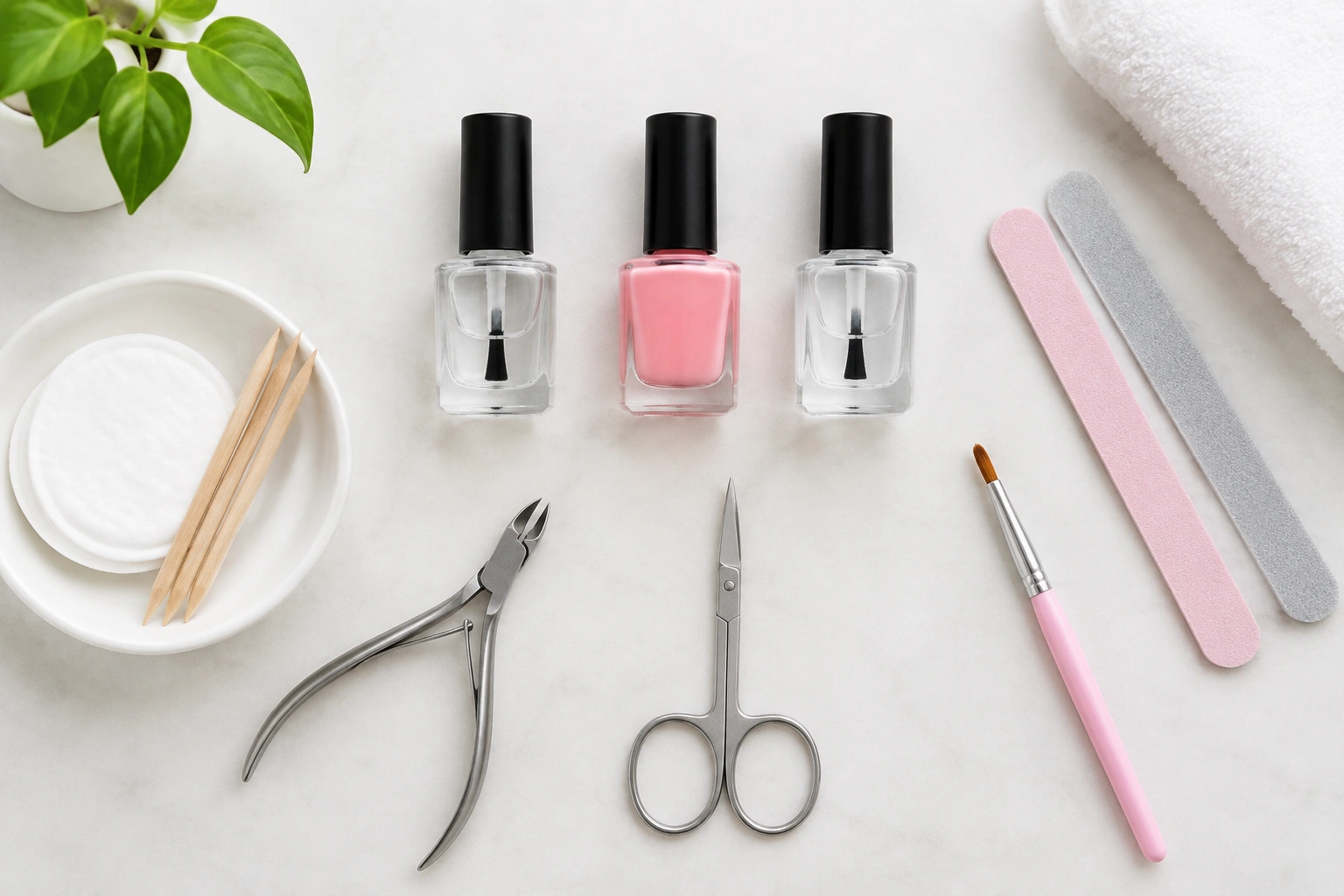
But there are exceptions. Some polishes are opaque enough for one coat. Others, especially sheer, light, or glitter formulas, may need three thin coats to look even. The real rule is simple: apply as many thin coats as you need for smooth, streak-free coverage — and stop before the polish gets thick.
A manicure usually has three parts: base coat, color coat(s), and top coat. The base coat and top coat help with wear and finish, but they are not counted as color coats.
If you want a deeper guide on timing, see how long to wait between coats of nail polish.
Quick Answer: The Usual Number of Coats
For most beginners, this is the easiest rule to follow:
- One coat: only if the polish already looks even and opaque enough
- Two coats: the standard choice for most regular nail polishes
- Three coats: only when the color still looks streaky, sheer, or patchy after two thin coats
That means you do not need to chase a fixed number every time. Instead, look at the nail after each coat. If the color is even and the finish looks smooth, stop there. If you can still see bare spots or obvious streaks, add another thin coat.
A useful example: a dark cream polish often looks finished in two coats, while a pale pastel may need three. A sheer nude may look best with two thin coats if you want a soft, natural look.
Why Coat Count Depends on the Polish Formula
Not every polish is made the same way. Some formulas are packed with pigment and cover quickly. Others are designed to look light, translucent, or sparkly, so they naturally need more layers.
Several things affect coverage:
- Pigment level: more pigment usually means better opacity
- Finish: sheer, jelly, and glitter formulas often show more of the nail underneath
- Color choice: light shades often look streakier than deeper shades
- Formula thickness: some polishes spread smoothly, while others need more building up
For beginners, the formula type is the easiest clue for choosing a starting point: opaque cream polishes usually start at two coats, sheer or jelly polishes often need three, and glitter polishes may need extra layers only if you want denser coverage.
This is why a fixed rule like “always use two coats” does not work for every bottle. The polish itself decides a lot of the outcome.
One Coat vs. Two Coats vs. Three Coats
Here is the simplest way to think about coat count:
| Coat count | Best for | What it looks like | Drying time | Common risk |
|---|---|---|---|---|
| One coat | Very opaque polish or a sheer look | Fast, but may look uneven | Fastest | Streaks or bald spots |
| Two coats | Most standard manicures | Smooth, even, and balanced | Moderate | Smudging if coats are too thick |
| Three coats | Sheer, pale, or streaky formulas | Fuller coverage and better color payoff | Slowest | Thickness and longer dry time |
Two coats usually give the best balance for everyday wear. One coat can be enough when the polish is naturally strong in color. Three coats can help when a formula is translucent or when the color is light enough that the nail still shows through.
The trade-off is simple: more coats can improve coverage, but they also add drying time and thickness. That is why thin application matters so much.
How to Tell If You Need Another Coat
After each layer, check your nails in good light. You are looking for three things:
- Streaks: lines where the polish dragged or applied unevenly
- Bald spots: areas where the nail still shows through
- Patchy color: parts of the nail look darker or lighter than others
If you still see any of those after the polish has mostly settled, another thin coat will usually help. If the nail already looks smooth and even, adding more polish may make it worse.
A simple test: hold your hand under a lamp or near a window. If the color looks consistent from cuticle to tip, you are probably done. If the tip looks solid but the center still looks sheer, add one more thin coat.
Why Two Thin Coats Usually Work Better Than One Thick Coat
This is one of the biggest beginner mistakes: trying to cover the nail in a single heavy layer.
A thick coat may seem faster, but it often causes problems:
- it dries more slowly
- it can wrinkle or dent more easily
- it may bubble
- it can drag or smudge when you add the next layer
- it may peel sooner because it never sets evenly
Thin coats spread better and dry more evenly. They also let you build color gradually, which gives you more control. If the first coat looks streaky, that is normal. The second thin coat is usually what smooths everything out.
For a practical thin-coat rule, load just enough polish to cover the brush without dripping, then wipe off the excess so the brush is coated but not overloaded. On the nail, a properly thin layer should look even and glossy, with the nail still faintly visible after the first coat but without puddles, ridges, or a bulky edge near the cuticle.
When Three Coats Make Sense
Three coats are not the default, but they are useful in a few situations.
You may need a third coat if:
- the polish is sheer
- the color is very light, like pale pink, white, or pastel
- the formula is streaky even when applied thinly
- you want a more opaque finish from a translucent polish
- the glitter or shimmer is not showing evenly yet
A pale pastel is a common example. Even with careful application, it may still look faint after two coats. A third thin coat can make the color look more finished.
The key word is thin. Three thin coats are better than two heavy ones. If you need more and more polish just to get coverage, the formula may simply be too sheer for the look you want.
Too many coats can make polish chip or peel faster because the layers stay thicker and may not dry evenly.
Do Base Coat and Top Coat Count as Coats?
Usually, no. When people talk about how many coats of nail polish to apply, they usually mean color coats.
Here is the basic structure:
- Base coat: goes on first to help the polish grip and create a smoother surface
- Color coat(s): the polish shade you actually want to see
- Top coat: goes on last to seal the manicure and add shine or protection
So a manicure might be:
– 1 base coat
– 2 color coats
– 1 top coat
That is four total layers, but only two of them are color coats.
If you are just learning, this distinction helps a lot. It keeps you from thinking, “I already did three coats,” when two of those were base and top coat.
How Long to Wait Between Coats
A good beginner rule is to wait about 2 to 5 minutes between thin coats, or until the surface looks set enough that the brush does not drag the layer underneath.
If you want a more concrete cue, lightly touch the side of a nail or the edge near the tip. The polish should feel dry enough that it is no longer wet or slippery, even if it is not fully hardened yet.
Waiting matters because adding polish too soon can cause:
- dragging
- streaking
- bubbling
- dents
- uneven texture
If you are unsure, wait a little longer rather than rushing. Thin coats dry better, but they still need time between layers.
Common Mistakes That Make Polish Look Worse
Most polish problems come from application, not from the number of coats itself.
Applying too much polish at once
A thick brush load can flood the nail and leave ridges or bubbles.
Brushing over wet polish too many times
Once the polish starts to settle, keep touching it and you can create streaks.
Adding a second coat too quickly
If the first layer is not ready, the next one can pull it around instead of covering it.
Using too many coats to fix a weak formula
If a polish still looks patchy after several thin coats, it may be better to switch to a more opaque shade.
Forgetting that different finishes behave differently
A cream polish, a sheer polish, and a glitter polish will not cover the same way.
Coat Count by Polish Type: Sheer, Opaque, and Glitter
Different polish types need different expectations.
Sheer polish
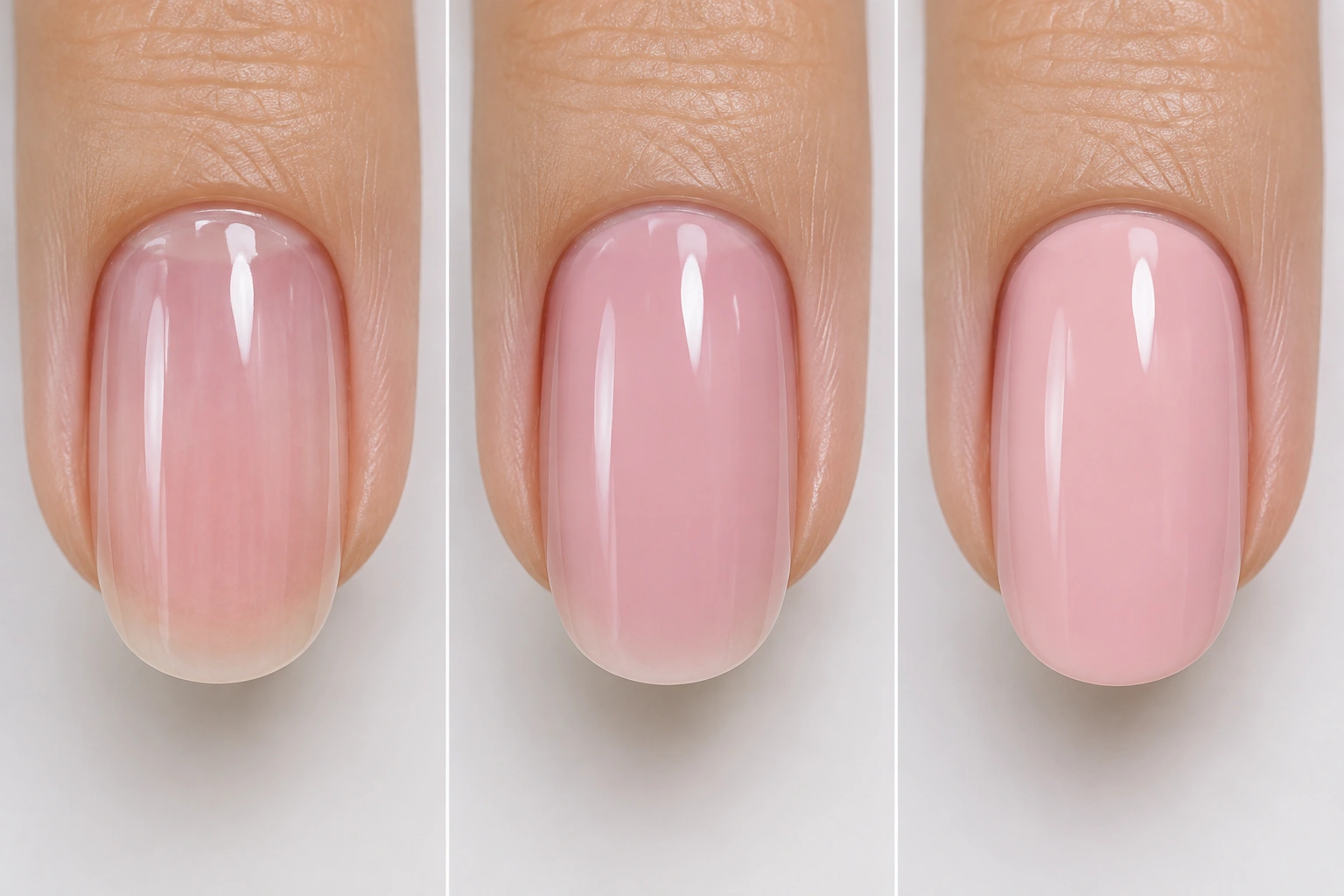
Sheer polish is meant to look light and translucent. It may look best with one or two coats if you want a natural finish. If you want more coverage, a third thin coat can help.
Opaque polish
Opaque cream formulas usually give the easiest result. Many of them look even in two coats, and some are strong enough to look finished in one.
Glitter polish
Glitter polish can be forgiving because the sparkle helps hide unevenness. But it may need extra layers if you want fuller coverage or denser sparkle across the nail.
Light colors
White, pale pink, and pastel shades often need more patience because they can look streaky before they look smooth.
Dark colors
Deep shades often cover faster, but they still need thin coats. A dark polish applied too thickly can look muddy or take too long to dry.
If you want a practical reference for finish types, it helps to think less about color alone and more about opacity. A darker polish is not automatically more opaque, and a light polish is not automatically sheer.
Simple Rule to Choose the Right Number of Coats
Use this easy decision rule:
- Apply one thin coat.
- Let it settle.
- Check for streaks, bald spots, or see-through areas.
- Add a second thin coat.
- Stop if the color looks smooth and even.
- Add a third thin coat only if the polish still looks patchy or translucent.
That is the most beginner-friendly way to handle polish. It keeps you from overloading the nail, and it lets the formula tell you what it needs.
If you remember only one thing, remember this: thin coats win. They dry better, look smoother, and usually last longer than one heavy layer.
When to See a Nail Technician or Dermatologist
If a polish formula keeps looking uneven no matter how carefully you apply it, a nail technician can help you figure out whether the issue is the product, the brush, or the application method.
If you notice irritation, rash, or unusual nail changes after using polish or remover, stop using the product and speak with a dermatologist. Product reactions can happen, and it is better to get proper advice than to keep testing the same formula.
Final Takeaway
For most people, two thin coats of color polish is the sweet spot. One coat is enough only when the formula is already opaque and even. Three coats are useful when the polish is sheer, light, or still streaky after two layers.
The real goal is not hitting a magic number. It is getting a smooth, even finish without making the polish too thick to dry well.

