
How Much Nail Dehydrator to Use? A Practical Nail Prep Guide

Quick Answer
For most brush-on nail dehydrators, use one thin, even coat on the natural nail plate. The brush should lightly wet the nail without dripping into the cuticle or sidewalls, and you should always follow the product label and safety directions in the FDA nail care guidance and on your bottle.
Use nail dehydrator in four quick steps
- Prep first: Shape the nail, manage non-living cuticle from the plate, and remove dust.
- Wipe the brush: Remove excess liquid on the bottle neck so the brush is damp, not loaded.
- Apply one coat: Use one or two light passes to cover the natural nail from cuticle area to free edge.
- Let it air-dry: Wait until the liquid has fully evaporated before primer, base coat, glue, or enhancement product.
When should you use more?
- Only when needed: A second light pass may help on naturally oily nails if your product instructions allow it, but flooding the nail does not improve prep.
If you are asking how much nail dehydrator to use, the safest rule is simple: use less than you think. A thin, controlled layer is enough to remove surface oil and moisture before gel, acrylic, dip, soft-gel tips, or press-ons.
I like to describe the goal as “evenly damp, never soaked.” This guide explains exactly what that looks like, when a second pass makes sense, and how to avoid over-prepping the nail.
In This Guide
- How much nail dehydrator should you use?
- What does nail dehydrator actually do?
- How do you apply nail dehydrator correctly?
- Should you use one coat or two?
- How much should you use for gel, acrylic, dip, and press-ons?
- Can too much nail dehydrator cause problems?
- How long should nail dehydrator dry before primer?
- What nail dehydrator mistakes cause lifting?
- Frequently asked questions
How Much Nail Dehydrator Should You Use?
Use one thin coat per natural nail unless your product specifically says otherwise. You do not need a measured number of drops because bottle openings, brushes, and formulas vary too much for drops to be reliable.
A properly loaded brush should leave a light film across the nail. It should not create a bead of liquid, run toward the cuticle, or collect beside the nail folds.
- Brush-on bottle: Wipe excess product from one side of the brush, then cover the nail with one or two light passes.
- Lint-free wipe system: Dampen the wipe enough to clean the plate, but do not saturate it until liquid drips.
- Very small nails: Use less product and rely on the tip or side of the brush for control.
- Wide thumbnails: Add another light brush pass only to cover missed areas, not to make the layer wetter.
Definition: A nail dehydrator is a nail-prep liquid used on the natural nail plate to reduce surface oil and moisture before an adhesion product, base coat, glue, gel, acrylic, dip, or tip system.
Think in terms of coverage, not volume. If the entire natural nail looks briefly wet and then dries without puddling, you have usually applied enough.
What Does Nail Dehydrator Actually Do?
Nail dehydrator prepares the surface so the next product can bond to a cleaner, drier nail. It does not replace shaping, cuticle cleanup, dust removal, primer, or the base product required by your nail system.
The goal is temporary surface prep, not deep drying. That difference matters because more dehydrator does not automatically create stronger adhesion.
- Removes surface oil: Natural oils can interfere with glue, gel, acrylic, and base-coat adhesion.
- Reduces surface moisture: A drier plate gives many nail systems a more consistent prep surface.
- Helps reveal missed areas: After evaporation, shiny patches may show that oil, dust, or residue remains.
- Supports the next step: Primer or base products can work on a properly prepared nail instead of over oily residue.
Dehydrator and primer are not the same product. Primer is designed to promote bonding, while dehydrator focuses on cleaning and drying the nail surface.
If your system uses both, dehydrator usually comes first. Follow the brand sequence instead of mixing steps from different tutorials.
How Do You Apply Nail Dehydrator Correctly?
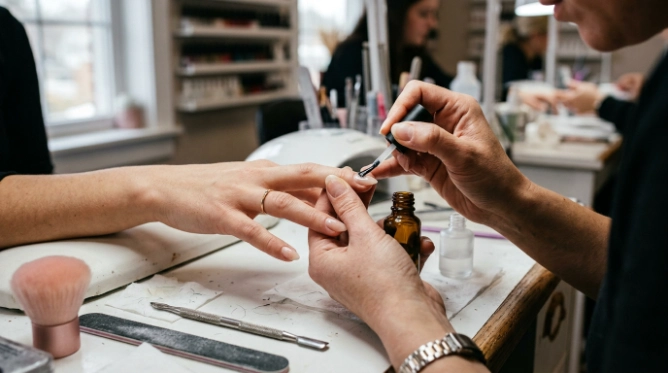
The best application is controlled and fast. The liquid belongs on the nail plate, not on surrounding skin.
- Wash and fully dry your hands. Avoid applying hand cream or cuticle oil immediately before prep.
- Shape the natural nail. File the free edge and complete any light surface prep required by your system.
- Remove non-living cuticle from the plate. Do not aggressively cut or scrape living skin.
- Brush away dust. Use a clean nail brush or lint-free method so debris is not trapped under product.
- Load the dehydrator brush lightly. Wipe excess against the bottle neck.
- Apply one thin coat. Keep a small margin from the skin and sidewalls.
- Let it evaporate completely. Do not cure a standard air-dry dehydrator unless the label specifically tells you to use a lamp.
- Continue with primer or base product. Use the order specified by the system you are applying.
The American Academy of Dermatology advises being careful with artificial-nail preparation because filing and chemical products can irritate or weaken nails when used aggressively. Their artificial nail safety guidance is a useful reminder that better adhesion should not come from harsher prep.
My practical rule is to stop once the nail is evenly covered. Repeated brushing adds product, not precision.
Should You Use One Coat or Two?
Start with one thin coat. A second coat is not a default requirement, and you should use it only when the manufacturer recommends it or when your nail system specifically calls for extra dehydration.
People with naturally oily nail plates may need more careful prep, but “more careful” does not mean flooding the nail. It means cleaning thoroughly, avoiding skin oils after prep, and applying any second pass just as thinly as the first.
| Situation | Practical amount | What to watch for |
|---|---|---|
| Normal natural nails | 1 thin coat | Full coverage with no pooling |
| Naturally oily nails | 1 thin coat; optional second light pass only if label allows | Do not keep layering because the nail still looks shiny from texture |
| Small nail plates | Less than a full brush load | Avoid touching cuticle and sidewalls |
| After accidental skin contact | Stop and clean the area; do not add more | Burning, redness, itching, or swelling |
If one thin coat dries evenly and your manicure retains well, there is no benefit in adding more just because the bottle is available.
How Much Should You Use for Gel, Acrylic, Dip, and Press-Ons?
The amount usually stays small across nail systems because dehydrator works on the natural nail surface. What changes is the product that follows it.
- Gel polish: Apply one thin coat to the natural nail, let it air-dry, then follow your gel brand’s base-coat steps.
- Acrylic: Use one light coat before the primer or bonding step required by your acrylic system.
- Dip powder: Use a thin dehydrator layer only if the dip system includes or recommends one, then continue in the listed order.
- Soft-gel or Gel-X-style tips: Dehydrate the natural nail, not the skin, before the system’s primer, bonder, or gel adhesive.
- Press-on nails: A light dehydrating step can help remove natural oils before glue or adhesive tabs, but follow the adhesive maker’s directions.
Do not assume the dehydrator should also be painted heavily onto plastic tips or cured gel. Some systems use separate prep liquids for the inside of tips, so check the exact bottle and kit directions.
The FDA notes that nail products can contain ingredients that cause irritation or allergic reactions in some users. That is another reason to keep products off the skin and use them only as directed.
Can Too Much Nail Dehydrator Cause Problems?
Yes. Using excessive nail dehydrator can make prep messier and increase unnecessary chemical contact with skin and nails without improving adhesion.
Overuse may also encourage beginners to chase a “bone-dry” appearance by repeating dehydration and filing. That can turn a simple prep step into an overly aggressive routine.
- Flooded cuticles: Liquid can run into skin folds and cause stinging or irritation.
- Repeated solvent exposure: Frequent heavy application may leave nails and surrounding skin feeling dry.
- False confidence: Extra dehydrator cannot fix leftover cuticle, dust, poor tip fit, thick gel layers, or incorrect curing.
- Product incompatibility: Mixing prep liquids from different systems can create unpredictable retention.
DermNet notes that nail cosmetics can trigger irritant or allergic contact dermatitis in some people. Its nail cosmetics allergy overview describes redness, swelling, blistering, and reactions that may occur around or away from the nails.
Dermatology note: If you develop persistent burning, itching, swelling, blistering, nail lifting, or a spreading rash, stop using the product and contact a dermatologist or other qualified healthcare professional.
How Long Should Nail Dehydrator Dry Before Primer?
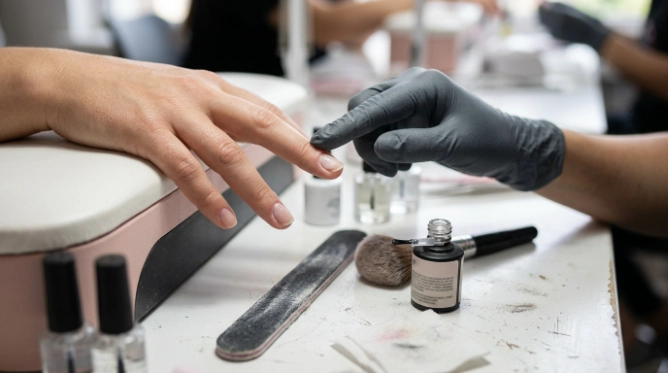
Let nail dehydrator dry completely before the next prep product. Most brush-on dehydrators are designed to evaporate on their own, so you usually wait until the visible wetness is gone rather than curing them in a lamp.
Avoid touching the nail after it dries. A fingertip can transfer oil back to the surface and undo the prep you just completed.
- Do: Wait for the entire nail to look dry before primer or base.
- Do: Keep the hand away from hair, face, clothing, and oily products during prep.
- Do not: Blow on the nails, because breath can add moisture and contamination.
- Do not: Use a UV or LED lamp unless the specific dehydrator label requires curing.
If the product remains visibly wet for an unusually long time, you may have applied too much. Next time, wipe more liquid from the brush before touching the nail.
What Nail Dehydrator Mistakes Cause Lifting?
Lifting is often blamed on “not enough dehydrator,” but the real cause can be anywhere in the prep or application process. Adding more dehydrator will not correct every retention problem.
- Skipping cuticle cleanup: Product bonded to invisible cuticle tissue can lift even when the nail looks clean.
- Leaving dust behind: Filing residue creates a barrier between the nail and the next layer.
- Touching the plate after prep: Skin oils can return to the nail immediately.
- Flooding the skin: Dehydrator, primer, base, or gel touching skin can make the application messy and unsafe.
- Applying thick product layers: Thick gel, glue, or base layers may behave differently from the system’s intended application.
- Mixing incompatible products: A dehydrator, primer, base, and adhesive from unrelated systems may not be designed to work together.
- Over-filing: More roughness is not always better, and aggressive filing can thin the natural nail.
The American Academy of Dermatology also warns that nail products and artificial-nail chemicals can irritate skin. Its manicure and pedicure safety advice recommends paying attention to reactions and seeking professional care when needed.
If you suspect acrylate sensitivity, DermNet’s acrylate allergy guide explains that itching, burning, scaling, hives, or blistering can occur after exposure in sensitized people.
The practical takeaway is simple: better retention comes from clean, controlled prep, not from soaking the nail in more dehydrator.
Frequently Asked Questions
Can I use too little nail dehydrator?
Yes, if you miss sections of the natural nail. The goal is complete, thin coverage, so use enough for the whole plate to look briefly and evenly damp before it evaporates.
Do I need two coats of nail dehydrator?
Usually not. Start with one thin coat and use a second light pass only when your product instructions or nail system specifically recommends it.
Should nail dehydrator touch the cuticle?
No. Keep it on the natural nail plate and away from living skin. If it runs into the cuticle or sidewalls, clean the area and reduce the amount on your brush next time.
Do I cure nail dehydrator under a UV or LED lamp?
Most standard dehydrators air-dry and are not cured. Always check the label, because specialized systems can have different directions.
Can nail dehydrator replace primer?
Not automatically. Dehydrator reduces surface oil and moisture, while primer or bonder promotes adhesion in systems that require it. Use each product for the role specified by your kit or brand.
Can I use nail dehydrator every time I do my nails?
You can use it when your manicure system calls for it, but keep the application thin and avoid unnecessary repeated coats. Stop if your nails or skin become irritated.
What should I do if nail dehydrator burns?
Stop using it and remove the product from the affected skin or nail area according to the label directions. If burning, redness, swelling, blistering, or pain persists, seek medical advice.
Final takeaway: For most nail-prep routines, one thin coat is enough. Cover the natural nail evenly, avoid the skin, let it air-dry, and follow the exact directions for your dehydrator, primer, and nail system.

