
How Often Should You Take Care of Your Toenails? A Simple Care Routine

Toenails are easy to ignore until one becomes too long, catches on a sock, develops a rough edge, or starts looking different. But a small amount of regular care can make your feet more comfortable and help you notice potential problems before they become harder to manage.
So, how often should you take care of your toenails? There is no perfect schedule for everyone. Toenails grow slowly, and factors such as age, footwear, activity level, nail thickness, and health can affect how often they need attention.
For most people, a quick weekly check combined with trimming every several weeks is a practical starting point. Filing, cleaning, moisturizing the surrounding skin, and watching for changes can be done between trims.
Quick Answer
For most healthy adults, check your toenails about once a week and trim them roughly every 6–12 weeks, or sooner if they become uncomfortably long. File rough edges between trims, keep your feet clean and dry, and watch for pain, swelling, discoloration, thickening, or lifting that may need professional attention.
How Often Should You Trim Your Toenails?
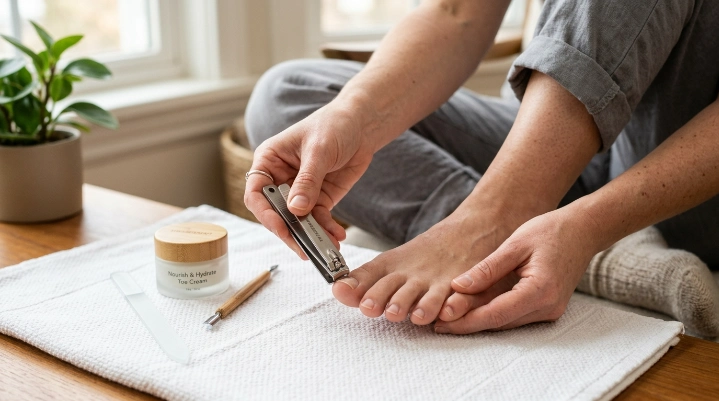
Toenails usually grow more slowly than fingernails, which is why they do not need to be cut as frequently. The American Academy of Dermatology’s nail-trimming guidance notes that toenails may need trimming less often than fingernails. One NHS hospital guide suggests trimming toenails about every 6 to 12 weeks.
Think of that timeframe as a guide rather than a strict deadline.
You may need to trim sooner if:
- The nail extends noticeably beyond the end of your toe.
- It presses against the inside of your shoes.
- The edge catches on socks or bedding.
- A corner becomes sharp or uncomfortable.
- You are very active and need consistently short, comfortable nails.
On the other hand, someone whose toenails grow slowly may comfortably go longer between trims.
The goal is not to make your toenails as short as possible. It is to keep them at a manageable length without cutting into the corners or surrounding skin.
A Simple Toenail Care Schedule
Toenail care becomes easier when you break it into small tasks instead of treating every pedicure as a major project.
| Care Task | Practical Frequency | What to Look For |
|---|---|---|
| Check toenails | About once a week | Color, thickness, cracks, pain, lifting |
| File rough edges | Weekly or as needed | Sharp corners, snags, uneven edges |
| Trim nails | About every 6–12 weeks or as needed | Excess length or shoe pressure |
| Clean feet and nails | Daily during normal bathing | Dirt, moisture, odor |
| Moisturize surrounding skin | Daily or as needed | Dryness or cracking |
| Inspect tools | Before each use | Dirt, rust, damage, dull cutting surfaces |
| Professional evaluation | As needed | Pain, infection signs, major nail changes |
Some podiatry guidance suggests that weekly filing can help maintain nail length, particularly when nails are difficult to cut safely.
Why Weekly Toenail Checks Are Worth the Effort
You do not need to perform a full pedicure every week. A 30-second visual check is often enough.
Look at each toenail when your feet are clean and dry. Notice whether anything has changed since the previous week.
Pay attention to:
- New yellow, white, brown, or dark areas
- Unusual thickening
- Crumbling or splitting
- A nail lifting away from the nail bed
- Red or swollen skin
- Tenderness around a nail edge
- Drainage or pus
- A new dark streak
- A nail that suddenly changes shape
Some changes are caused by everyday trauma or aging, but persistent changes can also accompany nail disorders. The American Academy of Dermatology advises having certain unexplained changes in nail color, shape, or texture examined by a dermatologist.
A weekly check simply makes it easier to recognize what is normal for you.
How Often Should You File Your Toenails?
You can use a nail file whenever an edge feels rough, sharp, or uneven. For someone who prefers filing over frequent clipping, once a week can be a reasonable routine.
Lincolnshire Community Health Services recommends regularly filing across the free edge and notes that filing can be especially useful for hard, thick, or brittle toenails.
Filing is useful for:
- Smoothing a freshly clipped edge
- Removing a small snag before it tears
- Maintaining length between trims
- Gradually reducing a hard-to-cut nail
- Softening sharp corners without digging into the sides
Use gentle pressure. You should not need to aggressively grind the nail.
If filing causes heat, soreness, or sensitivity, stop.
What Type of Nail File Is Best?
Different nail files work well for different situations.
Emery boards are affordable and convenient, but their abrasive surfaces wear out and they are generally harder to thoroughly sanitize.
Glass or crystal files have a smoother filing surface and can be useful for controlled shaping. Quality versions are also reusable when cleaned according to their care instructions.
Metal files are durable and may be useful for thicker toenails, although aggressive pressure can remove more nail than intended.
Electric nail files can work quickly, but beginners can accidentally thin the nail or irritate nearby skin. They are not necessary for ordinary home toenail maintenance.
For most people, a basic manual nail file and a good pair of toenail clippers are enough.
How to Trim Toenails Safely
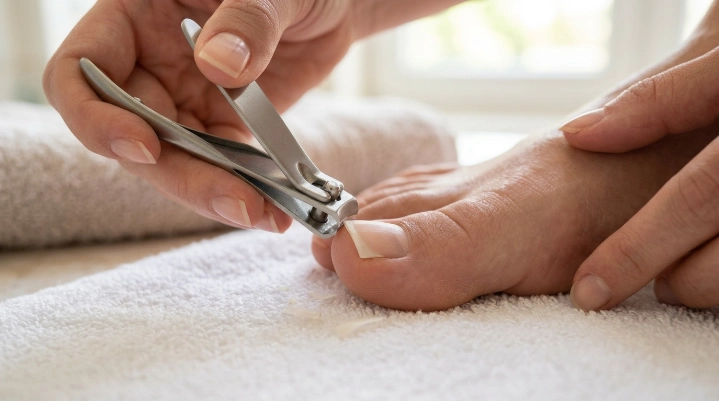
Technique matters just as much as frequency.
Both dermatology and NHS guidance recommend avoiding deeply rounded toenail corners. Cutting straight across helps reduce the chance of creating an ingrown edge.
Step 1: Make Sure You Can See Clearly
Sit somewhere comfortable with strong lighting. Do not try to trim nails when you cannot clearly see the cutting edge.
If reaching your feet is difficult, do not force yourself into an unstable position.
Step 2: Use the Right Clippers
Toenail clippers are usually wider and stronger than small fingernail clippers.
For very thick nails, a sturdy toenail nipper may provide more control. Make sure the tool is clean, in good condition, and comfortable to hold.
Step 3: Cut Straight Across
Make several controlled cuts instead of trying to remove the entire nail in one powerful clip.
Leave a small visible edge of nail rather than cutting down into the pink attached area.
Avoid carving deeply into the corners.
Step 4: Smooth the Edge
Use a clean file to remove sharp points or snags.
You only need to smooth the free edge. Do not aggressively file the surrounding skin or dig underneath the nail.
Step 5: Check the Skin
When finished, look for tiny cuts, bleeding, or irritated areas.
If you accidentally injure the skin, keep the area clean and monitor it instead of continuing to cut around it.
Expert Tip: File small rough edges as soon as you notice them. Regular light filing can prevent a tiny snag from turning into a split nail and may reduce how much you need to cut during your next trimming session.
Do You Need a Full Pedicure Every Time?
No.
Routine toenail care and a salon pedicure are not the same thing.
At home, basic maintenance may involve:
- Keeping nails at a comfortable length
- Filing rough edges
- Washing and drying your feet
- Moisturizing dry skin around the nails
- Checking for unusual changes
A professional pedicure can add polish, cosmetic shaping, callus care, and a more relaxing beauty experience.
You do not need salon treatment every time your nails grow.
If you visit a salon, prioritize hygiene. Tools that may contact skin should be handled and cleaned appropriately, and you should speak up if trimming feels painful.
Also be cautious about aggressive cuticle cutting. Cuticles help protect the area where the nail grows, and dermatologists caution that cutting them can increase opportunities for germs to enter around the nail.
What If Your Toenails Are Thick?
Thick toenails can require a different routine.
They may be more difficult to cut and can splinter when too much force is applied. Filing them gradually may sometimes feel more manageable than trying to remove a large amount at once.
If you do cut a thick nail, make small controlled cuts.
Mayo Clinic advises using small straight cuts when trimming thickened toenails rather than rounding the edges, which can help reduce splintering and ingrown-nail risk.
Do not assume unexplained thickening is simply cosmetic.
Toenail fungus, repeated shoe trauma, aging, and certain skin or nail conditions can all affect nail appearance. A fungal infection, for example, may cause thickening, discoloration, crumbling, or separation of the nail.
Keep Your Toenail Tools Clean
A good routine also includes caring for your tools.
Do not let nail debris collect on your clippers or reusable files. Follow the manufacturer’s cleaning instructions for reusable tools and allow them to dry before storage.
Store tools somewhere clean and dry rather than loose on a damp bathroom surface.
Avoid sharing personal nail tools whenever possible, particularly if someone has a suspected fungal infection or damaged skin.
Disposable files should be replaced once the abrasive surface is worn, dirty, damaged, or difficult to keep hygienic.
Tool cost does not automatically determine safety. A simple, inexpensive clipper that is sharp, clean, and easy for you to control can be more useful than a complicated professional-looking tool you cannot handle comfortably.
Adjust Your Routine for Sensitive Skin and Nails
Not everyone tolerates the same level of filing, trimming, polishing, or soaking.
If the skin around your toes is sensitive:
- Use gentle filing pressure.
- Avoid cutting living skin.
- Stop if you notice burning or tenderness.
- Choose fragrance-free moisturizer if scented products irritate you.
- Avoid repeatedly buffing the surface of thin nails.
- Give damaged nails time to grow rather than constantly reshaping them.
Pain is not a normal part of routine nail maintenance.
If you repeatedly hurt yourself while trimming, the problem may be your technique, visibility, flexibility, nail thickness, or the tool you are using.
Common Mistakes to Avoid
Even a simple toenail routine can create problems when you become too aggressive.
- Cutting nails extremely short: This can leave tender skin exposed and may contribute to ingrown edges.
- Rounding deeply into the corners: Toenails are generally better trimmed straight across.
- Digging underneath the nail with sharp tools: This can injure the skin beneath the nail.
- Tearing a snag instead of filing it: Pulling can split the nail farther back.
- Using excessive force on thick nails: Take smaller cuts or consider professional help.
- Ignoring repeated pain: Persistent pain is a reason to investigate, not simply trim more deeply.
- Sharing dirty nail tools: Keep personal grooming tools clean.
- Assuming every discoloration is fungus: Different nail conditions can look similar, so persistent unexplained changes deserve proper assessment.
- Covering a suspicious nail with polish indefinitely: Cosmetic coverage can make it harder to notice ongoing changes.
When to See a Nail Technician or Dermatologist
A nail technician can be helpful when your toenails are healthy but you want professional cosmetic shaping, polishing, or routine pedicure care.
A dermatologist, podiatrist, or other appropriate healthcare professional is the better choice when the issue may be medical.
Consider professional medical advice if you have:
- Increasing pain
- Redness or swelling around the nail
- Pus or drainage
- A repeatedly ingrown nail
- Significant thickening
- Crumbling or lifting
- Persistent unexplained discoloration
- A new or changing dark streak
- An injury that is not healing normally
- A nail change that continues getting worse
The American Academy of Dermatology’s guide to nail changes specifically recommends evaluation for several persistent or unusual changes, including a new or changing dark streak.
For possible fungal symptoms, the NHS fungal nail infection guide explains that infected nails may become discolored, thickened, brittle, or painful and that treatment can take months.
If you have diabetes, poor circulation, reduced sensation in your feet, or another condition that makes foot injuries harder to detect or heal, DIY trimming deserves extra caution. Professional foot care may be safer when you cannot comfortably see, reach, or cut your toenails.
DIY Toenail Care vs. Professional Care
| Situation | DIY Care May Be Reasonable | Professional Help Is Better |
|---|---|---|
| Normal nail growth | Yes | Usually unnecessary |
| Small rough edge | Yes, gently file | Usually unnecessary |
| Cosmetic polish change | Yes | Optional salon visit |
| Very thick nail | Possibly, if easy to manage | Helpful if difficult to cut |
| Recurring ingrown nail | Limited | Yes |
| Pain or swelling | Avoid aggressive DIY care | Yes |
| Suspected infection | Basic hygiene only | Medical evaluation |
| Unexplained dark streak | No cosmetic self-treatment | Dermatologist |
| Trouble seeing or reaching feet | May be unsafe | Professional care |
The important distinction is simple: cosmetic maintenance is different from treating a nail disorder.
FAQs
How often should you take care of your toenails?
Check your toenails about once a week and trim them when needed. A commonly suggested trimming interval is around every 6–12 weeks, although your personal growth rate may require a different schedule.
Should I file my toenails every week?
You can. Weekly filing is useful for keeping small rough edges smooth and maintaining length between trims. It can also be a practical option for nails that are difficult to cut.
Is it better to cut toenails wet or dry?
Normal nails can be easier to cut after bathing because they may be softer. However, very soft nails can also be easier to bend or tear, so use controlled cuts and a sharp tool.
How short should toenails be?
Keep them comfortably short without cutting into the attached nail or digging down the corners. Cutting too short can contribute to irritation and ingrown toenails.
Can I use a nail file instead of toenail clippers?
For maintaining modest growth, sometimes yes. Regular filing can gradually keep the nail shorter. Very long nails may still be easier to shorten with appropriate clippers before smoothing the edge.
Why are my toenails getting thicker?
Toenails can thicken for several reasons, including repeated trauma and nail disorders. Fungal nail infections are one possible cause and can also produce discoloration, brittleness, crumbling, or lifting.
When should I worry about toenail discoloration?
Seek professional advice when discoloration is new, unexplained, spreading, associated with pain or nail damage, or does not grow out normally. A new or changing dark streak in particular should be evaluated by a dermatologist.
Conclusion
So, how often should you take care of your toenails? A practical routine is to check them weekly, file rough edges when needed, and trim them approximately every 6–12 weeks or whenever their length becomes uncomfortable.
You do not need complicated tools or constant salon appointments. Consistency matters more.
Keep your tools clean, trim straight across, avoid cutting excessively short, and pay attention to changes in color, thickness, texture, or comfort. If something looks unusual or hurts, do not try to solve every nail problem with more cutting or filing.
Start by checking your toenails today. If they look healthy, a simple maintenance routine may be all you need. If you see a persistent change, choose the safer next step and have it professionally assessed.

