
How Short Should You Cut Your Toenails? A Safe Trimming Guide

If you have ever finished a pedicure and wondered whether you cut your toenails too short, you are not alone. Toenails can look neater when closely trimmed, but removing too much nail can leave the surrounding skin tender and make the corners more likely to become irritated.
So, how short should you cut your toenails? For most people, the safest goal is a moderate length: roughly level with the tip of the toe, with the corners still visible. This guide explains the right length, shape, tools, filing technique, hygiene habits, warning signs, and when DIY trimming is no longer the best option.
Quick Answer
For most adults, toenails should be trimmed straight across so the nail edge sits roughly level with the tip of the toe, not cut deeply into the corners or below the skin. Leaving a small visible free edge helps reduce pressure, tenderness, and the risk of ingrown toenails.
How Short Should You Cut Your Toenails Exactly?
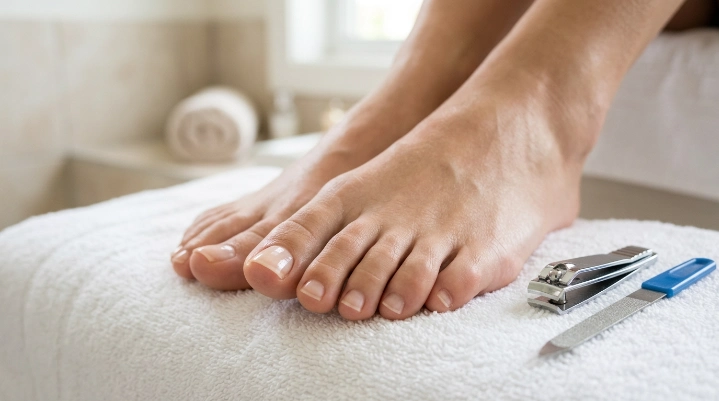
A toenail does not need to be cut down until almost no white edge remains.
A better visual guide is to trim the nail until it is approximately even with the end of the toe. The nail should still protect the sensitive skin underneath, and the corners should remain visible rather than being carved away.
The Mayo Clinic recommends keeping toenails at a moderate length and trimming them so they are even with the tips of the toes. Cutting them too short can allow pressure from footwear to encourage the nail to grow into nearby skin. Mayo Clinic’s ingrown toenail prevention guidance
A good finished toenail usually has:
- A straight or gently squared front edge
- Corners that remain visible
- No sharp points catching on socks
- No exposed, tender skin beneath the nail
- No pain when you press lightly around the nail
Do not use the amount of white nail alone as a strict measurement. Nail beds, toe shapes, and natural nail curves vary from person to person.
Why Cutting Toenails Too Short Can Cause Problems
A super-short pedicure may look clean for a few days, but the cosmetic result is not worth irritating the nail area.
When the nail is trimmed below the natural end of the toe, the surrounding skin may begin pressing against the nail as it grows back. Tight shoes can increase that pressure.
According to NHS guidance on ingrown toenails, cutting toenails too short and cutting into the edges should be avoided. NHS guidance for preventing ingrown toenails
Cutting too short may contribute to:
- Tenderness around the nail
- Red or irritated corners
- Ingrown toenails
- Small cuts in surrounding skin
- Increased sensitivity inside shoes
- Snagging as the nail grows unevenly
- Greater infection risk if the skin is broken
If a toe hurts immediately after trimming, that is often a sign that you removed more nail—or surrounding skin—than necessary.
What Shape Should Toenails Be?
For most people, straight across is the safest basic shape.
Unlike fingernails, which are often rounded or oval for appearance, toenails generally should not be deeply curved at the sides.
The American Academy of Dermatology recommends cutting toenails straight across to reduce the chance of an ingrown nail. American Academy of Dermatology nail-trimming guide
Can You Round the Corners Slightly?
You can use a fine nail file to smooth a sharp corner that catches on socks.
However, there is an important difference between smoothing an edge and cutting deeply down the sides.
Think of your ideal shape as a soft square:
- The front stays mostly straight.
- The corners stay visible.
- Only sharp or rough edges are lightly filed.
Do not dig underneath the nail corner trying to create an oval shape.
The Best Way to Trim Toenails Step by Step
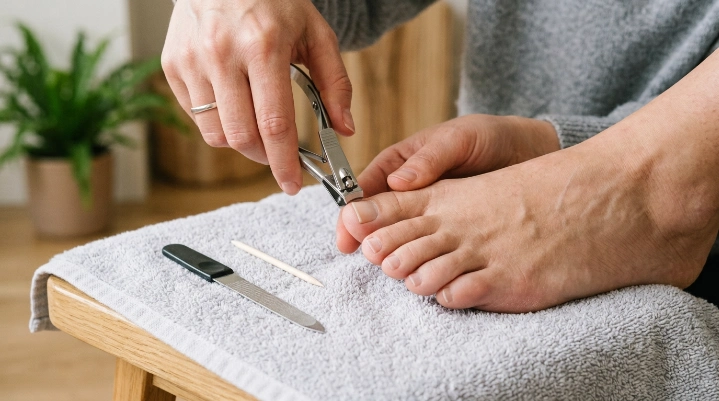
You do not need complicated pedicure equipment. Good lighting, clean tools, and patience matter much more.
1. Soften Very Hard Nails First
Toenails can be easier to trim after a shower or bath because they are softer.
The American Academy of Dermatology recommends trimming after bathing or briefly soaking nails in lukewarm water when needed.
If your toenails are unusually thick, Mayo Clinic advises that soaking the feet in warm water for about 5–10 minutes can make trimming easier. Mayo Clinic guidance for trimming thickened toenails
Dry your feet carefully before trimming so your tools do not slip.
2. Use Toenail Clippers or Appropriate Nippers
Toenail clippers are usually wider and stronger than fingernail clippers.
Position the blades carefully and avoid trying to remove the entire nail edge with one aggressive cut.
3. Make Small Cuts Across the Nail
Start on one side and work gradually toward the other.
Small cuts give you more control and are especially helpful for thicker toenails.
Keep the general cutting line straight.
4. Stop Before You Reach Sensitive Skin
Do not keep clipping simply because you can still see a narrow white edge.
Your goal is comfortable, protective length—not the shortest possible nail.
5. File Rough Edges
Use a fine nail file or emery board to smooth any corners that feel rough.
The file should refine the shape rather than dig down the sides of the nail.
6. Check the Nail in Your Shoes
After trimming, put on your normal socks and shoes.
You should not feel sharp pressure, pinching, or tenderness around the freshly trimmed nail.
Expert Tip: If you are debating whether to make one more cut, stop and file the edge instead. It is much easier to shorten a toenail later than to replace nail you have cut too deeply.
Clippers, Nippers, and Nail Files: Which Tool Should You Use?
Different tools solve different problems.
| Tool | Best For | Main Benefit | Main Limitation |
|---|---|---|---|
| Toenail clippers | Normal everyday toenails | Fast, controlled trimming | Dull clippers may crush or split thick nails |
| Nail nippers | Thick or difficult toenails | Stronger cutting action | Sharp and easier to misuse |
| Fine nail file | Rough edges and corners | Adds control without removing much length | Too slow for shortening long nails |
| Emery board | Light smoothing | Affordable and easy to replace | Wears out faster |
| Buffer | Surface smoothing | Can improve cosmetic appearance | Over-buffing may thin the nail |
For most healthy toenails, a quality clipper plus a fine file is enough.
A reusable tool can cost more initially than a disposable emery board, but durability is only useful if the tool can be cleaned properly and remains sharp. Avoid rusty, bent, chipped, or difficult-to-clean tools.
How to Use a Nail File on Toenails Safely
A nail file is particularly helpful when your toenail is already close to the correct length.
Instead of taking another clip and risking going too short, gently smooth the free edge.
Use light pressure and concentrate on rough areas.
You can also file after clipping if one corner feels slightly sharper than the other. The goal is to prevent snagging without filing deeply into the sidewall.
Avoid aggressive filing if:
- The nail is painful
- The surrounding skin is swollen
- The nail is partially detached
- You see bleeding
- The nail is extremely thin
- You suspect an infection
A file is a shaping tool—not a treatment for an infected or severely ingrown nail.
How Often Should You Cut Your Toenails?
Toenails grow more slowly than fingernails, so they usually do not need frequent cutting.
Rather than following a rigid schedule, trim when the nail begins extending noticeably beyond the toe or starts pressing against shoes.
Some people may need maintenance every few weeks, while others can comfortably wait longer.
The best schedule depends on:
- Your natural nail growth
- Activity level
- Shoe type
- Nail thickness
- Nail shape
- Previous nail injuries
- How short you normally keep your nails
Do not repeatedly cut healthy toenails shorter just to maintain a freshly clipped appearance.
Light filing between full trims may be enough.
Toenail Trimming and Ingrown Nails
Ingrown toenails commonly affect the big toe and can become painful when the nail edge presses or grows into surrounding skin.
Improper trimming is not the only possible cause. Tight footwear, injury, natural nail shape, and other factors may contribute too.
However, trimming technique is one factor you can control.
To lower your risk:
- Cut straight across.
- Leave the corners visible.
- Avoid cutting extremely short.
- Do not dig beneath the sides.
- Smooth rough edges rather than carving them away.
- Wear shoes with enough room around the toes.
If you already have a painful ingrown toenail, repeatedly cutting deeper into the corner may make the area more irritated.
What If Your Toenails Are Thick?
Thick toenails require extra patience.
Trying to force regular clippers through a very thick nail can cause cracking, sudden slipping, or an uneven cut.
Softening the nail first may help. Make several small cuts rather than trying to remove the whole edge at once.
Nail nippers may provide better control for some thick nails, but their blades are sharp.
People who have diabetes, poor circulation, or reduced sensation in their feet should be particularly cautious about trimming thick toenails themselves. Mayo Clinic recommends discussing toenail trimming with a healthcare professional when these conditions make foot care risky.
What About Very Curved Toenails?
Naturally curved nails can be challenging because the corners may appear to disappear into the side of the toe.
Do not chase those corners with clippers.
Trim the accessible front edge and lightly smooth any rough areas you can reach without digging into the skin.
If the nail repeatedly becomes painful or ingrown even with careful trimming, a podiatrist or dermatologist can assess whether nail shape or another condition is contributing.
Toenail Hygiene Matters Too
Correct length is only one part of safe nail care.
Keep toenail tools clean and dry. Avoid sharing personal nail files, clippers, or nippers when possible.
The American Academy of Dermatology recommends regularly disinfecting nail-trimming tools and drying them completely before storage.
Also:
- Wash and dry feet regularly.
- Dry carefully between your toes.
- Replace disposable files when worn or contaminated.
- Store tools somewhere clean and dry.
- Do not use rusty tools.
- Avoid cutting through inflamed skin.
- Do not aggressively remove cuticles around toenails.
Cuticles and surrounding nail folds help protect the area where the nail grows. Cutting living skin is unnecessary for a neat pedicure and can create an opening for irritation or infection.
DIY Toenail Trimming vs. Professional Care
Most healthy toenails can be maintained safely at home.
However, professional help is useful when the nail becomes difficult to manage.
| Situation | Home Care May Be Reasonable | Professional Help Is Better |
|---|---|---|
| Normal healthy nails | Yes | Optional |
| Slight rough edge | Yes, file gently | Usually unnecessary |
| Very thick nails | Sometimes | Helpful if difficult to cut |
| Repeated ingrown nails | Limited | Recommended |
| Severe pain | No | Recommended |
| Redness or swelling | Avoid aggressive trimming | Recommended |
| Pus or drainage | No | Medical evaluation |
| Reduced foot sensation | Extra caution | Healthcare guidance preferred |
A licensed nail technician can help with routine cosmetic grooming when nails and surrounding skin are healthy.
However, a nail technician should not be expected to diagnose or treat an infection or significant nail disorder.
Common Mistakes to Avoid
A few trimming habits can cause more trouble than the manicure is worth.
- Cutting until no white edge remains: A super-close cut can leave sensitive skin exposed.
- Rounding the sides deeply: This may encourage the nail edge to press into surrounding skin.
- Digging under the corners: Do not try to “clean out” nail corners with sharp tools.
- Using fingernail clippers on very thick toenails: The smaller tool may provide poor control.
- Forcing one large cut: Smaller cuts are easier to control.
- Using a dull clipper: Dull blades may crush or tear the nail.
- Over-filing: Excessive filing can thin or irritate the nail.
- Sharing used files: Personal tools are easier to keep hygienic.
- Ignoring pain: Nail trimming should not produce continuing soreness or bleeding.
- Cutting an inflamed ingrown nail yourself: Deeper trimming may worsen the problem.
When to See a Nail Technician or Dermatologist
Routine shaping and polishing can be handled by an experienced nail technician when the nails and surrounding skin look healthy.
A dermatologist, podiatrist, or other healthcare professional is more appropriate when you notice symptoms that could represent infection, injury, or a nail disorder.
Seek professional advice if you develop:
- Persistent redness
- Increasing swelling
- Severe or throbbing pain
- Pus or drainage
- Warm skin around the nail
- Repeated ingrown toenails
- A nail that separates from the nail bed
- Major unexplained color changes
- Significant thickening or distortion
- Bleeding that keeps returning
The NHS advises seeking medical help when an ingrown toenail becomes very painful, swollen, or produces pus.
Do not cover suspicious symptoms with polish and assume they are simply cosmetic.
People with diabetes, poor circulation, nerve damage, or reduced sensation in the feet may need individualized medical guidance for routine foot and toenail care.
FAQs
Should toenails be cut all the way down?
No. Toenails generally should not be cut as short as physically possible. Leave enough nail to cover and protect the end of the toe, with the edge approximately level with the toe tip.
Should you leave white on your toenails?
A small visible free edge is perfectly normal. You do not need to remove every bit of white nail. More important than an exact measurement is avoiding a cut that exposes tender skin or removes the corners.
Should toenails be rounded or square?
For most people, a straight or soft-square shape is preferable. Keep the front mostly straight and use a file only to smooth sharp edges.
Can cutting toenails too short cause ingrown nails?
It can contribute. Cutting too short—especially when combined with deeply rounded corners and tight footwear—can increase pressure between the nail and surrounding skin.
Is it better to cut or file toenails?
Use clippers for significant length and a file for small adjustments. If your nail is already near the right length, filing may provide more control than making another close cut.
Is it better to trim toenails wet or dry?
Normal nails can often be trimmed after a bath or shower when they are slightly softer. Thick nails may especially benefit from a short warm-water soak. Always dry your feet well and keep your hands and tools secure.
What should I do if my toenail hurts after cutting it?
Stop trimming and avoid digging into the corners. Wear roomy footwear and watch the area for increasing redness, swelling, drainage, or worsening pain. Seek professional care if symptoms persist or suggest infection.
Conclusion
So, how short should you cut your toenails? Aim for a comfortable, moderate length with the nail roughly level with the tip of the toe. Keep the front mostly straight, leave the corners visible, and smooth rough spots with a clean nail file instead of cutting deeper.
The safest toenail routine is usually simple: use clean tools, make controlled cuts, avoid over-trimming, and pay attention to discomfort.
If your nails are healthy, regular at-home maintenance may be all you need. If you develop repeated ingrown nails, significant thickness, pain, swelling, drainage, or unusual nail changes, skip aggressive DIY fixes and get professional guidance.
Your next pedicure does not need the shortest possible toenails—it needs comfortable, clean, well-shaped nails that can grow safely.

