
How to Care for Toenails Between Pedicures: A Simple At-Home Routine

A fresh pedicure can make your feet feel polished, smooth, and put together. But the real work of keeping your toenails looking healthy happens during the weeks between salon appointments.
Learning how to care for toenails between pedicures can help you prevent rough edges, overgrown nails, dry skin, chipped polish, and some of the irritation that comes from poor trimming or filing habits. You do not need professional equipment or a complicated routine.
The goal is simple: keep your toenails clean, comfortably trimmed, gently filed, moisturized, and monitored for changes that deserve professional attention.
This guide explains exactly what to do at home, which tools are worth keeping, what to avoid, and when a nail technician or dermatologist should take over.
Quick Answer
To care for toenails between pedicures, keep feet clean and dry, trim toenails straight across when needed, smooth rough edges with a clean nail file, moisturize the nails and surrounding skin, avoid cutting cuticles, disinfect reusable tools, and watch for persistent pain, swelling, discoloration, thickening, or nail lifting.
Why Toenail Care Between Pedicures Matters
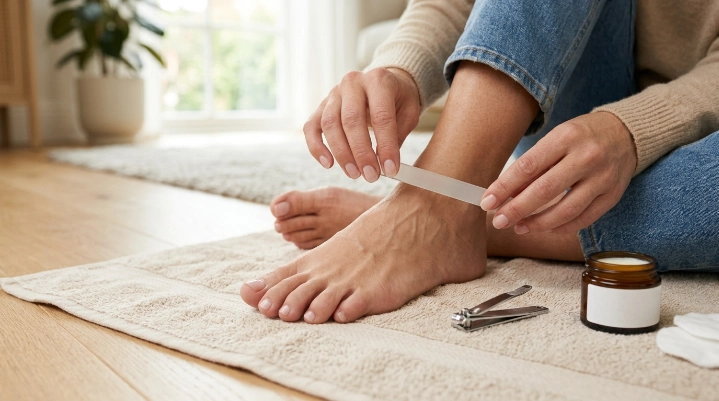
Toenails grow more slowly than fingernails, so it is easy to ignore them until your next salon appointment. However, several weeks of neglect can leave nails longer than is comfortable inside shoes, create rough corners, or allow small problems to become more noticeable.
Regular maintenance also helps you see what your nails actually look like.
When polish stays on continuously, changes in nail color, thickness, texture, or attachment may be harder to notice. Giving your toenails an occasional close look can help you spot problems earlier.
Between-pedicure care is not about creating a salon-perfect result at home. It is about maintaining what you already have without damaging the nail or surrounding skin.
A Simple Toenail Care Routine Between Pedicures
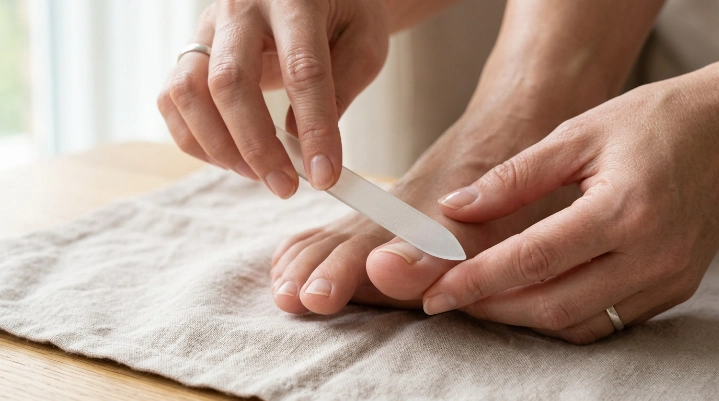
You do not have to work on your toenails every day. A few small habits combined with an occasional maintenance session are usually enough.
1. Wash and Dry Your Feet Carefully
Regular washing removes sweat, dirt, and debris that collect around the toes.
After bathing or showering, dry carefully around and between your toes. Damp environments can encourage fungal growth, especially when your feet spend much of the day inside closed shoes.
The CDC’s foot hygiene guidance also recommends paying attention to cleanliness when receiving professional foot care and choosing salons that properly handle reusable instruments.
You do not need to aggressively scrub around the nail folds. Gentle washing is enough for routine care.
2. Check Nail Length Before Automatically Cutting
Toenails do not need trimming simply because a certain number of days have passed.
Look at the length first.
If the nail extends far beyond the tip of the toe, catches on socks, or feels uncomfortable inside shoes, it may be time for a trim. If the nail is already short and comfortable, leave it alone.
Repeatedly cutting toenails too short can increase the chance of tenderness and ingrown edges.
3. Soften Nails Before Trimming
Thick or hard toenails are often easier to trim after a shower or bath.
The American Academy of Dermatology’s nail-trimming guidance recommends softening nails before clipping and using a toenail clipper for toenails.
Softening the nail does not mean soaking your feet for a long period. A normal shower is often enough.
Before trimming, make sure you have good lighting and can comfortably reach your toes. If you cannot see the nail clearly, do not try to cut blindly.
4. Trim Toenails Straight Across
Toenail shape matters.
Instead of cutting a deep curve into each corner, trim the nail mostly straight across. Leave the nail at a moderate length rather than cutting it down to the skin.
This approach can reduce the chance of the nail edge growing into surrounding tissue. Mayo Clinic also lists cutting toenails too short or rounding the corners as habits associated with ingrown toenails.
Use several controlled cuts rather than forcing a thick nail into one large clip.
If a corner already feels painful or appears embedded in the skin, do not dig underneath it with clippers, scissors, tweezers, or another sharp tool.
5. Smooth Rough Edges With a Nail File
A nail file is one of the most useful tools for maintenance between pedicures.
After trimming, lightly file sharp or uneven edges so they do not snag socks or feel scratchy.
You can also use a file when a toenail does not actually need shortening but has developed one small rough spot.
For natural toenails, good options include:
- Glass or crystal file: Smooth, reusable, washable, and useful for controlled maintenance.
- Emery board: Inexpensive and convenient but wears out faster.
- Traditional metal file: Durable but may feel aggressive on thin or sensitive nails.
- Fine-grit nail file: Helpful when you mainly want to refine an edge rather than remove significant length.
Use light pressure.
The AAD recommends smoothing rough edges and filing in the same direction rather than repeatedly sawing back and forth.
Do not aggressively thin or grind down a thick, discolored, or damaged toenail simply because it looks uneven. Thickening can have several causes, and excessive filing may injure the nail.
6. Leave Your Cuticles Alone
The cuticle is the thin seal of tissue at the base of the nail. It helps protect the area where the nail grows.
It may be tempting to recreate the freshly groomed appearance of a pedicure by cutting away visible cuticle tissue. That is usually unnecessary.
The AAD’s manicure and pedicure safety recommendations advise against cutting or forcefully pushing back cuticles because disrupting this protective barrier can increase the risk of inflammation and infection.
If the area looks dry, moisturize it instead.
7. Moisturize the Nails and Surrounding Skin
Feet can become dry from frequent bathing, cold weather, open-backed shoes, or simply going several weeks without salon care.
Apply a small amount of moisturizer to the tops of the toes, surrounding nail folds, and other dry areas of the feet.
If your nails feel brittle or dry, gently massaging moisturizer around the nail can help keep the area more comfortable.
Avoid leaving heavy moisturizer packed between the toes, especially if that area tends to stay damp.
8. Manage Polish Without Peeling It Off
When pedicure polish starts chipping, resist the urge to peel or scrape it away.
Picking polish off can remove superficial layers from the nail plate and leave the surface rough.
If you want to remove regular polish, use nail polish remover according to the product directions and moisturize afterward.
If you have gel, dip, acrylic, or another enhancement on the toenails, removal may require a specific technique.
Do not aggressively pry, peel, or grind off a professional nail coating. If you are unsure how it was applied, having a nail technician remove it is often safer than experimenting at home.
Helpful Toenail Tool Comparison
You only need a few tools for basic between-pedicure maintenance.
| Tool | Best Use | Cost Level | Maintenance | Main Caution |
|---|---|---|---|---|
| Toenail clipper | Shortening normal toenails | Low | Clean and disinfect regularly | Do not cut extremely short |
| Glass nail file | Smoothing and shaping | Moderate | Wash and dry after use | Handle carefully to prevent breakage |
| Emery board | Occasional filing | Low | Replace when worn or dirty | Difficult to fully disinfect |
| Fine-grit file | Gentle edge refinement | Low–Moderate | Clean if reusable | Avoid aggressive thinning |
| Cuticle oil | Dry nail folds and surrounding skin | Low–Moderate | Keep applicator clean | Do not apply over irritated or infected skin |
| Foot moisturizer | Dry skin around toes and feet | Low–Moderate | Use with clean hands | Avoid excessive moisture between toes |
You do not need an expensive professional pedicure kit for routine maintenance. A good toenail clipper, appropriate file, and moisturizer cover most everyday needs.
How Often Should You File or Trim Toenails?
There is no universal schedule.
Toenail growth varies from person to person, and toenails generally grow more slowly than fingernails.
Instead of trimming weekly automatically, check your nails every week or two and act only when necessary.
You may need to:
- File one rough corner without cutting the nail.
- Trim nails that are beginning to press against shoes.
- Remove old polish so you can inspect the nail.
- Moisturize dry skin more frequently.
- Delay trimming if the nail is already short.
The goal is maintenance, not constant grooming.
Expert Tip:
Expert Tip: Keep a small toenail kit containing only your own clipper and file. Clean reusable tools after use, let them dry completely, and avoid sharing them with other people.
Keep Pedicure Tools Hygienic
A beautiful pedicure is not worth compromising hygiene.
Reusable clippers, scissors, and similar tools should be kept clean. The AAD advises disinfecting nail-trimming tools regularly, while CDC guidance emphasizes proper instrument hygiene in salons.
At home:
- Remove visible nail debris from the tool.
- Follow the manufacturer’s cleaning or disinfection instructions when available.
- Allow tools to dry fully before storing them.
- Store them somewhere clean and dry.
- Do not share personal nail tools.
Disposable emery boards should be replaced when they become worn, dirty, damaged, or difficult to keep clean.
If you have been dealing with a suspected fungal nail infection, be especially careful about tool sharing. The AAD notes that fungi can spread through contaminated grooming items.
What Changes Should You Watch for Between Pedicures?
Removing polish occasionally gives you an opportunity to examine the natural nail.
Pay attention to changes such as:
- Persistent yellow, white, brown, green, or dark discoloration
- Increasing nail thickness
- Crumbling or splitting
- Nail lifting away from the skin underneath
- Swelling around the nail
- Redness or warmth
- Drainage or pus
- Increasing tenderness
- A new or changing dark streak
Not every nail change means something serious. Trauma, tight shoes, polish staining, skin conditions, and infections can all affect how toenails look.
However, the AAD advises having unexplained changes in nail color, shape, texture, or attachment professionally evaluated rather than automatically assuming they are cosmetic.
Fungal infections, for example, can cause discoloration, thickening, brittleness, buildup, or lifting. Those signs can resemble other nail conditions, so diagnosis based only on appearance is unreliable.
What About an Ingrown Toenail?
An ingrown toenail happens when an edge or corner of the nail grows into the surrounding skin.
Early symptoms can include tenderness, inflammation, and swelling.
To reduce the risk, avoid cutting the sides extremely short or carving deep curves into the corners.
The Mayo Clinic’s ingrown toenail guidance recommends trimming toenails straight across, keeping them at a moderate length, and avoiding footwear that crowds the toes.
If an ingrown toenail becomes severely painful, produces pus, or appears to have spreading inflammation, professional medical evaluation is appropriate.
Do not perform your own nail surgery by digging into the corner or cutting deeply into inflamed skin.
DIY Care vs. a Professional Pedicure
Basic maintenance at home can extend the neat appearance of a professional pedicure, but it does not replace every salon service.
At-home care works well for:
- Normal trimming
- Smoothing minor rough edges
- Moisturizing dry skin
- Removing ordinary polish
- Monitoring nail condition
- Maintaining clean personal tools
A nail technician may be more helpful for:
- Neat cosmetic polish application
- Professional removal of certain enhancements
- Hard-to-reach nails when no medical issue is present
- Cosmetic shaping within safe limits
A dermatologist or other appropriate healthcare professional is better for:
- Suspected infection
- Persistent nail discoloration
- Significant thickening or crumbling
- Nail separation
- Painful inflammation
- Recurrent ingrown toenails
- New or unexplained dark nail changes
A nail technician can improve appearance, but a nail salon should not be expected to diagnose or treat a medical nail condition.
When to See a Nail Technician or Dermatologist
Knowing when not to DIY is an important part of safe toenail care.
Consider a nail technician when your nails appear healthy but you need help with cosmetic shaping, polish application, or professional product removal.
Consider a dermatologist, podiatrist, or another appropriate healthcare professional if you have persistent pain, swelling, drainage, nail lifting, major thickening, unexplained discoloration, or a recurring ingrown toenail.
Mayo Clinic advises seeking medical care for severe ingrown-toenail discomfort, pus, or inflammation that appears to be spreading.
People with diabetes, reduced circulation, nerve problems affecting the feet, or other conditions that increase the consequences of foot injuries should be particularly cautious about self-treating nail problems. Mayo Clinic notes that poor blood flow can increase the risk of complications from an ingrown toenail.
If you are unsure whether a nail problem is cosmetic or medical, have it evaluated before filing, cutting, scraping, or covering it with polish.
Common Mistakes to Avoid
Even simple toenail maintenance can cause trouble when you overdo it.
Avoid these common mistakes:
- Cutting toenails extremely short. Leave enough nail to protect the end of the toe.
- Rounding deeply into the corners. Straight-across trimming is generally preferred for toenails.
- Sawing aggressively with a nail file. Use controlled, gentle strokes.
- Using a coarse file to thin a suspicious thick nail. Thickening may need professional evaluation.
- Cutting your cuticles. They help protect the nail area from germs.
- Sharing clippers or files. Personal grooming tools can spread infectious organisms.
- Peeling off polish or enhancements. This can damage the nail surface.
- Ignoring persistent pain or swelling. Cosmetic grooming should not be used to cover a possible infection.
- Keeping polish on indefinitely. Periodic inspection lets you notice changes in the natural nail.
- Using dirty salon or home tools. Hygiene is part of nail care, not an optional extra.
FAQs
How do I keep my toenails looking good between pedicures?
Keep them clean, trim only when necessary, file small rough edges, moisturize dry skin around the nails, and touch up or remove chipped polish appropriately. Avoid over-trimming or cutting the cuticles.
How often should I trim my toenails?
Trim according to nail growth rather than following a strict schedule. Check them regularly and trim when they become long enough to catch, press against footwear, or become uncomfortable.
Is it okay to file toenails between pedicures?
Yes. Gentle filing is useful for smoothing rough or sharp edges. Use a clean file and avoid aggressively thinning the entire nail, especially if the nail is thick, painful, discolored, or damaged.
What type of nail file is best for toenails?
A glass file or fine-grit file is a good choice for routine smoothing. Emery boards are inexpensive and convenient but need replacement more frequently. The best option is one that gives you controlled filing without forcing you to use heavy pressure.
Should I cut my toenail cuticles?
Usually no. Cuticles act as a protective barrier around the nail. Cutting or aggressively pushing them back can make it easier for irritation or infection to develop.
Should toenails get a break from polish?
You do not necessarily need a rigid polish-free schedule, but removing polish periodically makes it easier to inspect your natural toenails for discoloration, lifting, thickening, or other changes.
Can I fix a thick or discolored toenail by filing it down?
Do not assume that filing fixes the underlying problem. Nail fungus and other conditions can cause thickening or discoloration, and several nail conditions can look similar. A persistent change is better evaluated professionally.
Conclusion
Learning how to care for toenails between pedicures does not require an elaborate foot-care routine.
Keep your feet clean and dry, trim toenails straight across when they genuinely need shortening, smooth minor roughness with a clean nail file, moisturize dry skin, protect the cuticles, and maintain hygienic tools.
Most importantly, pay attention to what your natural nails are telling you. Pain, swelling, drainage, persistent discoloration, thickening, lifting, or unusual changes should not simply be filed down or covered with another coat of polish.
Use home care for normal maintenance, rely on a qualified nail technician for cosmetic services, and involve a dermatologist or other healthcare professional when the problem moves beyond beauty care.
Your next pedicure should be a finishing touch—not the first time in weeks that you have checked on your toenail health.

