
How to Choose the Right Nail Polish: A Beginner-Friendly Guide

Picking nail polish should feel simple, not stressful. If you are new to polish, the easiest way to narrow things down is to focus on three things first: formula, finish, and color. Those three choices do most of the work for you.
I’m Ella Hart, a licensed nail technician and beauty educator, and I like to tell beginners this: the “best” polish is not the one with the loudest trend label. It is the one that fits your skill level, your nail condition, and how you want your manicure to look and wear.
Start Here: The 3 Things That Matter Most
Before you buy anything, ask yourself three quick questions:
- How easy do I want this to be to apply and remove?
- What look do I want on my nails?
- How long do I need it to last?
That simple filter keeps you from buying a polish that looks pretty in the bottle but frustrates you later. For example, if you want your first manicure to be low-stress, a regular cream polish in a neutral shade is usually easier to handle than a long-wear formula with a dramatic finish.
A helpful rule: choose the formula first, then the finish, then the color. Beginners often do the opposite and end up with a shade they love but a polish type that is hard to use.
Choose the Right Formula for Your Skill Level and Wear Time
The formula matters because it affects how the polish feels to apply, how long it wears, and how easy it is to remove.
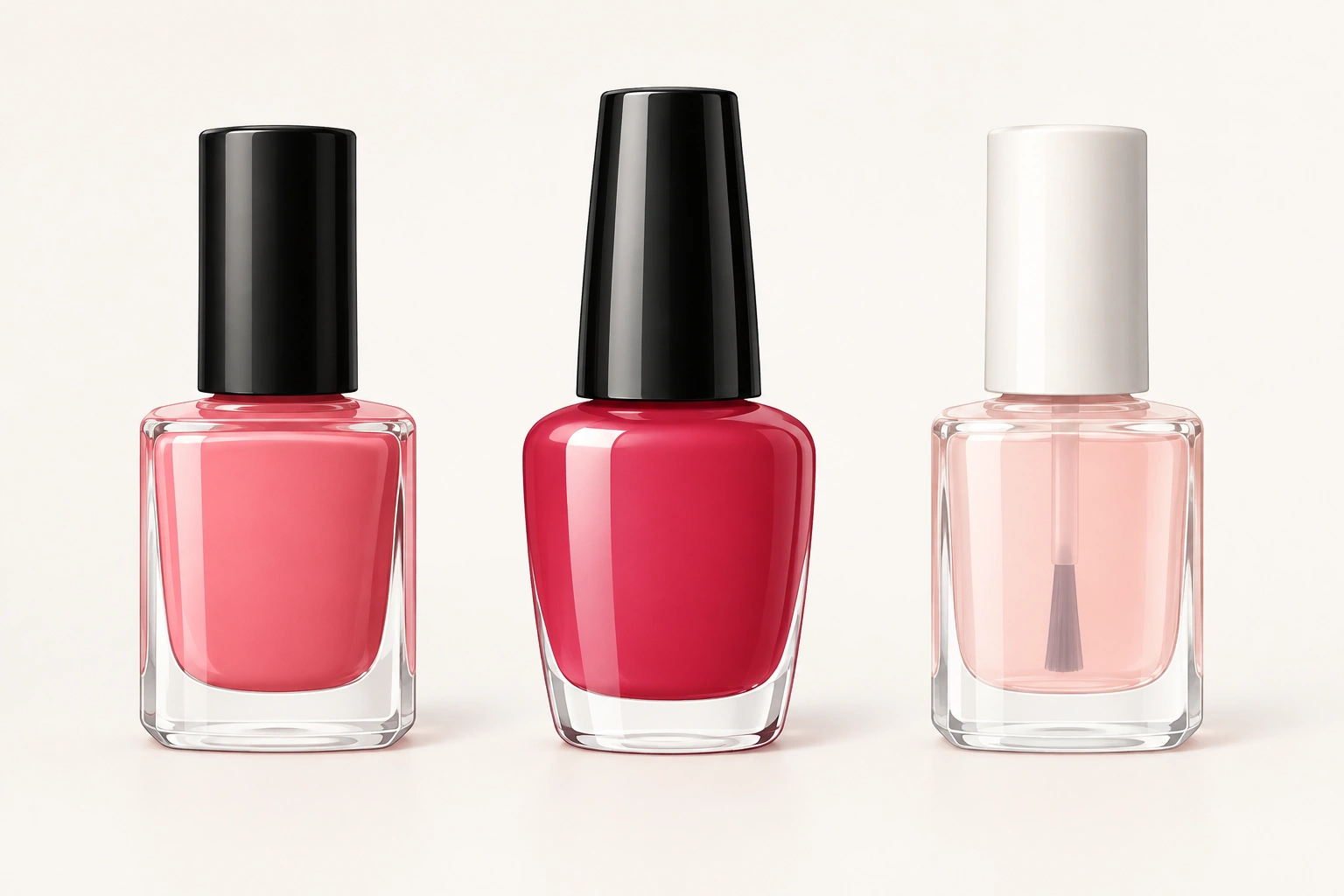
| Polish type | Best for | Application | Removal | Wear time |
|---|---|---|---|---|
| Regular nail polish | Beginners, everyday use | Easy | Easy | Shorter than gel |
| Gel polish | Longer wear, more durable finish | More involved | More involved | Often longer-lasting |
| Breathable polish | People who want a gentler-feeling everyday option | Usually simple | Usually simple | Varies by brand |
If you only want one polish to start with, buy this
If this is your first bottle, choose regular nail polish in a cream or glossy finish, with a neutral shade that is not too sheer or too dark. That combination is usually the easiest to apply, easiest to remove, and least likely to highlight small mistakes while you learn.
If your nails are very short, uneven, or still growing out, a slightly sheer or medium-opacity cream polish can be even more forgiving than a fully opaque dark color. If your nails are longer or more squared off, you may find opaque shades easier because there is more surface area to paint cleanly.
Regular nail polish
Regular polish is the easiest place to start. It is familiar, forgiving, and widely available. If you are learning, this is often the least intimidating option because you can practice without committing to a more complicated removal process.
Regular polish also gives you the most flexibility. You can try different colors and finishes without feeling locked in.
Gel polish
Gel polish is usually chosen when wear time matters more than convenience. It tends to require a more specific routine and removal process than regular polish, so it is not always the easiest first choice for beginners.
If you love the idea of a polished look that stays fresh longer, gel may appeal to you. If you want something simple to take off at home, regular polish is usually the easier route.
Breathable polish
Breathable polish is often marketed as an everyday option, but the term itself is not a guarantee of better performance or gentler ingredients. If your nails are sensitive or you want a simpler-feeling formula, it may be worth considering, but check the actual product details rather than relying on the label alone.
The main thing to remember is that labels like “breathable” can vary by brand, so read the product description carefully instead of assuming every version works the same way.
If you want to compare polish types in a broader beauty context, Essie’s color finder is a useful place to see how shade families and polish types are often organized.
Pick a Finish That Matches the Look You Want
Finish changes the whole mood of a manicure, even when the color is the same.
Cream and glossy finishes
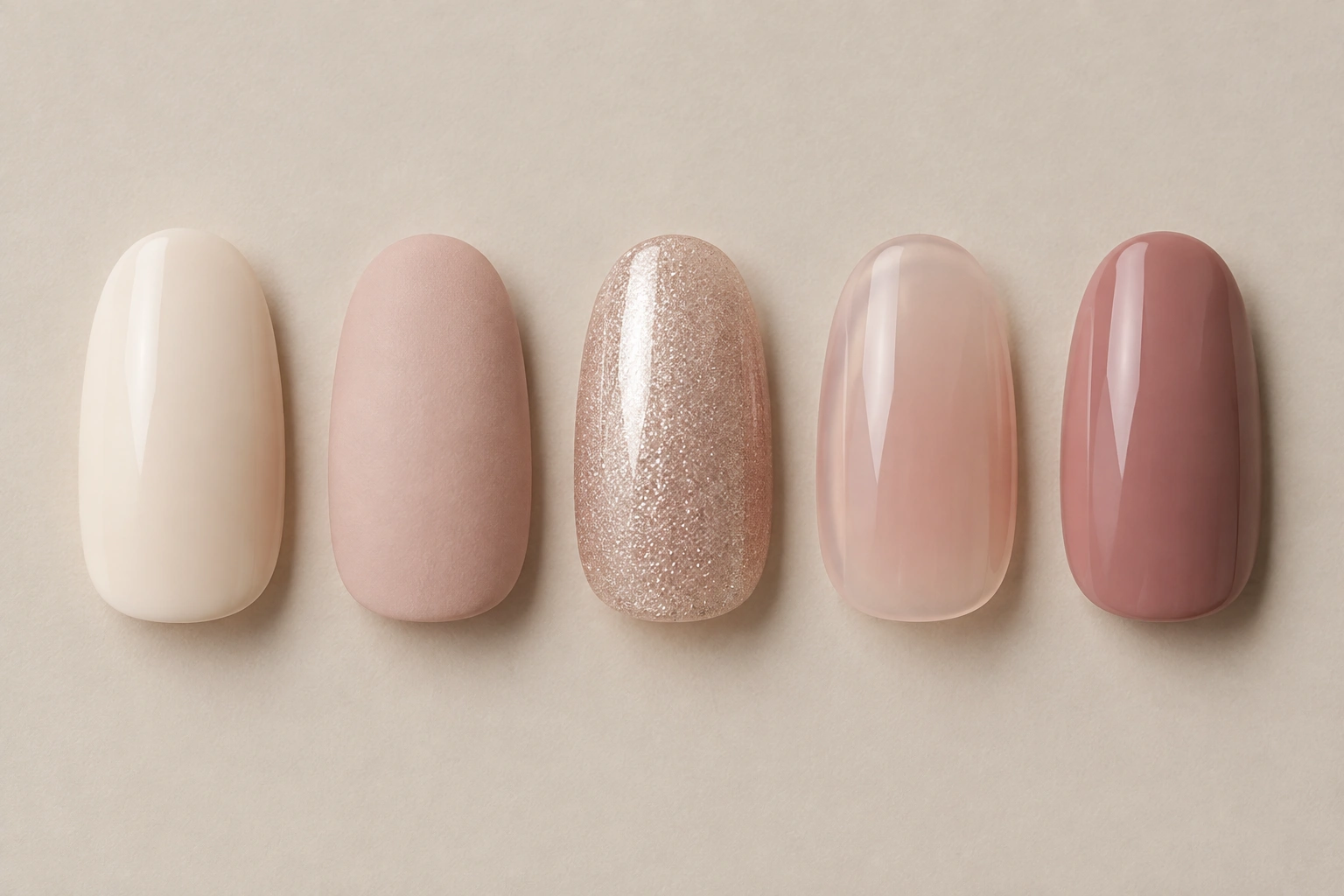
Cream finishes are smooth and classic. They usually give a clean, even look that works well for beginners because they are easy to understand and style. Glossy finishes add shine and make polish look fresh and polished.
If you are unsure what to buy first, a cream or glossy finish is the safest choice. It is versatile, easy to wear, and works for everyday life.
Matte finish
Matte polish gives a softer, flatter look with no shine. It can look modern and stylish, but it also shows texture more easily than glossy polish. If your nails are uneven or you are still learning application, matte may highlight small mistakes more than a shiny finish would.
Shimmer finish
Shimmer has fine reflective particles that catch the light. It is a nice choice if you want something a little more interesting than a plain cream shade without going full glitter.
Shimmer can also be forgiving on nails because the light reflection can help disguise small streaks.
Sheer vs. opaque
Sheer polish gives a lighter wash of color, while opaque polish covers the nail more fully.
If you want a subtle, low-risk first manicure, sheer polish is a smart pick. If you want stronger color payoff in fewer coats, opaque polish is the better choice. For beginners, sheer shades can be easier to live with because they are less likely to look harsh if the application is not perfect.
A few quality signals matter here too: a good formula should spread smoothly, not feel stringy or overly thick, and should cover evenly across coats. Brush shape matters as well. A flatter, wider brush can make application easier for some beginners, while a smaller brush may feel more precise on shorter nails.
How to Choose a Color That Suits You
Color choice gets easier when you stop thinking about trends and start thinking about what actually flatters your skin and fits your life.
A cautious starting point: different skin tones often suit different kinds of contrast and depth, but there is no fixed rule. Try a few examples and see what looks best in natural light.
- Light skin tones: soft pinks, sheer nudes, rosy beige, classic red, and muted berry shades are often easy starting points.
- Medium skin tones: coral, rose, mauve, teal, berry red, and metallic gold can be good places to experiment, but lighter or brighter shades can work too depending on undertone and preference.
- Deep skin tones: rich berry, plum, chocolate brown, bright fuchsia, cobalt, and metallic shades often show up beautifully; soft nudes can also work if they have enough depth.
That said, these are starting points, not rules. If a color makes you feel confident, that matters.
Use undertone as a shortcut
If you know your undertone, it can help narrow your options:
- Warm undertones: coral, peach, warm nude, golden tones
- Cool undertones: berry, mauve, blue-red, pink-based shades
- Neutral undertones: many shades can work, so you can experiment more freely
If you are not sure of your undertone, try one simple test: hold a few nail polish bottles near your hand in natural light and see which shades make your skin look brighter instead of washed out.
Match color to your style and setting
A color does not have to “flatter” your skin in a dramatic way to be a good choice. It just needs to feel right for how you dress and where you will wear it.
Soft nudes and pinks are often easier for professional settings, while bold reds and blues can feel more fitting for special occasions. If you like matching your nails to your wardrobe or jewelry, that is a practical way to narrow things down too.
Seasonal choices can help if you enjoy variety: pastels in spring, neons in summer, deep shades in fall, and glitter in winter are common style directions. You can always use those as inspiration rather than rules.
Match the Polish to Your Nail Condition
Your nails matter just as much as your color choice.
If your nails are weak, brittle, peeling, or prone to chipping, choose polish that is easier to remove and less likely to tempt you into rough scraping later. A simple regular polish is often a better beginner choice than a more stubborn formula.
Here is a practical way to think about it:
- Weak or brittle nails: choose a gentler, easier-to-remove formula
- Damaged nails: avoid anything that requires aggressive removal
- Peeling nails: look for a forgiving formula and keep the manicure simple
- Healthy, strong nails: you can experiment more freely
A good base coat can also help create a smoother surface for polish and may help reduce staining. One practical approach is to use a clear base coat, apply thin layers, and finish with a clear top coat for a smoother manicure.
Decide How Long You Need It to Last
This is where beginners often overbuy. A polish that lasts longer is not automatically the best polish if it is hard to apply or remove.
Long-wear formulas
Long-wear formulas are useful if you want a manicure to stay neat for longer without frequent touch-ups. They are a good fit for busy weeks, travel, or events where you do not want to redo your nails often.
The trade-off is usually removal and sometimes application complexity. If you are brand new to polish, that extra effort may not be worth it for your first bottle.
Quick-dry formulas
Quick-dry polish is helpful when time is limited. If you need to paint your nails before work, class, or an event, this type can make the process feel much easier.
The trade-off is that quick-dry does not always mean longest-lasting. If speed matters most, it is a strong choice. If durability matters most, you may want to lean toward a more wear-focused formula.
A simple decision rule
Choose quick-dry when you care most about speed.
Choose long-wear when you care most about staying power.
Choose regular polish when you want the easiest beginner experience.
Read Labels Without Getting Overwhelmed
Polish labels can sound more complicated than they are. The most useful labels are the ones that tell you about formula behavior, while some others are mostly marketing shorthand.
Labels that matter most
- Quick-dry: helpful if you want faster drying time
- Long-wear / chip-resistant: useful if you care about staying power, though results vary
- Sheer / opaque / cream / matte / shimmer: these tell you the actual finish or coverage level
- Base coat / top coat compatible: useful if the polish needs a specific routine
Ingredient and packaging claims you may see
- 3-free / 5-free / 10-free: these usually mean the formula leaves out certain ingredients some shoppers prefer to avoid. The exact ingredients can vary by brand, so the number alone is not a complete quality measure.
- Vegan: means no animal-derived ingredients are used, but it does not automatically tell you how well the polish performs.
- Cruelty-free: usually refers to animal testing policies, not formula quality.
- Non-toxic: this term is broad and not very specific on its own, so it is better treated as a marketing claim unless the brand explains exactly what it means.
If you have sensitivities or a strong ingredient preference, the ingredient list matters more than the front-of-bottle slogan.
If you have questions about ingredients or irritation, the FDA’s cosmetics information is a reliable place to learn how cosmetic labeling and safety claims are generally handled.
Choose Polish for Everyday Wear, Work, or Special Occasions
The best polish for a work week is not always the best polish for a party.
Everyday wear
For daily use, neutral creams, soft pinks, and muted shades are easy to pair with most outfits. They also tend to be less stressful if your manicure chips a little, because the wear is less noticeable than with a bright neon or high-contrast color.
Work
If you want something office-friendly, soft nudes, pale pinks, and classic muted tones usually feel safe and polished. A glossy finish keeps the look clean without drawing too much attention.
Special occasions
Special events are where bold reds, deep blues, metallics, shimmer, and darker shades can shine. If you want your nails to stand out, this is the time to choose a more dramatic color or finish.
A simple style tip: if your outfit is already busy, choose a quieter nail color. If your clothes are simple, your nails can carry more of the visual interest.
Common Beginner Mistakes to Avoid
A few small mistakes cause most first-time polish disappointments.
Buying only because a color is trendy
Trendy shades can be fun, but they are not always the easiest first purchase. A color that looks great in photos may feel wrong on your hands or be harder to wear in everyday life.
Ignoring removal
Some formulas are easy to remove, others are not. If you are new to polish, choose a formula you can actually take off without frustration.
Choosing a finish without knowing the effect
A matte polish looks very different from a glossy cream shade. If you want a classic manicure, buy for that effect instead of assuming all finishes will look similar.
Skipping base coat and top coat when durability matters
If you want better wear, base coat and top coat matter. A clear base coat can help create a smoother surface and reduce staining, while a top coat helps seal the color. How often you reapply top coat depends on your routine and the product.
Picking a very pale shade when you want strong color
Very pale shades can look sheer or faint on some skin tones. If you want visible color, choose something with more pigment or opacity.
Simple Beginner Checklist Before You Buy
Use this quick checklist before you add a polish to your cart:
- Do I want easy application or longer wear?
- Is this for everyday use, work, or a special occasion?
- Do I want sheer coverage or opaque color?
- Do I prefer glossy, matte, cream, or shimmer?
- Does the shade work with my undertone and style?
- Is the formula easy enough for me to remove at home?
- Are my nails weak, brittle, or damaged in a way that should change my choice?
- Do I need a base coat and top coat with it?
If you can answer those questions before buying, you are already ahead of most first-time shoppers.
If this, then buy that
- If you want the simplest first polish: buy regular nail polish in a cream or glossy neutral.
- If you want low effort and a forgiving look: choose sheer to medium-opacity color.
- If you want longer wear and do not mind extra removal steps: consider gel or long-wear polish.
- If your nails are fragile or peeling: stick with an easy-to-remove regular formula and keep the color simple.
- If you are unsure about color: start with a shade close to your natural lip color or a soft nude that matches your undertone.
When to See a Nail Technician or Dermatologist
If your nails are lifting, painful, very brittle, discolored, or reacting badly to products, it is worth speaking with a professional. A nail technician can help you choose a more suitable polish routine, and a dermatologist can check whether irritation or nail changes need medical attention.
FAQ
What is the easiest nail polish for beginners?
Regular nail polish is usually the easiest starting point because it is simple to apply and remove. A cream or glossy finish in a neutral shade is a practical first pick.
Is gel polish better than regular polish?
Not always. Gel polish may last longer, but it can be more involved to apply and remove. Regular polish is often better for beginners who want a simpler routine.
What nail polish color is most flattering?
There is no single best color for everyone. A flattering shade usually works with your undertone, your style, and the setting you will wear it in.
Should I choose sheer or opaque polish?
Choose sheer if you want a soft, forgiving look. Choose opaque if you want stronger color payoff and more coverage.
What does quick-dry really mean?
It usually means the polish is designed to dry faster than a classic formula. It can save time, but it does not always mean the manicure is fully set right away.
How do I know if a polish is good quality?
Look for a formula that applies smoothly, covers evenly across coats, and fits your routine. Brush shape, thickness, opacity, and how easy it is to remove are often more useful quality signals than a marketing claim on the front of the bottle.
Can weak nails wear nail polish?
Usually yes, but it is smart to choose a gentler, easier-to-remove formula and avoid rough removal. If your nails are very damaged or painful, get advice from a professional first.
What should I buy first if this is my first polish?
A regular polish in a neutral cream or glossy finish is a solid first choice. It gives you room to learn without making the process too complicated.

