
How to Clean Under Your Toenails Safely at Home

Dirt, sock lint, dead skin, and product residue can easily collect beneath your toenails. While it may be tempting to grab a sharp tool and dig everything out, aggressive cleaning can irritate the sensitive skin beneath the nail or even cause the nail to start separating from the nail bed.
Learning how to clean under your toenails safely is much simpler than it sounds. For most healthy toenails, warm water, mild soap, a soft nail brush, clean tools, and a little patience are all you need.
Below, you’ll learn the safest step-by-step method, which tools work well, what to avoid, how often to clean your toenails, and when buildup under a nail may actually be a sign that you should see a professional.
Quick Answer
To clean under your toenails, wash or soak your feet in warm water with mild soap, then gently brush beneath the exposed free edge of each nail with a soft nail brush. Rinse well and dry thoroughly. Never dig deeply beneath the nail with sharp or pointed tools, because this can cause injury or infection.
Why Does Dirt Build Up Under Toenails?
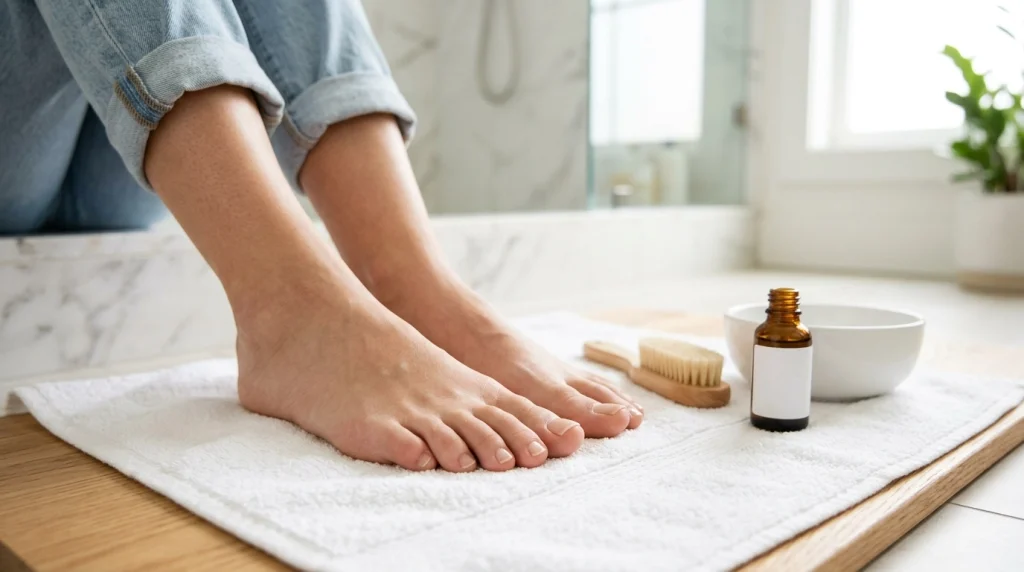
A little material under your toenails is normal. Your feet spend hours inside socks and shoes, where heat, sweat, fabric fibers, and dead skin can collect around the nail edges.
Common causes of visible buildup include:
- Sock lint and fabric fibers
- Dead skin cells
- Sweat mixed with everyday dirt
- Dust or soil from walking barefoot
- Residue from nail polish or foot products
- Debris trapped beneath longer toenails
People who exercise frequently, wear closed shoes all day, garden barefoot, or have longer toenails may notice buildup more often.
The goal is not to make the space beneath your toenails perfectly empty. Over-cleaning can cause more problems than a small amount of harmless debris.
The CDC’s guidance on foot hygiene recommends washing feet regularly, drying them completely, keeping toenails clean, and checking the feet for changes such as sores, swelling, or infected nails.
If you want a broader routine for the entire nail and surrounding skin, NailPrime’s guide to cleaning your toenails properly explains the complete process.
What You Need to Clean Under Your Toenails
You don’t need expensive pedicure equipment.
For basic at-home cleaning, gather:
| Tool | What It’s For | Best Choice |
|---|---|---|
| Mild soap | Loosens oil and everyday dirt | Fragrance-free if your skin is sensitive |
| Warm water | Softens nails and debris | Warm, not very hot |
| Soft nail brush | Removes surface debris | Soft or medium-soft bristles |
| Toenail clippers | Keeps nails manageable | Clean, sharp toenail clippers |
| Nail file | Smooths rough edges | Fine or medium-grit file |
| Clean towel | Thorough drying | Fresh, dry towel |
| Moisturizer | Helps dry surrounding skin | Simple fragrance-free lotion |
You normally do not need a metal scraper, needle, knife, safety pin, or other sharp object.
The NHS specifically advises against cleaning under nails with sharp objects because doing so may damage the nail or surrounding tissue.
How to Clean Under Your Toenails: Step by Step
1. Wash Your Hands and Clean Your Tools
Before touching your feet, wash your hands.
Make sure your clippers, nail brush, and file are clean as well. Nail tools can collect skin debris and microorganisms between uses.
The American Academy of Dermatology recommends keeping nail grooming tools clean and disinfecting clippers regularly.
If you share a bathroom with other people, it is better to keep your personal nail tools separate.
2. Soften Your Toenails With Warm Water
Cleaning is easier after a shower or bath because the nails and buildup have already softened.
Otherwise, place your feet in comfortably warm water for around 5 to 10 minutes.
You can add a small amount of mild soap.
Avoid extremely hot water, especially if you have dry or sensitive skin.
Softening the debris means you can remove it with less pressure.
3. Wash the Tops, Sides, and Toe Area
Apply mild soap to your feet.
Clean:
- The tops of the toes
- Around each nail
- Between the toes
- Along the nail edges
- The skin beneath the exposed nail tip
You don’t need to force soap far underneath the nail.
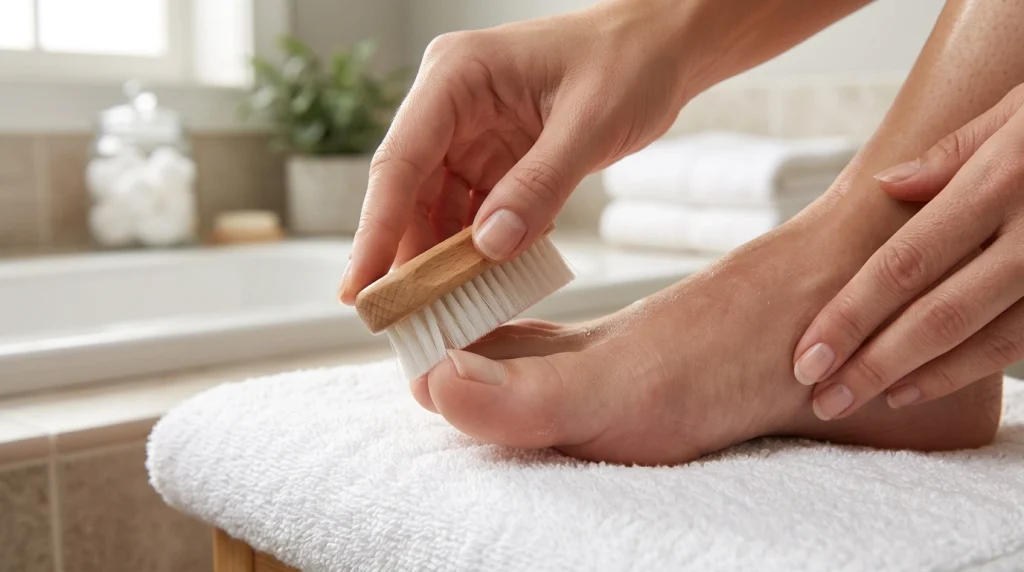
4. Gently Brush Beneath the Free Edge
The free edge is the part of your toenail that extends beyond the skin.
Wet a soft nail brush and gently brush underneath that exposed edge.
Use light strokes.
If something does not come out easily, don’t immediately start digging at it.
Continue soaking for another few minutes and try again.
A soft brush is generally safer than using pointed metal tools because you’re less likely to damage the skin under the nail.
If your main concern is stubborn visible buildup, see NailPrime’s guide to removing dirt from under toenails safely for additional cleaning tips.
5. Don’t Push Deeply Under the Nail
This is one of the most important parts of learning how to clean under your toenails.
The nail is attached to sensitive tissue underneath. Digging repeatedly beneath it can cause irritation, tenderness, bleeding, or separation between the nail plate and nail bed.
The American Academy of Dermatology notes that cleaning beneath a nail with a sharp object can contribute to nail lifting.
Only clean beneath the portion of the nail you can access easily.
If reaching the debris requires force, stop.
6. Rinse Thoroughly
Rinse away soap and loosened debris with clean water.
Check each nail.
If a small amount of discoloration or material remains beneath the nail, don’t assume you need to scrape harder. Sometimes what appears to be dirt is actually part of the nail or skin.
7. Dry Your Feet Completely
Drying is just as important as washing.
Use a clean towel and carefully dry:
- The nail surface
- Around the nail folds
- Between every toe
- The bottoms of your feet
Fungi thrive in warm, damp environments. The CDC recommends keeping the feet and toes clean and dry as part of preventing or controlling common fungal foot problems.
8. Trim Your Toenails When Needed
Longer toenails can trap more debris.
If your nails need trimming, cut them straight across rather than deeply rounding the corners.
This approach can help reduce the risk of ingrown toenails.
The American Academy of Dermatology recommends trimming toenails straight across, while Mayo Clinic notes that cutting them too short or rounding the corners can contribute to ingrown nails.
Do not trim so short that the skin beneath the nail becomes exposed or painful.
Expert Tip
Expert Tip: Clean what comes away easily after washing or soaking. If debris seems firmly attached underneath the nail, repeated scraping is usually not the answer. Give the nail time to grow out or have it evaluated if the appearance seems unusual.
How Often Should You Clean Under Your Toenails?
For most people, washing the feet daily is enough.
You do not have to aggressively scrub beneath every toenail every day.
A practical routine is:
- Wash your feet daily.
- Dry carefully after bathing.
- Lightly brush beneath the nail edge when visible debris appears.
- Trim nails as needed.
- Clean your nail tools regularly.
- Change into clean socks daily.
For a more detailed schedule, NailPrime’s guide on how often you should clean your toenails explains how to balance hygiene with avoiding unnecessary over-cleaning.
If you regularly get professional pedicures, maintaining these simple habits can also help your feet stay fresh between appointments. See our advice on keeping toenails clean between pedicures.
Should You Use a Nail Cleaner or Pedicure Tool?
A rounded nail-cleaning tool may sometimes help remove loose material near the visible edge, but it needs to be used very carefully.
A soft brush is the safer first option for most people.
Soft Nail Brush
Best for: Regular cleaning
Benefits:
- Inexpensive
- Gentle
- Easy to use
- Reusable
Limitation:
It may not remove hard or compacted debris immediately.
Wooden Manicure Stick
Best for: Very light cleaning near an accessible edge
It should never be forced deeply underneath the nail.
Stop immediately if you feel pain or resistance.
Metal Nail Cleaner
Best for: Usually unnecessary for routine DIY cleaning
Because a metal tool is rigid, it is easier to apply too much pressure and injure the skin underneath the nail.
If you use one, keep it at the visible free edge rather than pushing deeply underneath.
Electric Nail Drill
An electric drill is not necessary for ordinary under-nail cleaning.
Using one beneath a natural toenail can thin, heat, or injure the nail if you don’t have proper training.
For basic hygiene, simpler tools are usually safer.
What If the Dirt Won’t Come Out?
Sometimes dark, yellow, white, or crumbly material beneath a toenail isn’t ordinary dirt.
Possible explanations can include:
- Dead skin or keratin buildup
- Dried blood from an older injury
- Nail polish staining
- Nail lifting
- Fungal nail changes
- Thickened nail material
Do not repeatedly scrape harder because something looks dirty.
Fungal nail infections, for example, may make toenails thick, brittle, crumbly, or discolored. The NHS notes that fungal nail infections commonly affect toenails and can make them thicker or change their color.
If cleaning does not change the appearance, think of the problem as a possible nail change rather than simply poor hygiene.
How to Keep Toenails Cleaner Longer
A few everyday habits make a noticeable difference.
Wear Clean Socks
Change socks every day and after workouts if they become sweaty.
Let Shoes Dry
Try not to repeatedly wear damp shoes.
Alternating pairs can give footwear more time to dry.
Wear Breathable Shoes
Shoes that allow some airflow can reduce the warm, damp environment that fungi prefer.
Wear Footwear in Shared Wet Areas
Public showers, locker rooms, and pool areas can expose feet to fungi.
The CDC recommends protective footwear such as sandals in shared public shower and locker-room areas.
Keep Nails a Practical Length
Toenails don’t need to be extremely short, but very long nails provide more space for lint and debris to collect.
Keep Pedicure Tools Personal and Clean
Avoid casually sharing nail clippers, files, or similar tools.
If you receive salon pedicures, choose a salon that follows proper sanitation practices.
Common Mistakes to Avoid
Even a simple hygiene routine can become damaging if you’re too aggressive.
Avoid these common mistakes:
- Digging with sharp objects. Pins, needles, scissors, knives, and other pointed objects can injure the skin beneath the nail.
- Scraping until the nail hurts. Pain is a sign to stop, not a sign that you need more pressure.
- Cleaning too deeply. Focus on debris near the exposed free edge.
- Using harsh household chemicals. Bleach and strong cleaners do not belong underneath your toenails.
- Cutting nails extremely short. This can irritate the toe and contribute to nail problems.
- Rounding the corners deeply. Toenails are generally safer trimmed straight across.
- Ignoring moisture. Leaving feet damp after washing can encourage fungal growth.
- Sharing nail tools. Keep personal grooming tools clean and separate.
- Assuming every dark spot is dirt. Persistent discoloration deserves closer attention.
DIY Cleaning vs. Professional Foot Care
| Situation | DIY Care May Be Reasonable | Professional Advice Is Better |
|---|---|---|
| Ordinary sock lint | Yes | Usually unnecessary |
| Light surface dirt | Yes | Usually unnecessary |
| Mild dead skin buildup | Usually | If persistent or painful |
| Very thick nails | Sometimes difficult | Nail technician or podiatrist may help |
| Nail turning yellow or crumbly | Cleaning won’t treat the cause | Consider medical evaluation |
| Pain or swelling | Avoid aggressive cleaning | Healthcare professional |
| Pus or spreading redness | No | Medical evaluation |
| Nail lifting significantly | Avoid digging underneath | Dermatologist or other clinician |
| Diabetes or poor foot circulation | Extra caution needed | Ask your healthcare professional |
A nail technician can help with cosmetic nail maintenance and trimming in appropriate situations, but suspected infections and unexplained nail changes are medical issues rather than salon problems.
When to See a Nail Technician or Dermatologist
DIY cleaning has limits.
Consider professional help if you notice:
- Increasing pain
- Redness or swelling
- Warm skin around the nail
- Pus or drainage
- Significant nail lifting
- Persistent green, dark, yellow, or unusual discoloration
- A nail becoming increasingly thick or crumbly
- Repeated ingrown toenails
- Bleeding beneath or around the nail
- A nail change with no clear cause
The American Academy of Dermatology recommends having unexplained nail lifting and certain other significant nail changes examined.
If you have diabetes, reduced circulation, decreased feeling in your feet, or another condition that affects wound healing, be especially cautious about DIY foot care. Mayo Clinic advises people with diabetes or poor blood flow to seek medical care when foot sores or infections develop.
A professional pedicure should not replace medical evaluation for a suspected infection.
FAQs
What is the safest way to clean under toenails?
Soften your feet with warm water and mild soap, then use a soft nail brush to gently remove loose debris near the exposed nail edge. Rinse and dry thoroughly afterward.
Can I use a toothpick to clean under my toenails?
It is better not to. A toothpick can be pointed enough to scratch or puncture sensitive skin beneath the nail. A soft nail brush is a safer first choice.
Why is there white stuff under my toenails?
White material may simply be dead skin or keratin buildup, but persistent changes can also occur with nail conditions. If it doesn’t wash away or the nail becomes thick, crumbly, painful, or discolored, consider having it evaluated.
Why does dirt keep getting under my toenails?
Longer nails, closed shoes, sweaty feet, fabric lint, walking barefoot, and everyday dead skin can all contribute. Regular washing and keeping nails at a practical length usually reduce buildup.
Should I clean underneath my toenails every day?
Daily foot washing is a good habit, but deep under-nail cleaning is usually unnecessary. Gently clean visible buildup when needed instead of aggressively scraping beneath the nails every day.
Can hydrogen peroxide clean under toenails?
For ordinary dirt, you generally don’t need it. Mild soap and water are usually enough and are less likely to irritate sensitive skin. Do not rely on household antiseptics to treat an unexplained nail problem.
How do I know whether the material under my toenail is fungus or dirt?
Ordinary dirt usually loosens with washing. Fungal nail changes may persist and can make the nail thicker, brittle, crumbly, or discolored. A healthcare professional may need to examine or test the nail to determine the cause.
Conclusion
Learning how to clean under your toenails is mostly about being gentle.
Start with warm water and mild soap, soften the debris, use a soft nail brush around the exposed edges, rinse well, and dry your feet thoroughly. Keep your toenails trimmed straight across and your grooming tools clean.
Most importantly, don’t dig underneath a nail just because something won’t immediately come out. Persistent discoloration, thickness, pain, swelling, nail lifting, or crumbly material may need professional attention rather than stronger scrubbing.
A simple, consistent routine is usually the smartest way to keep your toenails looking clean while protecting the delicate skin and nail structure underneath.

