
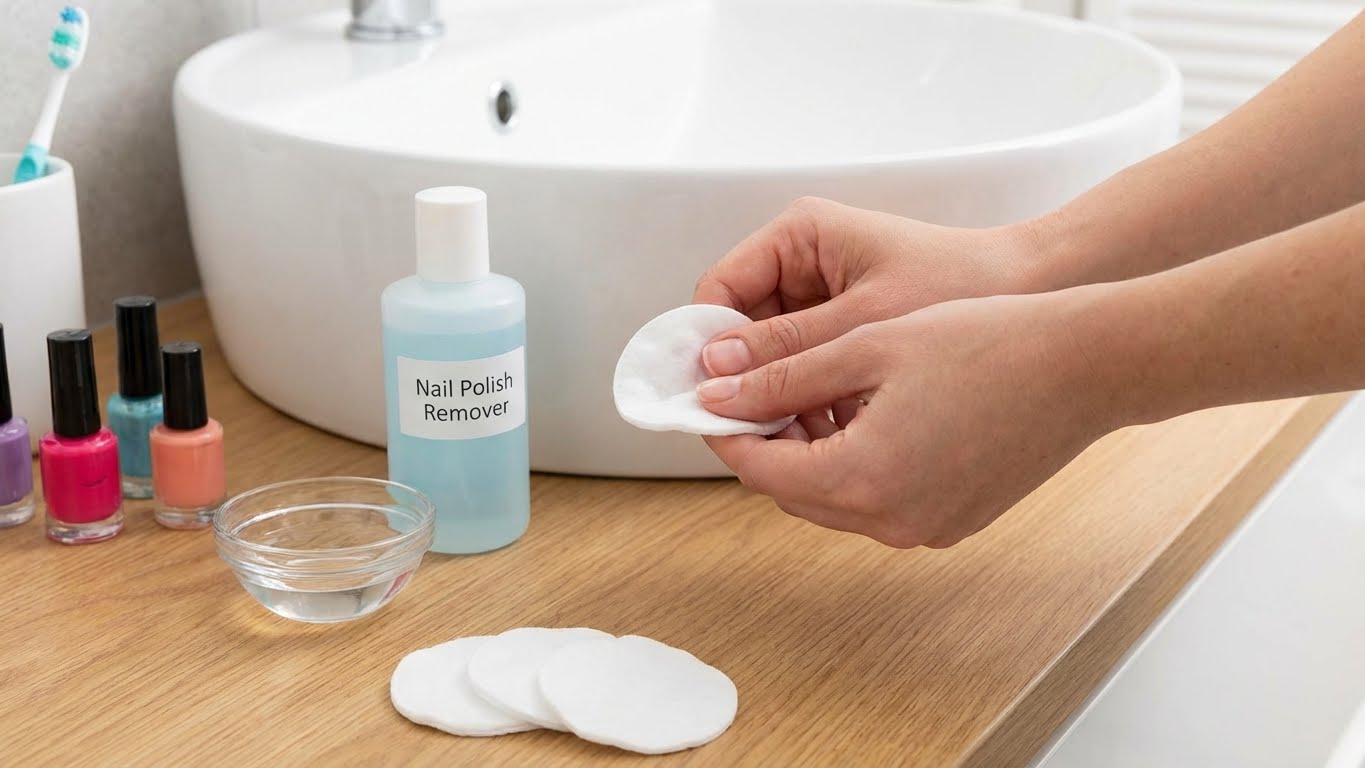
Removing clear nail polish is simple when you know the right steps and tools to use. The most effective way to remove clear nail polish is by using an acetone-based remover or gentle alternatives that suit your nail type. Acting quickly helps avoid buildup and keeps nails healthy.
Many think clear polish is easy to ignore, but it still needs proper removal to prevent damage or residue. Different methods work depending on the polish type and your nail sensitivity. This guide covers useful techniques from traditional removers to gentle at-home solutions.
Understanding how to cleanly and safely remove clear nail polish can save time and protect nail health. Knowing what to do when polish is stubborn or on delicate nails makes the process easier and more effective.
Key Takeways
- Using the right remover is key to effective polish removal.
- Gentle methods help protect sensitive nails.
- Quick and careful removal keeps nails healthy and clean.
Essential Tools and Supplies
Clearing nail polish requires a few key items to protect nails and skin while ensuring the polish comes off cleanly and efficiently. Using the right remover, applying it with proper tools, and taking precautions to protect skin are all important steps.
Nail Polish Remover Options
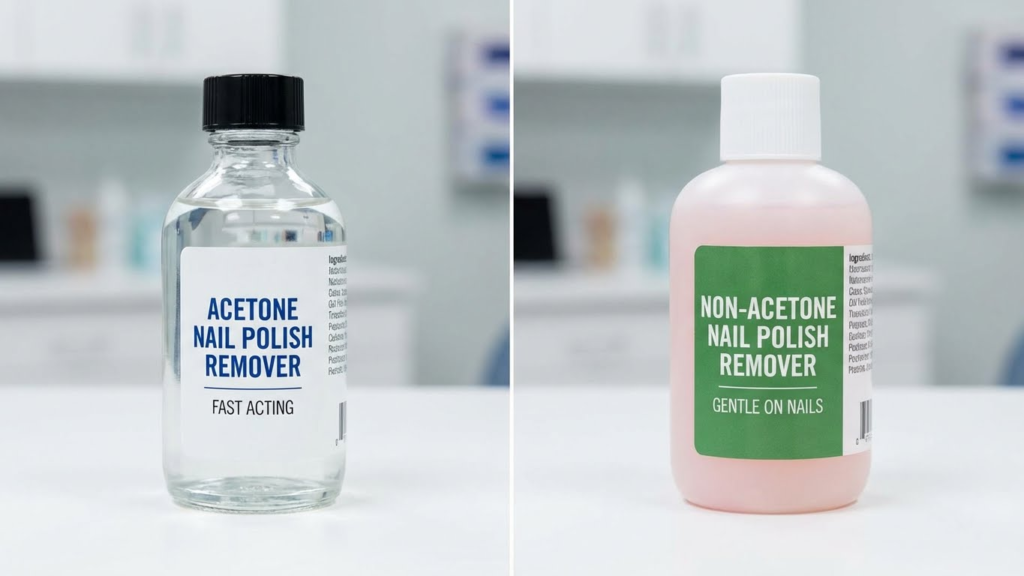
Nail polish remover comes in several types, each suited for different needs. Acetone-based removers are the most effective for quick and complete removal, especially for stubborn or dark colors. However, acetone can dry out nails and skin, so it’s best to use it sparingly.
Non-acetone removers are gentler and better for sensitive skin or natural nails. They take longer to work and might not remove dark or glitter polish as well.
Some removers also contain moisturizers or vitamins to help prevent dryness. When choosing a remover, consider the polish type and nail condition to avoid damage.
Cotton Pads and Swabs
Cotton pads are the primary tool for applying nail polish remover. They should be soft, absorbent, and large enough to cover the nail surface. Using pre-cut pads or reusable cotton rounds helps avoid waste.
Cotton swabs are useful for cleaning up polish around the edges of nails or fixing small mistakes. They allow for precision without over-applying remover to the skin.
Both cotton pads and swabs should be used gently to avoid rubbing or damaging the nail bed. Dabbing or pressing the remover-soaked cotton on the polish helps break down layers without excessive friction.
Protective Equipment
Protective gear can protect skin and nails from harsh chemicals during polish removal. Wearing gloves can prevent acetone or other solvents from drying out hands or causing irritation.
Using a cuticle oil or cream before and after removal helps keep skin moisturized and nails strong. Some people use nail strengtheners following the cleaning process to rebuild nails weakened by repeated polish removal.
It’s also important to work in a well-ventilated area to avoid inhaling strong fumes from removers. This simple step helps reduce discomfort and exposure to chemicals.
Traditional Removal Methods
Removing nail polish often involves different types of removers and tools. Each method works best depending on the polish type, nail sensitivity, and how quickly the polish needs to be removed. The following methods focus on common products and tools widely used for polish removal.
Using Acetone-Based Removers
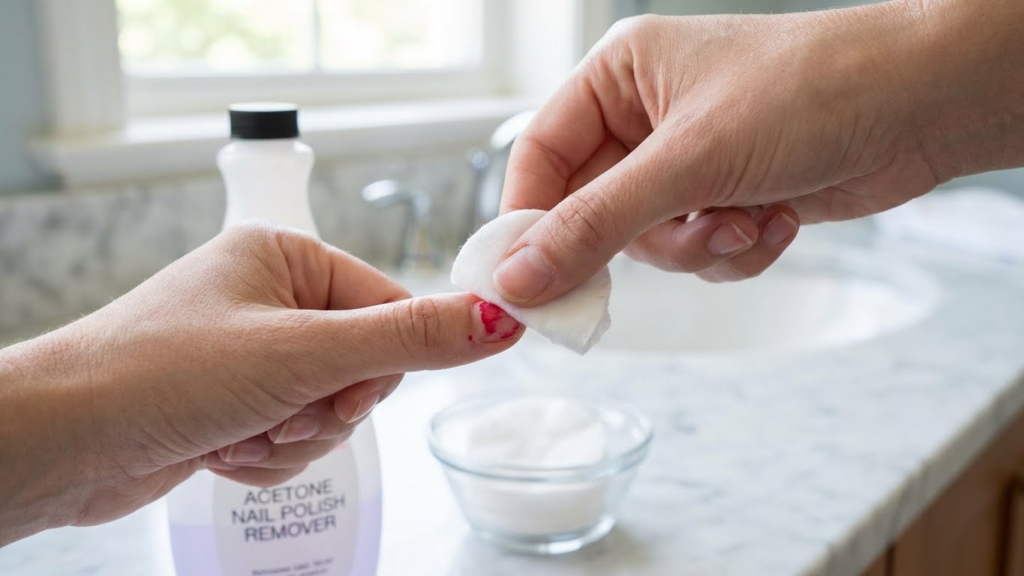
Acetone-based removers are the most effective at dissolving regular and stubborn nail polish. They work quickly but can be harsh on nails and skin. Acetone evaporates fast, which makes the removal process efficient but can also dry out nails and cuticles.
To minimize damage, applying a small amount to cotton balls and gently pressing on the nail for 15-20 seconds helps break down the polish without excessive rubbing. After removal, it’s important to wash hands and moisturize nails and cuticles to restore hydration.
Acetone removers remove polish thoroughly but should be used in moderation to avoid brittle nails or skin irritation.
Using Non-Acetone Removers
Non-acetone removers usually contain gentler solvents like ethyl acetate. They are less drying to nails and skin, making them better for sensitive nails or frequent use. However, they may take longer and require more effort to fully remove polish.
These removers suit nail types prone to dryness or damage. They are effective on regular polish but may struggle with dark or glitter polishes. Non-acetone removers can also be more pleasant to smell and are less likely to cause allergic reactions.
Users should still moisturize after use, but non-acetone varieties often help preserve natural nail strength better over time.
Removing Polish with Nail Polish Remover Pads
Remover pads are pre-soaked wipes designed for quick and convenient polish removal. They typically use either acetone or non-acetone formulas. Pads are portable and easy to use, making them popular for touch-ups or travel.
To use, simply rub the pad over each nail until the polish dissolves. The pads reduce mess and the need for extra cotton or tools. However, heavy or glitter polishes might require multiple pads or additional scraping.
While pads are convenient, repeated use can dry nails if they contain harsh solvents. It’s recommended to follow up with hand cream or nail oil to keep nails healthy.
Gentle Techniques for Sensitive Nails
Removing nail polish without causing damage or irritation is important for people with sensitive nails. Using mild and natural options helps keep nails healthy while effectively clearing the polish.
Natural Nail Polish Removal Methods
Natural methods avoid harsh chemicals that can dry or weaken nails. One common way involves soaking a cotton ball in lemon juice. The acid helps break down polish gently without drying the nails.
Another option is to use white vinegar mixed with lemon juice. This mixture softens polish, making it easier to wipe away with cotton. Both ingredients are mild and safe for sensitive skin.
These natural removers require extra time and gentle rubbing. They may not work quickly like acetone but reduce the risk of irritation, peeling, or dryness.
| Method | Ingredients | Key Benefit | Application Tip |
|---|---|---|---|
| Lemon Juice | Pure lemon juice | Natural acid, gentle | Soak cotton and hold on nails 5–10 min |
| Vinegar & Lemon | White vinegar + lemon | Softens polish | Use equal parts, soak cotton 10 min |
Homemade Nail Polish Remover Alternatives
Homemade removers combine safe household ingredients for a gentle clean. A popular mix is rubbing alcohol and vegetable oil. The alcohol dissolves polish softly, while the oil prevents dryness by moisturizing nails.
Another recipe uses coconut oil and baking soda. Baking soda adds mild exfoliation, loosening polish layers. Coconut oil nourishes the skin and nails during removal.
These mixtures are applied with cotton pads and require careful wiping rather than scrubbing. It’s important to rinse nails and apply hand lotion or cuticle oil afterward to replenish moisture.
| Homemade Remover | Ingredients | Benefit | Usage Advice |
|---|---|---|---|
| Rubbing Alcohol & Oil | Rubbing alcohol + veg oil | Dissolves polish + hydrates | Apply with cotton, rub gently |
| Coconut Oil & Baking Soda | Coconut oil + baking soda | Mild exfoliation + moisture | Mix to paste, wipe polish softly |
Removing Nail Polish Without Remover
There are effective ways to clear nail polish when traditional remover is not available. These methods use items often found at home and focus on dissolving or gently scraping away polish without causing damage.
Using Alcohol-Based Products
Alcohol-based products like hand sanitizer, perfume, or hairspray can help remove nail polish. These contain alcohol, which breaks down the polish, making it easier to wipe off.
To use this method:
- Soak a small cotton ball or cloth with the chosen alcohol product.
- Press it firmly on the nail for about 30 seconds.
- Gently rub the polish until it starts to come off.
- Repeat as needed, changing the cotton if it becomes saturated with polish.
This method is less harsh than acetone but may take more time and effort, especially with darker colors. It’s important to wash hands afterward to remove any sticky residue.
Peeling and Buffing Methods
Peeling off nail polish is possible but risks damaging the nail. If the polish is old and lifting, gently lifting the edge with a wooden stick can help remove flakes.
Buffing uses a nail file or buffer to wear away the polish. It should be done carefully to avoid thinning the nail surface.
Steps to buff:
- Use a fine-grit buffer gently on the polish.
- Buff in one direction without applying too much pressure.
- Stop when most polish is removed.
- Wash and moisturize nails since buffing can dry out the nail plate.
Buffing and peeling are slower and risk uneven nails, so they are best used as a last resort or on chipped polish.
How to Remove Stubborn or Glitter Nail Polish
Removing stubborn or glitter nail polish requires a careful approach to minimize damage and make the process effective. It often involves soaking the nails with acetone and allowing time for the polish to break down before gently wiping it away.
Foil Wrap Technique
The foil wrap method uses acetone-soaked cotton pads and aluminum foil to remove tough glitter polish. First, cut small squares of foil and cotton pads to fit each nail.
Steps:
| Step | Instruction |
|---|---|
| 1 | Soak a cotton pad in acetone. |
| 2 | Place the pad on the nail. |
| 3 | Wrap foil around the fingertip to secure. |
| 4 | Leave on for 10-15 minutes. |
| 5 | Gently press and slide the foil/pad off. |
This method softens the glitter polish so it wipes off with little scrubbing. It also reduces nail bed damage compared to harsh scraping or scraping with a metal tool.
Soaking Method
The soaking method involves soaking nails in acetone without foil. It works well for polish that is not too thick or layered.
Steps:
| Step | Instruction |
|---|---|
| 1 | Pour acetone into a small bowl. |
| 2 | Soak fingertips for 5-10 minutes. |
| 3 | Use a cotton ball or a soft brush to lift polish gently. |
| 4 | Repeat soaking if needed for full removal. |
This method is simpler but requires patience. It’s important to avoid scraping while the polish is still hard to prevent nail damage. Moisturizing after removal is recommended since acetone can dry the skin and nails.
Precautions and Aftercare for Nail Health
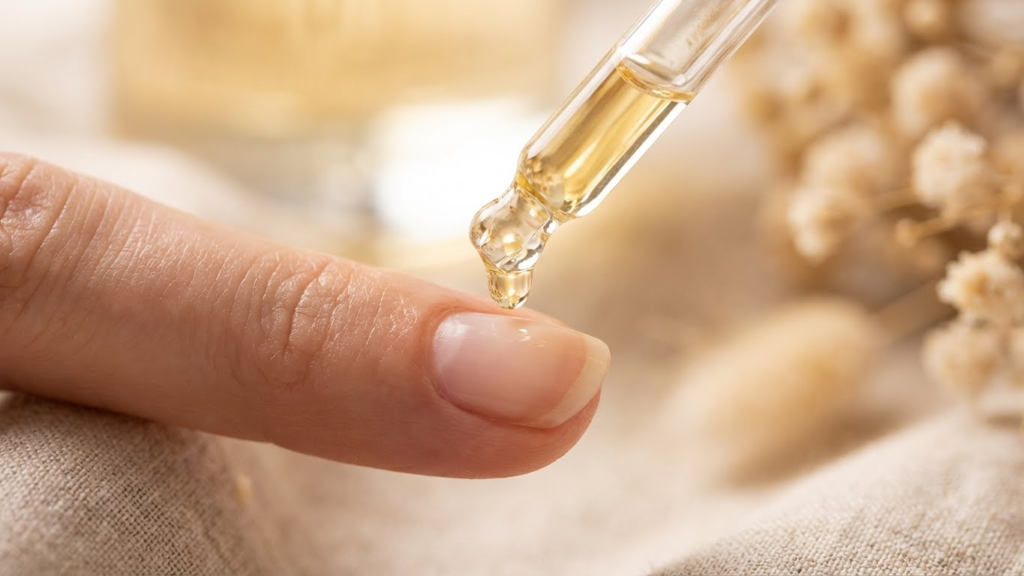
Proper care after removing nail polish helps maintain strong, healthy nails and prevent common problems like dryness and damage. Moisturizing and avoiding harsh treatment are key steps to keep nails looking good.
Hydrating Nails and Cuticles
Nail polish removers often contain chemicals that dry out nails and skin. To restore moisture, it is important to apply a nourishing cream or cuticle oil right after removal. These products help soften the cuticles and keep them from cracking.
Using oils rich in vitamins, like vitamin E, supports nail health and improves flexibility. Consistent hydration prevents brittleness and peeling. Moisturizing should also be part of daily care, not just after polish removal. This keeps the nails supple and the skin around them intact, reducing chances of infection or irritation.
Preventing Nail Damage
Avoid pushing back or cutting cuticles aggressively, as this can lead to infections. Instead, gently push them back only after softening with oil or cream.
Limit the use of acetone-based removers, which are effective but harsh. When possible, use gentler, non-acetone removers. Give nails time to rest between polish applications to prevent weakening.
Sanitizing tools before and after use prevents infection during nail care. Wearing gloves while cleaning or doing chores protects nails from drying chemicals that can cause damage.
Cleaning Up Residue and Stains
Removing leftover nail polish requires different approaches depending on where the polish is. Effective cleanup relies on using the right materials and acting carefully.
Handling Polish on Skin
To remove nail polish from skin, using acetone or non-acetone polish remover on a cotton pad works best. Gently press the cotton pad on the stained skin and wipe without scraping hard. This avoids irritation or redness.
If the polish is stubborn, repeating the process slowly is better than using harsh rubbing. After removal, washing the area with soap and water helps remove any chemical residue. For sensitive skin, applying moisturizer afterward can prevent dryness caused by the polish remover.
Avoid using rough materials on the skin, such as steel wool, which can cause damage or discomfort. Nail polish on skin usually cleans up quickly with patience and the right remover.
Dealing with Stains on Clothes or Surfaces
For fabric stained with nail polish, starting by removing any dried residue can help. Using an ice cube to harden the polish makes it easier to lift off gently. Then, apply nail polish remover or denatured alcohol to the spot with a clean cloth and blot carefully.
After treatment, washing the fabric with water or using a washing machine when possible removes leftover chemicals. For delicate or non-washable fabrics like silk, professional dry cleaning is safer.
On hard surfaces, nail polish remover works well but must be followed by cleaning with soapy water. Avoid paper towels as they can leave fibers behind. Instead, use clean, dry cloths to soak up the liquid and polish residue without spreading the stain.
In all cases, working quickly and avoiding aggressive scrubbing limits damage to the material.
Eco-Friendly and Safe Disposal
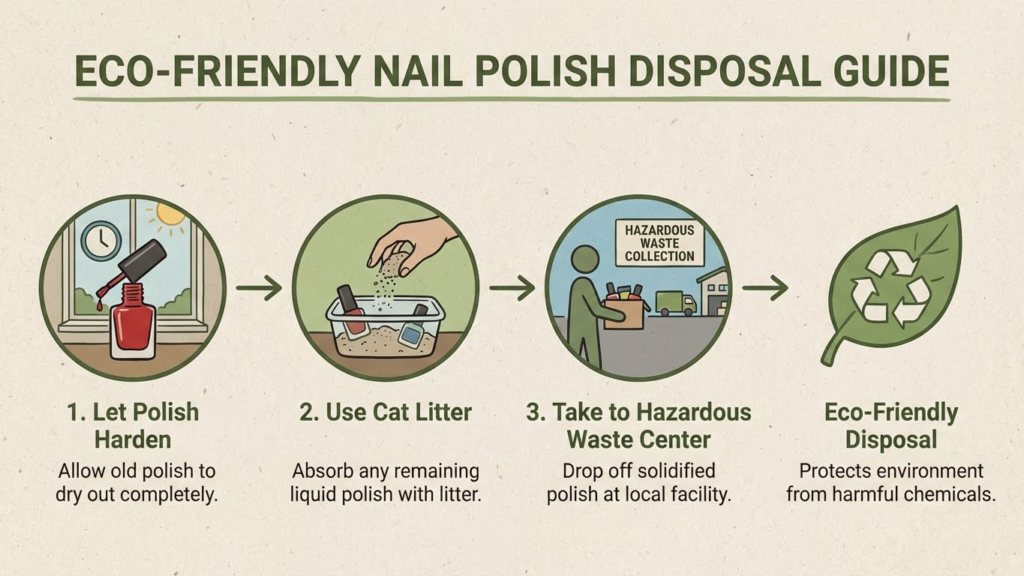
Nail polish contains chemicals that can harm the environment if not disposed of properly. It is important to handle old or unused polish carefully to avoid pollution. Throwing liquid polish into regular trash or drains should be avoided.
One safe method is to let the polish harden first. People can leave the bottle open in a well-ventilated area or mix the polish with an absorbent like cat litter or sawdust. Once solid, the polish can be treated as hazardous waste.
Many communities offer hazardous waste collection centers. These centers accept old nail polish and other chemical products for proper handling. Checking local rules helps ensure compliance and reduces environmental risks.
Some brands have take-back programs or sell eco-friendly nail polishes. These products have fewer harmful chemicals and are easier to dispose of safely. Choosing these options can lower the impact on soil and water.
If disposal services are unavailable, nail polish bottles with glass can sometimes be recycled after the polish is dried out. However, this depends on local recycling rules.
Steps for safe nail polish disposal:
| Step | Description |
|---|---|
| Harden the polish | Leave bottle open or mix with absorbent |
| Use hazardous waste centers | Drop off polished bottles safely |
| Consider eco-friendly brands | Choose less harmful nail polish |
| Recycle glass containers (if allowed) | Recycle empty glass after drying |
Handling nail polish carefully protects the environment and public health.
FAQS
How can I fix thick or clumpy clear nail polish?
If clear nail polish becomes thick or clumpy, adding a few drops of nail polish thinner can help. Shake the bottle well after adding thinner to mix it evenly. Do not use acetone or other removers as they can ruin the polish.
What is the best way to remove clear nail polish?
To remove clear nail polish, soak a cotton ball in acetone-based remover and press it on the nail for about 30 seconds. Then, gently rub the polish off. Repeating this process may be needed for stubborn polish.
Can clear nail polish damage nails?
Clear nail polish itself is generally safe, but repeated use of acetone removers can dry out and weaken nails. Moisturizing nails and cuticles after removal helps keep them healthy.
Is it possible to remove gel nail polish at home safely?
Yes, with the right tools and techniques. Typical steps include soaking nails in acetone, using foil wraps, and gently pushing off softened gel. Doing this carefully prevents nail damage.
How long does it take for clear nail polish to dry?
Clear nail polish usually dries within 5 to 15 minutes. However, full hardening may take longer depending on layers applied and polish brand.
| Common Problem | Solution |
|---|---|
| Thick polish | Add nail polish thinner, shake well |
| Polish not coming off | Soak cotton ball in remover, repeat steps |
| Nail dryness | Moisturize cuticles after removal |