
How to Cut Toenails That Are Curved: Safe Step-by-Step Guide

Curved toenails can make a simple pedicure surprisingly difficult. The corners may seem to disappear into the skin, the nail can feel harder to reach, and cutting it into a rounded shape may seem like the obvious solution.
Unfortunately, following the curve too closely can sometimes make things worse.
If you are wondering how to cut toenails that are curved, the safest approach is usually to soften the nail, use a clean toenail clipper, make several small cuts straight across, and gently file any rough edges. You should avoid digging into the corners or cutting the nail extremely short.
This guide explains the technique step by step, which tools help, how a nail file fits into the process, and when a curved nail should be left to a medical professional instead.
Quick Answer
To cut curved toenails safely, soften them after a shower or brief warm-water soak, then use clean, sharp toenail clippers to make small cuts straight across the nail. Do not follow the curve deeply into the corners. Leave a little visible nail and gently smooth sharp edges with a fine nail file.
Why Curved Toenails Need Extra Care
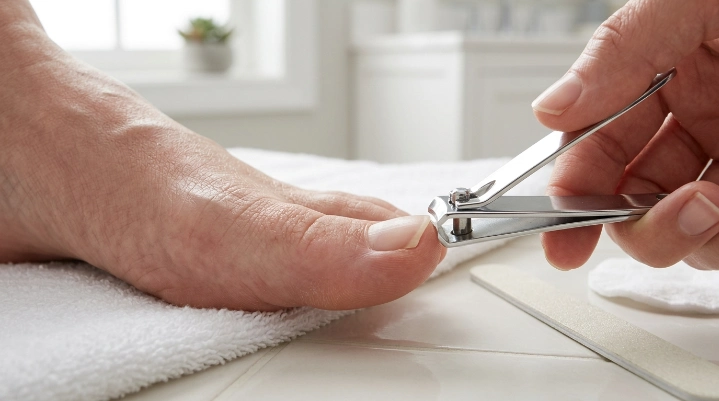
Not every toenail grows perfectly flat.
Some people naturally have nails with a noticeable downward curve. The curve may be mild, or the sides may curl toward the skin enough to make trimming awkward.
The problem is that a curved nail can tempt you to cut down into each side until the nail looks more rounded.
That is usually the part to avoid.
The American Academy of Dermatology recommends trimming toenails straight across to reduce the risk of ingrown nails. Its dermatologists also recommend softening nails before cutting and using a proper toenail clipper. American Academy of Dermatology nail-trimming guidance
Very curved nails are also one recognized risk factor for ingrown toenails. When an edge begins growing into the surrounding skin, you may notice tenderness, swelling, redness, or eventually infection. Mayo Clinic guidance on ingrown toenails
So the goal is not to make a naturally curved toenail perfectly flat.
The goal is to control the length without encouraging the edges to grow into the skin.
Check the Toenail Before You Cut It
Before picking up your clippers, look closely at the nail and surrounding skin.
A toenail that is simply curved but otherwise comfortable can usually be maintained carefully at home.
Stop and reconsider DIY trimming if you see:
- Significant redness around the nail
- Swollen skin along one side
- Pus or other drainage
- Bleeding
- Severe tenderness
- A nail edge already buried in the skin
- Thick, yellow, crumbling, or heavily distorted nail growth
- A dark area beneath the nail without an obvious recent injury
- A nail shape that has suddenly changed
- Skin that feels unusually warm around the toe
These signs can suggest that you are dealing with more than an ordinary grooming problem.
The NHS notes that a painful, red, swollen toe or a nail curving into the skin may indicate an ingrown toenail, and signs such as pus require extra attention. NHS ingrown toenail guidance
Do not try to solve an inflamed or infected nail by cutting deeper into it.
If you have diabetes, poor circulation, reduced sensation in your feet, or another condition that makes foot wounds more risky, routine DIY toenail cutting may also require guidance from a doctor or podiatrist.
Best Tools for Cutting Curved Toenails
You do not need a complicated pedicure kit. In fact, having a few clean, suitable tools is better than using many unfamiliar ones.
| Tool | Best Use | What to Look For | Main Safety Point |
|---|---|---|---|
| Toenail clipper | Routine curved nails | Sharp, aligned blades and comfortable grip | Use small cuts instead of one forceful cut |
| Straight-edge toenail nipper | Thick or difficult nails | Strong handles and controlled cutting jaws | Requires more control than a basic clipper |
| Fine nail file | Smoothing rough edges | Fine or medium-fine abrasive surface | File the free edge, not the surrounding skin |
| Glass or crystal file | Controlled finishing | Smooth reusable surface | Stop if filing causes tenderness |
| Disposable emery board | Simple finishing | Clean, intact surface | Replace when worn or contaminated |
Standard toenail clippers are inexpensive and sufficient for many people. More substantial nippers can cost more but may provide additional leverage for genuinely thick nails.
A reusable glass or crystal file may initially cost more than an emery board, but it can last much longer when properly cared for.
Whatever tool you choose, control matters more than price.
Avoid using dull household scissors, blades, pointed manicure tools, or anything that forces you to dig into the side of the nail.
How to Cut Toenails That Are Curved Step by Step
1. Soften the Toenail First
Curved toenails can be firm, especially on the big toe.
The easiest time to trim them is generally after bathing or showering. You can also soak your feet in lukewarm water for a few minutes.
Softening the nail reduces the amount of force needed from the clipper.
Dry your foot enough that your fingers and tools will not slip before you begin.
2. Wash and Prepare Your Tools
Use your own clean toenail clippers.
Remove visible nail debris from the cutting surfaces and follow the manufacturer’s cleaning instructions if your clipper or file has specific requirements.
The American Academy of Dermatology also recommends regularly disinfecting nail-trimming tools and drying them thoroughly afterward.
Do not casually share personal toenail tools.
This is especially important if either person has a suspected fungal nail problem or broken skin around the nails.
3. Sit Where You Can See the Entire Nail
Poor visibility is one of the easiest ways to accidentally cut too deeply.
Sit somewhere stable with good lighting. Bring the foot close enough that you can clearly see both sides of the toenail without twisting your body awkwardly.
If you cannot comfortably reach your feet, forcing yourself into an unstable position is not worth the risk.
A professional pedicure, podiatry visit, or assistance from an appropriate caregiver may be the safer option.
4. Start With One Small Cut
Do not try to remove the entire curved nail edge in a single clip.
Place the clipper at one side of the free edge—the portion extending beyond the attached nail bed—and remove only a small section.
Then reposition the clipper.
5. Continue Across the Nail in Small Sections
Work gradually from one side toward the other.
The finished edge should remain mostly straight across rather than following the rounded outline of your toe.
Several small clips are especially useful when the nail is thick or curved because they reduce the bending and crushing force placed on the nail plate.
If the nail begins splitting instead of cutting cleanly, stop.
The nail may still be too hard, or the clipper may be dull or unsuitable.
6. Do Not Dig Down the Sides
This is the most important part of learning how to cut toenails that are curved.
You may see a tiny piece of nail disappearing downward at each corner.
Do not chase that edge with the clipper.
Trying to create a deep V shape or removing the entire corner can leave the side too short. As the nail grows forward again, surrounding skin may press against it.
Mayo Clinic specifically lists cutting toenails too short or failing to cut them straight across among factors associated with ingrown nails.
7. Leave Some Nail Length
Do not trim until the nail is almost level with the skin.
A small amount of visible free edge gives the nail room to grow forward rather than encouraging skin to overlap the sides.
There is no need to leave long toenails. The goal is simply to avoid an extremely short cut.
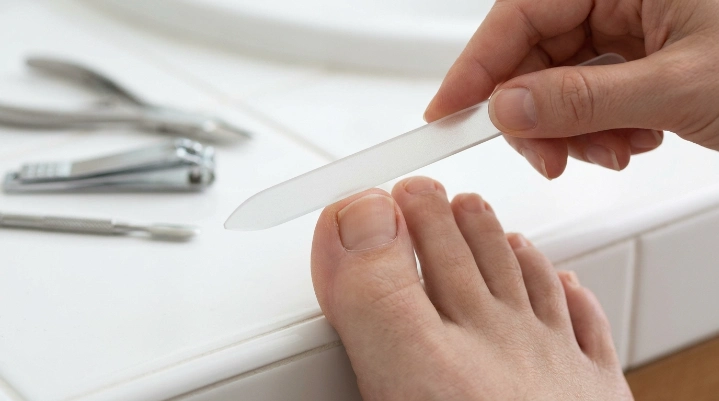
8. Smooth the Edge With a Nail File
After clipping, run a fingertip lightly across the nail edge.
If you feel a sharp point or rough area, use a clean fine nail file rather than cutting deeper.
File gently along the free edge until the snag is smooth.
Avoid aggressive sawing, thinning the top of the nail plate, or filing the skin beside the nail.
If you are unfamiliar with file abrasiveness, NailPrime’s broader nail-care principle is simple: the more aggressive the file, the more carefully it needs to be used on a natural nail.
9. Check the Toe Again
Once you are finished, inspect both sides.
You should not see fresh bleeding, torn skin, or a newly exposed deep corner.
If the toe feels comfortable and the nail is neat enough to avoid catching on socks, you are done.
Do not keep trimming simply because the curve is still visible.
A naturally curved toenail does not need to look perfectly straight from every angle.
How a Nail File Helps With Curved Toenails
A nail file is particularly useful when a curved toenail leaves a tiny sharp edge after clipping.
Instead of trying to cut farther into the corner, you can make small adjustments to the exposed free edge.
For ordinary natural toenails, a fine or medium-fine file generally provides better control than an extremely coarse abrasive.
Use light pressure and stop as soon as the roughness is gone.
Filing should not hurt.
If the painful part of the nail is buried beneath swollen skin, a nail file is not the right tool for solving the problem.
Expert Tip
Expert Tip: If you are tempted to keep cutting until both corners of a curved nail disappear, stop. Leave the corners visible enough to grow forward and use a fine file only on exposed sharp edges. A slightly imperfect-looking straight cut is often safer than an aggressively rounded one.
Keeping Curved Toenails Easier to Manage
Good maintenance can make your next trim much easier.
Try to:
- Check toenails regularly rather than waiting until they become very long.
- Wear shoes with enough room around the toes.
- Keep feet clean and dry.
- Change damp socks promptly.
- Avoid repeated pressure on the nail edges.
- Use only clean personal nail tools.
- Replace worn disposable files.
- Moisturize dry skin around the toes without leaving the feet constantly damp.
- Watch for changes in thickness, color, shape, or tenderness.
Shoes deserve particular attention.
A curved toenail already places its edges relatively close to the surrounding skin. Shoes that squeeze the toes together may increase pressure around those edges.
Common Mistakes to Avoid
Cutting the Corners Into a Deep Curve
Rounded fingernails may look neat, but toenails have different trimming recommendations.
Do not carve deeply down each side.
Cutting the Nail Extremely Short
Shorter is not automatically cleaner or healthier.
Leave enough free edge that the nail is not cut down into the surrounding skin.
Pulling Off a Partially Cut Nail
If a section remains attached after clipping, do not tear it away.
Reposition the clipper or gently file it.
Pulling can cause the nail to split farther than intended.
Using a Very Coarse File Aggressively
A coarse file may remove material quickly, but that is not always helpful.
Excessive filing can leave the edge thin, rough, or sensitive.
Digging Under the Nail
Do not insert sharp tools underneath the corners to lift, scrape, or cut the nail.
You can injure the nail bed or surrounding skin.
Continuing When the Toe Hurts
Pain is a reason to stop, not a signal to cut deeper.
A curved nail that becomes painful may already be irritating or entering the surrounding tissue.
Cutting an Already Inflamed Ingrown Nail
If a nail is already red, swollen, painful, or embedded in the skin, routine trimming advice changes.
The NHS advises people with an ingrown toenail not to keep cutting or picking at the affected toenail while attempting basic home care.
DIY Trimming vs. Professional Care
DIY trimming makes sense when the nail is:
- Only mildly or moderately curved
- Not painful
- Not infected
- Easy for you to see and reach
- Thin enough for your tool to cut cleanly
Professional help makes more sense when:
- The nail is extremely curved
- The sides repeatedly press into the skin
- The nail is unusually thick
- You cannot safely reach your feet
- You have previously injured yourself trimming it
- The same toe repeatedly develops ingrown nails
- There are suspicious changes in nail color or texture
A salon pedicure can help with cosmetic maintenance of otherwise healthy nails, but an inflamed, infected, injured, or medically abnormal toenail should not simply be treated as a pedicure problem.
When to See a Nail Technician or Dermatologist
A licensed nail technician can help maintain the appearance and length of an otherwise healthy curved toenail when you simply find home trimming difficult.
However, nail technicians do not replace medical professionals.
Consider seeing a dermatologist, podiatrist, or other qualified health professional if you have:
- Persistent or increasing pain
- Redness that is spreading
- Swelling around the toenail
- Pus or drainage
- Recurrent ingrown toenails
- Significant thickening or crumbling
- Unexplained changes in nail color or shape
- Bleeding that does not settle
- A toe injury that is not healing
Medical evaluation is particularly important if you have diabetes, circulation problems, reduced sensation in your feet, or another condition that raises the risk of complications from small foot injuries.
In these situations, do not keep experimenting with cutting, filing, or digging under the nail.
FAQs
Should curved toenails be cut straight or rounded?
Curved toenails should generally still be trimmed mostly straight across. Avoid following the entire curve down the sides. You can use a fine nail file to smooth an exposed sharp edge without cutting deeply into the corners.
What if my toenail curves down on both sides?
If both sides curve but are painless and not pressing into the skin, careful straight-across trimming may be enough. If the curve is severe, painful, or repeatedly causes ingrown nails, have it evaluated by a dermatologist or podiatrist.
Can I cut the sides of a curved toenail?
You should avoid cutting deeply down the sides. Removing too much from a corner can make the nail more likely to irritate surrounding skin as it grows. Trim the accessible free edge instead.
Should I soak curved toenails before cutting them?
A brief soak or trimming after a bath or shower can make hard toenails easier to cut. The goal is simply to soften the nail enough that you can make controlled cuts without excessive force.
Can I file a curved toenail instead of clipping it?
You can use a nail file to shorten or smooth a small amount of exposed nail, especially if the edge is rough. Filing is slower for significant length, however. Do not file aggressively into painful corners or use filing to grind down an abnormal-looking nail.
Why is my toenail becoming more curved?
Some toenails are naturally curved, but nail shape can also change after trauma, pressure from footwear, aging, or certain nail conditions. If the curvature is new, severe, painful, or accompanied by thickening or discoloration, seek professional advice rather than assuming it is only cosmetic.
What should I do if my curved toenail is already ingrown?
Do not keep cutting down the painful side. Wear roomy footwear and avoid picking or digging into the nail. If there is significant pain, spreading redness, pus, recurrent problems, or a medical condition that increases foot risk, seek professional medical care.
Final Thoughts
Learning how to cut toenails that are curved is mostly about resisting the urge to follow the curve too aggressively.
Soften the nail, use sharp and clean toenail clippers, work across the free edge with several small cuts, leave the corners intact, and smooth only exposed roughness with a fine file.
Most importantly, know when grooming stops being the right solution. A curved nail that becomes painful, swollen, infected, unusually thick, or repeatedly ingrown deserves professional attention.
Treat the nail gently now, and your next trim is much more likely to be simple, comfortable, and safe.

