
How to Cut Your Toenails Correctly: Safe Step-by-Step Guide

Cutting your toenails seems simple until you end up with a painfully short nail, a sharp corner digging into the skin, or an edge that keeps catching on your socks. Small trimming mistakes can make your toes uncomfortable and may contribute to ingrown toenails.
Learning how to cut your toenails correctly is mostly about choosing the right tools, trimming straight across, avoiding overly short cuts, and smoothing rough edges without digging into the corners.
This guide walks you through the safest basic technique, explains which tools work best, covers common mistakes, and shows you when a toenail problem should be left to a professional instead of treated at home.
Quick Answer
To cut your toenails correctly, use clean, sharp toenail clippers and trim each nail mostly straight across without cutting it extremely short or digging into the corners. Make several controlled cuts instead of one aggressive cut. Finish by gently filing rough edges, then keep your tools clean and dry.
Why the Way You Cut Your Toenails Matters
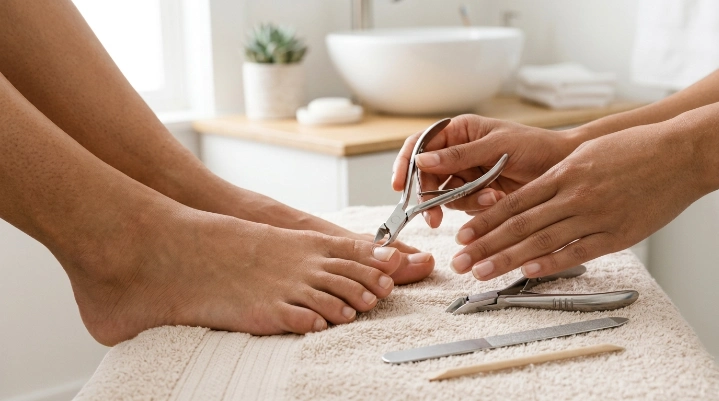
Toenails grow slowly, but they deal with constant pressure from socks, shoes, exercise, and daily movement. When a nail is cut incorrectly, the surrounding skin can become irritated.
One of the biggest mistakes is rounding deeply into the sides of a toenail because you want a perfectly curved shape. While that may look tidy immediately, removing too much of the corner can allow the surrounding skin to press against the growing nail.
The American Academy of Dermatology recommends cutting toenails straight across to reduce the likelihood of an ingrown toenail. Its nail-trimming guidance also recommends smoothing rough edges with a nail file rather than repeatedly cutting at the nail. American Academy of Dermatology guide to trimming nails
Correct trimming also helps reduce:
- Sharp edges that catch on socks
- Splitting and cracking caused by dull tools
- Tender skin along the sides of the nail
- Accidental cuts around the nail
- Excessively short nails
- Some avoidable causes of ingrown toenails
Good technique does not guarantee that you will never develop a toenail problem. Nail shape, footwear, injuries, infections, and health conditions can also affect how toenails grow.
What You Need Before Cutting Your Toenails
You do not need a complicated pedicure kit. A few appropriate tools are usually enough.
| Tool | Best Use | Cost Level | Important Consideration |
|---|---|---|---|
| Toenail clipper | Routine trimming | Low | Choose a sharp tool large enough for toenails |
| Nail nipper | Thick or difficult nails | Low to moderate | Very sharp; requires more control |
| Glass nail file | Smoothing rough edges | Low to moderate | Gentle and reusable when properly cleaned |
| Emery board | Occasional smoothing | Low | Replace when worn or dirty |
| Clean towel | Drying feet and tools | Low | Keep personal foot-care items clean and dry |
Choose Toenail Clippers Instead of Tiny Fingernail Clippers
Toenails are generally thicker than fingernails. A properly sized toenail clipper gives you better leverage and makes it easier to create controlled cuts.
The cutting edges should meet evenly when you close the clipper. If the blades are damaged, rusty, misaligned, or so dull that you have to squeeze unusually hard, replace the tool.
Do not force a small clipper through an extremely thick toenail. That can cause the nail to crack unpredictably.
When Nail Nippers May Be Helpful
Nail nippers have longer handles and stronger cutting jaws. They can be easier to control on thickened nails, but they are also very sharp.
Mayo Clinic recommends making small, straight cuts across thickened toenails rather than rounding the edges. Its guidance also advises extra caution for people who have diabetes, poor circulation, or reduced sensation in their feet. Mayo Clinic guidance for trimming thickened toenails
If you cannot clearly see or safely reach your toenails, trying to force the process at home is not worth the risk.
Should You Cut Toenails Wet or Dry?
For many people, toenails are easier to trim after a bath or shower because the nail is slightly softer.
This can be especially helpful if your nails are naturally firm. However, you do not want the nail and surrounding skin to be dripping wet or overly softened.
Dry your feet first so you can hold your toes and tools securely.
If a toenail is unusually thick, Mayo Clinic suggests softening it in warm water for about 5–10 minutes before drying the foot and trimming carefully.
Do not keep soaking an irritated, injured, or possibly infected toe simply to make it easier to cut. If the area is swollen, draining, bleeding, or very painful, routine DIY trimming may not be appropriate.
How to Cut Your Toenails Correctly Step by Step
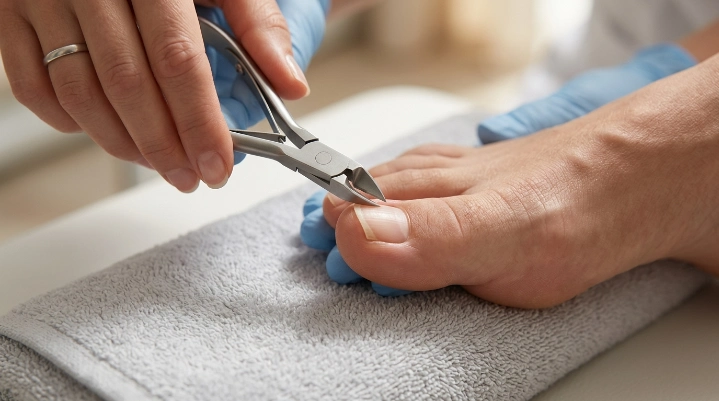
The safest approach is controlled rather than aggressive. Your goal is to shorten the nail while keeping its natural protective edge intact.
1. Wash and Dry Your Feet
Start with reasonably clean feet so dirt and debris are not pushed around the nail during trimming.
If you have just showered, dry each toe carefully, including the spaces between the toes.
2. Check Each Nail Before Cutting
Look at the nail and surrounding skin first.
Pause if you see:
- Significant redness
- Swelling
- Drainage or pus
- Bleeding
- A deep split
- Severe tenderness
- Unexplained dark discoloration
- A nail separating noticeably from the nail bed
A cosmetic trim should not be used to investigate or treat a suspicious nail problem.
3. Position the Clipper Straight Across
Place the clipper so you are removing the free edge—the part extending beyond the attached nail.
Avoid positioning the blades deeply down the sides.
You want the finished nail to look mostly straight across rather than dramatically rounded.
4. Make Several Small Cuts
You do not need to remove the entire width of a large toenail with one squeeze.
Starting at one side, make small, controlled cuts across the nail until you reach the other side.
Small cuts give you more control and can reduce the chance of cracking or suddenly removing too much nail.
5. Do Not Cut the Nail Extremely Short
Leave a visible free edge instead of trimming down until the nail feels flush with or buried beneath the surrounding skin.
Mayo Clinic identifies cutting toenails too short or failing to cut straight across as factors associated with ingrown toenails. It recommends keeping toenails at a moderate length rather than cutting them excessively short. Mayo Clinic ingrown toenail prevention guidance
6. Keep the Corners Visible
Do not dig the clipper underneath the corner simply because you can see a small white section there.
Removing the corner deeply can encourage the surrounding skin to crowd the nail as it grows.
A corner that feels slightly sharp can usually be softened with a file without dramatically changing the nail’s shape.
7. File Only What Needs Smoothing
After clipping, check the nail edge with your fingertip.
If there is a snag or rough spot, use a clean nail file or emery board gently.
The American Academy of Dermatology recommends filing in one direction because aggressive back-and-forth filing can weaken nails.
You do not need to file the entire nail thinner. Concentrate on the rough free edge.
8. Clean Up and Moisturize
Brush away nail clippings and wash your hands.
If the skin around your toes feels dry, apply a small amount of moisturizer to the surrounding skin. Avoid packing lotion underneath the nail.
Clean and completely dry reusable tools before storing them.
Expert Tip: If you are tempted to keep trimming because one corner does not look perfectly symmetrical, stop and use a gentle file instead. Over-correcting the corners is one of the easiest ways to turn a routine trim into an uncomfortable nail.
Why Toenails Should Usually Be Cut Straight Across
The straight-across rule is not mainly about appearance. It helps preserve the nail corners so they can continue growing forward instead of being buried beside the skin.
Imagine looking down at your big toenail. The front edge does not have to be perfectly ruler-straight, but the basic shape should remain square or softly squared rather than deeply curved at both sides.
Mayo Clinic specifically advises against curving toenails to match the rounded shape of the toe when trying to prevent ingrown toenails.
A tiny amount of filing to remove a sharp point is different from cutting deeply down the sides.
How Often Should You Cut Your Toenails?
There is no perfect schedule for everyone.
Toenails grow more slowly than fingernails, so many people find they need trimming only every few weeks. Your routine can depend on:
- How quickly your nails grow
- How short you keep them
- Your footwear
- Your activity level
- Nail thickness
- Previous nail injuries
Instead of following a strict calendar, check the length regularly.
A useful sign that trimming may be due is when the free edge begins extending noticeably beyond the toe or starts pressing against your footwear.
Do not repeatedly cut a nail just because a tiny amount of white edge is visible.
How to Handle Thick Toenails
Thick nails require patience.
Trying to force regular clippers through a very thick toenail can produce an uneven break rather than a clean cut.
First determine whether the thickness is simply normal for you. A toenail that has recently become thick, yellow, crumbly, painful, distorted, or separated from the nail bed may need professional assessment.
For manageable thick nails, softening them briefly and using appropriate nail nippers can make trimming easier. Make small straight cuts rather than trying to remove large sections at once.
Never aggressively grind, scrape, or thin a suspicious nail simply to make it look normal. Changes in nail thickness or color can have several possible causes, and DIY cosmetic work cannot diagnose them.
Filing Toenails After Cutting
A nail file is useful after trimming, but it should be a finishing tool rather than a way to aggressively reshape the entire side of the nail.
A fine or moderately fine file is generally easier to control on natural nails.
Hold the file against the free edge and make light strokes until the snag disappears.
Avoid:
- Digging the file down between the nail and skin
- Filing until the nail becomes extremely thin
- Aggressive sawing
- Using a dirty shared file
- Trying to file away painful tissue around an ingrown nail
If filing creates heat, tenderness, or discomfort, you are probably using too much pressure.
Toenail Tool Hygiene Matters
Clean-looking tools are not automatically clean.
Nail clippers can collect nail debris around their hinges and cutting surfaces. Files can also hold residue, especially porous disposable files.
The American Academy of Dermatology advises against sharing nail-grooming tools because infections such as nail fungus can spread through contaminated personal items. American Academy of Dermatology nail fungus prevention tips
Keep your home routine simple:
- Remove visible nail debris from reusable tools.
- Follow appropriate cleaning instructions for the material.
- Let tools dry completely before storage.
- Keep your clippers separate from dirty bathroom items.
- Replace disposable files when they become worn or contaminated.
- Do not share personal toenail tools.
If a tool has been used on a nail that may be infected, be especially cautious about using it on other nails.
Common Mistakes to Avoid
Cutting Into the Corners
Deeply cutting the sides may create temporary cosmetic neatness but can increase pressure between the growing nail and skin.
Cutting Too Short
Removing nearly all of the free edge can leave the toe tender, especially inside closed shoes.
Using Dull Clippers
Dull blades may crush or tear the nail instead of producing a controlled cut.
Ripping Off a Partially Cut Nail
If a piece remains attached, reposition the clipper or gently file it. Pulling can tear the nail farther than intended.
Aggressive Back-and-Forth Filing
Gentle filing is enough to remove a snag. Excessive filing can leave the edge thinner and more fragile.
Digging Under the Nail
Sharp tools should not be pushed beneath the nail to clean or reshape it.
Sharing Clippers or Files
Personal nail tools can carry debris and microorganisms between users.
Cutting Around Pain, Swelling, or Drainage
If the toe already looks inflamed or infected, more trimming may worsen irritation instead of solving the cause.
DIY Toenail Trimming vs. Professional Care
Routine toenail maintenance is usually manageable at home when your nails and skin are healthy and easy to reach.
A nail technician can be useful when you want careful cosmetic shaping, polish application, or routine pedicure maintenance.
However, a nail technician is not a substitute for medical diagnosis.
| Situation | DIY Care | Nail Technician | Medical Professional |
|---|---|---|---|
| Normal healthy toenails | Usually appropriate | Optional | Usually unnecessary |
| Minor rough edge | Usually appropriate | Optional | Usually unnecessary |
| Difficult cosmetic shaping | Possible | Helpful | Usually unnecessary |
| Very thick nail | Use caution | May help cosmetically | Consider evaluation if new or abnormal |
| Painful ingrown nail | Avoid digging/cutting | Not a medical treatment | Appropriate |
| Swelling or drainage | Not appropriate | Postpone service | Appropriate |
| Major color or shape change | Do not self-diagnose | Not diagnostic | Appropriate |
| Diabetes, poor circulation, or reduced foot sensation | Extra caution | Depends on medical guidance | Ask your healthcare professional |
When to See a Nail Technician or Dermatologist
A nail technician is appropriate for routine cosmetic care when the nail and surrounding skin are healthy.
A dermatologist, podiatrist, or other qualified healthcare professional is the safer choice when a toenail problem appears medical rather than cosmetic.
Get professional advice if you notice:
- Increasing pain or tenderness
- Significant redness or swelling
- Pus or other drainage
- Repeated ingrown toenails
- Bleeding that is not simply from a tiny accidental nick
- A nail becoming unusually thick or distorted
- Unexplained dark, green, yellow, or otherwise unusual discoloration
- Separation of the nail from the nail bed
- Changes that keep worsening despite gentle care
If you have diabetes, reduced circulation, numbness, or reduced sensation in your feet, talk with your healthcare team about the safest way to manage toenail care. Mayo Clinic specifically advises additional caution in these situations.
DIY nail care has limits. When you cannot safely see, reach, or control the tool, getting help is the smarter choice.
FAQs
Should toenails be cut straight or curved?
Toenails should generally be cut mostly straight across. Avoid deeply rounding the corners because this can contribute to the nail growing into the surrounding skin.
How short should I cut my toenails?
Keep them at a moderate length rather than cutting them down as far as possible. Leaving a small visible free edge helps prevent the surrounding skin from crowding the nail.
Is it better to cut toenails before or after a shower?
Many people find trimming easier after bathing because the nails are slightly softer. Dry your feet before using the clippers so you can maintain a secure grip.
Can I use a nail file instead of toenail clippers?
A file works well for smoothing rough edges and making small length adjustments. Removing a lot of length with a file can be slow and may encourage over-filing, so clippers are generally more practical for routine trimming.
What should I do if my toenail is very thick?
Do not force small clippers through it. Softening the nail briefly and using appropriate nail nippers may help, but unexplained thickening, discoloration, crumbling, pain, or nail separation should be evaluated professionally.
Should I cut an ingrown toenail corner out myself?
Avoid digging into the side of the nail or repeatedly cutting the corner away. If an ingrown toenail is painful, swollen, draining, recurrent, or getting worse, seek medical advice rather than trying increasingly aggressive DIY trimming.
How often should toenail clippers be cleaned?
Remove debris after use and clean reusable tools regularly according to their material and manufacturer’s directions. Keep them completely dry and avoid sharing them with other people.
Conclusion
Learning how to cut your toenails correctly comes down to a few habits: use clean and sharp tools, make controlled cuts, keep the nail mostly straight across, avoid cutting extremely short, and use a file only to smooth rough edges.
Do not chase perfect-looking corners by digging farther into the nail. A slightly imperfect but comfortable toenail is better than a beautifully rounded nail that becomes painful as it grows.
Most healthy toenails can be maintained safely at home. But pain, swelling, drainage, major discoloration, unusual thickening, or repeated ingrown nails deserve professional attention.
For your next trim, focus on clean tools, straight cuts, moderate length, and gentle filing. Those simple choices can make routine toenail care safer and much easier.

