
How to File Toenails Without Making Them Weak

Filing your toenails sounds simple, but it is surprisingly easy to overdo it. A coarse file, heavy pressure, or repeated sawing can leave the nail edge thin, rough, and more likely to split.
Learning how to file toenails without making them weak is mainly about using the right tool, working slowly, and removing only as much nail as necessary. You do not need an aggressive salon technique for everyday maintenance.
This guide explains which nail files work best, how to file step by step, what mistakes can weaken toenails, and when a nail problem should be handled by a professional instead of at home.
Quick Answer
To file toenails without making them weak, use a fine or medium-fine nail file, apply light pressure, and file gently in one direction across rough edges. Keep the overall toenail shape fairly straight rather than deeply rounding the corners. Stop as soon as the edge feels smooth and avoid thinning the nail surface.
Why Filing Can Make Toenails Feel Weak
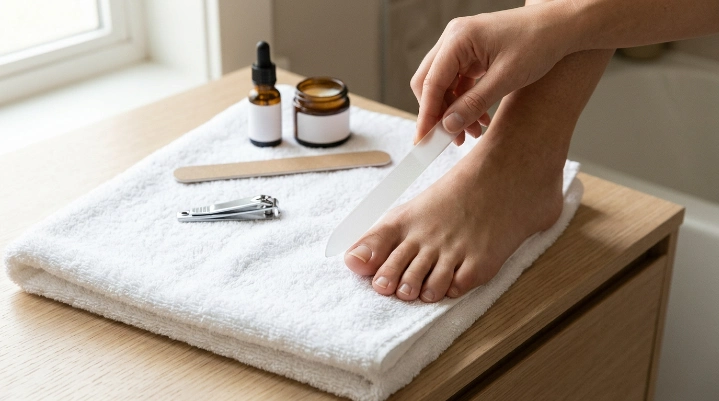
A healthy toenail is made from layers of keratin. Filing is useful because it smooths rough edges and prevents the nail from catching on socks or shoes, but every pass removes a small amount of material.
The problem usually comes from removing too much too quickly.
Common causes of filing-related weakness include:
- Using a very coarse file on a normal natural toenail
- Filing aggressively back and forth
- Pressing hard against the nail
- Filing the top surface repeatedly
- Trying to make a thick toenail dramatically thinner
- Filing the side corners too deeply
- Continuing after the edge is already smooth
The American Academy of Dermatology recommends smoothing rough edges with a nail file and filing in the same direction because repeated back-and-forth filing can weaken nails. Its guidance also recommends keeping toenails trimmed straight across to help reduce ingrown-nail problems. American Academy of Dermatology nail-trimming guidance
The goal is therefore not to grind the nail into shape. Think of filing as finishing work after trimming.
Choose the Right Nail File for Toenails
The best file depends partly on how thick your toenails are.
A normal natural toenail rarely needs the roughest file you can find. A gentler file gives you more control and makes accidental over-filing less likely.
| Nail File Type | Best For | Typical Cost | Main Advantage | Main Caution |
|---|---|---|---|---|
| Glass or crystal file | Normal natural toenails | $5–$20 | Smooth, controlled filing | Can break if dropped |
| Fine emery board | Routine smoothing | $1–$5 | Cheap and easy to control | Wears out and should not be shared |
| Medium-grit board | Slightly thicker toenails | $2–$8 | Removes material more efficiently | Can weaken thin nails if used aggressively |
| Metal file | Thick, sturdy nails | $3–$15 | Durable and washable | May feel too aggressive on fragile nails |
| Electric nail file | Thick or artificial nails | $20+ | Fast material removal | Easy for beginners to over-file |
Glass or Crystal Files
A glass file is one of the easiest options to control when you are working on natural toenails. Its fine abrasive surface can smooth an edge without requiring heavy pressure.
Glass files are also reusable and washable, although they cost more initially than disposable emery boards.
Emery Boards
A fine emery board is inexpensive and perfectly suitable for routine toenail care.
Replace it when the surface becomes worn, dirty, bent, or difficult to clean. Because porous disposable files are difficult to disinfect thoroughly, do not share them with other people.
Metal Nail Files
Metal files are durable, but they can remove nail material faster than expected.
If your toenails are naturally thin, peeling, or brittle, a finer glass file or emery board is usually easier to control.
Electric Nail Files
An e-file can be useful for specialized nail work, but it is rarely necessary simply to smooth ordinary natural toenails.
A motorized file can create friction and remove nail material quickly. For a beginner, that makes accidental thinning more likely.
If you only want to smooth a rough toenail edge, a manual file is usually the simpler choice.
How to File Toenails Without Making Them Weak: Step by Step
1. Check the Nail Before You Start
Look at the toenail in good light.
Normal filing is reasonable when you are dealing with:
- A slightly rough free edge
- A small snag
- Minor unevenness after clipping
- Normal healthy nail growth
Do not automatically file away unusual thickness, crumbling, lifting, discoloration, or painful areas. Those changes may have causes that cosmetic filing will not fix.
2. Trim Excess Length First
If the toenail is clearly too long, do not try to shorten the entire nail with a fine file.
Use clean toenail clippers to remove excess length first, taking small controlled cuts.
Keep the nail fairly straight across rather than cutting deeply into the corners. Mayo Clinic also recommends small straight cuts for thickened toenails and then gentle filing to smooth sharp edges. Mayo Clinic guide to trimming thickened toenails
Leave a little visible free edge. Cutting extremely short can make the surrounding skin more vulnerable and may contribute to ingrown toenails.
3. Clean Your Feet and Tools
Good hygiene matters because files and clippers come into contact with the nail and nearby skin.
Wash your feet and make sure the toes are clean. Dry them thoroughly before filing so you have a stable grip and can see the nail edge clearly.
Clean reusable tools according to their manufacturer’s directions.
The American Academy of Dermatology recommends regularly disinfecting nail clippers and nail scissors and emphasizes proper hygiene during manicures and pedicures. AAD manicure and pedicure safety advice
Never share personal nail tools when there may be an infection.
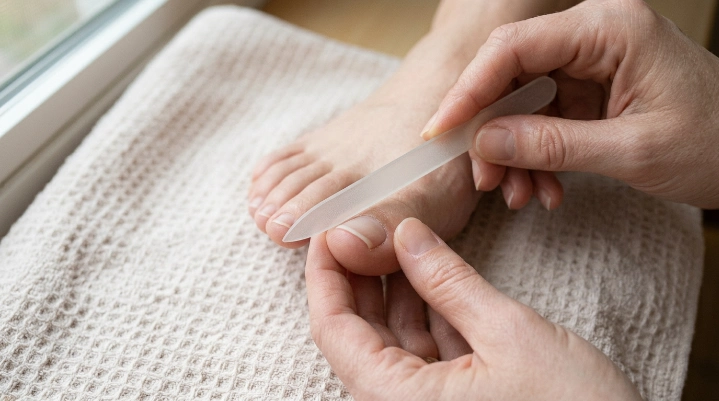
4. Hold the File Lightly
Support your foot somewhere comfortable rather than twisting your ankle or reaching awkwardly.
Hold the file securely but do not squeeze it tightly.
Place the abrasive surface against the free edge of the toenail—the part extending beyond the attached nail bed.
5. File in One Direction
Use light, controlled strokes.
Move the file across the edge in one direction, lift it, and repeat. Avoid rapidly scrubbing back and forth.
You do not need much pressure. If the file is appropriate for your nail, gentle strokes should gradually smooth the edge.
6. Keep the Toenail Shape Fairly Straight
Toenails are different from fingernails.
A dramatic oval or deeply rounded shape may look neat, but filing far down the corners can encourage the nail edge to press into surrounding skin as it grows.
Smooth obvious sharp points while keeping the overall edge relatively straight.
Mayo Clinic identifies cutting toenails too short or rounding the corners as factors associated with ingrown toenails.
7. Stop When the Edge Is Smooth
Run a fingertip gently across the free edge.
If there is no sharp snag, stop filing.
More filing does not automatically create a healthier or prettier nail. Once the roughness is gone, additional passes simply remove more nail material.
8. Moisturize Afterward
Dry nails are more prone to splitting.
After grooming, apply a small amount of moisturizer around the nail and surrounding skin if they feel dry. The AAD recommends moisturizing after nail trimming to help keep nails flexible.
Avoid leaving your feet damp inside socks or shoes.
Should You File the Top of Your Toenails?
For normal at-home grooming, you usually do not need to file the top surface of a healthy toenail.
Surface filing and buffing physically remove some of the nail plate. A few gentle passes may sometimes be used cosmetically, but repeated buffing can make the nail noticeably thinner.
Be especially cautious if your toenails already:
- Bend easily
- Split into layers
- Peel at the ends
- Feel unusually thin
- Have been damaged by trauma
- Have recently had enhancements or product removal
A thick toenail is also not automatically a nail that should simply be ground thinner.
Thickness can develop for several reasons, including repeated pressure, injury, age-related changes, or fungal infection. If you do not know why a toenail has changed, identify the cause rather than aggressively filing away the symptom.
What If Your Toenails Are Thick?
Thick toenails can be difficult to manage with an ordinary fine file.
For mild, uncomplicated thickness, trimming the nail first and smoothing the remaining edge may be easier than trying to file away a large amount of nail.
Mayo Clinic recommends extra caution with thickened toenails and notes that people with diabetes, poor circulation, or reduced sensation should speak with their healthcare team if they have questions about safely trimming their nails.
If a nail repeatedly becomes thicker, yellow, crumbly, distorted, or separated from the nail bed, do not assume it simply needs a stronger file.
The NHS lists brittle, discolored, and unusually thick nails among possible symptoms of fungal nail infection. NHS fungal nail infection guidance
How Often Should You File Toenails?
There is no need to file your toenails every day.
File them when you notice a rough edge, after trimming, or when a small snag needs smoothing.
Toenails grow considerably more slowly than fingernails, so routine grooming is generally less frequent.
If you find yourself constantly filing the same area because it keeps splitting, investigate why. Repeated pressure from tight shoes, trauma, excessive filing, or an underlying nail condition may be contributing.
Expert Tip
Expert Tip: Use the least aggressive file that gets the job done. Start with light pressure and only move to a slightly coarser file if your toenail is genuinely too thick for the finer surface. You can always file a little more, but you cannot put removed nail layers back.
How to Protect Weak or Brittle Toenails
If your toenails already feel weak, make your filing routine especially gentle.
File Only the Free Edge
Avoid repeatedly buffing or sanding the main nail surface.
Keep Some Length
Do not file the nail flush with the skin. A small free edge gives the toe more protection.
Protect Nails From Shoe Pressure
Shoes that pinch the toes can place pressure on both the nail and surrounding skin. Mayo Clinic recommends properly fitting footwear as part of ingrown-toenail prevention.
Moisturize Dry Nails
Moisturizing the nail and nearby skin can help reduce excessive dryness.
Do Not Pick Peeling Layers
If the edge begins peeling, resist pulling the loose layer backward. Carefully smooth the snag without digging into attached nail.
Nail File Hygiene: What Matters Most?
Toenail files can pick up skin debris and microorganisms during use.
For personal at-home care:
- Keep your tools clean and dry.
- Do not share files or clippers.
- Replace worn disposable files.
- Clean reusable glass or metal files according to manufacturer instructions.
- Store tools somewhere dry.
- Do not use the same disposable file on an obviously infected nail and then on healthy nails.
The NHS specifically advises against sharing nail clippers or scissors as part of fungal-nail prevention.
Salon hygiene matters too. If you get pedicures, choose a salon that appears clean and uses appropriate sanitation procedures between clients.
Common Mistakes to Avoid
- Sawing aggressively back and forth. Repeated friction can leave the edge rough and weaken the nail.
- Using an overly coarse file. Faster is not always better, particularly on thin natural nails.
- Filing deeply into both corners. This can change the nail’s natural growth path and may increase ingrown-nail problems.
- Using a nail file to shorten a very long nail. Clip excess length first, then smooth it.
- Over-buffing the top surface. This gradually removes nail thickness.
- Filing until the nail feels tender. Tenderness is a sign to stop.
- Sharing files. Personal nail tools should stay personal.
- Filing through pain or inflammation. Painful nail problems deserve evaluation rather than more filing.
- Trying to grind away unexplained discoloration or thickness. Cosmetic filing cannot diagnose or treat the underlying cause.
DIY Filing vs. a Professional Pedicure
Routine toenail filing is usually inexpensive and easy to handle at home when your nails are healthy.
A basic manual file may cost only a few dollars, while reusable glass files generally cost more but last longer with proper care.
A professional pedicure costs considerably more but may be worthwhile when you have trouble reaching your feet or want cosmetic shaping and polish application.
However, a nail technician is not a substitute for a healthcare professional.
A salon should not be expected to diagnose or treat infections, unexplained nail changes, painful ingrown nails, or medical foot problems.
When to See a Nail Technician or Dermatologist
Consider a nail technician when your nails appear healthy but you simply want help with neat shaping, polish, or routine cosmetic maintenance.
Choose a dermatologist, podiatrist, or other appropriate healthcare professional when you notice:
- Persistent pain
- Redness, warmth, or swelling
- Pus or drainage
- Bleeding around the nail
- A nail growing into surrounding skin
- Significant nail lifting
- Unexplained thickening
- Yellow, white, brown, green, or dark discoloration
- Repeated crumbling or splitting
- A nail that changes shape unexpectedly
- A problem that keeps returning
The NHS advises seeking medical advice for unexplained nail changes and for sore, red, swollen, or warm skin around a nail.
Do not keep filing a painful or suspicious-looking nail in an attempt to make it look normal. Filing can change its appearance without addressing what caused the problem.
People with diabetes, poor circulation, reduced feeling in their feet, or other conditions that make foot injuries harder to detect or heal should be especially cautious with DIY nail care.
FAQs
Is it better to cut or file toenails?
Usually, both methods work together. Use toenail clippers to remove significant length, then use a file to smooth sharp or uneven edges. Filing an entire long toenail down can take unnecessary time and encourage over-filing.
Should toenails be filed straight or rounded?
Keep the overall toenail edge fairly straight. You can lightly smooth a sharp point, but avoid deeply rounding both corners. Straight-across toenail care is commonly recommended to reduce the risk of ingrown nails.
Can filing make toenails thinner?
Yes. A file removes nail material each time it passes over the nail. Excessive filing—especially on the top surface—can make a toenail thinner and more fragile.
What grit nail file is best for natural toenails?
A fine or medium-fine file is generally easier to control for routine natural toenail maintenance. Very coarse files remove material quickly and should be used cautiously.
Is a glass nail file good for toenails?
Yes. A glass or crystal file can work well for normal natural toenails because it offers controlled, fine filing. Very thick nails may require trimming first or a somewhat more effective filing surface.
Should I file wet or dry toenails?
For ordinary edge smoothing, a clean, dry toenail gives you good visibility and control. If a toenail is very thick and needs clipping, Mayo Clinic suggests softening thickened nails with warm water before trimming and drying them afterward.
Why does my toenail keep splitting after I file it?
You may be using too much pressure, filing back and forth, using an overly coarse file, or removing too much of the nail. Repeated splitting can also have other causes. If the problem continues despite gentler care, have the nail evaluated rather than repeatedly filing it thinner.
Conclusion
Knowing how to file toenails without making them weak comes down to restraint.
Use a clean, appropriately fine file. Work with light strokes in one direction. Keep the toenail’s overall edge fairly straight, avoid aggressively thinning the surface, and stop as soon as roughness is gone.
Most healthy toenails need only occasional smoothing—not repeated grinding.
If your toenail is painful, unusually thick, discolored, crumbly, inflamed, or changing for no clear reason, put down the file and get appropriate professional advice. For normal healthy nails, a simple, gentle filing routine is usually the smartest way to keep them neat without sacrificing strength.

