
How to Keep Your Toenails Healthy: Simple Care Tips That Work

Healthy toenails may not get as much attention as a fresh manicure, but they deserve a place in your beauty routine. Toenails deal with pressure from shoes, moisture from socks, repeated trimming, polish, pedicures, and everyday friction. Small care mistakes can lead to splitting, discoloration, irritation, ingrown edges, or infection.
Learning how to keep your toenails healthy does not require an expensive pedicure routine. The basics are surprisingly simple: keep your feet clean and dry, trim toenails correctly, smooth rough edges with the right nail file, wear properly fitting shoes, keep grooming tools clean, and pay attention when a nail suddenly changes.
This guide covers a practical at-home routine, nail-file safety, pedicure habits, warning signs, and when professional help is the smarter choice.
Quick Answer
To keep your toenails healthy, wash and dry your feet thoroughly, trim toenails straight across, smooth sharp edges gently with a clean nail file, avoid cutting cuticles, wear shoes with enough toe room, and keep nail tools hygienic. Watch for persistent discoloration, swelling, pain, thickening, or other unexplained changes.
What Do Healthy Toenails Look Like?
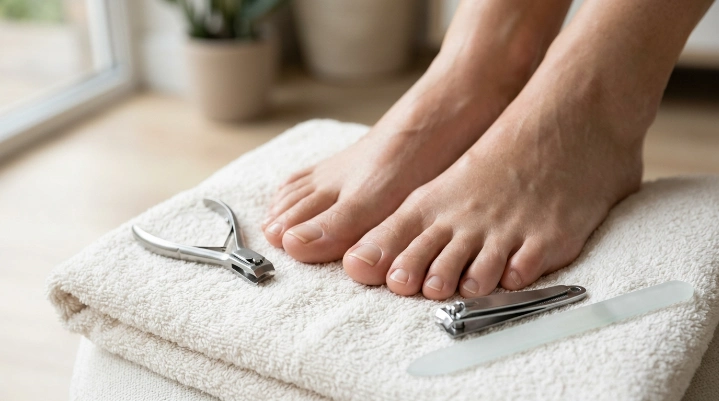
Healthy toenails are usually attached firmly to the nail bed and reasonably smooth and even. Natural color varies between people, so the goal is not to make every toenail look perfectly pink or identical.
More important is knowing what is normal for you.
A sudden or persistent change deserves attention. Examples include unusual thickening, crumbling, lifting, swelling, tenderness, or unexplained changes in color or shape. The American Academy of Dermatology’s healthy nail guidance also recommends seeking dermatologic advice when nails change, swell, or hurt.
Remember that cosmetic appearance alone cannot tell you whether a nail is healthy. Polish can hide changes, while completely natural-looking nails can still become irritated by tight shoes or aggressive grooming.
Build a Simple Toenail-Care Routine
Consistency matters more than buying a large collection of foot-care products.
A basic routine can cover most everyday needs.
1. Wash Your Feet Regularly
Clean your feet with soap and water during your normal shower or bath. Pay attention to the spaces between your toes, especially if your feet sweat easily.
You do not need to aggressively scrub underneath the nail with pointed tools. Sharp objects can injure the skin or separate the nail from the nail bed.
2. Dry Your Feet Thoroughly
Moisture can collect inside socks, between toes, and around the nail folds. Fungi thrive in moist environments, which is one reason dermatologists recommend keeping nails clean and dry.
After bathing, dry your toes carefully before putting on socks or shoes.
If you exercise or spend long hours in closed shoes, changing damp socks can also make your feet more comfortable.
3. Check Your Toenails Occasionally
You do not have to examine them every day. Just make a habit of looking at them when trimming your nails or removing polish.
Watch for:
- New yellow, brown, white, greenish, or dark discoloration
- Increasing thickness
- Crumbling or ragged edges
- Separation from the nail bed
- Redness or swelling around the nail
- Persistent tenderness
- Pus or drainage
- A new dark streak or unexplained pigment change
- A nail becoming difficult or painful to trim
Do not automatically assume every unusual-looking toenail is fungus. Other nail and skin conditions can resemble fungal infection, and diagnosis sometimes requires examination or testing. Mayo Clinic notes that psoriasis and other conditions may resemble nail fungus.
Trim Toenails the Right Way
Trimming technique is one of the most important parts of learning how to keep your toenails healthy.
Cut Straight Across
Use a proper toenail clipper and trim mostly straight across instead of creating deeply rounded corners.
The American Academy of Dermatology recommends cutting toenails straight across to help reduce the risk of ingrown nails.
Do not cut the sides deeply trying to create a curved salon-style shape. A corner that is cut too short can grow into the surrounding skin.
Do Not Cut Them Extremely Short
Your toenails should be neat, but they do not need to be trimmed down to the skin.
Cutting too short may leave the toe more vulnerable to pressure and can encourage an edge to grow into the skin. The NHS similarly advises cutting straight across and avoiding overly short trimming when preventing ingrown toenails.
Trim After Bathing if Your Nails Are Hard
Toenails can be easier to trim after a shower or bath because the nail plate is softer.
For especially thick nails, forcing a small or dull clipper through the nail can lead to cracking or accidental injury. If your toenails are unusually thick, painful, or difficult to manage safely, professional care may be a better option.
How to Use a Nail File on Toenails Safely
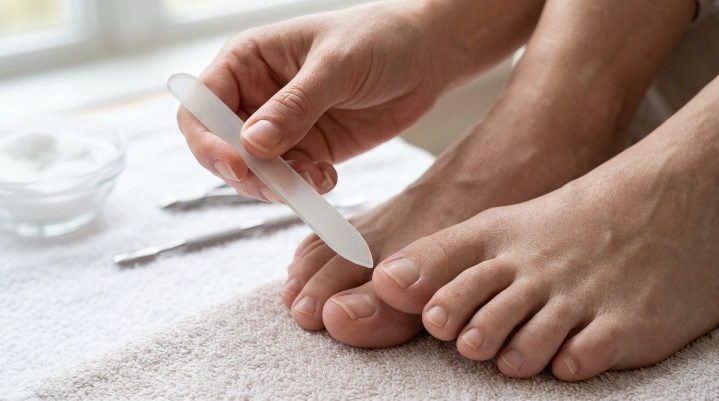
A nail file is useful for finishing the shape, not replacing good clipping technique.
After trimming, you may notice a rough corner or sharp edge that catches on socks. That is where a file helps.
File Gently in One Direction
Move the file across the free edge of the toenail with light pressure. Avoid aggressive back-and-forth sawing.
Dermatologists recommend smoothing uneven edges with a nail file or emery board and filing in the same direction because repeated back-and-forth filing can weaken nails.
Do not file deep into the sides of the nail in an attempt to remove an ingrown corner.
Choosing a Nail File
Different file materials suit different needs.
| Nail File Type | Best For | Benefits | Things to Consider |
|---|---|---|---|
| Emery board | Normal natural toenails | Inexpensive and easy to control | Wears out and is difficult to fully disinfect |
| Glass file | Smoothing natural nail edges | Fine surface and reusable | Can break if dropped |
| Metal/sapphire file | Small rough edges | Durable and washable | Coarse pressure may be too aggressive |
| Diamond file | Thick or hard nail edges | Durable with strong filing ability | Usually costs more |
| Electric file | Specialized shaping | Fast on thick material | Easy to over-file without proper technique |
For routine home care, you usually do not need the most aggressive file available.
A finer file used slowly is often easier to control than a very coarse file.
What Does a Nail File Cost?
Basic disposable files can cost only a few dollars per pack, while reusable glass, sapphire, or diamond files generally cost more. Electric nail files can cost considerably more depending on power, attachments, and quality.
Price alone does not determine whether a file is good for your toenails. Control, grit, ease of cleaning, and your own nail thickness matter more.
Expert Tip: Keep one nail file specifically for your feet rather than using the same file interchangeably on fingers, toes, family members, or visibly abnormal nails.
Keep Clippers and Nail Tools Clean
Tool hygiene is easy to overlook because a nail clipper may look clean even after repeated use.
The AAD recommends routinely disinfecting nail clippers and nail scissors. Its trimming guidance describes cleaning tools with 70–90% isopropyl alcohol, followed by rinsing and thorough drying.
At home:
- Remove visible nail debris from the tool.
- Clean or disinfect reusable tools according to the tool manufacturer’s instructions.
- Let tools dry completely before storing them.
- Store them somewhere clean and dry.
- Replace disposable emery boards when worn or contaminated.
- Avoid sharing personal nail tools.
If one toenail appears infected, avoid using the same uncleaned tool on healthy nails. Nail fungus can spread through contaminated grooming tools.
Do Not Cut Your Cuticles
The cuticle is the thin seal of tissue at the base of the nail. It helps protect the area where new nail grows.
Cutting or aggressively pushing it back can break that protective barrier and make it easier for germs to enter. Dermatologists specifically recommend leaving cuticles alone during nail trimming and pedicure care.
If the skin around your toenails is dry, gently moisturizing the surrounding skin is generally a better approach than cutting living tissue.
Stop using a product if it causes burning, rash, itching, swelling, or significant irritation.
Wear Shoes That Give Your Toes Enough Room
Beautiful toenails can still become damaged inside badly fitting shoes.
Repeated pressure from a tight toe box may irritate the nail, push the nail against surrounding skin, or create repeated trauma.
Choose shoes that:
- Do not crush your toes together
- Leave comfortable space at the front
- Do not make a toenail hurt while walking
- Fit appropriately for exercise
- Allow you to move your toes naturally
Properly fitting footwear is also included in dermatologists’ healthy-toenail recommendations.
If your feet swell during the day, a shoe that feels fine in the morning may feel much tighter later.
Be Smart About Nail Polish and Pedicures
Toenail polish can be part of a perfectly reasonable beauty routine, but regularly seeing your natural nails makes it easier to notice changes.
When removing polish, look at the nail plate before applying another color.
If a toenail is painful, swollen, draining, crumbling, or significantly discolored, repeatedly covering it with polish can make monitoring the problem harder.
At a salon, pay attention to hygiene. Tools that contact clients should be properly cleaned and disinfected according to applicable professional standards.
You can also ask your nail technician not to cut your cuticles.
A nail technician can help with cosmetic grooming, shaping, and polish. However, a nail technician should not be your substitute for medical evaluation when a nail looks infected or develops an unexplained abnormality.
Prevent Common Fungal-Nail Risks
Toenail fungus is common, but good foot hygiene can lower some everyday exposure risks.
Helpful habits include:
- Keep your feet clean and dry.
- Change out of sweaty socks.
- Avoid sharing nail clippers and files.
- Wear protective footwear in communal wet areas.
- Treat persistent athlete’s foot rather than ignoring it.
- Keep toenails reasonably short.
- Make sure reusable grooming tools are cleaned.
The AAD recommends footwear such as flip-flops in public showers and pool areas because fungi associated with nail infections can be present in warm, damp environments.
If you think you already have nail fungus, avoid assuming that filing the nail thinner will cure it.
According to Mayo Clinic’s nail-fungus treatment guidance, treatment varies with the severity and cause, and some cases require prescription treatment.
What to Do About an Ingrown Toenail
An ingrown toenail occurs when part of the nail grows into the surrounding skin. The big toe is commonly affected.
Early symptoms may include tenderness, redness, and swelling near one edge of the nail.
One of the biggest mistakes is trying to perform your own miniature nail surgery.
Do not aggressively dig under the nail, cut deeply into the corner, or tear away skin.
The NHS guidance on ingrown toenails recommends measures such as keeping the foot dry, wearing roomy footwear, and seeking care when symptoms persist or infection is suspected.
Pus, increasing swelling, significant pain, or feeling feverish or unwell warrants professional evaluation.
Common Mistakes to Avoid
Even a well-intentioned DIY pedicure can cause trouble when grooming becomes too aggressive.
Avoid these common mistakes:
- Cutting toenails too short. Leave enough nail to protect the toe.
- Rounding the corners deeply. Straight-across trimming is safer for preventing ingrown edges.
- Filing aggressively. Use light pressure and stop when the rough edge is smooth.
- Digging into an ingrown nail. This may injure the surrounding skin.
- Cutting your cuticles. They help protect the nail root.
- Sharing clippers or files. Personal nail tools should stay personal.
- Using visibly dirty salon or home tools. Hygiene matters.
- Ignoring shoe pressure. Repeated trauma can damage toenails.
- Covering a suspicious nail indefinitely with polish. Check unexplained changes instead.
- Assuming every thick or yellow nail is fungus. Similar-looking nail changes may have different causes.
- Trying to treat pain or infection as a cosmetic issue. Health problems deserve medical assessment.
DIY Toenail Care vs. Professional Care
Not every toenail needs professional treatment, but not every problem belongs in your bathroom pedicure kit either.
| Situation | DIY Care May Be Reasonable | Professional Help Is Better |
|---|---|---|
| Normal trimming | Yes | If you cannot safely reach the nail |
| Small rough edge | Yes, use a clean file | If filing causes pain |
| Cosmetic polish change | Usually | If discoloration persists without polish |
| Thick toenails | Mild cases may be manageable | When very thick, painful, or hard to cut |
| Ingrown nail | Mild early irritation may improve with conservative care | Persistent pain, swelling, infection, or recurrence |
| Suspected fungus | Basic hygiene is helpful | Diagnosis/treatment may require a clinician |
| Redness or pus | No | Seek medical care |
| Unexplained dark streak/change | Do not self-diagnose | See a dermatologist |
When to See a Nail Technician or Dermatologist
A nail technician is useful when your nails are basically healthy and you want help with cosmetic maintenance, shaping, polishing, or a pedicure.
A dermatologist, doctor, or podiatrist is more appropriate when the concern appears medical.
Consider professional medical evaluation if you have:
- Persistent pain
- Redness, warmth, or swelling
- Pus or drainage
- A nail that repeatedly grows into the skin
- Significant thickening or crumbling
- Unexplained nail lifting
- Persistent color or shape changes
- A new or changing dark streak
- Suspected fungal infection that is not improving
- An injury that has damaged the nail or surrounding skin
The NHS advises seeking medical attention for unexplained nail changes and for skin around a nail that becomes sore, red, swollen, and warm.
If you have diabetes, poor circulation, reduced sensation in your feet, or another condition that makes foot injuries higher-risk, be cautious with DIY trimming and treatment. Dermatologists particularly recommend medical attention for nail problems in people with diabetes or poor circulation.
FAQs
How often should I trim my toenails?
There is no single schedule that fits everyone. Trim them when the free edge becomes long enough to catch, press against shoes, or become difficult to manage. Toenails grow more slowly than fingernails, so they usually need less frequent trimming.
Should toenails be cut straight or curved?
Cut toenails mostly straight across. Deeply rounding the corners can increase the chance that the nail edge grows into the surrounding skin.
Is filing toenails bad for them?
Not when done gently. A nail file can smooth rough edges after clipping. Use light pressure and avoid repeatedly sawing back and forth.
Can I use the same nail file on my fingers and toes?
Keeping separate tools is a simple hygiene habit, especially if any toenail looks abnormal. At minimum, reusable tools should be properly cleaned before being used on another nail.
Why are my toenails getting thicker?
Toenails may become thicker for several reasons, including repeated trauma, age-related changes, fungal infection, or other nail conditions. Because different problems can look similar, persistent thickening should not automatically be self-diagnosed as fungus.
Is it okay to keep toenail polish on all the time?
Polish itself does not tell you whether the nail underneath is healthy. Periodically removing it gives you an opportunity to check for changes such as lifting, discoloration, thickening, or irritation.
When should I worry about a toenail color change?
Seek professional advice when a color change appears without an obvious explanation, persists, worsens, or occurs with pain, swelling, thickening, lifting, or another abnormal change. Unexplained nail changes are among the reasons dermatology and health guidance recommends medical evaluation.
Conclusion
Learning how to keep your toenails healthy comes down to a handful of dependable habits rather than complicated treatments.
Keep your feet clean and dry. Trim your toenails straight across without cutting them excessively short. Smooth rough edges gently with a clean nail file. Protect your cuticles, keep personal grooming tools hygienic, and choose shoes that do not squeeze your toes.
Most importantly, know the limit of DIY nail care.
Routine clipping, filing, and cosmetic maintenance can usually be handled at home. Persistent pain, swelling, drainage, unexplained discoloration, major thickening, recurring ingrown nails, or other unusual changes deserve professional attention.
Give your toenails the same regular check-in you give the rest of your beauty routine. A few minutes of smart care can help you catch problems early and keep your feet looking neat, comfortable, and well cared for.

