
How to Make Thick Toenails Easier to Cut: A Safe, Simple Guide

Thick toenails can make a basic pedicure feel like a much bigger job. Regular clippers may not open wide enough. The nail may crack instead of cutting cleanly. You may even find yourself squeezing the clipper harder and harder with very little progress.
If you are wondering how to make thick toenails easier to cut, the safest approach is usually to soften the nail first, use a tool made for thicker toenails, make small cuts, and smooth rough edges with a nail file.
The important part is not to force the nail.
Thickening can happen with age, repeated shoe pressure, past injuries, psoriasis, or a fungal nail infection. That means a nail that is becoming very thick, painful, discolored, crumbly, or misshapen may need more than a home pedicure.
Below, I will walk you through the easiest way to prepare, trim, and file thick toenails while keeping safety in mind.
Quick Answer
To make thick toenails easier to cut, soak your feet in warm water for about 5–10 minutes, dry them well, and use clean, sharp toenail nippers or wide-jaw clippers. Trim the nail in small cuts straight across, then gently smooth sharp or uneven areas with a nail file.
Why Thick Toenails Are So Difficult to Cut
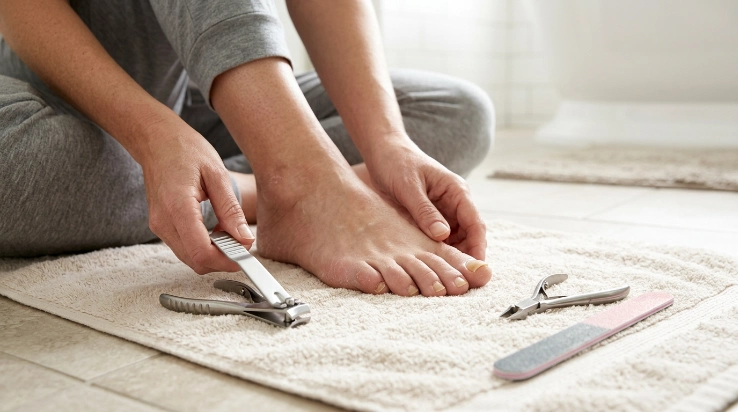
Normal toenails are already thicker than fingernails. Once a toenail becomes unusually dense or hard, standard nail clippers may struggle to get through it.
The nail can also become:
- Hard and difficult to bend
- Wider than a normal clipper opening
- Brittle around the edges
- Curved or misshapen
- Rough on the surface
- More likely to split when squeezed
This is why simply applying more pressure is not a good solution.
Using too much force can make a clipper suddenly slip. You could cut the surrounding skin or remove more nail than you intended.
According to the Mayo Clinic’s guidance on trimming thickened toenails, thick nails can be related to aging, psoriasis, injury, tight shoes, or fungal infection. Mayo Clinic also recommends softening thickened nails before trimming them.
How to Make Thick Toenails Easier to Cut Step by Step
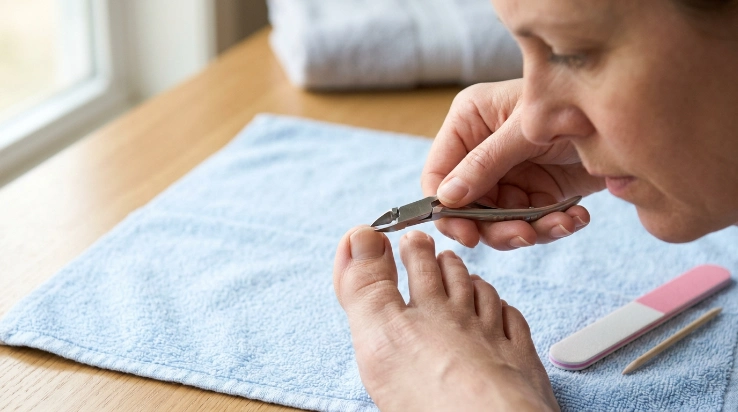
You do not need to attack a thick nail with a powerful tool. Preparing the nail first usually makes the biggest difference.
1. Soften the Toenails First
Start by soaking your feet in comfortably warm water for about 5–10 minutes.
The goal is not to soak for half an hour. You simply want to make the nail a little less rigid.
A shower or bath can work too.
Afterward, dry your feet carefully, especially between your toes.
Do not leave the feet damp for long periods. Moist environments can encourage fungal growth.
Softening the nail is especially useful if the nail feels almost impossible to cut when completely dry.
2. Gather the Right Tools
A tiny fingernail clipper is rarely the best tool for a very thick big toenail.
You may find these options easier:
| Tool | Best For | Main Benefit | Main Limitation |
|---|---|---|---|
| Wide-jaw toenail clipper | Moderately thick nails | Wider opening and stronger leverage | Can still struggle with extremely thick nails |
| Nail nipper | Hard or very thick nails | Strong cutting power and good control | Very sharp and requires careful handling |
| Medium/coarse nail file | Rough or thick edges | Removes small amounts gradually | Over-filing can weaken the nail |
| Emery board | Finishing edges | Gentle and inexpensive | Wears out faster |
| Metal/glass file | Regular maintenance | Reusable and easy to clean | Some versions can feel aggressive |
For many thick toenails, nail nippers are easier to control than forcing ordinary nail clippers around the nail.
Your tools should also be clean, sharp, and in good condition.
The American Academy of Dermatology’s nail-trimming recommendations advise using the proper nail tools, trimming toenails straight across, and smoothing uneven edges with a nail file or emery board.
3. Make Small Cuts Instead of One Big Cut
This is where many people run into trouble.
Do not try to clip the entire big toenail in one squeeze.
Instead:
- Start near one side of the nail.
- Position only a small section between the blades.
- Make one controlled cut.
- Move across the nail little by little.
- Stop if the nail begins cracking or splitting.
Small cuts require less force.
They also give you more control over how much nail you remove.
If your clipper cannot comfortably fit around the nail, do not force the jaws open or press the tool into your skin. Switch to a wider clipper or nail nipper.
4. Cut the Toenail Straight Across
It can be tempting to dig down into the corners, especially if they look long.
Try not to.
Cutting deeply into the sides can make an ingrown toenail more likely.
Aim for a mostly straight edge and leave a small amount of visible nail rather than cutting down to the skin.
Do not remove a large section simply because the nail looks thick.
5. Use a Nail File to Smooth the Edge
Once the main length is removed, use a file to smooth sharp spots.
This step matters because thick toenails can leave especially hard, jagged edges after clipping.
A rough edge may:
- Catch on socks
- Scratch nearby toes
- Split farther up the nail
- Feel uncomfortable inside shoes
Use light pressure.
You are trying to smooth the nail, not grind it away.
The American Academy of Dermatology recommends filing rough edges rather than leaving them jagged.
6. Clean and Dry Your Tools
After trimming, remove visible nail debris from the tool.
Clean reusable clippers, nippers, and files according to their material and manufacturer instructions, then allow them to dry completely.
Avoid sharing your personal toenail tools.
This is especially important when fungal infection is possible.
Can Filing Make a Thick Toenail Easier to Cut?
Yes, but there is a difference between gentle thinning and aggressive grinding.
If the free edge of the toenail is unusually bulky, lightly filing that area may make the next trim easier.
Start conservatively.
File a little, inspect the nail, and stop before the nail becomes thin or sensitive.
Do not keep filing just because the surface still looks uneven.
Natural toenails are not supposed to be paper-thin.
If filing causes:
- Pain
- Heat
- Tenderness
- Bleeding
- Pink or sensitive areas
stop immediately.
The Mayo Clinic’s nail fungus treatment information notes that thinning a thickened nail may sometimes be part of fungal nail management, but professional debridement may also be appropriate in some cases.
What Type of Nail File Works Best?
For an ordinary thick nail, I would start with a file that gives you control rather than the roughest file available.
A very coarse file removes nail faster, but that is not always an advantage.
It is easier to remove too much.
A medium file can be a good compromise for reducing a rough, bulky free edge before switching to a finer file for smoothing.
If a nail is so thick that you feel you need heavy grinding for several minutes just to make progress, stop and consider professional care.
Why Did My Toenail Become So Thick?
Making the toenail easier to trim solves the immediate grooming problem, but it does not explain why the nail changed.
Common reasons include:
Aging
Toenails may gradually become thicker and harder as we get older.
Repeated Shoe Pressure
Shoes that repeatedly press against the same toenail can affect the way it grows.
This is especially common around the big toe.
Previous Injury
A nail can grow differently after a toe has been hit, stubbed, crushed, or repeatedly irritated.
You may not even remember the original injury.
Nail Fungus
Fungal nail infection can make a toenail thick, discolored, crumbly, misshapen, or separated from the nail bed.
The Mayo Clinic’s overview of nail fungus symptoms lists thickening, discoloration, brittleness, crumbling, misshaping, and nail separation among possible signs.
However, do not assume every thick yellow toenail is fungus. Other nail conditions can look similar.
Psoriasis and Other Nail Conditions
Psoriasis can affect the nails as well as the skin.
Certain nail growth disorders can also cause marked thickening.
If you cannot tell why the nail has changed, a dermatologist can examine it and help determine the cause.
Expert Tip
Expert Tip: If a thick toenail feels impossible to cut, do not solve the problem by squeezing harder. Soften the nail, switch to a wider and sharper tool, and remove only a small amount at a time. If that still requires excessive force, let a professional handle it.
Should You Use Toenail Clippers or Nail Nippers?
Both can work.
The better choice depends on how thick your nail is and how comfortable you are controlling the tool.
Wide-Jaw Toenail Clippers
These look similar to standard clippers but open farther.
They are useful when your regular clipper simply cannot fit around the nail.
They can also be easier for beginners because the motion feels familiar.
Nail Nippers
Nippers look more like a small pair of pliers.
They give you more leverage and allow you to take small bites from a thick nail.
Mayo Clinic specifically recommends nail nippers as a useful tool for thickened toenails.
The drawback is that the blades can be extremely sharp.
Work slowly and keep your fingers and surrounding skin away from the cutting edge.
How Much Do You Need to Spend?
You do not need an expensive home pedicure kit just because your toenails are thick.
A basic emery board or nail file can cost only a few dollars.
Heavy-duty toenail clippers and nippers usually cost more because they use stronger blades, wider jaws, and larger handles.
Instead of buying based only on price, look for:
- Sharp, well-aligned blades
- A comfortable non-slip grip
- A jaw wide enough for your nail
- A tool you can control easily
- Material that is simple to clean and dry
- No loose hinges or damaged cutting edges
A bargain tool that crushes the nail or slips in your hand is not really a bargain.
Professional nail or medical foot care costs more, but it may be the safer option if trimming your nails yourself could cause an injury.
Hygiene Matters More Than You May Think
Toenail tools come into contact with nail debris and skin.
Good hygiene is especially important if one nail looks suspicious for fungus.
A few practical habits help:
- Wash and dry your feet regularly.
- Keep your tools clean and dry.
- Do not share toenail clippers or files.
- Replace disposable emery boards when they become dirty or worn.
- Let reusable tools dry completely before storage.
- Keep your feet dry inside shoes.
- Avoid cutting irritated skin around the nail.
If you visit a salon, choose one that follows appropriate tool-cleaning and sanitation practices.
Common Mistakes to Avoid
Even a strong pair of clippers will not help if the trimming method is too aggressive.
Avoid these common mistakes:
- Trying to cut a rock-hard nail without softening it first.
- Using fingernail clippers on a toenail that clearly does not fit.
- Squeezing harder when the blade is not cutting properly.
- Trying to remove the entire nail edge in one cut.
- Digging deep into the nail corners.
- Aggressively grinding the nail thinner with a rough file.
- Cutting the nail extremely short.
- Using rusty, damaged, or dull tools.
- Sharing personal nail tools.
- Ignoring pain, swelling, bleeding, or major color changes.
- Assuming every thick toenail is simply a cosmetic problem.
The biggest rule is simple: if trimming requires force that feels unsafe, stop.
When DIY Toenail Care May Not Be a Good Idea
Most healthy adults can handle mild toenail thickening with careful home grooming.
Some situations deserve extra caution.
Talk with a medical professional before trimming difficult nails yourself if you have conditions that affect:
- Blood circulation in your feet
- Sensation in your feet
- Wound healing
- Your immune system
Diabetes is an especially important example.
Mayo Clinic advises people with diabetes, poor circulation, or reduced sensation in the feet to be particularly careful with thickened toenail trimming.
Even a small accidental cut can be more significant when healing or sensation is impaired.
When to See a Nail Technician or Dermatologist
A nail technician may be able to help with ordinary grooming when the nail is healthy but difficult to shape.
However, nail technicians do not diagnose medical nail conditions.
A dermatologist, podiatrist, or other qualified healthcare professional is more appropriate if you notice:
- Increasing nail thickness
- Significant yellow, brown, white, or dark discoloration
- Crumbling or ragged nail edges
- Nail separation from the skin underneath
- Swelling or redness
- Bleeding
- Drainage
- Bad odor combined with other nail changes
- Pain around or beneath the nail
- Difficulty walking
- A severely curved or distorted nail
- Repeated ingrown toenails
- Thickening that continues to worsen
- Several nails changing at once
The American Academy of Dermatology explains that professional nail debridement can reduce excessive nail thickness in some cases, particularly when fungal disease is involved. AAD’s nail fungus treatment guide also explains why diagnosis matters before choosing treatment.
If a nail suddenly changes without an obvious reason, it is worth getting it checked rather than repeatedly filing the change away.
How to Keep Thick Toenails More Manageable
Once you have safely trimmed your toenails, regular maintenance is much easier than waiting for them to become very long again.
Try this simple routine:
- Check the nails every few weeks.
- Trim only when there is enough free edge.
- Soften difficult nails before cutting.
- Make small, controlled cuts.
- File rough edges gently.
- Keep tools clean and dry.
- Wear shoes that do not constantly press on the toes.
- Watch for new color, shape, or texture changes.
You do not need perfectly thin or polished-looking toenails.
The goal is to keep them comfortable, manageable, and healthy without damaging the nail or surrounding skin.
FAQs
What is the easiest way to cut very thick toenails?
Soften the nail in warm water for about 5–10 minutes, dry your feet, and use sharp nail nippers or a wide-jaw toenail clipper. Make several small cuts rather than trying to cut through the whole nail at once.
Should I cut thick toenails wet or dry?
Slightly softened nails are generally easier to trim than rock-hard dry nails. After soaking, dry your feet thoroughly before using your tools.
Can I file down a thick toenail instead of cutting it?
You can gently file a thick or rough edge, but filing is slow and should not become aggressive grinding. If the nail needs extensive thinning, professional care may be safer.
Why are my toenails getting thicker?
Possible causes include aging, repeated pressure from shoes, old injuries, psoriasis, fungal infection, and other nail-growth changes. A dermatologist can help if the cause is unclear.
Are thick toenails always caused by fungus?
No. Fungus is one possible cause, but age, trauma, psoriasis, footwear pressure, and other nail disorders can also cause thickening.
What tool is best for extremely thick toenails?
Nail nippers often provide more leverage than standard clippers. However, they are very sharp. If the nail is severely thickened, painful, distorted, or difficult to reach safely, professional trimming is a better option.
How short should I cut a thick toenail?
Do not cut it down to the skin. Leave a small visible edge and trim mostly straight across. Cutting extremely short or digging into the corners may increase irritation and ingrown-nail problems.
Conclusion
Learning how to make thick toenails easier to cut is mostly about preparation and control, not strength.
Soften hard nails first. Choose a clipper or nipper that actually fits around the nail. Make small cuts straight across. Finish rough areas with a nail file, and keep your tools clean.
Most importantly, pay attention to what the nail is telling you.
A mildly thick but otherwise healthy toenail may be manageable at home. A nail that is painful, increasingly thick, discolored, crumbly, swollen, bleeding, or badly distorted deserves professional attention.
Take the gentle approach first. If you cannot trim the nail comfortably and safely, skip the force and let a qualified professional take over.

