
How to Prevent Common Toenail Problems: Simple Habits for Healthy Feet

Toenails may seem low-maintenance, but small everyday habits can make a big difference in how they look and feel. Cutting them too short, wearing tight shoes, using dirty nail tools, or leaving feet damp for long periods can contribute to problems such as ingrown toenails, fungal infections, splitting, discoloration, and soreness.
Learning how to prevent common toenail problems is mostly about keeping your nails clean, dry, properly trimmed, and protected from unnecessary pressure or damage.
You do not need a complicated pedicure routine. In this guide, you will learn how to trim and file toenails safely, choose suitable nail tools, improve foot hygiene, recognize warning signs, and know when a DIY approach is no longer the safest option.
Quick Answer
To prevent common toenail problems, keep your feet clean and dry, trim toenails straight across, smooth rough edges gently, wear properly fitting shoes, disinfect reusable nail tools, and avoid cutting into the nail corners. Watch for persistent pain, swelling, discoloration, thickening, drainage, or nail lifting, which may need professional evaluation.
Why Toenail Problems Happen
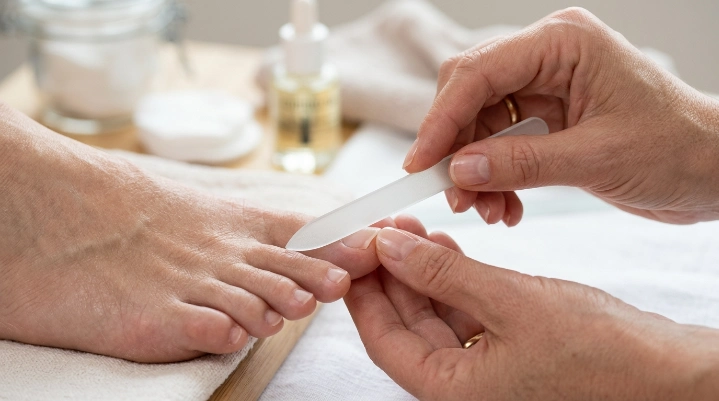
Most toenail problems do not come from one single mistake. They usually develop after repeated pressure, moisture, irritation, injury, or improper nail care.
For example, trimming the corners of a toenail too deeply can encourage the nail edge to grow into the surrounding skin. Tight shoes may make that pressure worse.
Warm, sweaty feet can create an environment where fungi thrive. The American Academy of Dermatology recommends keeping feet clean and dry, changing sweaty socks, wearing breathable footwear, and avoiding sharing nail-grooming tools as part of nail-fungus prevention.
Common factors behind toenail trouble include:
- Cutting toenails too short
- Rounding deeply into the nail corners
- Wearing shoes with a narrow toe box
- Keeping damp socks or shoes on for too long
- Sharing nail clippers or files
- Reusing dirty pedicure tools
- Filing too aggressively
- Picking at the nail or surrounding skin
- Walking barefoot in shared wet areas
- Ignoring athlete’s foot or early nail changes
- Repeatedly hitting the toenail during exercise
- Covering a suspicious nail with polish instead of checking it
The good news is that many of these risks can be reduced with a simple routine.
The Most Common Toenail Problems to Prevent
Understanding what you are trying to prevent makes daily toenail care easier.
| Toenail problem | Common warning signs | Helpful prevention habit |
|---|---|---|
| Ingrown toenail | Tender edge, redness, swelling | Trim straight across and avoid digging into corners |
| Nail fungus | Yellowing, thickening, crumbling, lifting | Keep feet dry and maintain good tool hygiene |
| Brittle or splitting nails | Peeling, cracks, rough edges | File gently and avoid unnecessary trauma |
| Bruised toenail | Dark area under nail, tenderness | Wear properly fitting footwear |
| Irritated nail folds | Redness or sore skin around nail | Avoid aggressive cuticle cutting |
| Nail injury | Cracks, lifting, bleeding, soreness | Protect toes and avoid forcing damaged nails |
| Thickened toenail | Harder-to-cut or unusually bulky nail | Avoid aggressive DIY thinning and seek advice if persistent |
Not every change means you have an infection. Injury, repeated shoe pressure, certain skin conditions, and other health issues can also change toenail appearance.
That is why a toenail that stays unusual despite better care deserves a closer look rather than endless filing or cosmetic covering.
Trim Toenails the Right Way
Proper trimming is one of the most important steps when learning how to prevent common toenail problems.
The American Academy of Dermatology advises cutting toenails straight across rather than rounding deeply into their corners, which can help reduce the chance of an ingrown toenail.
Step-by-Step Safe Toenail Trimming
- Start with clean tools. Use a toenail clipper that is sharp, clean, and comfortable to control.
- Look at the natural nail shape. Do not automatically copy the rounded shape you may use on fingernails.
- Clip mostly straight across. Make several controlled cuts instead of forcing one large cut through a thick nail.
- Leave a little nail visible. Avoid cutting the nail down into tender skin.
- Do not dig into the corners. Deep corner cutting may create irritation and encourage the nail edge to grow into the skin.
- Smooth sharp edges with a file. The goal is to remove snags, not reshape the entire nail aggressively.
- Check the surrounding skin. Stop if you notice bleeding, swelling, drainage, or significant pain.
If a toenail is extremely thick or difficult to cut safely, forcing the clipper through it is not a good idea. A podiatrist or healthcare professional may be able to thin or trim difficult nails more safely.
How to Use a Nail File on Toenails
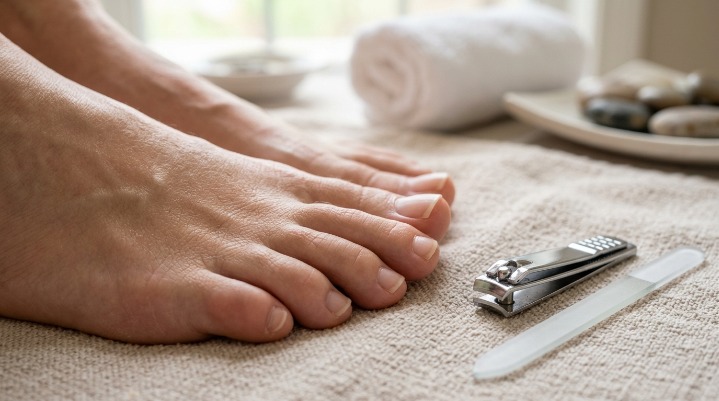
A nail file is useful for smoothing rough edges after clipping, but it should not replace careful trimming or be used as a treatment for a diseased nail.
For natural toenails, a fine or medium-fine file usually gives you better control than a very coarse abrasive.
Nail File Materials
Glass or crystal file: Smooth, reusable, and relatively easy to clean. It can be a good choice for gentle edge finishing.
Emery board: Affordable and easy to find. Because it is porous and wears down, replacing it regularly is generally more practical than trying to disinfect it indefinitely.
Metal file: Durable and washable, but it can feel aggressive on thin or fragile nails. Use very light pressure.
Buffer block: Better suited to light surface smoothing than shortening toenails. Excessive buffing can thin the nail plate.
A basic toenail file commonly costs only a few dollars, while reusable glass files may cost more initially but can last considerably longer when cared for properly.
Expert Tip: Use the least aggressive file that gets the job done. If you feel heat, tenderness, or soreness while filing, stop. Toenail care should not hurt.
File Without Overdoing It
Use light strokes along the free edge of the nail.
You are trying to remove sharp corners and roughness—not grind the nail dramatically thinner.
Avoid repeatedly filing the skin beside the nail or forcing the file underneath the nail plate. This can irritate delicate tissue and potentially create small areas where microorganisms can enter.
Filing also cannot cure nail fungus. The American Academy of Dermatology notes that fungal organisms can live within the nail and tissue beneath it, so simply filing away visible changes does not eliminate the infection.
Keep Feet Clean and Dry
Moisture control is one of the simplest ways to protect toenails.
Wash your feet regularly, including around the toes, and dry them thoroughly afterward. Pay special attention to the spaces between your toes.
If your feet sweat heavily:
- Change socks when they become damp.
- Choose moisture-managing socks when appropriate.
- Rotate shoes rather than repeatedly wearing a damp pair.
- Let shoes dry between uses.
- Choose breathable footwear when possible.
- Avoid staying in wet shoes after exercise or rain.
Mayo Clinic similarly recommends clean, dry feet, absorbent socks, breathable footwear, clean nail tools, and protective footwear in shared pool or locker-room areas to help prevent fungal nail infections.
Choose Shoes That Give Your Toes Enough Space
A fashionable shoe is not a good bargain if your toes are pressed together all day.
Repeated pressure can contribute to soreness, bruised nails, nail lifting, and irritation around the nail edges.
When trying on shoes, check whether:
- Your toes can move naturally.
- Your longest toe is not hitting the front.
- The toe box does not squeeze the sides of your nails.
- Your heel does not slide enough to force your toes forward.
- Athletic footwear leaves enough space for movement during exercise.
High heels or sharply pointed shoes do not automatically cause a toenail problem, but wearing restrictive footwear frequently may increase pressure.
If a toenail repeatedly turns dark or becomes sore after running, hiking, or long walks, your shoe fit deserves attention.
Protect Toenails in Public Wet Areas
Locker rooms, public showers, pool decks, and similar warm, wet environments can expose your feet to fungi.
Wear shower sandals or another protective shoe rather than walking barefoot.
Do not share:
- Nail clippers
- Nail files
- Towels
- Socks
- Shoes
- Pedicure tools
If someone in your household has athlete’s foot or nail fungus, separate personal grooming tools and encourage appropriate treatment.
Keep Toenail Tools Hygienic
A clean-looking tool is not necessarily a properly cleaned tool.
Visible nail dust, skin debris, or product residue should be removed before disinfecting a reusable tool.
For reusable clippers, follow an appropriate cleaning and disinfection routine and let the tool dry completely before storage. The AAD specifically recommends cleaning debris away before disinfecting nail clippers and allowing them to air-dry fully.
What About Files and Buffers?
Tool material matters.
Hard, non-porous files such as some glass or metal files can often be cleaned more effectively than porous emery boards.
Disposable files, foam buffers, and similar porous tools should be replaced when dirty, worn, damaged, or contaminated instead of being shared between people.
Never share a personal nail file with someone who has a suspicious or infected toenail.
Do Not Cut or Dig at the Cuticle Area
The cuticle and skin around the nail form part of your natural protective barrier.
Aggressively cutting, tearing, or pushing this skin can cause soreness and small injuries.
With toenails, there is usually little reason to perform aggressive cuticle work at home.
If you see loose dead skin, resist the temptation to dig underneath the nail or cut deep around the nail groove.
Pain, bleeding, or broken skin means it is time to stop the pedicure.
Prevent Ingrown Toenails Before They Start
An ingrown toenail happens when an edge of the nail presses or grows into nearby skin.
The big toe is especially vulnerable.
To reduce the risk:
- Cut toenails straight across.
- Do not carve a deep curve into the corners.
- Avoid cutting nails extremely short.
- Wear shoes with enough toe space.
- Do not repeatedly pick the nail corners.
- Protect toes from repeated impact.
If the nail edge is already painful, swollen, or embedded in the skin, repeatedly digging it out yourself can make the problem worse.
People with diabetes, poor circulation, reduced sensation in the feet, or another condition that affects foot healing should be especially cautious about DIY treatment and should follow guidance from their healthcare professional.
Reduce the Risk of Toenail Fungus
Toenail fungus can cause a nail to become thicker, discolored, brittle, crumbly, or separated from the nail bed.
Prevention is easier than trying to fix a long-established infection.
Helpful habits include:
- Drying feet well after bathing
- Changing sweaty socks
- Allowing shoes to dry
- Wearing footwear in shared showers
- Avoiding shared nail tools
- Disinfecting reusable clippers
- Treating athlete’s foot promptly
- Watching for early nail changes
Do not assume every yellow or thick toenail is fungus. Trauma and other nail conditions can look similar.
A dermatologist may need to examine or test the nail before recommending treatment.
Be Careful With Nail Polish and Pedicures
Regular polish can make toenails look neat, but cosmetic coverage can also make it harder to watch a nail that is changing.
If you notice unexplained discoloration, lifting, swelling, drainage, or worsening pain, take a break from polish and inspect the nail.
At a salon, look for good hygiene practices.
A responsible salon should use clean tools and appropriately maintain pedicure equipment between clients.
Avoid a pedicure if the skin around your toenails is:
- Bleeding
- Open or cracked
- Swollen
- Painful
- Draining fluid
- Showing signs of infection
A salon service should never be used to hide a possible medical nail problem.
Build a Simple Weekly Toenail Routine
Preventive toenail care does not need to take much time.
Once or Twice a Week
Check your toenails in good lighting.
Look for:
- New discoloration
- Tenderness
- Swelling
- Cracks
- Nail lifting
- Thickening
- Red or irritated skin
- Changes after wearing new shoes
When Nails Become Long
Trim them straight across using a clean toenail clipper.
File only enough to remove rough or sharp edges.
Every Day
Keep feet clean and dry.
Change damp socks and avoid staying in sweaty footwear for hours.
After Using Nail Tools
Clean reusable tools appropriately, dry them thoroughly, and store them somewhere clean and dry.
This routine costs very little and can help you catch changes early.
DIY Care vs. Professional Care
| Situation | DIY care may be reasonable | Professional help is safer |
|---|---|---|
| Slightly rough nail edge | Gentle filing | Persistent splitting or pain |
| Normal nail that needs trimming | Straight-across clipping | Nail too thick to cut safely |
| Mild shoe pressure | Change footwear | Repeated bruising or lifting |
| Dry surrounding skin | Gentle moisturizer | Cracked, bleeding, swollen skin |
| Suspected fungus | Keep clean and dry while arranging evaluation | Diagnosis and treatment |
| Mild corner tenderness | Stop pressure and monitor | Embedded nail, drainage, severe pain |
| Cosmetic shaping | Home or salon care | Abnormal color, shape, or growth |
DIY care works best for routine grooming.
It is much less useful when you are dealing with infection, severe inflammation, significant nail trauma, or unexplained changes.
Common Mistakes to Avoid
- Cutting toenails into a deep curve. This can encourage the edges to press into surrounding skin.
- Cutting nails extremely short. Leave enough nail to protect the tip of the toe.
- Using a coarse file aggressively. More abrasion does not mean better care.
- Filing painful or damaged nails repeatedly. Pain is a reason to stop, not file harder.
- Sharing nail tools. Personal grooming tools should stay personal.
- Storing tools while damp. Moisture is bad for both hygiene and many tool materials.
- Ignoring tight shoes. Nail care cannot compensate for constant toe pressure.
- Picking underneath a lifting nail. This can worsen trauma.
- Covering discoloration immediately with polish. Check unexplained changes first.
- Assuming every thick nail is fungus. Several different conditions can change nail appearance.
- Trying to perform medical-style nail thinning at home. Very thick or painful nails may need professional care.
When to See a Nail Technician or Dermatologist
A licensed nail technician can help with normal grooming, shaping, and cosmetic pedicure care.
However, a nail technician is not the right person to diagnose or medically treat an infection.
Consider seeing a dermatologist, podiatrist, or another appropriate healthcare professional if you notice:
- Persistent or worsening pain
- Spreading redness or swelling
- Pus or drainage
- A bad odor with other symptoms
- Significant nail lifting
- A thick, crumbly, or increasingly discolored nail
- An ingrown toenail that is embedded in the skin
- Bleeding or an open wound
- A dark mark that appeared without a clear injury
- Nail changes that continue despite gentle care
- Recurring toenail problems
The AAD notes that conditions such as nail psoriasis and nail injuries can sometimes resemble fungal nail disease, which is one reason proper diagnosis can matter before treatment begins.
If you have diabetes, poor circulation, reduced sensation, immune problems, or difficulty healing foot wounds, ask your healthcare professional for personalized foot-care guidance rather than relying on aggressive at-home treatment.
FAQs
How can I prevent common toenail problems at home?
Keep toenails clean and dry, trim them straight across, file rough edges gently, wear properly fitting shoes, use clean nail tools, and check your feet regularly for changes.
Should toenails be cut straight or curved?
Toenails are generally best trimmed mostly straight across. Cutting deeply into the corners may increase the chance of an ingrown nail.
What type of nail file is best for toenails?
A fine or medium-fine file is usually suitable for smoothing natural toenail edges. Glass files are reusable and easy to clean, while emery boards are inexpensive but should be replaced regularly.
Can filing prevent toenail fungus?
Filing can smooth or thin a rough nail, but it does not prevent or cure fungus by itself. Good foot hygiene, dry footwear, clean tools, and avoiding fungal exposure are more important preventive measures.
How often should I cut my toenails?
There is no single schedule for everyone. Trim them when they become long enough to catch, press against footwear, or become difficult to keep neat. Toenails grow more slowly than fingernails, so they usually need less frequent trimming.
Why does my big toenail keep hurting?
Possible causes include tight shoes, repeated trauma, an ingrown nail, infection, or another nail condition. If the pain persists, worsens, or comes with swelling, drainage, or major discoloration, have it professionally evaluated.
Is it safe to get a pedicure if my toenail looks infected?
It is better to postpone cosmetic nail services if the nail or surrounding skin is painful, swollen, bleeding, draining, or suspicious for infection. A healthcare professional can help determine what is causing the problem.
Conclusion
Knowing how to prevent common toenail problems comes down to a few consistent habits: trim straight across, file gently, keep feet dry, wear shoes that fit, maintain clean nail tools, and pay attention when your nails change.
Avoid treating every nail concern as a cosmetic problem. Pain, swelling, unusual discoloration, drainage, severe thickening, or persistent nail lifting deserves more attention than another coat of polish.
Keep your toenail routine simple and gentle. Check your nails regularly, correct small grooming or footwear problems early, and get professional help when a nail change falls outside normal at-home care.

