
How to Prevent Ingrown Toenails: Simple Nail Care Habits That Work

Ingrown toenails can turn something as simple as wearing shoes or walking around the house into an uncomfortable experience. They happen when the edge or corner of a toenail presses or grows into the surrounding skin, often causing tenderness, redness, swelling, and sometimes infection.
Learning how to prevent ingrown toenails mostly comes down to better trimming, gentle filing, good footwear, clean nail tools, and knowing when to leave a problem alone instead of trying to fix it aggressively at home.
The good news is that you do not need a complicated pedicure routine. A few small changes can make your toenails much easier to manage and reduce the chance of painful corners developing.
Quick Answer
To prevent ingrown toenails, trim toenails straight across, avoid cutting them extremely short, gently smooth sharp edges with a nail file, wear shoes with enough toe room, and keep your feet clean and dry. Avoid digging into nail corners. If you notice worsening pain, swelling, drainage, or infection, get professional medical advice.
What Causes an Ingrown Toenail?
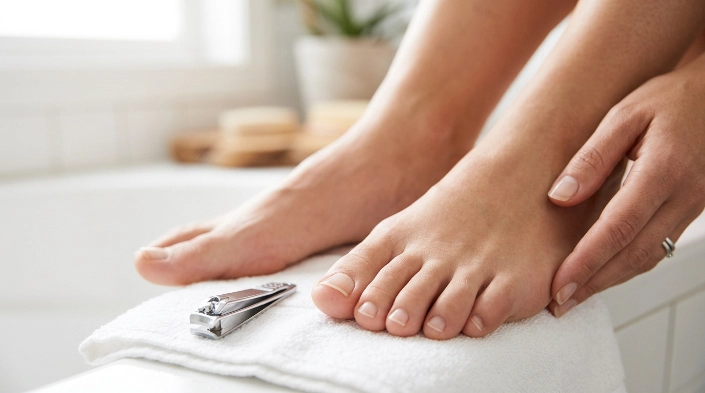
An ingrown toenail develops when part of the nail pushes into the skin beside it instead of growing forward normally.
The big toe is the most common place for this to happen, although any toenail can become ingrown.
Several everyday habits can increase the risk.
Cutting the sides of a toenail into a rounded shape is one of the biggest problems. The nail may look neat immediately after trimming, but as it grows, the shortened corner can press into the nearby skin.
Cutting nails extremely short can cause a similar issue. Pressure from socks and shoes may encourage the skin to overlap the nail edge.
Tight shoes are another common factor. Footwear that squeezes your toes together leaves very little space for the toenail to grow naturally.
According to the Mayo Clinic’s guidance on ingrown toenails, common contributing factors include cutting nails too short or incorrectly, tight shoes, nail injuries, unusually curved nails, and some nail conditions. Mayo Clinic guidance on ingrown toenails
Genetics can matter too. Some people naturally have toenails that curve more strongly at the sides, making careful maintenance especially important.
How to Prevent Ingrown Toenails Step by Step
The best prevention routine is simple and consistent. You are trying to help the nail grow forward without creating sharp corners, unnecessary pressure, or irritated skin.
1. Trim Your Toenails Straight Across
This is the most important habit to learn.
Rather than following the curved shape of your toe, cut the nail mostly straight across from one side to the other.
Do not dig down into the corners.
The American Academy of Dermatology recommends cutting toenails straight across to reduce the chance of developing an ingrown nail. Its nail-trimming guidance also recommends using appropriate nail tools and smoothing rough edges afterward. American Academy of Dermatology nail-trimming guide
A tiny amount of smoothing is fine, but the goal is not to create deeply rounded corners.
2. Do Not Cut Toenails Too Short
Many people trim toenails extremely short because they want their pedicure to last longer.
That can backfire.
Ideally, leave enough nail so the end is close to the tip of the toe instead of cutting deeply into the skin line.
When a nail is cut too short, the skin around it can begin pressing against or overlapping the growing nail.
Shorter is not always healthier.
You want a clean, manageable nail—not the shortest nail possible.
3. Use a Nail File Only for Gentle Smoothing
A nail file can help prevent irritating snags, but it should not be used to dig into the sides of the toenail.
After trimming, check the free edge with your fingertip.
If you feel a rough or sharp spot, lightly smooth it with a clean file.
For healthy natural toenails, a fine or medium-fine manual file is usually easier to control than an extremely coarse file.
The purpose is to remove the snag, not reshape the entire sidewall.
Never push the tip of a nail file underneath an irritated nail corner. That can injure the skin and make inflammation worse.
4. Wear Shoes With Enough Toe Room
Even perfectly trimmed toenails can become irritated when they are constantly squeezed by footwear.
Your toes should have enough room to rest naturally rather than being compressed together.
Be especially careful with narrow-toe heels, pointed shoes, tight boots, athletic shoes that are too small, and shoes that cause your big toe to repeatedly hit the front.
The NHS also recommends avoiding shoes that are too tight or do not fit properly when trying to prevent ingrown toenails. NHS ingrown toenail guidance
If your toenails regularly feel sore after wearing a specific pair of shoes, the fit deserves attention even if the shoes technically match your usual size.
5. Keep Your Feet Clean and Dry
Hygiene will not correct the shape of an ingrowing nail, but it matters because irritated skin around a toenail is more vulnerable to problems.
Wash your feet regularly and dry carefully around and between the toes.
Change damp socks after workouts or long periods of sweating.
If your shoes frequently become moist, give them time to dry before wearing them again.
Clean, dry skin also makes it easier to notice redness, swelling, drainage, or other changes early.
The Best Tools for Preventing Ingrown Toenails
You do not need an expensive professional pedicure kit.
The right tool depends on what you are trying to accomplish.
| Tool | Best Use | Main Benefit | Main Caution | Typical Cost |
|---|---|---|---|---|
| Toenail clipper | Routine shortening | Easy and affordable | Avoid cutting deeply into corners | Low |
| Nail nipper | Thick or hard toenails | More cutting power | Sharp and easy to misuse | Low–Medium |
| Emery board | Smoothing rough edges | Inexpensive and easy to control | Wears out and can hold debris | Low |
| Glass nail file | Gentle finishing | Smooth and reusable | Can be slow on thick nails | Medium |
| Metal file | Firmer nail edges | Durable and washable | Heavy pressure may be aggressive | Low–Medium |
| Electric nail file | Specialized shaping | Fast material removal | Easy to over-file without training | Medium–High |
For most healthy toenails, a regular toenail clipper plus a gentle manual file is enough.
If your nails are very thick, hard, painful, discolored, or difficult to cut, do not automatically reach for the strongest tool available. Thickened nails can have several causes, and aggressive grinding can make a sensitive nail worse.
How to File Toenails Without Encouraging Ingrown Corners
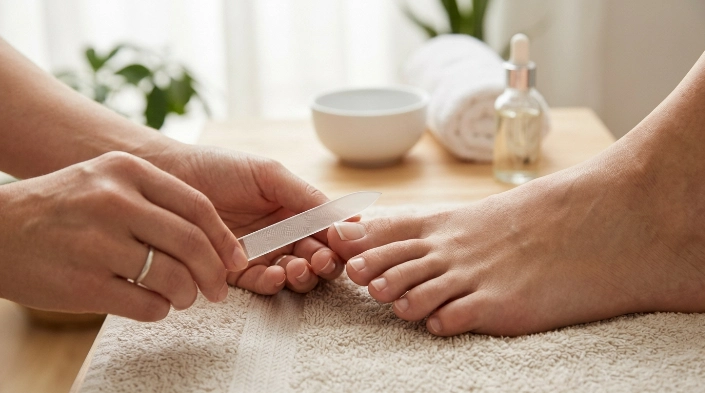
Filing seems harmless, but technique matters.
Start with a clean, dry nail and a clean file. Support the toe so it does not move around while you work.
File only the exposed free edge.
Use light, controlled strokes until roughness disappears. You do not need to dramatically change the natural shape.
Avoid sawing deeply down each side of the nail.
If the file touches tender skin, causes heat, creates soreness, or makes the nail edge feel thinner than the center, stop.
The nail should feel smoother after filing—not sensitive.
Expert Tip: If you keep feeling tempted to “dig out” a toenail corner with a file or clipper, stop trimming that area. Constantly cutting the corner shorter can create the exact growth pattern you are trying to prevent.
Nail File Material, Grit, and Sensitivity
Not every file feels the same.
An emery board is affordable and gives beginners good control. The downside is that it wears out and is not as easy to clean thoroughly as a washable file.
Glass or crystal files cost more upfront but generally create a smoother filing experience and can be cleaned and reused when the manufacturer permits it.
Metal files are durable, but they may feel aggressive on thin or sensitive nails if you use too much pressure.
Very coarse files remove nail material quickly. That does not automatically make them better.
For routine smoothing around healthy natural toenails, a gentler file gives you more control and reduces the temptation to remove too much material.
If the nail or surrounding skin already feels painful, inflamed, or injured, filing may not be appropriate at all.
Keep Nail Tools Clean
Hygiene is especially important when a nail corner has been irritated.
Do not casually share clippers, files, or other pedicure tools between people.
Wash reusable tools according to their material and manufacturer instructions, dry them thoroughly, and store them in a clean place.
Replace disposable files when they become worn, dirty, torn, or difficult to clean.
The American Academy of Dermatology advises keeping nail-grooming tools clean and notes that tools such as clippers should be disinfected regularly.
If a file has been used on a nail that may have a fungal infection or other contagious problem, avoid immediately using the same uncleaned tool on healthy nails.
Common Mistakes to Avoid
Even people who take excellent care of their feet can accidentally create problems through over-grooming.
Common mistakes include:
- Cutting a deep V-shape into the middle of the toenail.
- Rounding the corners aggressively to match the toe.
- Cutting the nail below the skin line.
- Digging beneath the nail with pointed tools.
- Trying to remove painful nail corners yourself.
- Using a coarse file until the nail becomes thin or sore.
- Wearing shoes that repeatedly squeeze the big toe.
- Sharing nail tools without proper cleaning.
- Continuing a DIY pedicure despite bleeding, drainage, or significant swelling.
- Treating a painful or discolored nail purely as a cosmetic problem.
The basic rule is simple: groom the nail you can safely see and reach. Do not perform DIY surgery on the skin around it.
What If You Get Pedicures at a Salon?
Professional pedicures can be part of a healthy nail-care routine, but technique and hygiene still matter.
Tell your nail technician that you prefer your toenails trimmed straight across.
If you are prone to ingrown nails, ask them not to cut deeply into the corners simply to create a more rounded cosmetic shape.
Also pay attention to sanitation practices.
Reusable tools should be appropriately cleaned and disinfected between clients, while single-use items should not be reused when they cannot be properly sanitized.
A nail technician can help with cosmetic trimming, filing, polish, and routine grooming.
However, a salon service is not a substitute for medical care when the toe is infected, severely inflamed, bleeding, or unusually painful.
DIY Care vs. Professional Help
Routine prevention is usually very manageable at home.
Healthy nails that simply need trimming and smoothing rarely require professional treatment.
A salon can be useful if you struggle with flexibility, want cosmetic maintenance, or feel more comfortable having someone else shape your nails.
A podiatrist or other healthcare professional becomes more appropriate when there is recurring ingrowth, significant pain, abnormal nail shape, infection, or difficulty safely trimming the nail.
Mayo Clinic notes that severe or spreading symptoms may require professional treatment and that people with conditions affecting blood flow to the feet face a higher risk of complications.
Warning Signs You Should Not Ignore
A mildly irritated nail corner and an infected toe are not the same thing.
Watch for increasing redness, worsening swelling, throbbing pain, drainage, pus, bleeding, warmth around the nail, or redness spreading beyond the nail edge.
You should also pay attention when pain makes normal walking or shoe wearing difficult.
Do not keep trimming, filing, or digging at a worsening toe in an attempt to make it look better.
That may create more skin damage and make the area harder to heal.
When to See a Nail Technician or Dermatologist
A nail technician is appropriate for routine cosmetic grooming when the nail and surrounding skin are healthy.
For persistent pain, infection, repeated ingrown toenails, unusual discoloration, major nail thickening, nail separation, or unexplained changes in the nail, choose a healthcare professional instead.
A dermatologist can evaluate many nail and skin problems. A podiatrist specializes in foot-related conditions and frequently treats difficult or recurrent ingrown toenails.
Seek medical advice sooner if you have diabetes, reduced sensation in your feet, poor circulation, or another condition that makes foot injuries harder to detect or heal.
Do not rely on DIY clipping or filing in those situations without appropriate guidance.
A Simple Prevention Routine
You do not need to inspect your toenails every day, but a quick routine can help.
After bathing, look for rough corners, redness, tenderness, or shoe-pressure marks.
When the nails are long enough to need trimming, cut them straight across in small controlled cuts.
Smooth only obvious snags.
Keep your tools clean.
Then make sure the shoes you wear most often are not squeezing your toes.
These small habits are much more useful than repeatedly cutting troublesome corners shorter.
FAQs
Can I round my toenails slightly?
A very small amount of smoothing at a sharp exposed edge may be reasonable, but avoid deeply rounding or cutting away the sides. For ingrown toenail prevention, the main nail edge should stay relatively straight across.
Does filing toenails prevent ingrown nails?
Filing can help smooth sharp or rough edges after trimming, but it does not guarantee prevention. Proper trimming, nail length, footwear, hygiene, and avoiding injury all matter.
Should I cut out the corner of an ingrown toenail?
No. Digging into a painful corner can damage nearby skin and may worsen irritation. If a nail is already painful, swollen, or infected, professional guidance is safer than repeatedly cutting the corner.
How short should toenails be?
Avoid cutting them extremely short. A practical goal is to leave the nail around the level of the toe tip rather than cutting deeply below the surrounding skin.
Are glass nail files better for toenails?
Glass files can be useful for gentle finishing and routine smoothing, especially on normal natural nails. Very thick nails may take longer to file. The best option depends on your nail thickness, sensitivity, and the amount of shaping needed.
Can tight shoes really cause ingrown toenails?
Yes. Shoes that squeeze the toes or press repeatedly against the nail can encourage irritation and contribute to ingrown toenails. A wider, properly fitting toe box can reduce that pressure.
When is an ingrown toenail an emergency?
Most are not emergencies, but worsening pain, pus, spreading redness, significant swelling, fever, or symptoms in someone with diabetes or poor circulation deserve prompt medical attention.
Conclusion
Knowing how to prevent ingrown toenails is mostly about resisting the urge to over-trim.
Cut toenails straight across, leave a reasonable amount of length, gently file only rough exposed edges, keep your tools clean, and choose shoes that give your toes enough room.
Most importantly, know where DIY nail care ends. A nail file and clipper are grooming tools, not treatments for infection or serious nail disease.
Build a simple, gentle routine and check your toenails regularly. If a nail becomes repeatedly painful, swollen, infected, or difficult to manage safely, make the smarter choice and ask a qualified healthcare professional for help.

