
How to Soften Thick Toenails Before Cutting: A Safe Step-by-Step Guide

Thick toenails can turn a simple grooming task into a frustrating one. A nail that feels hard, dense, or difficult to fit inside your clipper may crack, split, or hurt if you try to force your way through it.
Learning how to soften thick toenails before cutting can make trimming much easier. Softening the nail first reduces resistance and gives you better control, especially when you combine it with the right toenail clipper or nail nipper.
However, not every thick toenail is simply a grooming problem. Aging, repeated shoe pressure, previous injuries, psoriasis, and fungal infections can all cause toenails to become thicker.
This guide explains the safest ways to soften thick toenails, how long to soak them, which tools work best, how to trim them without cutting too deeply, and when a professional should handle the job instead.
Quick Answer
To soften thick toenails before cutting, soak your feet in lukewarm water for about 10–15 minutes, then dry them thoroughly. Trim while the nails are still softer using clean, sharp toenail clippers or nippers. Make small cuts straight across, and finish rough edges gently with a nail file.
Why Thick Toenails Are Harder to Cut

A healthy toenail is firm, but it should usually be thin enough for a standard toenail clipper to cut without extreme pressure.
When a toenail becomes thicker, several things change.
The nail may:
- Feel unusually hard or dense.
- Become more curved.
- Require extra pressure to cut.
- Crumble instead of cutting cleanly.
- Develop jagged edges.
- Become difficult to fit inside normal clippers.
- Press against shoes and become uncomfortable.
Trying to force a small clipper through a very thick nail can cause the tool to slip. It may also split the nail or remove more nail than you intended.
Softening helps because water temporarily makes the nail plate more flexible and easier to trim.
The American Academy of Dermatology recommends trimming nails after bathing or showering, or soaking them in lukewarm water for a few minutes when necessary.
What Causes Thick Toenails?
Before focusing only on trimming, pay attention to why your toenail is thick.
Aging is a common reason. Toenails can naturally become thicker as nail growth slows over time.
Other possible causes include:
- Repeated pressure from tight shoes.
- Previous toe injuries.
- Fungal nail infections.
- Psoriasis.
- Long-term nail damage.
- Changes in the way the nail grows.
Fungal nail infections are especially worth watching. According to the NHS, infected nails may become thicker than usual, brittle, discolored, or crumbly.
A thick nail that is otherwise comfortable and stable may simply need better grooming tools.
A nail that is rapidly changing, painful, swollen, separating from the nail bed, or severely discolored deserves more caution.
How to Soften Thick Toenails Before Cutting
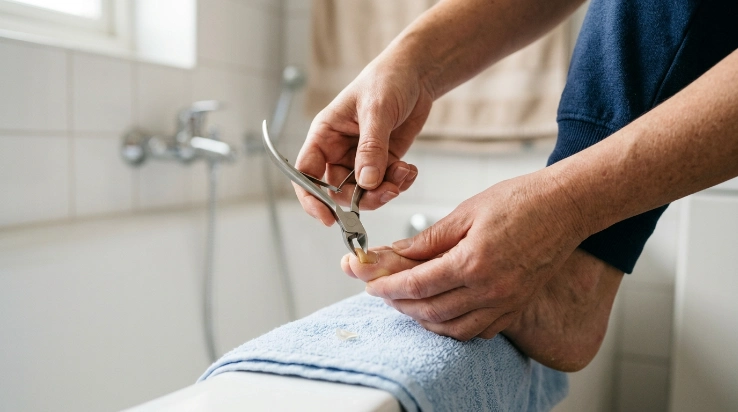
For routine home grooming, warm water is usually the simplest starting point.
Step 1: Gather Your Supplies
Before soaking your feet, prepare everything you need.
Useful supplies include:
- A clean basin or bathtub.
- Lukewarm water.
- A clean towel.
- Sharp toenail clippers or nail nippers.
- A nail file or emery board.
- Mild soap if needed.
- Moisturizer for afterward.
Having everything nearby matters because the nail gradually becomes firm again after it dries.
Step 2: Soak Your Feet in Lukewarm Water
Place your feet in comfortably warm—not hot—water.
For thick toenails, about 10–15 minutes is a practical starting point. The goal is simply to make the nail less rigid, not to soak the skin until it becomes extremely soft.
If your nails are only slightly thick, a shower or bath may soften them enough to trim immediately afterward.
Avoid excessively hot water. Hot water can irritate or dry sensitive skin and is unnecessary for softening the nail.
Step 3: Dry Your Feet Carefully
Remove your feet from the water and pat them dry with a clean towel.
Pay particular attention to the areas between the toes.
Your toenail can remain slightly softened while the surrounding skin should be reasonably dry. This gives you a better grip on both your foot and your trimming tool.
Step 4: Check the Nail Before Cutting
Look closely at the toenail.
Ask yourself:
- Is the nail painful?
- Is there redness around it?
- Is the toe swollen?
- Is there bleeding?
- Is the nail lifting away from the skin?
- Does it have severe yellow, brown, white, green, or black discoloration?
- Does the nail appear infected?
- Can I clearly see where the attached nail ends?
Do not treat an abnormal or painful nail as an ordinary cosmetic trimming job.
If the nail looks safe to trim, move on to the cutting step.
Step 5: Use the Right Tool
Standard fingernail clippers are often too small for dense toenails.
A better choice may be:
- A sturdy toenail clipper for moderately thick nails.
- A wide-jaw toenail clipper when a regular opening is too narrow.
- A nail nipper for particularly thick nails when you can control it safely.
Sharp blades usually require less squeezing than dull ones.
Stainless steel is popular because it is durable and relatively easy to clean, although the quality of the blade and hinge matters more than the material name alone.
Step 6: Make Small Cuts
Do not try to remove the entire nail edge with one powerful squeeze.
Instead:
- Position the blade where you can clearly see it.
- Remove a small section.
- Move gradually across the nail.
- Keep checking the skin underneath.
- Stop before reaching the attached pink or sensitive nail area.
For toenails, trimming generally straight across is recommended because excessively rounding the corners can contribute to ingrown toenails.
Small cuts also give you more control when the nail is unusually thick.
Step 7: Smooth the Edge With a Nail File
After cutting, inspect the free edge.
If you find a sharp corner or rough area, use a clean nail file or emery board to smooth it gently.
Do not aggressively grind a thick nail until it becomes extremely thin.
The goal is simply to remove rough edges that could snag socks or scratch nearby skin.
Mayo Clinic also recommends gently filing sharp edges after thickened toenails have been trimmed.
Step 8: Moisturize the Surrounding Skin
Once trimming is finished, apply moisturizer to dry skin around the feet if needed.
Avoid packing heavy creams into irritated nail folds or between damp toes.
Keeping the surrounding skin comfortable is useful, but moisturizer does not treat the underlying cause of a thick or infected nail.
Which Softening Method Works Best?
| Method | Best For | Benefits | Limitations |
|---|---|---|---|
| Lukewarm water soak | Most routine thick toenails | Simple, inexpensive, easy | Temporary softening only |
| Bath or shower | Mildly thick nails | Convenient | May not soften very dense nails enough |
| Urea-containing nail/skin product | Some very thick nails | Can help soften hard nail material | Product strength and suitability vary |
| Professional thinning | Extremely thick or difficult nails | Better control for challenging nails | Requires an appointment and added cost |
| Aggressive filing at home | Generally not preferred | Can reduce thickness | Easy to over-file or irritate surrounding skin |
For many people, lukewarm water plus a good-quality toenail tool is enough.
Mayo Clinic notes that urea-containing creams may be used to soften thick nails before trimming or filing in some situations. It also advises professional foot care for people who have conditions that cause poor blood flow to the feet.
If you are considering a stronger softening product, follow its directions carefully rather than assuming that more product or a longer application time will work better.
Should You File Thick Toenails Before Cutting?
Sometimes—but gently.
A nail file can be useful if the free edge is extremely rough or if you need to smooth the nail after trimming.
For a very thick nail, reducing a small amount of bulk may also make clipping easier. However, aggressive filing creates several problems.
You may:
- File too close to sensitive nail tissue.
- Irritate the surrounding skin.
- Create heat or discomfort from friction.
- Spread nail debris.
- Damage a nail that is already weak or infected.
If you use a file, keep the pressure controlled.
A coarse file removes material quickly, while a finer file gives you more control for smoothing. Avoid repeatedly sawing hard across a fragile natural nail.
Choosing Clippers for Thick Toenails
The right tool can matter almost as much as softening.
Standard Toenail Clippers
These work well when the nail is only moderately thick.
Look for:
- Sharp, aligned blades.
- A comfortable handle.
- Enough jaw opening for the nail.
- A secure hinge.
They are inexpensive and familiar, but smaller models may struggle with unusually thick nails.
Wide-Jaw Clippers
Wide-jaw designs open farther than ordinary nail clippers.
They can be useful if the nail physically will not fit comfortably between standard blades.
The extra leverage may also reduce the amount of hand pressure you need.
Nail Nippers
Nippers resemble small precision pliers.
Their longer handles and stronger cutting edges can make dense toenails easier to manage.
However, they are also extremely sharp.
Good visibility and hand control are essential.
If you cannot clearly see the cutting edge or comfortably reach your toes, a professional trimming service is safer than trying to use a sharper tool blindly.
Hygiene Matters More Than You May Think
Toenail tools come into contact with nail debris, skin, and occasionally small amounts of blood if someone cuts too deeply.
Keep personal tools clean and avoid sharing them.
The American Academy of Dermatology recommends regularly disinfecting nail-trimming tools and drying them completely before storage.
At home:
- Remove visible nail debris after use.
- Clean tools according to their manufacturer instructions.
- Dry metal tools thoroughly.
- Store them somewhere clean and dry.
- Replace tools that have rusted, loosened, or become difficult to control.
If you suspect a fungal infection, be especially careful about hygiene.
Do not use the same uncleaned file or clipper across multiple nails or share it with another person.
Expert Tip
Expert Tip: Soften first and cut less than you think you need to. Several small, controlled cuts are usually easier to manage than forcing a thick nail through a clipper in one big cut.
How Short Should You Cut Thick Toenails?
Avoid cutting them extremely short.
A little visible free edge is usually preferable to digging into the attached nail or surrounding skin.
Cutting too deeply can cause:
- Tenderness.
- Bleeding.
- Skin injury.
- Increased infection risk.
- Pain inside shoes.
- Problems around the nail corners.
Aim for a neat straight edge rather than trying to make every millimeter of white nail disappear.
If a corner seems buried under the skin, do not dig into the nail fold with a sharp tool.
That situation may involve an ingrown toenail and requires a different approach.
DIY Trimming vs. Professional Foot Care
Routine thick nails can often be maintained at home, but professional care has an important role.
| DIY Home Care | Professional Care |
|---|---|
| Lower cost | Higher cost |
| Convenient | Requires an appointment |
| Good for uncomplicated nails | Better for extremely thick or distorted nails |
| You control your own tools | Professional equipment may handle difficult nails more easily |
| Requires good reach and vision | Useful when mobility or vision is limited |
| Not appropriate for every medical condition | Can reduce risk in higher-risk situations |
A salon nail technician can help with cosmetic grooming when the nail is otherwise healthy.
A podiatrist or dermatologist is more appropriate when the problem involves pain, infection, injury, unusual nail changes, or a medical condition that makes foot injuries risky.
Common Mistakes to Avoid
When learning how to soften thick toenails before cutting, avoid these common problems:
- Cutting completely dry, rock-hard nails. Softening them first can reduce resistance.
- Using very hot water. Lukewarm water is sufficient.
- Forcing undersized clippers through the nail. Choose a tool that actually fits the nail thickness.
- Trying to remove the whole edge in one cut. Work gradually.
- Rounding deeply into both corners. A straighter toenail edge generally helps reduce ingrown-nail problems.
- Digging under the nail. This can injure sensitive tissue.
- Using rusty or loose tools. Poorly maintained tools are harder to control.
- Sharing clippers and files. Personal grooming tools should be kept personal.
- Aggressively thinning the nail with a file. Stop well before you reach sensitive tissue.
- Ignoring pain or discoloration. Thick nails can sometimes reflect fungal infection or another nail condition.
- Trying to trim when you cannot see the nail clearly. Poor visibility dramatically increases the chance of accidentally cutting skin.
- Continuing after bleeding starts. A bleeding nail or toe is an injury, not a grooming task.
When to See a Nail Technician or Dermatologist
A routine nail technician may help maintain uncomplicated thick toenails, especially when you simply struggle with shaping or reaching them.
However, cosmetic nail services are not a substitute for medical assessment.
Consider seeing a dermatologist, podiatrist, or other qualified healthcare professional if:
- The nail is painful.
- Thickening continues to worsen.
- The surrounding skin is red or swollen.
- There is bleeding or drainage.
- The nail is separating from the nail bed.
- Several nails become thick and discolored.
- Walking or wearing shoes becomes painful.
- You cannot trim the nail safely yourself.
- You suspect a fungal nail infection.
- You have a condition that makes foot wounds more serious.
Mayo Clinic advises contacting a healthcare professional when thickened toenails continue getting thicker, become painful, or cannot be safely trimmed at home.
Fungal nail changes also deserve additional attention when they become severe, spread, or occur in someone with diabetes or a weakened immune system.
Do not rely on soaking and clipping to treat an infection. Softening simply makes the nail easier to groom; it does not fix the medical reason the nail became thick.
How Much Does Thick Toenail Care Cost?
Simple home care is inexpensive.
You may only need:
- A basin you already own.
- A toenail clipper.
- A basic nail file.
- A towel.
- Moisturizer.
Wide-jaw clippers and nail nippers generally cost more than basic drugstore clippers, but you do not automatically need the most expensive tool.
Focus on:
- Blade alignment.
- Sharpness.
- Grip.
- Jaw opening.
- Ease of cleaning.
- Your ability to control the tool safely.
Professional nail services cost more and vary by location.
Medical foot care can cost substantially more, especially when examination, testing, or treatment is needed. Insurance coverage also varies.
The cheapest option is not always the smartest one if the nail is painful, infected, extremely thick, or unsafe for you to reach.
FAQs
How long should I soak thick toenails before cutting?
About 10–15 minutes in lukewarm water is a practical starting point for thick nails. Some nails soften sooner. The goal is to make the nail easier to cut, not to leave your feet soaking for an unnecessarily long period.
Can I cut my toenails immediately after a shower?
Yes. After a shower or bath is often an excellent time because the nail has already absorbed moisture. Dry your foot well, then trim while the nail is still slightly softened.
Does Vaseline soften thick toenails?
Petroleum jelly can help moisturize dry skin and reduce moisture loss, but it is not a reliable treatment for the underlying causes of a thick toenail. For trimming, a warm-water soak is usually a simpler way to temporarily soften the nail.
Can I use a nail file instead of clippers on thick toenails?
You can use a file to smooth rough edges or gently reduce some thickness, but filing an entire very thick toenail can be slow and difficult. Avoid aggressive filing, particularly if the nail is painful, damaged, or possibly infected.
Why is my big toenail suddenly getting thick?
Possible causes include repeated shoe pressure, trauma, psoriasis, aging-related changes, and fungal infection. A new or worsening change—especially with pain, discoloration, crumbling, swelling, or separation from the nail bed—should be evaluated rather than treated only as a cosmetic issue.
Should thick toenails be cut straight or curved?
Toenails are generally best trimmed mostly straight across rather than deeply rounded at the corners. This approach can help reduce the chance of the nail edge growing into the surrounding skin.
What if my toenail is too thick for normal clippers?
Do not force the tool. Soften the nail first and consider a properly sized wide-jaw toenail clipper or nail nipper. If the nail remains too difficult to cut safely, especially when it is painful or severely distorted, professional trimming is the better option.
Conclusion
Knowing how to soften thick toenails before cutting makes routine foot care much easier.
Start by soaking the nails in lukewarm water, dry your feet carefully, and use a clean, sharp tool that comfortably fits the nail. Work across the toenail in small cuts rather than forcing the entire nail through the clipper. Finish by gently filing rough edges.
Most importantly, pay attention to what the nail is telling you.
A thick but otherwise comfortable nail may simply need better grooming. A painful, swollen, bleeding, severely discolored, or rapidly changing toenail may need professional care instead.
Choose control over force. If you cannot clearly see, reach, or safely trim the nail, let a qualified professional handle it rather than risking an injury.

