
How to Store Nail Polish So It Stays Smooth, Usable, and Easy to Find

If you want your polish to last, the simplest rule is this: keep nail polish in a cool, dark, dry place with the cap tightly closed and the bottle stored upright. For most people, room temperature in a cool, dry place away from sunlight is usually enough.
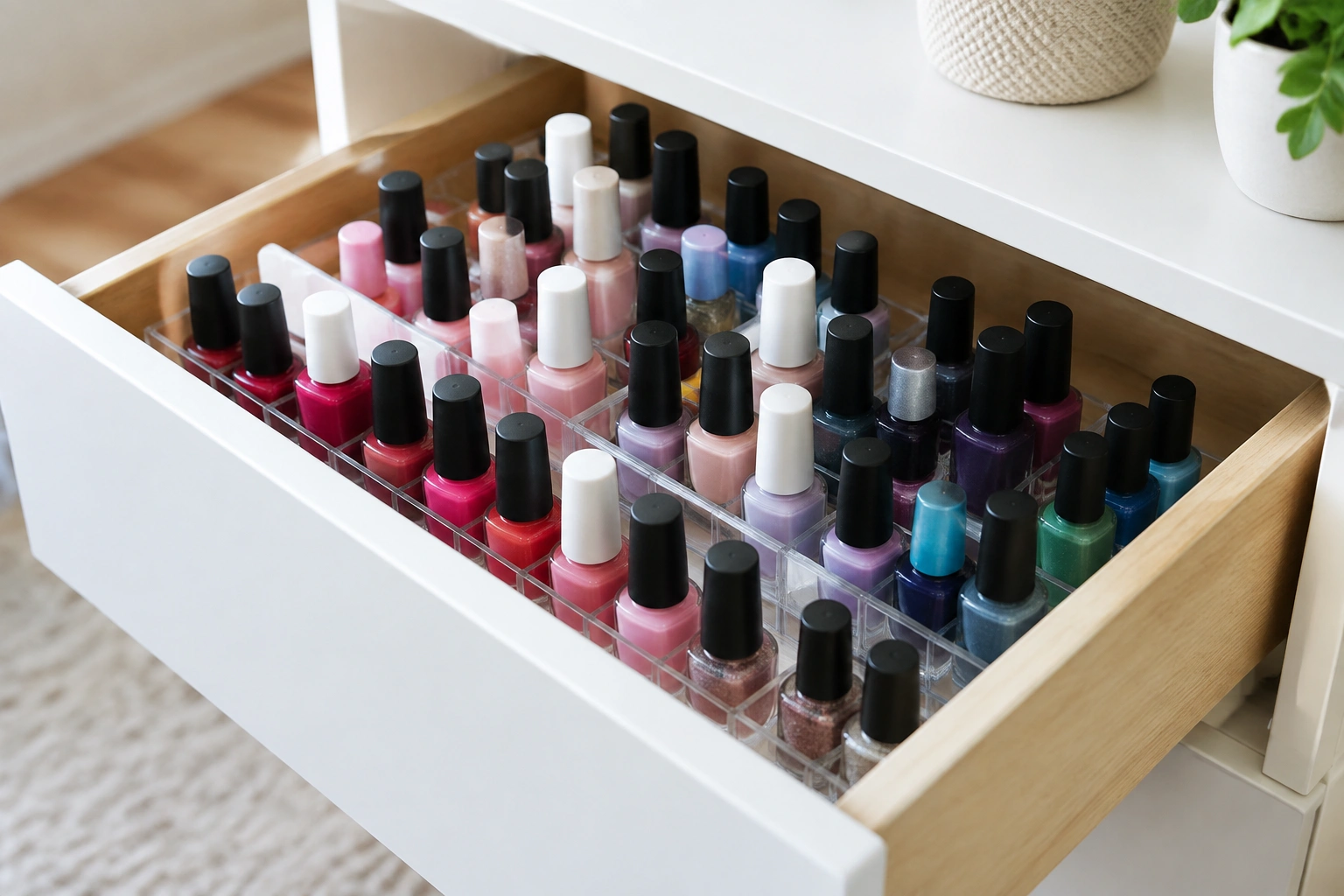
That one habit does most of the work. It helps slow thickening, reduces evaporation, and keeps the bottle from leaking or getting messy around the neck. If you already own a few bottles, you do not need a fancy system. A drawer, closet shelf, or lidded bin is usually enough.
For a beginner, that is the big idea. Nail polish does best when it is protected from heat, sunlight, humidity, and extra air exposure. The rest of this guide will help you choose the best spot at home, organize your bottles, and tell when a polish is no longer worth saving.
If you are still learning the basics of polish itself, it can help to read what nail polish is and how nail polish works first. Knowing what is inside the bottle makes storage advice easier to understand.
What Conditions Keep Nail Polish Usable Longer?
Nail polish is more sensitive to its environment than many beginners expect. The formula can change slowly over time, especially if it sits in the wrong place.
Heat makes polish age faster
Warm temperatures can make polish thicken sooner and may affect how smoothly it applies later. A bottle left near a sunny window, on top of a radiator, or in a hot car is much more likely to become difficult to use.
That is why a steady room temperature is better than a spot that gets hot during the day and cool at night. Frequent temperature swings are not ideal either.
Sunlight can break down the formula
Direct light, especially UV light, is another problem. It can affect both the color and the formula over time. A clear shelf by a window may look pretty, but it is not the best place for long-term storage.
A drawer or closed cabinet protects polish much better than an open display.
Humidity can create storage problems
Humidity does not usually ruin polish overnight, but a steamy bathroom is not a great home for it. Moisture in the air can affect caps, seals, and the general storage environment. Bathrooms also tend to swing between warm and cool, which is another small stress on the bottle.
Air exposure thickens polish
Every time a bottle is left open, some solvent evaporates. That is one reason polish gets thicker over time. The less time a bottle spends open, the better.
If you use polish often, try to keep your setup simple so you can cap each bottle quickly after use.
For more on cosmetic safety and storage basics, the FDA’s cosmetics guidance is a useful general resource, and CDC information on home safety can also help when you are thinking about storage around heat, fumes, and children.
Where to Store Nail Polish at Home
The best storage spot is usually the one that stays coolest, darkest, and driest in your home.
Closet or drawer: usually the best choice
A bedroom drawer, closet shelf, or cabinet inside a cool room is often the easiest answer. These spots protect polish from sunlight and usually stay more stable than a bathroom.
They also keep bottles out of the way, which reduces the chance of dropping them. If you have only a few bottles, a drawer is often enough.
Bathroom: convenient, but not ideal for long-term storage
The bathroom is easy to reach, which is why many people keep polish there. The trade-off is humidity and temperature changes. Hot showers, steam, and frequent moisture make it a less stable place.
If your bathroom is the only realistic option, choose a closed cabinet away from the shower and sink. That is better than leaving bottles on an open shelf.
Near a window or in a car: avoid these spots
A windowsill, vanity in direct sun, or car glove box is a poor storage choice. These places can get too warm and too bright. Even short-term storage there can shorten the life of the polish.
A quick comparison of common storage spots
| Storage spot | Light exposure | Humidity | Temperature stability | Convenience | Best use |
|---|---|---|---|---|---|
| Closet | Low | Low | Good | Medium | Long-term storage |
| Drawer | Low | Low | Good | High | Small beginner collections |
| Bathroom cabinet | Low to medium | Medium to high | Fair | High | Shorter-term, everyday use |
| Open acrylic organizer | Medium | Depends on room | Fair | Very high | Easy access, neat display |
| Refrigerator | Very low | Low | Good if sealed | Low | Special cases only |
If you want a simple home setup, a drawer or closet usually gives the best balance of protection and convenience.
Should Nail Polish Be Stored Upright or on Its Side?
Upright is best for most bottles.
That position helps keep polish away from the cap, which can reduce buildup around the neck and lower the chance of leaking. It also makes it easier to grab a bottle without shaking it around.
Storing bottles on their side is more likely to let polish pool near the cap. Over time, that can make the cap sticky or harder to open. For the same reason, keep the bottle tightly closed after each use.
If you have a small collection, upright storage in a box, drawer divider, or organizer is usually the simplest answer.
How to Seal Bottles Properly and Prevent Thickening
A bottle lasts longer when it closes cleanly every time.
Wipe the neck before recapping
After using polish, wipe excess product from the bottle neck before closing it. That small step helps keep the cap from sticking and creates a better seal.
If polish dries around the threads, the cap can become harder to open later. It can also stop the lid from closing fully.
Tighten the cap fully
This sounds obvious, but it matters. A loose cap lets air in, and air speeds up thickening. You do not need to overtighten it to the point of damage, but it should be snug.
Keep bottles open for as little time as possible
Set up your polish, base coat, and top coat before you begin. That way, you are not leaving bottles open while you search for other tools.
If you use several shades, close the one you are not using right away instead of leaving everything open on the table.
Don’t shake bottles aggressively
When polish has been sitting, some separation is normal. A gentle roll between your palms is usually better than hard shaking, which can create bubbles. Bubbles do not help the polish last longer and can affect how it looks when applied.
Do You Need to Refrigerate Nail Polish?
Refrigeration is usually optional, not required.
For most people, room-temperature storage in a cool, dark place is enough. That is the simplest and most practical approach.
When refrigeration may help
If you live in a very warm climate or your home gets hot for long periods, a refrigerator can be useful for backup bottles. It may help keep the formula more stable than a hot room or sunny shelf.
When refrigeration is unnecessary
If your polish already lives in a drawer or closet that stays fairly stable, refrigeration usually adds hassle without much benefit. You also need to avoid repeated temperature swings, so constantly moving bottles in and out is not ideal. For most users, that makes refrigeration unnecessary.
For most beginners, a cool indoor storage spot is the easier and safer choice.
How to Organize a Small Nail Polish Collection
A good storage system should do two things: protect the bottles and help you find the color you want quickly.
Drawers with dividers
This is one of the easiest beginner setups. Use small dividers or boxes so bottles do not tip over. You can group shades by color family, finish, or how often you use them.
For example, keep everyday neutrals in front and special shades in the back.
Lidded storage bins

A plastic bin with a lid is a simple way to protect polish from dust and light. It is especially useful in a closet or under a bed.
The trade-off is visibility. You may need to open the bin to find a color, so labeling or grouping bottles inside helps.
Acrylic organizers
Clear organizers make it easy to see your collection at a glance. That is helpful if you like choosing colors quickly.
The downside is light exposure. If the organizer sits in a bright room, the bottles are more exposed than they would be in a drawer. If you use one, place it away from windows and direct sun.
If you enjoy matching colors and planning your next manicure, you may also like nail polish color combinations and nude nail polish colors for easy pairing ideas.
How to Store Base Coat, Top Coat, and Nail Polish Remover
These products can live near your polish, but they should be handled with a little extra care.
Base coat and top coat
Base coat and top coat should be stored the same way as regular polish: upright, tightly closed, and away from heat and sunlight. Because these products are used often, they may thicken if they are left open during a manicure.
Keep them in the same drawer or bin as your polish if that is convenient.
Nail polish remover
Nail polish remover is best kept separately from your polish collection when possible. It can have stronger fumes, and a spill is more annoying if it happens near your bottles.
Store remover in a tightly closed container, away from heat and flame, and out of reach of children and pets. If you use remover often, keep it in a stable spot where the cap will not be knocked loose.
How to Tell When Nail Polish Has Gone Bad
Polish does not always “expire” in a dramatic way. More often, it slowly becomes harder to use. A simple rule of thumb is this: if the polish is thick, stringy, clumpy, or won’t mix back to normal, replace it.
Try this checklist before you toss it
- Roll the bottle gently between your palms
- Inspect the texture once it settles
- Test a small amount on a swatch, paper, or nail tip
- Discard it if it still looks clumpy, streaky, or uneven
Signs the bottle may be past its best
Look for these changes:
- The polish is very thick or stringy
- It separates and does not mix back together easily
- The formula feels clumpy or uneven
- The smell seems much stronger or different than usual
- It applies in a rough, sticky, or patchy way even after gentle mixing
A little separation is normal. But if the texture stays strange after rolling the bottle gently, it may be time to let it go.
When to discard it
If the polish has become unusable, has hardened in the bottle, or no longer applies evenly, it is usually better to replace it than fight with it. Old polish can waste time and give poor results.
The same rule applies to top coat and base coat. If those products no longer level well or feel too thick to work with, they are not worth keeping around.
Common Nail Polish Storage Mistakes to Avoid
A few small habits can shorten the life of your polish more than beginners realize.
Leaving bottles in sunlight
This is one of the easiest mistakes to avoid. A pretty display on a sunny shelf can quietly damage the formula.
Storing polish in a hot bathroom
Bathrooms are convenient, but not stable. Steam and heat swings make them a weaker choice than a drawer or closet.
Forgetting to close caps tightly
Even a slightly loose cap can let enough air in to thicken polish over time.
Letting polish build up around the neck
Dried product around the cap can make the bottle harder to open and less airtight. Wiping the neck after each use helps prevent that.
Keeping remover too close to polish
It is fine to store them in the same general area, but keep remover sealed and separated enough that a spill will not spread to your other bottles.
If you want a broader foundation on polish care, Essie’s nail care resources can be a helpful brand-level reference point for product handling and routine care.
Simple Shelf-Life Tips to Make Nail Polish Last Longer
You do not need a complicated system to keep polish in good shape. A few steady habits are enough.
- Store bottles upright
- Keep them in a cool, dark, dry place
- Close caps tightly after each use
- Wipe the bottle neck before recapping
- Keep bottles away from windows, heaters, and hot cars
- Use drawers, bins, or cabinets instead of open shelves when possible
- Check older bottles before you reach for them
- Keep remover separate and sealed
If you have a small collection, the easiest setup is often the best one: a drawer or closet bin, bottles standing upright, and a habit of closing each cap fully. That protects your polish without making your routine harder.
When to See a Nail Technician or Dermatologist
If a product seems to irritate your skin, smells unusually strong, or behaves very differently than expected, stop using it and ask a professional for advice. A nail technician can help you decide whether a bottle is simply old or no longer worth using, and a dermatologist can help if you are dealing with a skin reaction or ongoing nail concern.
FAQ: Nail Polish Storage Basics
Can nail polish be stored in the bathroom?
Yes, but it is not the best long-term option. A closed bathroom cabinet is better than leaving bottles out in the open, but a drawer or closet is usually more stable.
Should nail polish be stored upright or on its side?
Upright. That helps reduce leaking, cap buildup, and air exposure around the neck.
Can you put nail polish in the fridge?
You can, but it is usually optional. It may help in very warm climates or for backup bottles, but most people do fine with room-temperature storage in a cool, dark place.
How long does nail polish last if stored properly?
There is no single number that fits every bottle. Proper storage can help it stay usable longer, but polish still changes over time. If the polish is thick, stringy, clumpy, or won’t mix back to normal, replace it.
What is the best way to keep polish from getting thick?
Close the cap tightly, wipe the neck clean, and keep the bottle away from heat, sunlight, and excess air exposure.
Should I shake nail polish before using it after storage?
A gentle roll is usually better than aggressive shaking. Shaking can create bubbles.
Can I store base coat, top coat, and remover the same way as polish?
Base coat and top coat can be stored the same way as polish. Remover should be kept sealed and separated when possible, away from heat and flame.
What is the easiest storage setup for a beginner?
A drawer or lidded bin in a closet or bedroom is usually the simplest and most reliable setup.

