
How to Tell If Nail Polish Is Expired: A Beginner’s Simple Guide

If you found an old bottle and you’re wondering whether it’s still usable, the quickest answer is this: check the label first, then inspect the polish itself. Many nail polishes include a PAO symbol, such as 12M, 18M, or 24M, which tells you how many months the product is intended to be used after opening. Unopened bottles can last a very long time depending on the formula and how they’re stored, but brand guidance and storage conditions still matter. A bottle that looks fine on the outside can still be too thick, clumpy, or off-smelling to use well.
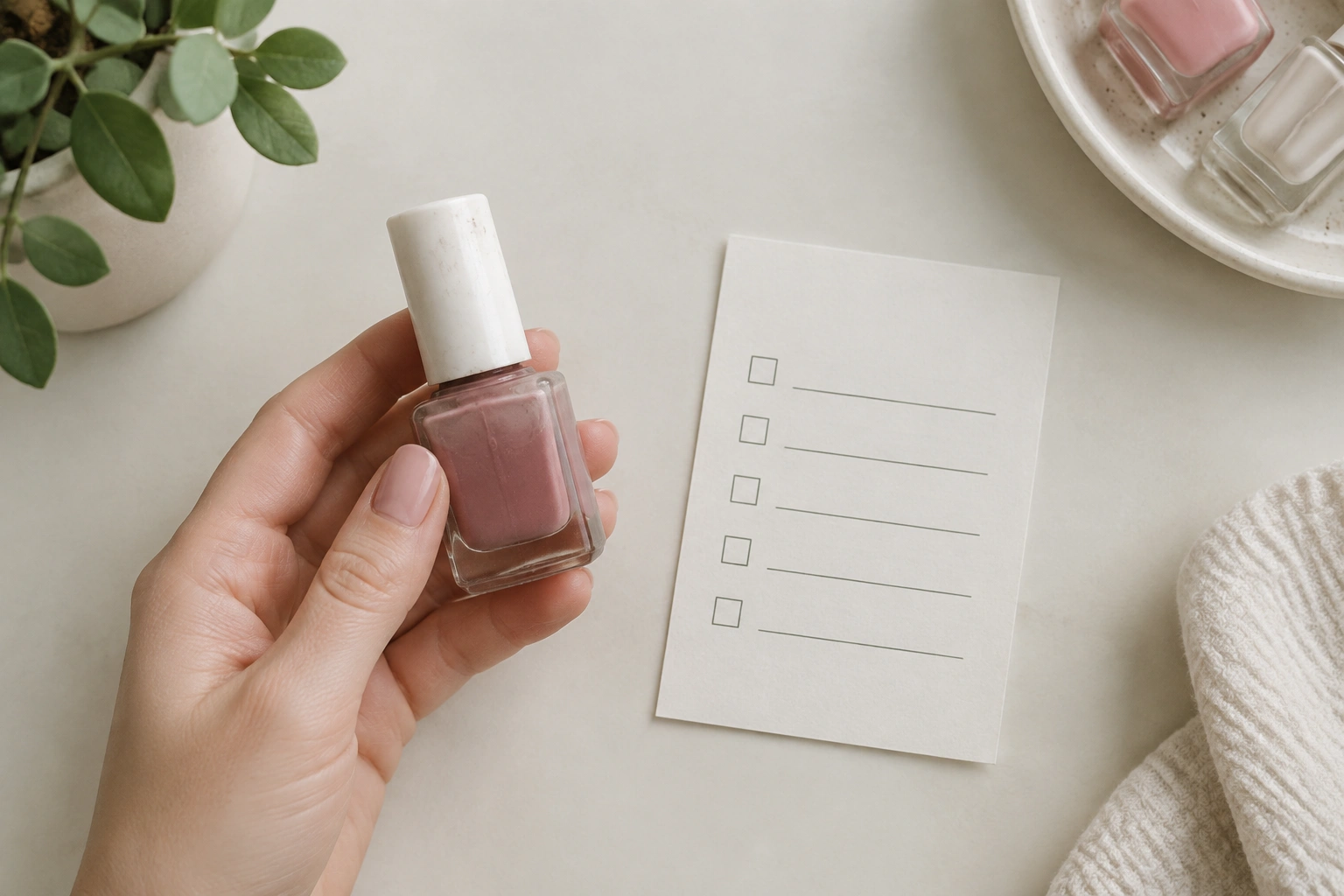
Here’s the beginner rule I use with clients: if it mixes smoothly, smells normal, and applies evenly, it may still be usable; if it’s clumpy, stringy, grainy, or smells unusual, it’s time to let it go. That simple check will save you a lot of frustration.
How Long Nail Polish Usually Lasts
Nail polish does not have one universal expiration date. Shelf life depends on the formula, how often the bottle has been opened, and how it has been stored. As a general guide, unopened nail polish tends to last a very long time, but the label is still the best place to check for product-specific guidance. Once opened, the clock changes because air gets into the bottle each time you use it.
The label may show a PAO symbol, which stands for “period after opening.” You’ll often see numbers like 12M, 18M, or 24M. That means the brand expects the polish to perform best for that many months after opening. If you want a simple visual reference for label guidance, the FDA’s cosmetics labeling information is a helpful place to understand how cosmetic products are identified and labeled.
In real life, though, age alone is not enough to decide. I’ve seen older bottles that still work well because they were sealed tightly and stored in a cool drawer. I’ve also seen newer bottles turn unusable because they were left in a warm bathroom or opened often without the cap being tightened properly. Age matters, but condition matters more.
Simple Signs to Check on the Bottle
Before you even open the bottle, look for basic warning signs. These are the easiest clues to spot and don’t require any special tools.
1. Separation that won’t blend back together
A little pigment separation is normal in nail polish. Shaking or rolling the bottle should bring it back together. What you do not want is heavy separation that stays broken up even after mixing. If the color looks uneven, watery at the top, and sludge-like at the bottom, that’s a sign the formula has aged badly.
2. Clumps or graininess
If the polish looks lumpy or gritty, that is a bad sign. A smooth formula should look uniform. Grainy texture often means the product is no longer mixing properly, and the finish on the nail will usually look uneven too.
3. Stringy or gooey texture
When you pull the brush out, the polish should flow in a controlled way. If it stretches into strings, feels sticky, or comes out in thick ropes, the solvents may have evaporated too much. That kind of polish usually applies poorly and dries unevenly.
4. Discoloration
Some color change can happen over time, especially if the bottle has been exposed to light or heat. If the shade looks noticeably different from what you remember, or if it has turned muddy, cloudy, or dull in a way that doesn’t match the original color, treat that as a warning sign.
5. Cap and brush problems
If the cap is stuck, the neck of the bottle is crusted with dried polish, or the brush comes out hard and stiff, the bottle may have been drying out for a while. That doesn’t always mean the polish is ruined, but it often means the formula is aging and may not apply smoothly.
A useful comparison for beginners: slight settling can be normal; stubborn clumps are not. If the bottle needs a gentle shake and then looks normal, that’s very different from a bottle that still looks broken apart after mixing.
What the Smell Can Tell You
Smell is not the only clue, but it is a useful one. Fresh nail polish has a strong solvent smell, so a stronger odor alone does not automatically mean the polish is spoiled. What matters is whether the smell has become unusual for that polish.
If the bottle smells sharper, sour, rancid, or just “off” in a way that feels different from a normal polish odor, I would be cautious. Odor changes can happen as ingredients age or evaporate. The NIH’s general guidance on household chemical safety is a good reminder to handle strong-smelling products in a ventilated space and avoid assuming an old product is still fine just because it still has color.
A practical test: open the bottle in a well-ventilated room, take a quick sniff, and then compare it to what you remember from newer polish. If the smell seems wrong enough that you hesitate to use it, trust that hesitation. A bottle that smells off and also looks thick or clumpy should usually be discarded.
How to Tell Thick Polish from Expired Polish
This is where beginners get stuck, because thick does not always mean expired. Nail polish can thicken simply because some solvent has evaporated. That can happen even if the polish is still salvageable.
Here’s the difference I look for:
- Thick but usable polish still stirs or shakes back into a smooth texture.
- It flows from the brush without dragging in long strings.
- It applies evenly in thin coats.
- It dries normally and leaves a reasonably smooth finish.
By contrast, expired or badly deteriorated polish usually has more than one problem at once. It may be thick and clumpy, thick and grainy, or thick and separated. It may also drag on the nail, streak badly, or dry into a rough surface.
A simple decision rule: if the polish is only a little thick, but still looks uniform and behaves normally, it may just need a little help. If the texture is broken, uneven, or full of lumps, it is probably beyond normal thickening.
When Nail Polish Can Be Revived with Thinner
If the polish is only thickened, nail polish thinner may help. This is a low-risk fix when the bottle still looks otherwise normal. Add a small amount only, close the cap, roll the bottle gently between your hands, and test the consistency again. Some older formulas may improve, but others cannot be fully restored.
The important part is using nail polish thinner, not nail polish remover. Remover is not the same thing. Remover can break down the formula in a way that makes the polish worse instead of better. If you’re unsure what to buy, many beauty retailers such as Sally Beauty carry nail polish thinner alongside other nail care basics.
Try thinner only when:
– the polish is thick but not clumpy,
– the smell is still normal,
– the color looks stable,
– and the bottle hasn’t dried out badly around the cap.
Even then, thinner is a repair, not a reset button. It may improve application, but it won’t always restore a formula to its original quality. If you add thinner and the polish still drags, streaks, or looks grainy, it’s time to stop trying.
When to Throw Nail Polish Away
Some bottles are simply not worth saving. I recommend discarding nail polish if you notice any of these:
- heavy clumping
- grainy texture that won’t smooth out
- stringy, gooey polish that keeps stretching
- strong or unusual odor
- severe separation that won’t mix back together
- a formula that still applies badly after thinning
- a cap or brush that shows the bottle has dried out too much
If the polish is contaminated, badly dried out, or impossible to mix into a smooth texture, it will likely frustrate you more than it helps you. A bottle that leaves streaks, bubbles, or rough patches on the nail is not doing its job anymore.
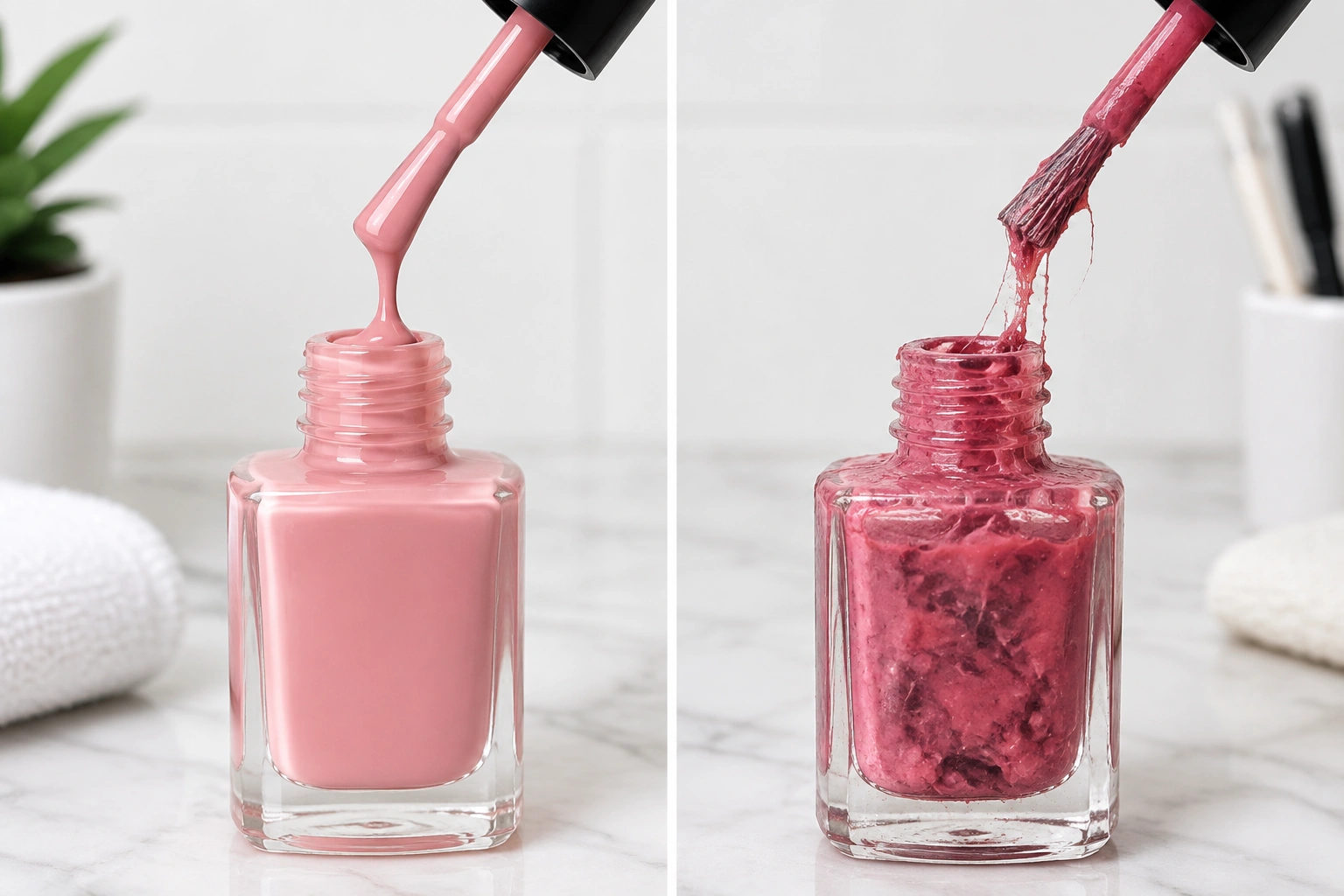
There’s also a practical trade-off here: keeping an old favorite shade can feel worth it, but using a failing formula usually wastes more time than it saves. If you’re repeatedly fighting the bottle, replacing it is often the simpler choice.
How Storage Affects Shelf Life
Storage makes a bigger difference than many beginners realize. Nail polish lasts longer when the cap is closed tightly after every use and the bottle is kept in a cool, dry place away from sunlight. Heat, humidity, and temperature swings can all speed up thickening and separation.
A bathroom cabinet is not always the best home for polish if it gets warm and steamy. A drawer or box in a stable room is usually better. Try to keep bottles upright so the neck stays cleaner and the cap seals properly.
A few small habits help a lot:
– wipe the bottle neck before recapping
– close the lid firmly after every use
– avoid leaving the bottle open while painting nails
– don’t store polish near windows or heaters
If you want a simple benchmark for product freshness and storage expectations, essie’s nail care resources are useful for seeing how a beauty brand presents polish care and use guidance.
Common Mistakes to Avoid
A few beginner mistakes cause perfectly decent polish to go bad faster.
Using remover instead of thinner
This is the biggest one. Remover can damage the formula instead of restoring it.
Ignoring smell changes
If the polish smells unusual, don’t talk yourself into using it just because the color still looks fine.
Shaking a badly broken polish and hoping for the best
Some bottles will never return to a smooth state. If shaking doesn’t help, that’s useful information.
Storing polish in heat or sunlight
That can shorten shelf life and make polish thick much faster.
Trying to save every bottle
A favorite shade is worth preserving if it still works. A bottle that keeps applying badly is not worth the effort.
When to See a Nail Technician or Dermatologist
If you’re unsure whether a bottle is safe to use because it has been contaminated, smells extremely unusual, or seems to be causing irritation when applied, stop using it. A nail technician can help you judge whether the polish is simply old or truly unusable. If you notice ongoing skin or nail irritation after using a product, a dermatologist is the right person to ask.
FAQs About Expired Nail Polish
Can I use nail polish that is a few years old?
Sometimes, yes. If it is unopened or stored well, and it still mixes smoothly and applies normally, it may still be usable. Age alone does not decide it.
Is thick nail polish always expired?
No. Thick polish may just need a little nail polish thinner. If it is also clumpy, grainy, or stringy, that’s a stronger sign it should be discarded.
Can I use nail polish remover to thin old polish?
No. Remover is not the same as thinner and can make the formula worse.
What if the polish smells weird but still looks okay?
Treat the smell as a warning sign. If the odor is unusual enough to make you hesitate, I would not use it.
Does unopened nail polish expire?
Unopened bottles can last a very long time, but not every formula lasts the same way. Check the label and inspect the bottle before using it.
What happens if I use expired nail polish?
Usually the main issue is poor performance: streaking, clumping, rough texture, and uneven drying. If the polish is badly deteriorated, it can also be more frustrating to remove.
When should I replace a favorite shade?
Replace it when the polish no longer mixes smoothly or still applies badly after thinning. That’s usually the clearest sign the bottle has reached the end of its life.
The easiest way to judge an old bottle is to use all three checks together: label, look, and smell. If those three line up, you’ll know whether to keep the polish, revive it, or toss it without guessing.

