
How to Trim Thick Toenails Safely: A Simple Step-by-Step Guide

Thick toenails can turn a basic pedicure task into something surprisingly difficult. Regular clippers may not open wide enough, the nail can split instead of cutting cleanly, and using too much force can make the clipper slip toward your skin.
Learning how to trim thick toenails safely is mostly about preparation, choosing the right tool, and working in small, controlled sections. You should never have to force a clipper through a nail.
This guide explains how to soften and trim thick toenails, which tools work best, how to smooth the edges afterward, and when a nail is better left to a nail professional or healthcare provider.
Quick Answer
To trim thick toenails safely, soften them in warm water for about 5–10 minutes, dry your feet, and use a sharp toenail clipper or nail nipper. Make several small cuts straight across instead of one large cut. Finish by gently filing sharp edges, and stop if you feel pain or see bleeding.
Why Do Toenails Become Thick?
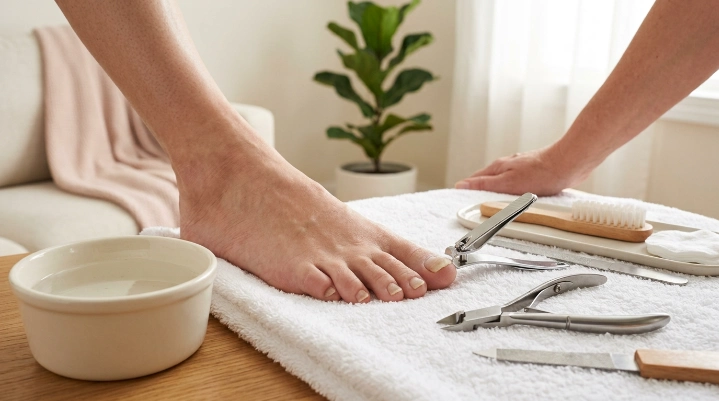
A thick toenail is not automatically unhealthy. Nails can gradually become thicker and harder as we get older because toenails grow more slowly.
Other possible causes include:
- Repeated pressure from tight shoes
- Previous injury or trauma
- Fungal nail infections
- Psoriasis or other skin conditions
- Repeated rubbing during sports or exercise
- Long-term changes in the nail plate
The Mayo Clinic’s guide to thickened toenails notes that aging, injury, tight footwear, psoriasis, and fungal infections can all contribute to nail thickening.
Do not assume a thick or yellow toenail is simply a cosmetic problem. Increasing discoloration, crumbling, pain, lifting, or changes in several nails may need professional evaluation.
What You Need Before Trimming Thick Toenails
You do not need a complicated pedicure kit. A few clean, well-maintained tools are usually enough.
Basic supplies
Gather:
- A basin or bathtub with comfortably warm water
- A clean towel
- Sharp toenail clippers or nail nippers
- A nail file or emery board
- Soap and supplies for cleaning your tools
- Moisturizer for the surrounding skin
If ordinary clippers cannot comfortably fit around the nail, do not force them open. A wider-jaw clipper or nail nipper usually gives you better leverage.
Which tool works best?
| Tool | Best For | Typical Cost | Main Limitation |
|---|---|---|---|
| Standard toenail clipper | Mildly thick nails | $5–$15 | May not open wide enough |
| Wide-jaw toenail clipper | Thick, hard nails | $8–$20 | Very sharp; needs careful placement |
| Nail nipper | Very thick or tough nails | $10–$30 | Requires more control |
| Nail file/emery board | Smoothing and gradual thinning | $3–$15 | Slow for removing lots of length |
| Glass or metal file | Reusable smoothing | $5–$20 | Coarse versions can remove too much nail |
Price varies by material and brand, so treat these as general shopping ranges rather than fixed prices.
Stainless-steel cutting tools are popular because they are durable and relatively easy to clean and dry. More important than branding is a sharp, properly aligned cutting edge and a handle you can control comfortably.
How to Trim Thick Toenails Safely Step by Step
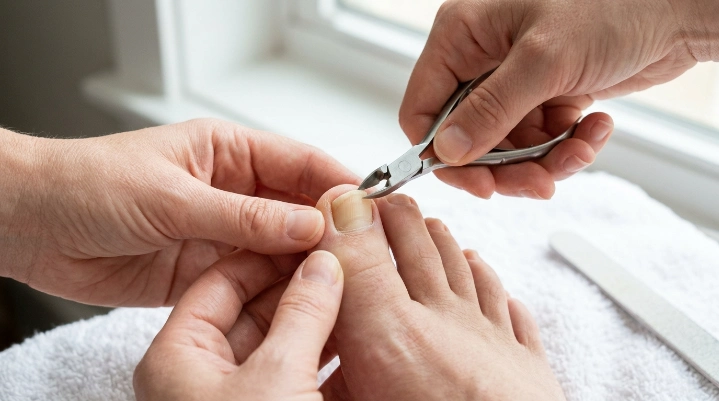
The safest method is slow and deliberate. Trying to finish the entire nail with one powerful squeeze is where many DIY trimming mistakes happen.
1. Wash and inspect your feet
Start with clean feet.
Before cutting anything, look carefully at the toenail and surrounding skin. Check for:
- Redness
- Swelling
- Drainage
- Bleeding
- Broken skin
- Significant tenderness
- A nail separating from the nail bed
- Unusual dark discoloration
If the area looks infected or injured, trimming aggressively at home can make things worse.
2. Soften the toenails
Soak your feet in comfortably warm water for about 5–10 minutes.
The goal is to make the nail slightly easier to cut, not to leave your feet soaking until the nail becomes overly waterlogged.
Both dermatology guidance from the American Academy of Dermatology on trimming nails and Mayo Clinic guidance recommend softening difficult nails before trimming.
A shower or bath can accomplish the same thing.
3. Dry your feet thoroughly
Pat the feet, nail surfaces, and spaces between the toes dry with a clean towel.
Drying gives you a better grip on the foot and trimming tool. It also prevents the clipper from slipping because your fingers are wet.
4. Position yourself where you can clearly see the nail
Good visibility matters more than people realize.
Use bright lighting and sit somewhere stable. You should be able to reach the toe without twisting your back or forcing your hand into an awkward angle.
If you cannot comfortably see or reach the nail, do not trim blindly. Getting help is safer than guessing where the blade is positioned.
5. Start at one side and take small cuts
Place the blades only around the part of the nail you want to remove.
Make a small cut, move slightly across the nail, and repeat.
Small sections give you much better control and reduce the chance of the thick nail cracking, splintering, or suddenly breaking when pressure builds.
Do not try to cut through the entire width of a very thick big toenail in one squeeze.
6. Cut the toenail mostly straight across
Toenails should generally be trimmed straight across rather than deeply rounded at the corners.
The American Academy of Dermatology recommends a straight-across approach to help reduce the risk of ingrown toenails.
Leave a small visible free edge instead of cutting the nail flush with the skin.
Avoid digging down the sides looking for hidden nail corners. That can injure the surrounding tissue and encourage an ingrown edge.
7. Do not cut painful or attached skin
A thick nail can make it difficult to see exactly where the nail ends and sensitive tissue begins.
Never use nippers to:
- Dig beneath the nail
- Cut into sidewalls
- Remove attached skin
- Cut cuticles
- Pry up a nail
- Tear away loose-looking sections
If you feel a sharp pinch rather than pressure on the nail, stop.
8. File rough or sharp edges
Once the length is reduced, use a nail file or emery board to smooth rough edges.
A light finishing pass helps prevent the nail from snagging on socks and reduces sharp corners that could scratch neighboring toes.
Mayo Clinic specifically recommends gently filing sharp edges after thickened toenails are trimmed.
Use controlled strokes rather than aggressively grinding the nail.
9. Clean and dry your tools
Remove visible nail debris from your clipper, nipper, or reusable file after use.
Wash or disinfect reusable tools according to their material and manufacturer instructions, then allow them to dry completely before storage.
Do not share toenail tools, especially when a fungal infection may be present.
Porous emery boards and worn buffers can be difficult to clean effectively. Replace them when dirty, damaged, or heavily worn.
10. Moisturize the surrounding skin
Finish by applying moisturizer to dry skin around the toes.
Avoid packing creams or oils underneath a lifted nail. The goal is simply to keep normal surrounding skin comfortable and flexible.
Should You File a Thick Toenail Before Cutting It?
Sometimes.
If a toenail is so thick that your clipper cannot safely fit around it, gentle filing can gradually reduce some thickness.
A sturdy file may be useful for the top surface of a very thick nail, but work slowly. You should not grind aggressively until the nail becomes thin, hot, tender, or sensitive.
Filing is also useful for someone who only needs to remove a tiny amount of length.
If you are curious about how abrasive strength affects filing, understanding nail-file grit can help you avoid accidentally choosing a surface that is too aggressive for a natural nail.
How Short Should Thick Toenails Be?
Short enough that they are not constantly pressing into shoes, but not so short that the skin underneath or at the corners is exposed.
A small white or free edge is perfectly acceptable.
Cutting extremely short does not make the next pedicure easier. Instead, it can increase tenderness and make it easier for the nail edge to grow into surrounding skin.
Expert Tip
Expert Tip: If your thick toenail requires enough force that your hand shakes, the tool slips, or the nail starts cracking instead of cutting, stop. Softening the nail more or switching to an appropriate wide-jaw clipper or nipper is safer than squeezing harder.
How to Prevent Thick Toenails From Becoming Harder to Manage
You may not be able to reverse every cause of nail thickening, but regular maintenance can make trimming easier.
Check your toenails regularly
Do not wait until the nail becomes extremely long before thinking about trimming it.
A quick check every few weeks lets you catch rough edges, pressure points, or changes in color and texture early.
Wear shoes with enough toe room
Constant shoe pressure can repeatedly traumatize toenails.
Your toes should not be pushed firmly against the front or top of your shoes while walking.
Keep feet clean and dry
Wash your feet regularly and dry carefully, especially between the toes.
Fungi thrive in warm, moist environments, which is one reason breathable footwear and good foot hygiene matter.
Avoid sharing nail tools
Keep personal toenail clippers, nippers, and files for your own use.
The Mayo Clinic’s overview of nail fungus recommends keeping nails trimmed, cleaning grooming tools, and paying attention to thickening, discoloration, crumbling, and separation from the nail bed.
Signs Your Thick Toenail May Need More Than a Pedicure
Thickness alone does not tell you the cause.
Pay closer attention if you notice:
- Yellow, white, brown, or unusual dark discoloration
- A crumbly or ragged nail
- Increasing thickness
- A distorted nail shape
- Nail lifting away from the skin underneath
- Persistent odor
- Red or swollen surrounding skin
- Drainage or pus
- Bleeding
- Persistent pain
- Difficulty walking
These symptoms can occur with fungal infections and other nail disorders, but appearance alone cannot reliably diagnose the cause.
A dermatologist, podiatrist, or other healthcare professional can determine whether treatment or testing is appropriate.
DIY Trimming vs. Professional Care
DIY nail care makes sense when the nail is simply thick but otherwise comfortable and healthy-looking.
Professional care becomes more important as pain, infection risk, poor visibility, or underlying health concerns increase.
| Situation | DIY Trimming | Professional Help |
|---|---|---|
| Mild thickening, no pain | Usually reasonable | Optional |
| Nail difficult to reach | Riskier | Often helpful |
| Severe nail curvature | Difficult | Safer choice |
| Pain or swelling | Avoid aggressive trimming | Recommended |
| Bleeding or drainage | Not appropriate | Seek medical care |
| Suspected fungal changes | Basic maintenance only | Consider evaluation |
| Diabetes or poor circulation | May be unsafe | Ask healthcare team |
| Reduced foot sensation | May miss an injury | Professional guidance preferred |
Special Safety Considerations
Some people should be much more cautious about trimming difficult toenails at home.
Mayo Clinic advises extra care with sharp nail nippers if you have diabetes, poor circulation, or reduced sensation in your feet.
If you cannot reliably feel a cut, heal normally, or see the area well, a tiny trimming injury can become more serious than it would for someone without those concerns.
Discuss safe foot-care routines with your healthcare team instead of experimenting with aggressive clippers, blades, or electric filing tools.
Common Mistakes to Avoid
Even a good clipper can cause problems when the technique is wrong.
Avoid these common mistakes:
- Trying to cut the entire nail at once. Small cuts give you more control.
- Cutting toenails extremely short. Leave a small free edge.
- Rounding deeply into the corners. This can contribute to ingrown nails.
- Digging beneath the nail. You may injure sensitive tissue.
- Using dull clippers. Dull blades can crush or tear thick nails.
- Forcing a clipper that will not fit. Choose a wider tool instead.
- Aggressively thinning the nail. Excess filing can cause heat, tenderness, and damage.
- Sharing nail tools. Personal grooming tools should stay personal.
- Putting dirty tools back into storage. Clean and fully dry reusable tools.
- Ignoring pain, swelling, or drainage. These are not ordinary cosmetic issues.
- Trying to cut an ingrown nail out yourself. Digging into a painful corner can make inflammation worse.
When to See a Nail Technician or Dermatologist
A nail technician can help with routine cosmetic maintenance when the nail and surrounding skin appear healthy. She may also make a basic pedicure easier if flexibility or hand strength makes home trimming inconvenient.
However, a nail technician should not be expected to diagnose or medically treat a painful, infected, severely distorted, or suspicious nail.
See a dermatologist, podiatrist, or healthcare professional when:
- The nail becomes increasingly thick or discolored
- You have significant pain
- The surrounding skin becomes swollen or warm
- You notice bleeding or drainage
- The nail separates from the nail bed
- You suspect an infection
- You cannot safely reach or trim the nail
- A dark streak or unexplained color change appears
- Changes continue despite normal nail care
The Mayo Clinic also recommends medical evaluation when a fungal-looking nail becomes progressively discolored, thickened, or misshapen, or when swelling, pain, bleeding, or walking difficulty occurs.
If you have diabetes, poor circulation, or reduced sensation, ask your healthcare team about appropriate foot care before trimming a difficult nail yourself.
FAQs
Can I cut very thick toenails with regular nail clippers?
Sometimes, but only if the clipper opens comfortably around the nail and cuts without excessive force. If you have to squeeze extremely hard or the nail cracks, use an appropriate wide-jaw clipper or nail nipper instead.
How long should I soak thick toenails before cutting them?
About 5–10 minutes in comfortably warm water is usually enough to soften difficult nails. A bath or shower before trimming can also help.
Should thick toenails be cut straight or curved?
Cut toenails mostly straight across. Avoid carving deeply down the corners, because doing so can increase the risk of an ingrown toenail.
Can I file a thick toenail instead of clipping it?
Yes. Filing can work for small amounts of length or gradual thinning, especially when clipping is difficult. Work slowly and stop if the nail becomes hot, sore, or sensitive.
Why is my big toenail suddenly getting thicker?
Possible causes include repeated shoe pressure, injury, fungal infection, aging, or skin conditions. A sudden or progressive change—especially with discoloration, pain, crumbling, or lifting—deserves professional evaluation.
How often should I trim thick toenails?
There is no single schedule for everyone because toenails grow at different rates. Check them every few weeks and trim when length begins to create pressure, snagging, or discomfort. Regular small trims are usually easier than waiting for significant overgrowth.
Can a nail salon trim severely thick toenails?
A salon may help with routine cosmetic care when the nail is otherwise healthy. Painful, infected, severely curved, bleeding, or suspicious nails are better evaluated by a dermatologist, podiatrist, or healthcare professional rather than treated as a standard pedicure.
Conclusion
Learning how to trim thick toenails safely comes down to control rather than force. Soften the nail first, use a sharp tool designed for toenails, make several small cuts straight across, and finish by filing any sharp edges.
Keep your tools clean, avoid digging into the corners, and pay attention to changes in color, shape, pain, or surrounding skin.
Most mildly thick toenails can be maintained carefully at home. But when a nail becomes painful, increasingly distorted, infected-looking, or simply too difficult to trim safely, the smartest next step is professional care rather than a more aggressive DIY method.
Treat thick toenails patiently, use the right tool for the job, and make nail safety the priority every time you trim.

