
How to Trim Toenails Without Hurting the Skin

Trimming your toenails should not leave the skin sore, nicked, bleeding, or tender afterward. Yet it is surprisingly easy to catch the skin when a nail is cut too short, the corners are dug out, or a dull clipper slips under pressure.
Learning how to trim toenails without hurting the skin mostly comes down to preparation, good lighting, a sharp tool, and small controlled cuts. You also need to know when to stop cutting and use a nail file instead.
Below, you will learn a simple at-home technique, which tools are easiest to control, what to do with thick or curved nails, and when a painful toenail needs professional attention rather than another DIY trim.
Quick Answer
To trim toenails without hurting the skin, soften hard nails first, use clean and sharp toenail clippers, make small cuts straight across, and leave the nail at a moderate length instead of cutting into the corners. Finish by gently filing sharp edges. Stop immediately if you feel pain or notice bleeding.
Why Toenail Trimming Sometimes Hurts the Skin
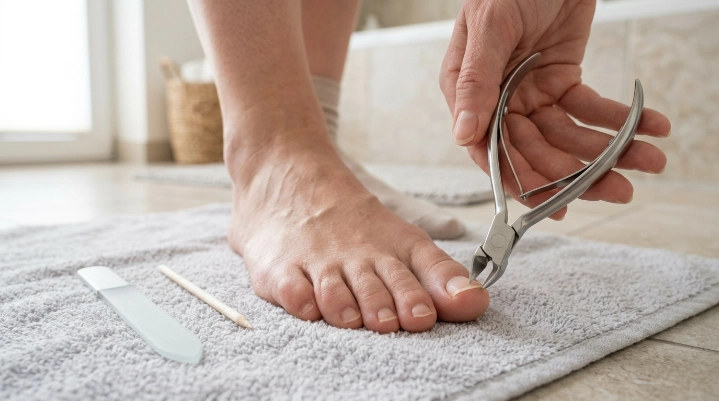
Usually, the nail itself is not what hurts. Pain happens when the clipper, file, or nail edge affects the living skin around or beneath the nail.
A few common causes include:
- Cutting the nail too short
- Digging the clipper into the side corners
- Trying to remove the entire nail edge in one large cut
- Using dull or poorly aligned clippers
- Pulling away partially cut pieces of nail
- Filing aggressively against sensitive skin
- Trimming an already inflamed or ingrown nail
The skin under the visible nail edge is sensitive living tissue. Your goal is to shorten the free edge—the part of the nail extending beyond the attached nail bed—without cutting into that skin.
The American Academy of Dermatology recommends cutting toenails straight across to reduce the likelihood of ingrown nails and using a nail file to smooth uneven edges afterward. American Academy of Dermatology nail-trimming guide
What You Need Before You Start
You do not need an elaborate pedicure kit. A few well-chosen tools can actually give you better control than a crowded collection of gadgets.
| Tool | Best Use | Typical Price Range | Main Safety Consideration |
|---|---|---|---|
| Toenail clipper | Everyday trimming | $5–$20 | Blades should be sharp and aligned |
| Nail nipper | Very thick nails | $10–$30+ | Extremely sharp; use small cuts |
| Fine nail file | Smoothing sharp edges | $3–$20 | Avoid aggressive filing |
| Clean towel | Drying and stabilizing foot | $3–$15 | Use a clean, dry towel |
| Small light or lamp | Improving visibility | Varies | Make sure the nail edge is clearly visible |
A basic toenail clipper is enough for most healthy nails. If yours are unusually thick, a sturdier nipper may provide more leverage, but greater cutting power also means you need more control.
Whatever tool you choose, do not force a weak clipper through a nail it cannot cut cleanly.
How to Trim Toenails Without Hurting the Skin: Step by Step
1. Trim When the Nail Is Easier to Cut
Hard, dry toenails can require more pressure. That makes sudden slips more likely.
Try trimming shortly after bathing or showering. If the nails are particularly hard or thick, you can soften them briefly with warm water and then dry your feet before cutting.
For thickened toenails, Mayo Clinic recommends softening the nails in warm water before trimming and then drying the feet and nails thoroughly. Mayo Clinic guide to trimming thickened toenails
You want the nail slightly easier to cut—not so waterlogged that everything feels slippery.
2. Sit Somewhere Stable and Well Lit
Do not rush through toenail trimming while balancing awkwardly over a bathtub.
Sit in a comfortable position where you can clearly see the whole nail. Keep your foot supported.
If reaching your toes makes you twist, strain, or lose control of the clipper, that is a sign you may need assistance rather than forcing the position.
3. Clean and Check the Nail First
Look at the nail and surrounding skin before cutting.
Check for:
- Redness
- Swelling
- Pus or drainage
- Bleeding
- Significant tenderness
- A nail edge already buried in the skin
- Dark or unexplained discoloration
- Significant thickening or crumbling
A normal grooming session is not the right time to aggressively work on inflamed or infected-looking tissue.
4. Position the Clipper on Nail Only
Before squeezing, look carefully at both ends of the cutting blades.
Make sure no surrounding skin has slipped between them.
This is particularly important on the smallest toes, where there may be very little free nail edge to work with.
Never place the clipper where you cannot clearly see what is inside the blades.
5. Take Several Small Cuts
Trying to remove the entire width of a tough toenail in one squeeze gives you less control.
Start at one side and make a small cut. Move across gradually until you reach the other side.
For thickened toenails, Mayo Clinic specifically recommends small straight cuts across the nail rather than rounding the corners.
If the nail starts cracking or splintering, stop and reassess the tool instead of squeezing harder.
6. Cut Straight Across
This is one of the most important parts of safe toenail trimming.
Your toenail does not need perfectly square, razor-sharp corners, but you should avoid cutting a deep curved shape down both sides.
Mayo Clinic lists cutting toenails too short or not straight across among the factors that can contribute to ingrown toenails. Mayo Clinic ingrown toenail guidance
Do not try to make the nail follow the rounded outline of the toe by digging downward at the corners.
7. Leave a Moderate Amount of Nail
One of the easiest ways to hurt the skin is to keep cutting because the nail still looks slightly white at the edge.
You do not need to remove every visible bit of free edge.
A practical goal is to leave the nail around the level of the toe tip rather than trimming it down close to the skin.
If the next cut would put the blades against the skin, you are done clipping.
8. File Instead of Making “One More Cut”
This is where a nail file becomes especially useful.
If the length is correct but one corner feels slightly rough or catches on a sock, do not keep cutting deeper into the corner.
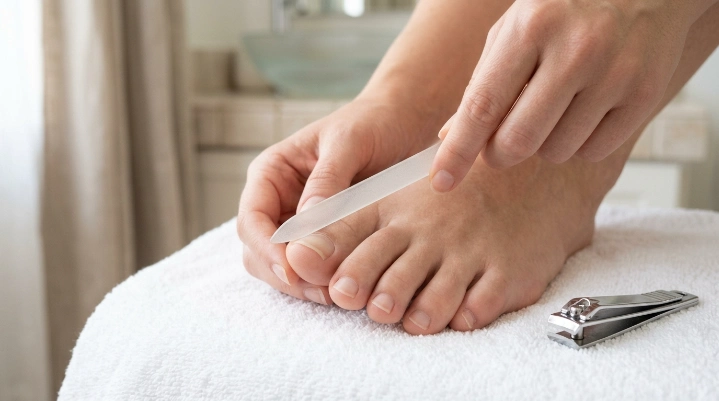
Use a fine file to smooth the sharp spot.
The AAD advises smoothing rough nail edges with a nail file or emery board and recommends moving the file in the same direction rather than aggressively sawing backward and forward.
Use light pressure and focus only on the free edge.
Expert Tip: When you feel tempted to make one tiny extra cut near the skin, switch to a fine nail file instead. Filing gives you much finer control and can remove a snag without taking away more nail length.
How to Use a Nail File Around Toenail Skin Safely
Because NailPrime readers often use files as part of regular pedicure care, it is worth treating filing as a separate step rather than an afterthought.
A file should smooth the nail—not scrape the skin beside it.
Choose a Suitable File
For ordinary natural toenails, a fine or medium-fine file usually gives you enough control.
Common options include:
Glass or crystal files: Smooth, reusable, and easy to control for finishing the edge.
Fine emery boards: Inexpensive and useful for everyday maintenance, although they wear out and should be replaced.
Metal files: Durable but potentially aggressive when used with heavy pressure.
You do not need an extremely coarse surface for routine finishing.
Keep the File Above the Skin
Angle the file so its abrasive face contacts the free nail edge.
Avoid pushing the file deep into the groove where the side of the nail meets the skin.
If filing produces heat, soreness, or a burning sensation, you are using too much pressure or staying in one area too long.
How Short Should You Cut Toenails?
“Short” should never mean “as close to the skin as possible.”
A moderate length is safer because the nail edge still has room to grow forward instead of being surrounded by skin.
Mayo Clinic recommends keeping toenails around the level of the toe tips and warns that cutting them too short can increase pressure from shoes and contribute to an ingrown nail.
The exact appearance varies because toe and nail shapes are different.
Use comfort and skin clearance as your guide rather than trying to achieve an ultra-short pedicure look.
What About Thick Toenails?
Thick nails require patience.
Avoid squeezing harder and harder with a standard clipper if the blade barely fits around the nail.
Instead:
- Soften the nail first.
- Dry the toe so your grip is stable.
- Use a strong, sharp tool intended for thicker toenails.
- Cut away small amounts at a time.
- File rough areas gently afterward.
A nail nipper may be useful because it gives more leverage, but its pointed blades are very sharp.
People who have diabetes, poor circulation, or reduced sensation in their feet should be particularly careful with self-trimming. Mayo Clinic recommends discussing safe trimming with a healthcare professional when these conditions are present.
What If Your Toenail Is Curved?
A naturally curved toenail does not mean you should chase both corners with the clipper.
If you cannot see a corner because it extends into the skin, do not blindly dig for it with the pointed end of a tool.
Instead, leave the area alone and watch for signs such as:
- Pain when the toe is touched
- Redness along one nail edge
- Swelling
- Increasing tenderness in shoes
- Drainage or pus
These can occur with an ingrown nail.
Trying to “fix” an ingrown edge by cutting farther down the side can make the area more irritated.
Hygiene Matters as Much as Technique
Any accidental nick around a toenail can create an opening in the skin. Keeping grooming tools clean helps lower unnecessary exposure to germs.
The AAD recommends disinfecting nail-grooming tools regularly and warns against sharing personal nail tools because fungal infections can spread through contaminated items. AAD guidance for preventing nail fungus
For everyday home care:
- Keep clippers dry between uses.
- Remove nail debris after trimming.
- Replace disposable files when worn, dirty, or damaged.
- Do not share emery boards.
- Store tools somewhere clean and dry.
- Avoid using rusty or visibly damaged clippers.
If you accidentally cut the skin, stop the pedicure instead of continuing to file and trim around the injury.
Common Mistakes to Avoid
Small technique errors cause many painful trims.
- Cutting too short: Leave a small, comfortable amount of free nail instead of trimming to the skin.
- Rounding deeply into both corners: Toenails are generally safer when trimmed straight across.
- Trying to remove one big section: Several small cuts give you more control.
- Pulling off partly cut nail: Finish the cut cleanly rather than tearing the nail.
- Using dull clippers: Dull blades can crush, bend, or split the nail.
- Digging beneath the nail: Pointed tools can injure sensitive tissue.
- Using a coarse file near skin: Save aggressive abrasives for appropriate nail materials and use a gentler file for finishing.
- Ignoring pain: Pain is a reason to stop, not a signal to squeeze harder.
- Sharing pedicure tools: Shared files and clippers can create hygiene problems.
- Trimming inflamed skin yourself: Redness, swelling, drainage, or severe tenderness may need professional evaluation.
DIY Trimming vs. Professional Help
Routine toenail trimming is reasonable at home when your nails are healthy, easy to reach, and comfortable to cut.
A salon visit may also be helpful for cosmetic maintenance, particularly when mobility makes self-pedicures difficult.
However, nail technicians are beauty professionals—not substitutes for medical diagnosis.
A dermatologist, podiatrist, or other qualified healthcare professional is more appropriate for unexplained nail disease, significant infection, recurring ingrown nails, or wounds.
When to See a Nail Technician or Dermatologist
Consider professional help when the problem goes beyond normal grooming.
A nail technician may be a reasonable choice if:
- Your nails are healthy but difficult for you to reach.
- You want cosmetic shaping or polish.
- You need help with routine nonmedical maintenance.
Consider a dermatologist, podiatrist, or other healthcare professional if:
- Redness is spreading.
- The toe is swollen or very painful.
- You see pus or drainage.
- The nail repeatedly grows into the skin.
- There is persistent bleeding.
- The nail becomes unusually thick or distorted.
- A nail changes color without an obvious cause.
- The nail separates significantly from the nail bed.
- You cannot trim the nail safely yourself.
Mayo Clinic advises seeking medical attention for severe toe discomfort or spreading redness and pus associated with an ingrown toenail.
If you have diabetes, poor circulation, reduced feeling in your feet, or difficulty healing wounds, be especially cautious about DIY trimming and seek personalized medical guidance when needed.
FAQs
Is it normal for toenail trimming to hurt?
Routine trimming of a healthy toenail should not hurt. Pain may mean you are cutting too close to living skin, pressing on an irritated area, or dealing with an underlying problem such as an ingrown or inflamed nail.
Should I cut toenails wet or dry?
Toenails can be easier to cut shortly after bathing because they are softer. Very thick nails may also benefit from brief warm-water softening. Dry the foot well before trimming so your grip stays secure.
Should toenails be cut straight or curved?
Toenails are generally best trimmed straight across rather than deeply rounded at the corners. This helps reduce the chance of the nail edge growing into surrounding skin.
Can I file my toenails instead of clipping them?
You can file small amounts of length, but removing a lot of toenail with a file can be slow and create unnecessary friction. A useful routine is to clip most of the excess length and then file the edge smooth.
What should I do if I accidentally cut the skin?
Stop trimming. Gently clean the area and keep it protected from further irritation. If bleeding does not stop, the cut is deep, or redness, swelling, warmth, worsening pain, or drainage develops, seek appropriate medical care.
Why does the corner of my toenail hurt after I cut it?
You may have trimmed the nail too short or removed too much from the corner. Shoe pressure can then push nearby skin against the growing nail. Persistent or worsening corner pain deserves professional evaluation, especially if redness or swelling appears.
How often should I trim my toenails?
There is no perfect schedule for everyone because toenails grow at different rates. Trim them when enough free edge has developed to catch, press against footwear, or become uncomfortable. Avoid cutting them simply because you want an extremely short appearance.
Conclusion
Learning how to trim toenails without hurting the skin is less about cutting more and more about knowing when to stop.
Use clean, sharp toenail clippers, soften hard nails when necessary, sit somewhere stable, make small straight cuts, and leave a moderate amount of nail instead of digging into the corners. Then let a fine nail file handle minor roughness rather than making another risky cut near the skin.
Most healthy toenails can be maintained safely at home with a simple routine. But pain, swelling, drainage, recurring ingrown edges, major discoloration, or difficulty trimming safely should move the problem out of DIY territory.
Keep your next pedicure gentle, controlled, and focused on protecting both the nail and the skin around it.

