
Is Nail Polish Safe for Kids? A Parent’s Practical Guide

If your child wants painted nails, the short answer is: usually yes, with the right product and the right precautions. For older kids and teens, occasional nail polish use is generally a low-risk cosmetic choice. For toddlers and younger children, the bigger concerns are putting fingers in the mouth, skin sensitivity, fumes, and accidental ingestion.
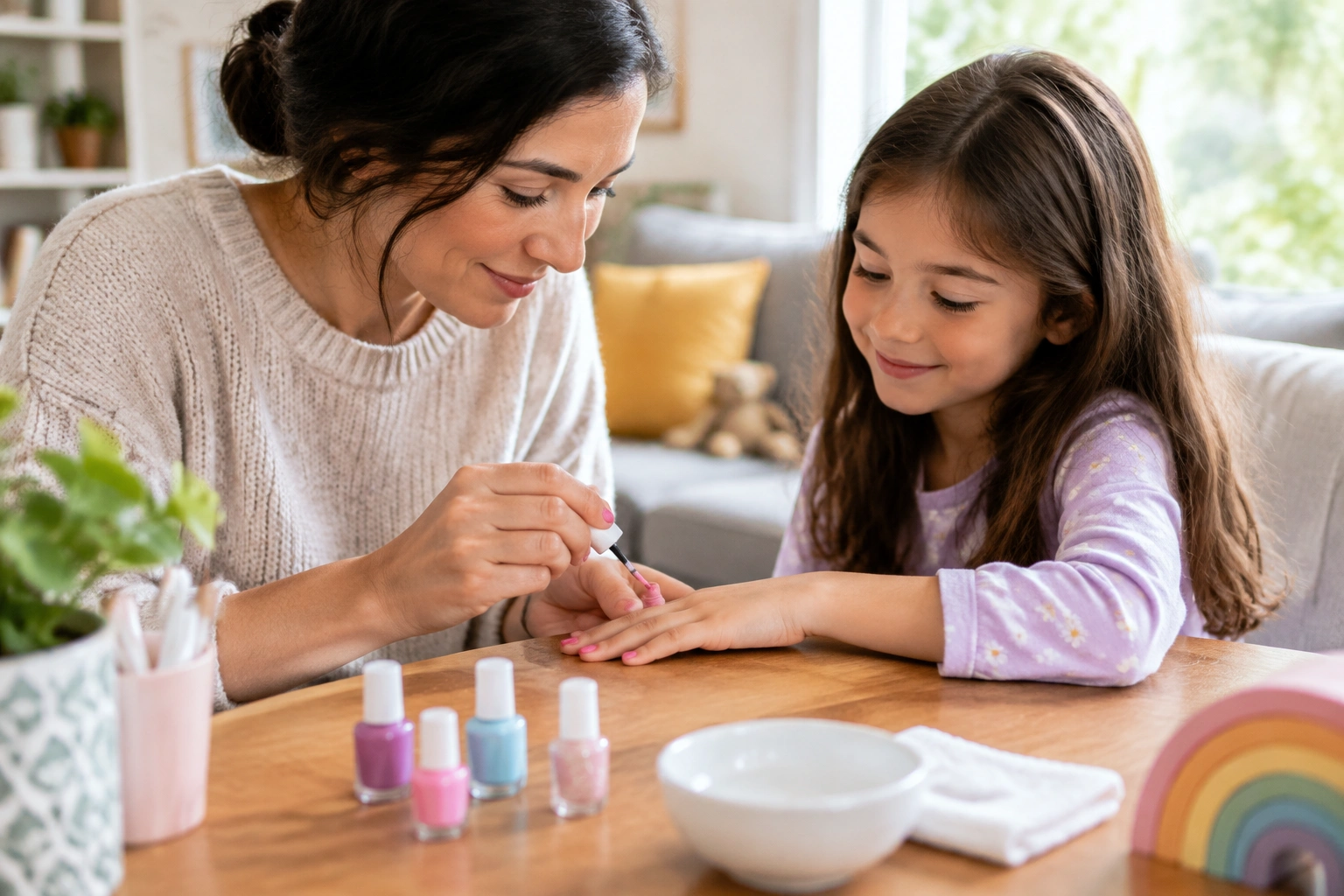
As a mom and licensed nail technician, I look at this question the same way I’d look at any kid-friendly beauty choice: not “Is it perfect?” but “What’s the safest reasonable way to do this?” That means choosing gentler formulas when possible, keeping application brief and well ventilated, and paying attention to how a child’s skin reacts.
What Makes Nail Polish a Safety Concern for Children?
Nail polish is a cosmetic, but it isn’t the same as face paint or washable marker. The main safety concerns for kids are pretty practical:
- Inhalation of fumes, especially in a small room or salon with poor ventilation
- Skin irritation around the nail folds, cuticles, or fingertips
- Mouth contact or ingestion, which is more likely in toddlers and nail-biters
- Removal-related irritation from strong solvents like acetone
- Allergic reactions, including itchy, red, or swollen skin
For most healthy older children, the risk from occasional use is usually more about irritation and exposure management than serious toxicity. But the younger the child, the more I recommend caution. A preschooler who constantly touches their mouth is a very different situation from a teen who can sit still and follow instructions.
The American Academy of Pediatrics has long emphasized keeping cosmetics and small personal-care products out of young children’s reach, and the FDA’s cosmetic guidance is a useful reminder that cosmetic labels and ingredients still matter. You can also review general cosmetic safety information on the FDA cosmetics page and pediatric guidance at the American Academy of Pediatrics.
Ingredients and Labels to Watch For
This is where many parents get tripped up. A bottle saying “non-toxic” or “kid-safe” sounds reassuring, but those words are not a universal guarantee. They are marketing terms, not a single regulated safety standard.
When you’re checking a polish, the ingredient list matters more than the front label. Common ingredients people look at include:
- Phthalates, including DBP (dibutyl phthalate)
- Formaldehyde
- Toluene
- Camphor
These ingredients are often discussed because they can be more concerning from an exposure or sensitivity standpoint, especially in products used repeatedly. That doesn’t mean every product containing one ingredient will cause a problem, but it does mean parents should be selective.
A practical rule I use: if a polish is marketed for kids but won’t clearly tell you what’s in it, I pass on it. That’s especially true if the bottle has a strong smell, vague claims like “chemical-free,” or no ingredient transparency at all.
The safest way to evaluate a product is to:
1. Read the ingredient list.
2. Prefer formulas that are clearly labeled and transparent.
3. Treat “non-toxic” as a starting point, not the final answer.
4. If the label is vague, incomplete, or hard to verify, choose a different product.
5. If your child has sensitive skin or allergies, patch test first.
Some parents also cross-check ingredients with public cosmetic-safety resources, but the key point is still the same: prioritize ingredient transparency over front-label claims.
Is Nail Polish Safe at Different Ages?
Age matters because behavior matters. The biggest difference isn’t just the number on the birthday cake — it’s whether the child can keep polish out of their mouth, sit still while it dries, and avoid rubbing their eyes.
For older children and teens, occasional use is generally more reasonable because they can usually follow simple instructions and tolerate the application process better. For toddlers and frequent nail-biters, I’d be much more cautious because the odds of mouth contact, skin irritation, and accidental ingestion are higher.
Toddlers and preschoolers
For this age group, I’d treat nail polish as occasional only, not an everyday habit. If you do it:
– Use a water-based or very low-odor kid formula
– Apply it in a well-ventilated area
– Keep the session short
– Supervise the child until the nails are fully dry
– Avoid polish if the child is a frequent nail-biter or mouth explorer
A toddler who sucks fingers or chews nails is more likely to ingest polish residue, so I’d be more cautious here than with an older child.
School-age kids
This is where many families feel comfortable allowing polish occasionally. Most children this age can follow simple instructions like “don’t touch your mouth” and “let your nails dry before you eat.” That said, kids with eczema, allergies, or very sensitive skin may still need a gentler formula.
Teens
Teens can usually handle regular polish more safely because they can follow application and removal steps better. Even so, I still recommend:
– Good ventilation
– Ingredient awareness
– A gentler remover when possible
– A pause if any irritation appears
If you want a deeper age-by-age breakdown, I also have a related guide on what age kids can wear nail polish.
Safer Polish Options: Regular, Water-Based, Peel-Off, and “Non-Toxic” Formulas
Here’s the comparison I wish more parents saw before buying.
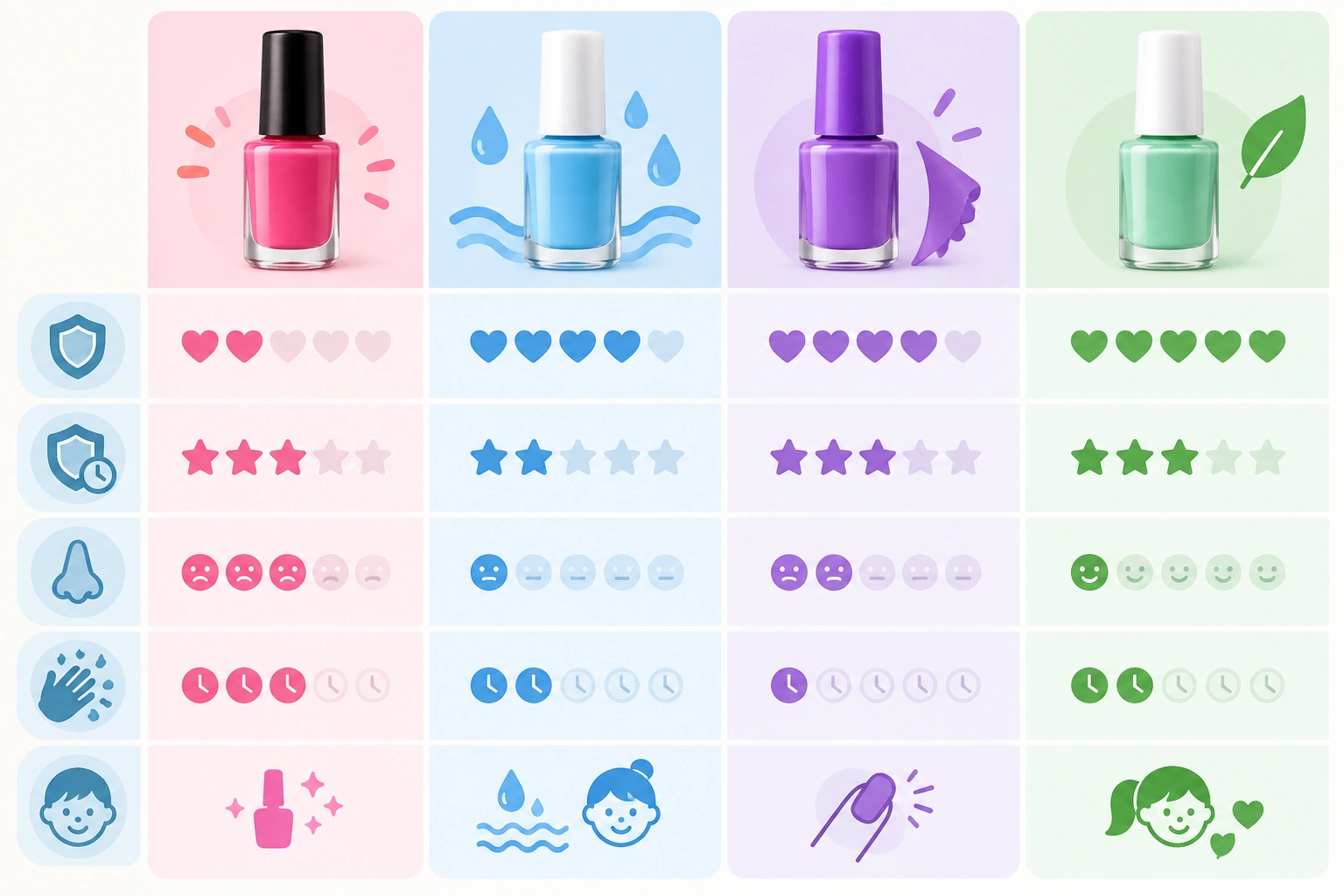
| Type | Safety feel for kids | Durability | Odor | Removal | Best for |
|---|---|---|---|---|---|
| Traditional polish | Moderate | Better | Often stronger | Needs remover | Older kids/teens who want longer wear |
| Water-based polish | Often gentler | Usually shorter | Lower odor | Easier to remove | Toddlers, sensitive skin, occasional wear |
| Peel-off polish | Can reduce remover use | Variable | Usually lighter | Peels off | Kids who want easy removal |
| “Non-toxic” labeled polish | Depends on ingredients | Varies | Varies | Varies | Only if ingredient list also looks good |
Regular polish
Traditional polish is usually solvent-based, which is why it tends to last longer and look smoother. It can also have a stronger smell and more exposure to solvents during application and removal. For a teen who wants a weekend manicure, that trade-off may be reasonable. For a toddler, I’d usually reach for something gentler.
Water-based polish
Water-based polish is often the most kid-friendly choice because it tends to be lower odor and easier to remove. It’s different from traditional solvent-based polish in both feel and cleanup, which is why it’s often a better fit for younger children. The trade-off is durability. It may chip fast, which means more touch-ups. For younger kids, though, that’s usually worth it.
Peel-off polish
Peel-off formulas can be helpful when you want to avoid remover altogether. That can be a real plus for kids with sensitive skin. The downside is that they may not stay put as long and can lift at the edges sooner. Peel-off polish isn’t automatically “safer” in every way — it’s often just easier to remove, which can reduce solvent exposure.
“Non-toxic” polish
This label can be useful, but only if you still check the ingredient list. A bottle can say “non-toxic” and still not be ideal for every child. I’d rather see:
– Clear ingredients
– Low odor
– A formula designed for kids
– Easy removal without harsh rubbing
Some kid-focused brands also market themselves as low-odor or non-toxic, but the label alone should never be the whole decision.
How to Use Nail Polish More Safely at Home
A safe manicure at home is really about reducing little exposures, one by one.
A simple safety routine
- Pick a ventilated spot — near a window, open door, or even outside if weather allows.
- Keep the bottle closed when not in use.
- Apply thin coats instead of heavy ones.
- Keep fingers away from the mouth, nose, and eyes.
- Let nails dry fully before snacks, toys, or tablet time.
- Wash hands after application if polish got on the skin.
- Store polish out of reach when you’re done.
That last step matters more than people think. A pretty bottle can look like a toy to a toddler.
Patch test tip: If your child has sensitive skin or has reacted to cosmetics before, apply a small amount of the polish to a small area of skin, then wait 24 to 48 hours. Stop using the product if you see redness, itching, swelling, or a rash.
If you want a quick drying tip that’s safe for beginners, I also have a related post on whether cold water helps nail polish dry faster. Just remember that faster drying is not the same as fully cured.
Nail Polish Remover: What Is Safer for Kids?
Removal is where many families accidentally make things harsher than they need to be.
Acetone remover
Acetone works quickly, which is great for adults who want speed. For kids, though, it can be drying and irritating, especially on small fingers or already sensitive skin.
Acetone-free remover
This is often a gentler pick, but “gentler” doesn’t mean harmless. It can still dry the skin or require more rubbing, which may bother sensitive children. It’s also not something I’d use repeatedly without a reason.
When to avoid remover altogether
For toddlers and very young children, it’s often better to avoid remover when you can and choose water-based or peel-off polish instead. If a child has very sensitive skin, eczema around the hands, or a tendency to rub their eyes or mouth, minimizing remover use becomes even more important.
Peel-off or water-based polish can reduce remover use
This is one of the biggest practical advantages of kid-friendly formulas. If you can remove polish with warm water, gentle peeling, or very mild cleanup instead of repeated solvent use, that’s often easier on a child’s skin.
If you need more backup options, I also cover how to remove nail polish without remover, which can be handy for regular polish in a pinch.
When to Stop Using Nail Polish
I’d pause polish use if you notice any of these:
- Redness around the nails
- Itching or burning
- Swelling
- A rash on the fingers or hands
- Cracked or peeling skin after use
- Sneezing, coughing, eye irritation, or breathing discomfort during application
Those signs can point to irritation or, less commonly, an allergic reaction such as allergic contact dermatitis. If a child reacts once, don’t assume they’ll “get used to it.” Repeated exposure can sometimes make irritation worse, not better.
A simple decision rule: if the polish causes symptoms two times in a row, stop using that product and switch formulas or stop entirely.
What to Do If a Child Gets Polish on Their Skin or Ingests It
Most small skin smudges are not an emergency. Wash the area with mild soap and water. If polish gets on the skin around the nails, avoid scrubbing hard.
If a child puts a freshly painted finger in their mouth, a tiny accidental lick or brief mouth contact is usually low concern, especially with a small amount of regular polish. Wipe the mouth gently and offer water. Then watch for any unusual symptoms. If the child swallowed a meaningful amount, or if the product was remover rather than polish, contact poison control for guidance because recommendations depend on the product and the amount involved.
Seek urgent help if:
– The child swallows a significant amount of polish or remover
– They have trouble breathing
– They develop swelling of the lips, face, or tongue
– They seem very sleepy, confused, or unwell
For any serious exposure concern, contact poison control or your local emergency service right away. If you’re in the U.S., the Poison Help line is 1-800-222-1222.
Simple Decision Guide for Parents and Caregivers
Here’s the easiest way I’d decide at home:
Choose nail polish if:
- Your child is old enough to keep fingers out of their mouth
- You can supervise the application
- You have a well-ventilated space
- You can use a low-odor or kid-friendly formula
Choose a water-based or peel-off formula if:
- The child is young
- You want to minimize remover use
- Your child has sensitive skin
- Nail-biting or finger sucking is a concern
Skip polish for now if:
- The child is a toddler who mouths everything
- There’s a history of skin reactions to cosmetics
- You can’t supervise drying time
- The room is poorly ventilated
- The child develops redness, itching, or breathing irritation
For many families, the safest middle ground is occasional use with a gentler formula, close supervision, and careful removal. That gives kids the fun of painted nails without turning it into a daily exposure or a fume-filled salon moment.
When to See a Pediatrician or Dermatologist
Reach out if your child:
– Gets repeated rashes after polish use
– Has eczema that flares around the hands
– Develops swelling, hives, or breathing symptoms
– Seems to react to multiple nail products
– Has a suspected allergy and you want help figuring out the trigger
A dermatologist can help determine whether the issue is irritation, allergy, or something else entirely. That’s especially useful if your child loves nail polish and you’re trying to find a safer way to keep using it.
FAQ
Is regular nail polish safe for kids every day?
Usually not the best choice for everyday use, especially for younger children. Occasional use is generally more reasonable for older kids and teens, while toddlers and frequent nail-biters need more caution. If a child wants polish often, a gentler formula and good supervision matter more.
Is “non-toxic” nail polish really safe?
Not automatically. Non-toxic is a marketing term, not a regulated safety guarantee. The better question is whether the brand gives a clear ingredient list and avoids vague claims. Ingredient transparency matters more than the front label.
Are salon gel manicures safe for kids?
They’re different from regular kids’ polish and usually raise extra concerns. Gel polish needs UV or LED curing and often requires more involved removal, which can mean more exposure and more chance of nail or skin irritation. For children, especially younger kids, regular kid-friendly polish is usually the simpler choice.
What if my child only got a tiny bit of nail polish in their mouth?
A tiny accidental lick or brief mouth contact is usually low concern. Wipe the mouth, offer water, and observe. If your child swallowed a meaningful amount, the product was remover, or you’re unsure how much was involved, contact poison control for product-specific guidance.
What’s the safest remover for kids?
Often the safest answer is to avoid remover when possible and choose water-based or peel-off polish. If you do use remover, acetone-free may be less harsh, but it can still dry or irritate skin.
Final Takeaway
So, is nail polish safe for kids? Often yes, but not all polishes are equally kid-friendly, and younger children need more caution. If you keep the focus on ingredients, ventilation, supervision, and gentle removal, nail polish can be a reasonable occasional cosmetic choice for many children and teens.

