
Is Nail Polish Toxic? A Beginner’s Guide to Safer Use

If you’ve ever wondered is nail polish toxic, the short answer is: for most people, occasional use is usually low risk, but some ingredients, fumes, and removers can matter more if you use polish often, have sensitivities, or work in a poorly ventilated space.
That’s the practical way to think about it. Nail polish is not usually something you need to panic about, but it is also not something to treat as harmless in every situation. The real question is how much you’re exposed to, how often you use it, and which product you choose.
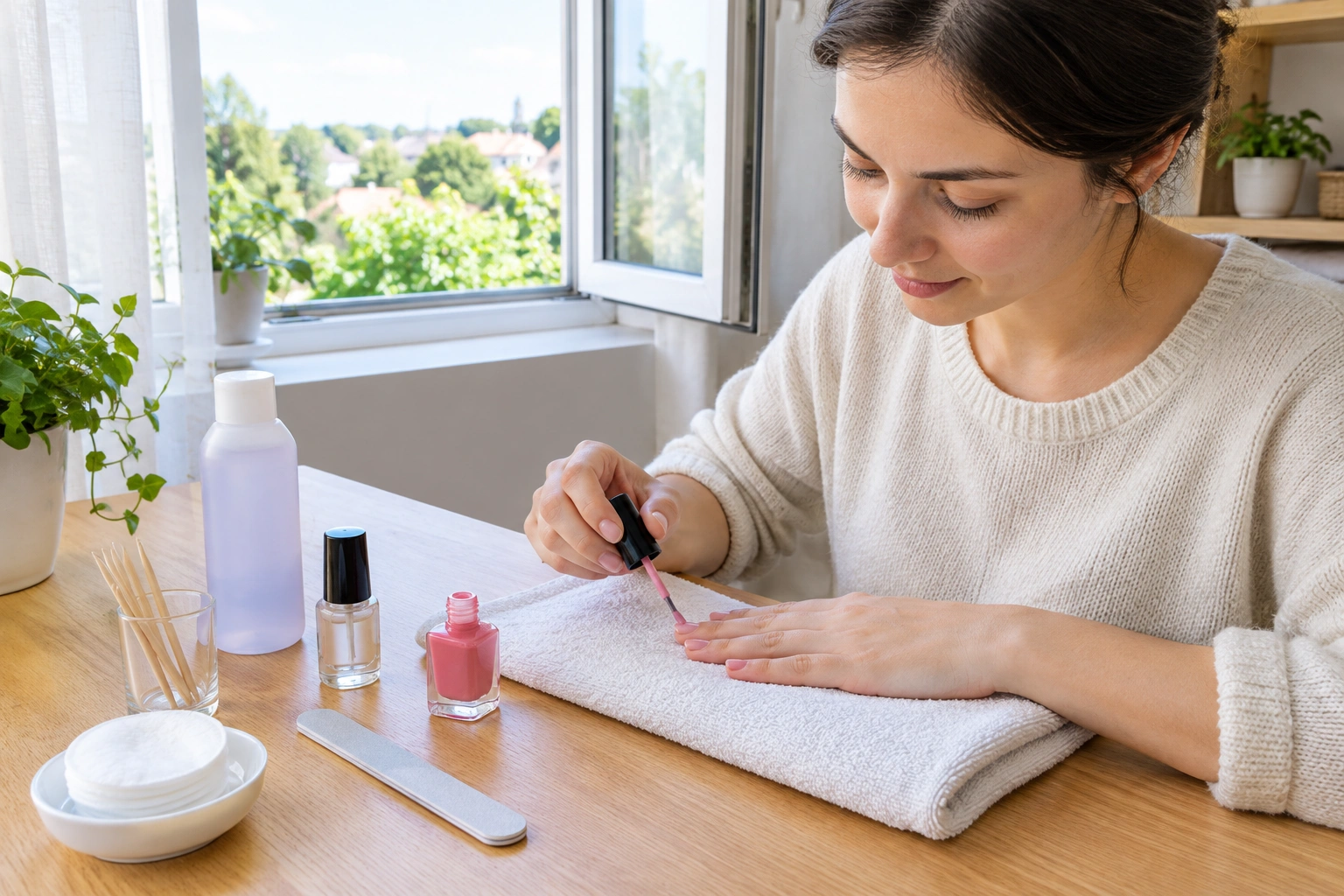
For a simple, beginner-friendly approach: use polish in a room with fresh air, keep remover use brief, and pay extra attention if you’re pregnant, buying polish for a child, or sensitive to strong smells.
What Nail Polish Is Made Of
Nail polish is usually a mix of a few basic parts:
- Film-formers help the polish dry into a smooth layer on the nail.
- Solvents keep the polish liquid in the bottle and help it spread.
- Pigments give it color.
- Additives may improve shine, wear, or texture.
The ingredient list matters because the solvent part is often what creates the strong smell and the most noticeable vapor exposure. That smell is one reason nail polish gets linked with safety concerns. It does not automatically mean the product is dangerous, but it does mean you are breathing in some vapors while you paint your nails, especially if you use it often or in a small room.
If you want a deeper look at why some bottles get thick or stringy over time, our guide on why nail polish gets clumpy explains what happens inside the bottle.
What “Toxic” Really Means in Everyday Use
People often use the word “toxic” to mean “bad for you,” but in nail care, that can be too broad.
In everyday use, the concern is usually one of these:
- Irritation from smell or fumes
- Dryness from remover
- Skin sensitivity or allergic reactions
- Higher exposure from frequent use or poor ventilation
That is different from a true poisoning situation. Most home manicures are not a crisis. The bigger issue is repeated exposure over time, especially if you paint nails often in a closed bathroom, use strong remover without fresh air, or already notice that smells bother you.
A helpful rule: if a product gives you headaches, stings your nose, makes your eyes water, or irritates your skin, treat that as a sign to change how you use it or switch products.
Ingredients That Raise the Most Concern
You may hear certain ingredient names mentioned again and again in nail polish discussions. These are often brought up because some people prefer to avoid them, especially in older or more conventional formulas.
Common ingredients people watch for
- Toluene: often discussed because inhalation exposure can be more of a concern in poorly ventilated spaces
- Formaldehyde: known for being a stronger concern in beauty products, especially for people trying to avoid potential irritants
- Dibutyl phthalate (DBP): often grouped with other ingredients people prefer to avoid, particularly in “free-from” formulas
- Camphor: can be irritating for some users and may be noticeable because of its smell
- Ethyl acetate: a common solvent with a strong smell, so it can be more noticeable during application
- Acetone: more often found in remover, but important because it can be drying and has a strong odor
You do not need to memorize every chemical name to make a safer choice. A more useful habit is to notice whether a product smells very strong, whether it bothers your skin, and whether the brand explains its formula clearly.
Some shoppers prefer “free-from” formulas because they leave out certain ingredients from the list. That can be a reasonable choice, but the label alone does not tell you everything about the product’s overall safety or how your body will respond to it.
For official consumer guidance on beauty product safety, the FDA’s cosmetics information is a useful place to start.
Are Nail Polish Fumes Dangerous to Breathe?
Nail polish fumes come from volatile ingredients that evaporate into the air. You may also hear the term volatile organic compounds (VOCs). In simple terms, these are ingredients that can turn into vapor easily, which is why polish and remover smell strong.
For most people, a quick manicure in a ventilated space is more of a comfort issue than a major health issue. The concern grows when:
- the room is small,
- windows are closed,
- the products are used often,
- or the smell causes symptoms.
A beginner-friendly example: painting your nails at a table near an open window is very different from doing a full manicure in a tiny bathroom with the door shut.
If you are sensitive to smells, choose a lighter routine. Open a window, use a fan, and keep the bottle closed when you are not actively brushing on polish.
The CDC’s workplace safety information can also help you understand why ventilation matters when you’re around chemical fumes.
Regular Polish vs Gel Polish vs Dip Powder
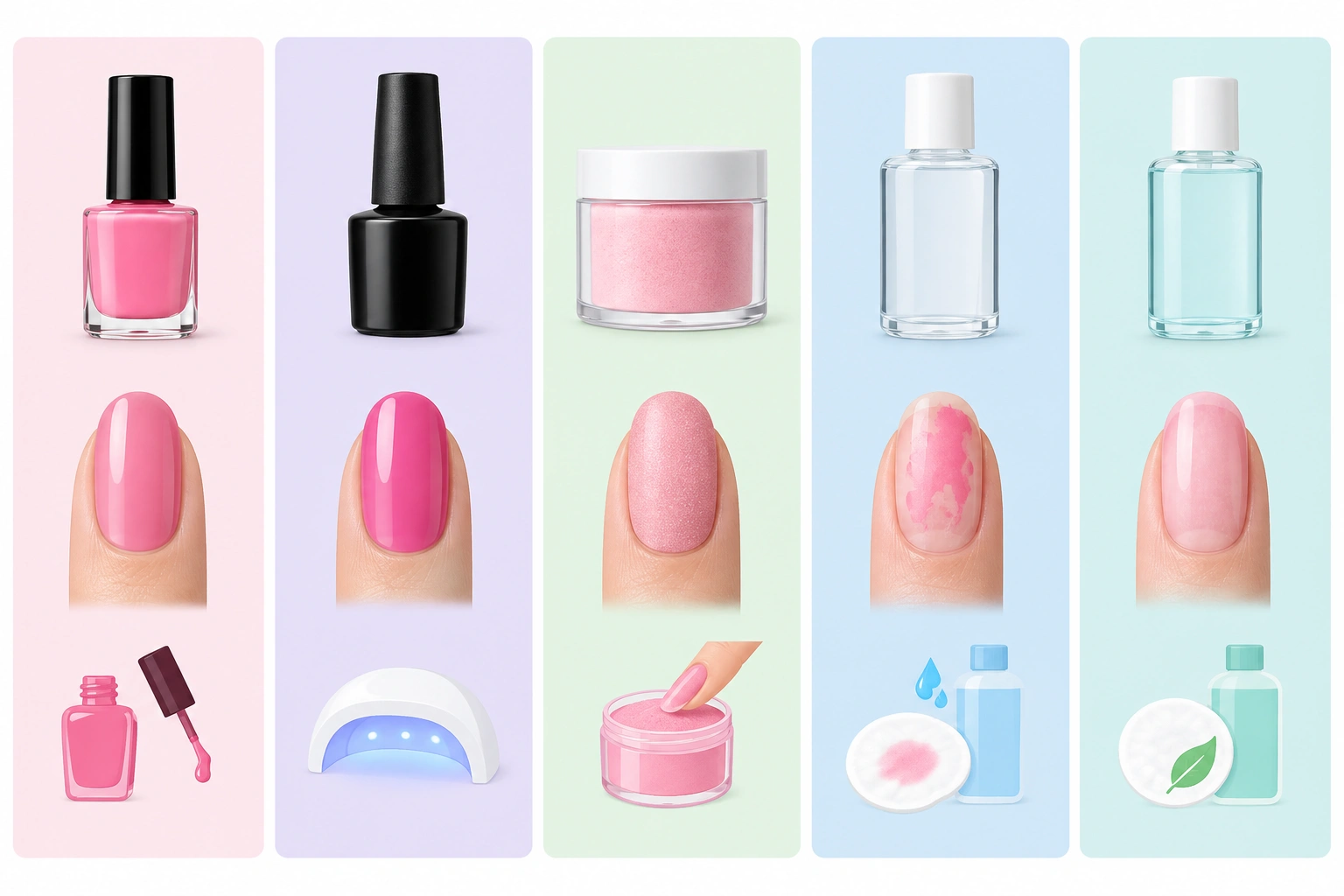
Not all nail products carry the same kind of exposure. Here’s the simple version.
| Product type | Main upside | Main caution | Beginner takeaway |
|---|---|---|---|
| Regular polish | Easy to apply and remove | Fumes and remover use still matter | Best for simple at-home use |
| Gel polish | Long wear and glossy finish | Needs curing and more involved removal | Good if you want durability, but not the lowest-exposure option |
| Dip powder | Stronger wear for some users | Application and removal can be more involved | Can be convenient, but removal deserves care |
Regular polish
Regular polish is usually the easiest place to start. It gives you color without the extra steps of curing under a lamp. The trade-off is that it chips sooner, so you may repaint more often.
Gel polish
Gel polish can last longer, which sounds convenient. But it also adds a curing step under a UV or LED lamp and usually requires more careful removal. That makes gel polish potentially more concerning than regular polish for some people, not because it is automatically unsafe, but because it adds another exposure step and more involved removal. If you like changing colors often, gel may create more repeated removal exposure than regular polish.
Dip powder
Dip powder may appeal to people who want longer wear, but it still involves product buildup and removal considerations. If you are new to nail care, it can be harder to manage safely at home than regular polish.
A simple decision rule: if your main goal is low-fuss color, regular polish is usually the easiest choice. If your main goal is long wear, gel or dip may be worth the extra steps, but only if you are comfortable with the removal process.
Is Nail Polish Remover Worse Than the Polish Itself?
Often, yes — removal can be the part that deserves the most caution.
Acetone remover
Acetone remover is usually the harsher option, but it is also the most effective for stubborn polish and especially for gel removal. The downside is that it can be very drying and has a stronger smell.
Non-acetone remover
Non-acetone remover is usually gentler on the skin and nails, but it is not automatically better in every situation. It can take longer to work, which may mean more rubbing, more repeated use, or more time with the product on your nails.
Which one should you choose?
- If your nails are dry or peeling, a non-acetone remover may be a gentler first choice for regular polish.
- If you need to take off a long-wear product like gel, acetone is often the more practical option.
- If you are just removing a light layer of regular polish, a milder remover may be enough.
The main point is that remover is often the bigger source of dryness and repeated exposure than the polish itself. If you are choosing between the two, acetone is usually harsher, while non-acetone is usually gentler but slower.
What Do 3-Free, 5-Free, 7-Free, and 10-Free Mean?
These labels usually mean the formula leaves out certain ingredients that some shoppers prefer to avoid.
- 3-free commonly means three ingredients are excluded.
- 5-free, 7-free, and 10-free mean more ingredients are left out.
That sounds simple, but the labels can be confusing because different brands may define them differently. One brand’s “5-free” may not exclude the exact same ingredients as another brand’s “5-free.” In other words, “free-from” is a marketing shorthand, not a universal safety standard.
A few common examples of ingredients that may be left out include formaldehyde, toluene, DBP, camphor, and formaldehyde resin, depending on the brand and label. But the exact list is not fixed across the industry.
A good way to use these labels is as a starting point, not a guarantee. If you already know you are sensitive to strong smells or certain ingredients, a free-from formula may be a smarter choice. If you have no reaction to your current polish, the label may matter less than how you use the product.
In other words: the label is helpful, but ventilation, frequency, and removal habits still matter more than marketing language alone.
How to Use Nail Polish More Safely at Home
You do not need a salon setup to reduce exposure. A few simple habits make a real difference.
A basic safety checklist
- Paint nails in fresh air
- Open a window or use a fan.
-
Avoid closed, stuffy rooms when possible.
-
Keep the bottle closed when you pause
-
Don’t leave polish open while you answer messages or do other tasks.
-
Avoid getting polish on skin
-
Try to keep the polish on the nail plate, not the surrounding skin.
-
Use remover sparingly
- Put remover on only as long as needed.
-
Wash your hands after finishing.
-
Let nails dry fully
-
Smudging leads to extra touch-ups, which means more solvent exposure and more product use.
-
Store products safely
- Keep them out of reach of children and away from heat.
If you like doing your nails at home, a simple routine with good air flow is usually the safest practical choice.
Pregnancy and Child Safety: When to Be More Cautious
This is a topic where caution makes sense, especially if you are trying to reduce exposure as much as possible.
During pregnancy
Many pregnant people still use nail polish occasionally, but it is reasonable to be more careful with fumes, remover, and salon visits. Lower-frequency use is a sensible approach, especially if you notice smell sensitivity, headaches, or nausea. Choose:
- a well-ventilated space,
- shorter sessions,
- and the least irritating remover that still gets the job done.
If the smell bothers you, makes you feel sick, or you have a specific medical concern, ask a clinician for advice that fits your situation.
For children
Children may be more sensitive to smells and skin contact, so keep the routine simple. Use products made for their age group if you are using any at all, and avoid treating nail polish as a casual everyday product for small kids.
A special-event manicure is different from regular repeated use. If a child reacts to the smell, seems bothered by it, or gets skin irritation, stop and wash it off. If you are unsure whether a product is appropriate for a child, check with a pediatric clinician.
When to Avoid Nail Polish or Seek Medical Advice
Stop using the product and get help if you notice:
- dizziness
- headache that seems linked to fumes
- breathing irritation
- eye watering that does not settle
- rash, itching, or swelling
- a strong reaction after remover use
If the smell alone makes you feel unwell, that is a valid reason to switch to a lower-exposure routine or avoid the product altogether.
When to see a nail technician or dermatologist
See a dermatologist if you have repeated redness, itching, nail lifting, or a reaction that keeps coming back. Those symptoms can point to irritation or sensitivity that needs professional attention.
The Bottom Line
So, is nail polish toxic? For most people, occasional use is usually low risk, but the safer answer depends on how you use it. The main concerns are fumes, repeated exposure, strong removers, and sensitivity to certain ingredients.
If you want a simple beginner rule, this is it: choose a formula you can tolerate, use it in fresh air, keep remover use brief, and pay extra attention if you are pregnant, shopping for a child, or sensitive to smells.
That approach keeps nail polish in the “practical beauty product” category instead of the “worry about every bottle” category.

