
How to Maintain Toenail Health Without a Pedicure

You do not need a standing salon appointment to keep your toenails clean, comfortable, and well-shaped. In fact, many of the habits that matter most for toenail health happen at home: washing and drying your feet properly, trimming nails safely, smoothing rough edges, moisturizing dry skin, wearing comfortable shoes, and noticing changes early.
Learning how to maintain toenail health without a pedicure can also save money and give you more control over the tools and products that touch your feet. The key is keeping your routine simple and knowing when a nail problem has moved beyond cosmetic care.
This guide walks you through an easy at-home toenail routine, including clipping, filing, hygiene, moisturizing, tool choices, common mistakes, warning signs, and situations where professional help is the smarter option.
Quick Answer
To maintain toenail health without a pedicure, wash and dry your feet daily, trim toenails straight across, gently file rough edges, moisturize the surrounding skin, keep grooming tools clean, and wear shoes that do not squeeze your toes. Check your nails regularly for pain, swelling, discoloration, thickening, or other unusual changes.
What Healthy Toenail Maintenance Really Involves
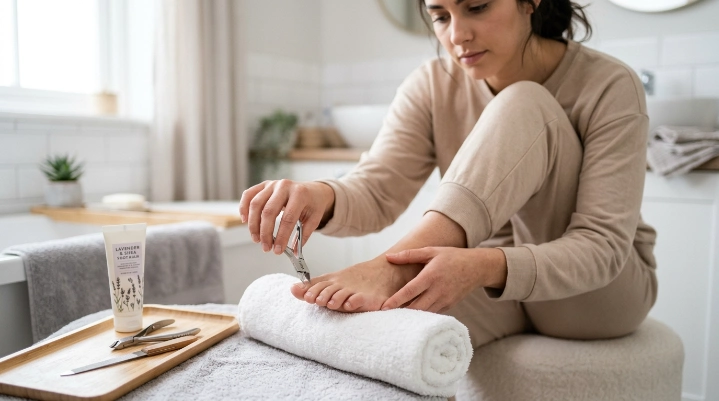
Healthy toenail care is not about making every nail look perfectly polished. The goal is to keep the nail plate—the hard, visible part of the nail—clean, reasonably short, smooth, and protected from unnecessary damage.
A good routine usually comes down to five habits:
- Keeping your feet and toenails clean and dry
- Trimming toenails before they become overly long
- Filing sharp or rough edges gently
- Protecting the skin around the nails
- Watching for unusual changes
According to CDC guidance on foot and nail hygiene, keeping feet clean and dry and using clean grooming tools can help lower the risk of common foot and nail problems.
The best part is that these habits require very little equipment.
What You Need for At-Home Toenail Care
You do not need a complete salon kit. A few basic tools are usually enough for routine maintenance.
| Tool or Product | Main Purpose | What to Look For | Typical Cost |
|---|---|---|---|
| Toenail clippers | Remove excess nail length | Sharp, sturdy blades and comfortable grip | About $5–$20 |
| Nail file | Smooth rough edges | Fine or medium grit with good control | About $2–$15 |
| Soft nail brush | Clean around nails | Soft bristles that do not scratch skin | About $3–$10 |
| Foot moisturizer | Reduce dry, cracked skin | Simple fragrance-free formula for sensitive skin | About $5–$20 |
| Small clean towel | Dry feet carefully | Soft and washable | Usually already at home |
You may spend more for premium stainless-steel clippers or reusable glass files, but expensive tools are not automatically healthier.
Sharpness, cleanliness, comfort, and gentle technique matter more than branding.
How to Maintain Toenail Health Without a Pedicure: Step by Step
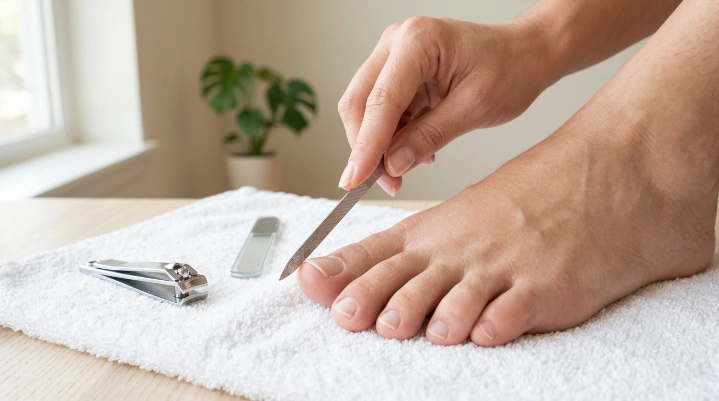
A regular routine makes toenail maintenance much easier than waiting until the nails become long, rough, or uncomfortable.
1. Wash Your Feet and Toenails
Wash your feet with mild soap and water, including around your toenails and between your toes.
You do not need to aggressively scrape underneath the nail. If dirt has collected near the free edge, use a soft nail brush rather than a sharp metal object.
Sharp tools can accidentally injure the delicate skin beneath or beside the nail.
2. Dry Your Feet Completely
Dry the entire foot after washing, especially between your toes.
This small step matters because fungi tend to do well in warm, damp environments. The CDC recommends keeping feet clean and dry as part of basic foot hygiene.
If your feet sweat heavily during the day, changing damp socks can also help keep the area more comfortable.
3. Trim Toenails Straight Across
Toenails should generally be clipped straight across rather than deeply rounded at the corners.
The American Academy of Dermatology recommends straight-across trimming to help reduce the chance of ingrown toenails. It also suggests trimming after bathing or briefly softening the nails in lukewarm water if the nails are difficult to cut.
Make several controlled cuts instead of trying to force the entire nail through the clipper at once.
Do not cut the nail extremely short. Leave a small visible edge rather than clipping down into the skin.
4. Use a Nail File to Smooth the Edge
After clipping, check each toenail for sharp corners, tiny snags, or uneven areas.
A nail file is useful here because it allows you to refine the shape without removing a large amount of nail.
Use light, controlled strokes.
The AAD recommends filing in the same direction rather than aggressively sawing backward and forward, which can weaken the nail edge.
5. Moisturize the Skin Around Your Toenails
Dry skin around the nails can crack, peel, and feel uncomfortable.
After your feet are clean and dry, apply a small amount of moisturizer to the tops and sides of the feet and around the nail folds.
If the skin between your toes tends to stay damp, avoid leaving a heavy layer of moisturizer there.
6. Inspect Your Toenails
Before putting on socks, take a few seconds to look at your nails.
Notice whether there are new:
- Color changes
- Cracks
- Thickened areas
- Lifting
- Swelling
- Tender spots
- Changes in nail shape
You are not trying to diagnose yourself. Regular inspection simply helps you recognize when something has changed.
How Often Should You Trim and File Your Toenails?
There is no perfect schedule for everyone.
Toenails grow more slowly than fingernails, so many people do not need to trim them every week. A practical approach is to check them every one to two weeks and trim when they begin extending far enough to catch, press against shoes, or feel uncomfortable.
If your toenails are already short, you may only need a few strokes with a file to smooth a rough spot.
Avoid filing simply because you feel that you should. Over-filing can thin the nail unnecessarily.
What Type of Nail File Is Best for Toenails?
Your ideal file depends on the thickness and condition of your nails.
Emery Board
Emery boards are inexpensive and widely available.
They work well for small touch-ups, but they wear out and are harder to thoroughly clean than some reusable files.
They are useful if you prefer replacing your file regularly rather than maintaining a reusable tool.
Glass Nail File
Glass files usually have a fine filing surface and can provide excellent control on normal natural nails.
They are especially useful when you want to smooth edges gently rather than remove a lot of length.
However, very thick toenails may require more patience.
Metal Nail File
Metal files are durable and easy to store, but some are fairly aggressive.
Use light pressure, especially if your toenails are thin, brittle, peeling, or sensitive.
A coarse file is not automatically better just because toenails are thicker than fingernails.
Electric Nail File
An electric file can remove material quickly, which is exactly why beginners should be cautious.
Excessive speed, pressure, or repeated contact can generate heat and remove more nail than intended.
For routine healthy toenails, a manual file and quality clipper are usually simpler and easier to control.
Expert Tip: Keep one nail file specifically for your own toenails. Clean reusable tools according to their material and replace disposable files when they become dirty, damaged, or worn. Never share a file if you suspect a nail infection.
Keep Your Toenail Tools Clean
Even a simple at-home routine can create hygiene problems when tools are dirty or shared.
The CDC recommends cleaning nail-grooming tools before use, while the AAD advises disinfecting clippers and similar tools regularly.
For reusable tools:
- Remove visible nail dust and debris.
- Wash or clean the tool according to its material and manufacturer instructions.
- Allow it to dry completely.
- Store it in a clean, dry place.
- Do not share personal nail tools.
Porous disposable emery boards should generally be replaced instead of treated like permanent reusable equipment.
If a file becomes cracked, rusty, heavily worn, contaminated, or difficult to clean, replace it.
Protect Toenails Between Grooming Sessions
Your trimming routine is only one part of toenail health.
What happens inside your shoes every day matters too.
Wear Shoes With Enough Toe Space
A shoe that constantly squeezes your toes can create pressure on the nails.
Your toes should have room to move naturally without repeatedly hitting the front or sides of the shoe.
Pay special attention to athletic shoes, work shoes, boots, and high heels that you wear for long periods.
Change Damp Socks
If your feet sweat, change into clean, dry socks rather than leaving your feet damp for hours.
Breathable footwear and rotating shoes so they can dry fully between uses may also help.
Protect Your Feet in Shared Wet Areas
Locker rooms, pool areas, communal showers, and similar damp spaces can expose bare feet to organisms associated with athlete’s foot and fungal nail infections.
Wearing shower shoes or sandals creates a useful physical barrier. The AAD specifically recommends footwear in shared damp environments as part of fungal nail infection prevention.
Should You Push Back or Cut Toenail Cuticles?
Usually, less is better.
The cuticle and nearby skin help form a protective barrier around the growing nail.
Cutting deeply into this area can create tiny openings that allow germs to enter. Both CDC and AAD nail-care guidance recommend avoiding unnecessary cuticle cutting.
If the skin looks dry, moisturize it instead of aggressively trimming it.
A loose piece of dead skin can be carefully clipped with a clean tool, but do not cut living skin simply to create a cleaner-looking cuticle line.
DIY Toenail Care vs. Professional Pedicures
You can maintain normal healthy toenails without routine salon pedicures.
The better choice depends on your needs.
| At-Home Care | Professional Pedicure |
|---|---|
| Low ongoing cost | Higher recurring cost |
| You control your tools | Technician performs the service |
| Convenient for basic maintenance | Helpful for cosmetic shaping and polish |
| Requires flexibility and good visibility | Easier if reaching the toes is difficult |
| Best for routine healthy nails | Can provide a polished finished appearance |
| Cannot diagnose medical nail problems | Nail technicians also cannot medically diagnose infections |
A home routine may cost very little once you own clippers and a file.
Salon pricing varies widely by location, service level, polish choice, add-ons, and gratuity. For someone who mainly wants clean and comfortably trimmed toenails, basic home maintenance can therefore be much more economical.
However, cost should not push you into doing something unsafe.
If you cannot comfortably reach or see your toenails, have extremely thick nails, or repeatedly injure yourself while trimming, professional assistance may be worth the expense.
Common Mistakes to Avoid
Even simple nail care can cause trouble when you get too aggressive.
- Cutting nails extremely short: This can leave the surrounding skin uncomfortable and may increase the chance of nail-edge problems.
- Digging into the corners: Do not carve deeply down the sides of a toenail in an attempt to prevent an ingrown nail.
- Filing too aggressively: More pressure does not equal healthier nails. Stop when the edge feels smooth.
- Using dirty tools: Clean reusable clippers and files regularly.
- Sharing nail tools: Sharing can transfer organisms from one person’s nails or skin to another.
- Cutting healthy cuticles: The cuticle has a protective purpose.
- Ignoring shoe pressure: Perfect trimming cannot compensate for shoes that constantly crush your toes.
- Covering a suspicious nail with polish: Discoloration, lifting, swelling, or drainage should be evaluated rather than hidden.
- Trying to file away a medical problem: Filing may improve the surface appearance of a thick nail, but it does not identify or treat the underlying cause.
Warning Signs That Need More Than Routine Nail Care
Not every unusual toenail is infected, but certain changes deserve attention.
Mayo Clinic lists thickening, discoloration, brittleness, crumbling, misshaping, and separation from the nail bed among possible signs of fungal nail infection. Other conditions can produce similar-looking changes, which is why appearance alone cannot confirm the cause.
Stop aggressive DIY grooming and seek appropriate advice if you notice:
- Increasing pain
- Swelling around the nail
- Bleeding
- Drainage or pus
- Significant odor with nail changes
- Rapid or unusual discoloration
- A nail lifting away from the nail bed
- Thickening that continues to worsen
- Difficulty walking because of a toenail
- Redness that appears to be spreading
Do not repeatedly file, scrape, or cover these symptoms with cosmetic products.
When to See a Nail Technician or Dermatologist
A nail technician can help with cosmetic grooming when your toenails and surrounding skin appear healthy. A licensed professional may also be useful when you have difficulty shaping your own nails neatly.
A technician should not be expected to diagnose or treat an infection.
A dermatologist, podiatrist, or other healthcare professional is the better choice when you have persistent pain, significant thickening, unusual discoloration, swelling, drainage, bleeding, repeated ingrown nails, or another change that does not improve.
Mayo Clinic also advises seeking medical care for worsening nail changes and highlights additional concern when symptoms occur alongside conditions such as diabetes.
If you have diabetes, circulation problems, reduced feeling in your feet, or another condition that makes foot injuries more serious, ask your healthcare professional how you should handle toenail trimming rather than assuming a standard DIY routine is appropriate.
A Simple Weekly Toenail Health Checklist
You do not need to perform a miniature pedicure every weekend.
Instead, use a quick maintenance check:
- Look at each toenail for changes.
- Wash your feet normally.
- Dry carefully between the toes.
- Check whether any nail edge is catching.
- File only rough edges that need attention.
- Moisturize dry surrounding skin.
- Check shoes for pressure points.
- Clean your grooming tools when necessary.
- Trim only when nail length actually requires it.
Consistency is more useful than aggressive grooming.
FAQs
Can I keep my toenails healthy without ever getting a pedicure?
Yes. Most routine toenail maintenance can be performed at home with clean clippers, a suitable nail file, basic hygiene, moisturizer, and properly fitting shoes. Pedicures are optional for many people rather than a requirement for healthy nails.
Is filing toenails better than clipping them?
They serve different purposes. Clippers efficiently shorten longer toenails, while files are better for smoothing and refining the edge. For many people, clipping first and lightly filing afterward gives the best control.
How often should I file my toenails?
File when you notice a rough, sharp, or uneven edge rather than following a strict schedule. Filing healthy nails unnecessarily or too aggressively can remove more nail material than needed.
Should I soak my toenails before trimming?
You do not always need to soak them. However, trimming after a bath or shower can make nails easier to cut. The AAD also suggests briefly softening nails in lukewarm water when needed.
Can I use the same nail file on my fingernails and toenails?
You can on healthy nails if the file can be properly cleaned, but keeping separate tools is a simple hygiene habit. Never share a file with another person, especially when a fungal or other nail infection is suspected.
Why are my toenails getting thicker?
Several different conditions and repeated physical pressure can change nail thickness, so thickening alone does not tell you the cause. If a nail keeps becoming thicker, discolored, painful, crumbly, or misshapen, have it evaluated instead of repeatedly filing it thinner.
Is toenail polish bad for healthy nails?
Occasional polish use is generally a cosmetic choice, but polish can make it harder to monitor the natural nail. If a nail develops pain, unusual discoloration, lifting, or another concerning change, leave it uncovered so the problem can be properly assessed.
Conclusion
Learning how to maintain toenail health without a pedicure is mostly about developing a few gentle habits and repeating them consistently.
Keep your feet clean and dry. Trim toenails straight across when they become too long. Smooth rough edges with a nail file rather than aggressively reshaping the nail. Moisturize dry surrounding skin, clean your grooming tools, avoid cutting healthy cuticles, and make sure your shoes give your toes enough room.
Most importantly, treat nail care as maintenance—not medical treatment.
A nail that becomes painful, swollen, thick, discolored, lifted, or otherwise unusual deserves more attention than another round of clipping and filing.
Start with a simple home kit and a regular visual check. Healthy-looking toenails usually need far less work than a full pedicure—just careful, consistent care and the judgment to know when DIY grooming should stop.

