
Nail Colors by Season: The Shades That Feel Right All Year

There’s a special kind of confidence that comes from choosing a manicure that just fits the moment. Not too loud for the office, not too shy for a vacation photo, not too heavy for spring’s first warm day. That’s the appeal of nail colors by season: the palette changes with the weather, the light, and the mood.
Seasonal color is not about rules for the sake of rules. It’s about atmosphere. Spring wants air and softness. Summer asks for energy. Fall leans into depth. Winter looks beautiful in polish that feels crisp, rich, or festive. Once you start thinking in those terms, choosing your next shade becomes easier—and much more fun.
Best Nail Colors by Season at a Glance

Here’s the quick version if you want to narrow your options before diving deeper.
| Season | Mood | Best color family | Wearability sweet spot | Great for |
|---|---|---|---|---|
| Spring | Fresh, light, renewed | Pastels, blush, soft green, milky pink | Soft but not washed out | Everyday wear, brunch, weddings |
| Summer | Bright, lively, sunlit | Coral, aqua, tangerine, sky blue, marigold | High-impact and playful | Vacations, weekends, bold looks |
| Fall | Warm, rich, grounded | Burgundy, plum, chocolate brown, rust, forest green | Deep and cozy | Workwear, dinners, transitional weather |
| Winter | Polished, icy, festive | Jewel tones, silver, icy blue, classic red, deep navy | Crisp and dramatic | Holiday events, evening looks, cold-weather style |
A useful way to think about seasonal polish is intensity. Spring usually looks best when colors are softened. Summer can handle saturation. Fall loves depth and warmth. Winter makes room for contrast—either very dark, very bright, or very metallic.
Spring vs. Summer, and Fall vs. Winter
| Pairing | Spring | Summer | Fall | Winter |
|---|---|---|---|---|
| Overall feel | Light, airy, gentle | Bright, vivid, sunlit | Warm, earthy, rich | Cool, crisp, dramatic |
| Bright vs. muted | Usually muted or softened | Usually brighter and more saturated | Usually muted-to-deep | Usually high-contrast, deep, or icy |
| Warm vs. cool | Can lean either way, but often soft and balanced | Often warmer or cleaner/brighter | Often warm and grounded | Often cooler, sharper, or jewel-toned |
| Best clue | If it looks delicate, it’s probably spring | If it pops in sunlight, it’s probably summer | If it feels cozy, it’s probably fall | If it feels polished or frosty, it’s probably winter |
Spring Nail Colors: Soft, Fresh, and Light
Spring manicure colors tend to feel like the first open window after a long winter. The best shades are airy, clean, and gently optimistic. They don’t need to shout. They just need to look alive.
Blush pink and milky pink
If you want a shade that feels polished without looking heavy, blush pink is one of the easiest spring choices. It reads fresh on short nails and elegant on longer shapes. Milky pink works especially well when you want a manicure that looks neat, feminine, and slightly sheer rather than fully opaque.
Lavender and soft lilac
Lavender is one of those colors that instantly signals spring without feeling predictable. It has enough personality to stand out, but it still belongs to the season’s softer side. Soft lilac is especially pretty if you want a color that feels youthful and clean rather than sugary.
Mint green and matcha-inspired green
Green in spring works best when it feels tender rather than tropical. Mint, sage, and matcha-inspired shades all capture that early-season freshness. Spring greens usually look best when they stay soft and slightly muted rather than turning bright or neon.
Butter yellow and soft peach
Butter yellow is one of the few yellows that can feel delicate instead of harsh. It brings warmth without becoming loud. Soft peach does something similar: it adds a little glow, especially on nails that you want to look sunny but still refined.
Spring skin tone examples
- Light skin tones: blush pink, lilac, and cool mint often look especially fresh. If a pastel looks too pale, choose a version with a little more pigment.
- Medium skin tones: soft peach, butter yellow, and rosy pink usually add warmth without washing out the hand.
- Tan skin tones: sage, matcha green, and slightly deeper lilac can create a clean, balanced contrast.
- Deep skin tones: richer pastels, creamy peach, and more saturated spring shades often show up better than very sheer versions. A pale color can still work, but it usually needs more opacity.
Colors to avoid in spring
If you want a seasonal spring look, skip shades that feel too heavy, muddy, or overly dark. Very blackened colors, deep burgundy, and flat brown usually pull the manicure away from spring’s lighter mood. Super-neon shades can also feel more summer than spring.
When spring color works best
Spring shades are ideal when you want your manicure to feel light, polished, and low-contrast. They pair well with lighter wardrobe colors, floral prints, and minimal jewelry. If your style is more dramatic, spring colors can still work—but choose one with a little more pigment so it doesn’t look too washed out.
Summer Nail Colors: Bright, Fun, and High-Impact
Summer is the season that can handle a little attitude. The light is stronger, the colors are louder, and nails often look best when they feel vivid rather than delicate.
Coral and bright pink
Coral sits in that sweet spot between warm and playful. It feels sun-kissed, which is exactly why it works so well in summer. Bright pink is the bolder cousin—more graphic, more noticeable, and especially good if you want your nails to pop against tan skin or white clothing.
Sky blue and aqua
Summer blue usually looks clearer and brighter than spring blue. Sky blue feels open and airy, while aqua pushes the look further into vacation territory. These shades are ideal if you want something cheerful without going neon.
Tangerine and blood orange
Orange is one of summer’s easiest ways to add energy. Tangerine gives you a lively look without always tipping into neon, while blood orange feels a bit deeper and more dramatic. Tangerine can be especially useful for short nails because the color does the work without needing a lot of length.
Marigold and sunny yellow
Yellow in summer does not have to be loud to feel right. A softer butter yellow reads easygoing and understated, while marigold gives more warmth and presence. Choose the softer version for everyday wear and the richer version when you want the manicure to feel more intentional.
Summer skin tone examples
- Light skin tones: coral, sky blue, and softer tangerine can keep the look bright without overwhelming the hand.
- Medium skin tones: aqua, marigold, and bright pink often show up clearly and feel especially lively.
- Tan skin tones: saturated coral, orange, and sunny yellow can create a strong, summery contrast.
- Deep skin tones: vivid blue, punchy pink, and rich orange often look particularly striking; very pale summer shades may need more opacity to stand out.
Colors to avoid in summer
If you want a true summer look, avoid shades that feel too dusty, too brown, or too muted. Heavy burgundy, dull taupe, and very grayish colors usually read more fall or winter. If you love a softer manicure, keep it within the summer family but choose a cleaner pastel rather than a muddy neutral.
When summer color works best
Summer colors are strongest when you want your manicure to feel energetic, vacation-ready, or photo-friendly. They’re also excellent for simple outfits because the nails become part of the statement. If you prefer subtle polish, summer can still work for you—but choose a softened version of the season’s bright shades rather than a full neon.
Fall Nail Colors: Rich, Warm, and Earthy
Fall is where polish gets moody in the best way. The colors deepen, the finish often feels richer, and the whole palette starts to mirror the season’s texture—wool, leather, cinnamon, wood, and late-afternoon light.
Burgundy and oxblood
Burgundy is one of the most reliable fall shades because it feels elegant without trying too hard. Oxblood pushes darker and more dramatic, which makes it a strong choice for evening wear or a more fashion-forward look. These shades are especially flattering when you want something classic but not plain.
Chocolate brown and coffee tones
Brown nails have become much more wearable in recent years because they can read chic instead of severe. Chocolate brown feels cozy and grounded, while lighter coffee tones can look softer and more transitional. If you want a fall manicure that doesn’t scream “holiday,” brown is one of the smartest choices.
Forest green and olive
Deep green is one of the most underrated seasonal colors. Forest green feels polished, while olive leans earthier and more casual. Both work beautifully with gold jewelry and neutral clothing. They also make a nice alternative if you’re tired of always reaching for red in autumn.
Plum and deep plum
Fall is often the season when deeper shades start to feel especially appealing. Burgundy, deep plum, chocolate brown, and forest green all fit that richer mood. Plum works well because it has enough color to feel intentional while still staying firmly in the autumn range.
Rust, burnt orange, and terracotta
Not every fall manicure has to be dark from day one. Early autumn can still wear softer warmth before the palette turns fully rich. Caramel, olive, smoky blue, and muted terracotta are good early-fall options, while oxblood, chocolate, burnt orange, forest green, and plum feel more fully autumn.
Fall skin tone examples
- Light skin tones: burgundy, plum, and muted terracotta can add depth without looking too harsh.
- Medium skin tones: rust, olive, and chocolate brown often look balanced and seasonal.
- Tan skin tones: burnt orange, forest green, and deep plum tend to feel especially rich.
- Deep skin tones: oxblood, chocolate, and jewel-toned green usually create strong contrast and look polished.
Colors to avoid in fall
If you’re aiming for a seasonal fall manicure, skip colors that are too icy, too pastel, or too bright. Neon pinks, frosted blues, and very pale spring shades can feel out of sync with the season. If you want a lighter look, choose a muted terracotta or coffee tone instead.
When fall color works best
Fall shades are ideal when you want your manicure to feel grounded, sophisticated, and seasonally accurate without being trendy for the sake of it. They work especially well with layered outfits and richer textures. If you prefer brightness, choose rust or terracotta instead of going all the way to blackened tones.
Winter Nail Colors: Deep, Icy, and Festive
Winter polish can go in two directions: cool and icy, or deep and dramatic. Both feel right. The difference is whether you want your nails to look crisp or luxurious.
Classic red
A classic red manicure never really leaves winter, especially around the holidays. It feels vivid under cold-weather lighting and instantly adds polish to simple outfits. Red is one of the best choices when you want a manicure that reads festive without needing any extra decoration.
Deep navy and sapphire
Winter blue works best when it is darker than summer blue. Navy feels tailored and clean; sapphire adds a jewel-like finish that looks especially striking in evening light. Jewel tones can bridge late fall into winter beautifully, especially when you want polish that feels rich rather than playful.
Silver and metallic finishes
Metallics belong to winter because they echo holiday décor, icy weather, and evening sparkle. Molten silver can feel modern, while softer silver reads more festive. If you want something that looks special without committing to a bright color, metallic is one of the easiest answers.
Icy blue and frosted neutrals
Icy blue brings a cleaner, cooler energy than summer blue. It feels crisp rather than playful. Frosted neutrals—think pearl beige, icy taupe, or a sheer cool nude—are excellent if you want something understated that still feels seasonal.
Deep green and jewel tones
Winter is also the season for jewel-toned green. If fall green is forested and earthy, winter green is richer and more polished. It works especially well for holiday events because it feels festive without defaulting to red or gold.
Winter skin tone examples
- Light skin tones: icy blue, silver, and classic red can look especially crisp.
- Medium skin tones: sapphire, deep green, and cool nude often create a polished finish.
- Tan skin tones: navy, jewel green, and metallic silver can feel elegant and high-contrast.
- Deep skin tones: rich red, cobalt-leaning blue, and deep metallics often stand out beautifully; very pale frosted shades may need more opacity to avoid looking faint.
Colors to avoid in winter
Very soft spring pastels and warm, dusty shades can feel less seasonal in winter. If you want the look to stay aligned with the season, avoid colors that are too faded, too peachy, or too sunny. A warmer neutral can still work, but it usually looks better when it has a bit of depth or shine.
When winter color works best
Winter shades are strongest when you want contrast. They suit formal events, holiday gatherings, and evenings out, but they can also make a simple sweater-and-coat outfit feel finished. If you prefer softer nails, keep winter in the icy or frosted family rather than going fully dark.
How to Choose a Seasonal Nail Color for Your Skin Tone
Season matters, but undertone matters too. A color can look beautifully seasonal and still feel slightly off if the temperature of the shade clashes with your skin.
Warm undertones
Warm undertones usually pair well with peach, coral, tangerine, rust, caramel, olive, warm red, and golden metallics. These shades echo warmth instead of fighting it. If you love fall colors but want something brighter, warm pink or marigold can bridge the gap.
Cool undertones
Cool undertones often look especially good in lavender, blue-based pink, icy blue, plum, navy, silver, and berry shades. These colors tend to feel cleaner and more harmonious. If you want a spring manicure but your skin runs cool, choose lilac instead of peach, or rose pink instead of coral.
Neutral undertones
Neutral undertones have the widest range, which is both a gift and a trap. You can wear many shades well, but the best results usually come from choosing a color with a clear temperature—either distinctly warm or distinctly cool—rather than something muddied in the middle.
Seasonal shade examples by skin depth
- Light skin tones: soft spring shades like blush pink or lilac can look delicate; in summer, coral or sky blue adds more contrast; in fall, burgundy and plum deepen the look; in winter, red and icy blue feel especially crisp.
- Medium skin tones: peach, mint, aqua, rust, and sapphire tend to show up clearly without overpowering the hand.
- Tan skin tones: brighter spring and summer shades often pop well, while fall and winter jewel tones create a more dramatic finish.
- Deep skin tones: richer versions of every season usually work best. Think saturated spring lilac, vivid summer coral, deep fall plum, and winter navy or metallic silver.
NailsAMI makes a useful point here: undertone can help narrow choices, but natural-light swatches are more useful than rigid rules. That’s a smart approach because polish can shift a lot once it’s on the nail. Their fall guide explains that practical testing mindset here.
For more skin-tone-specific guidance, NailPrime has dedicated guides for warm skin tones, cool skin tones, and neutral skin tones.
Trendy vs. Timeless Seasonal Nail Shades
This is usually the real decision behind the manicure.
Trend-driven shades give you that right-now feeling. Think tangerine in summer, shimmering sapphire in winter, or a very specific marigold in late summer. They are fun, memorable, and often more fashion-forward.
Timeless shades are the ones you can wear year after year without thinking too hard. Blush pink in spring, classic red in winter, burgundy in fall, and clean nude anytime all fall into that category.
If you want the safest route, choose timeless with one seasonal twist. For example, a nude manicure in spring can lean pinker; in fall, it can lean caramel. That small shift keeps the look current without making it feel costume-like.
Best Transitional Nail Colors That Work Across Multiple Seasons
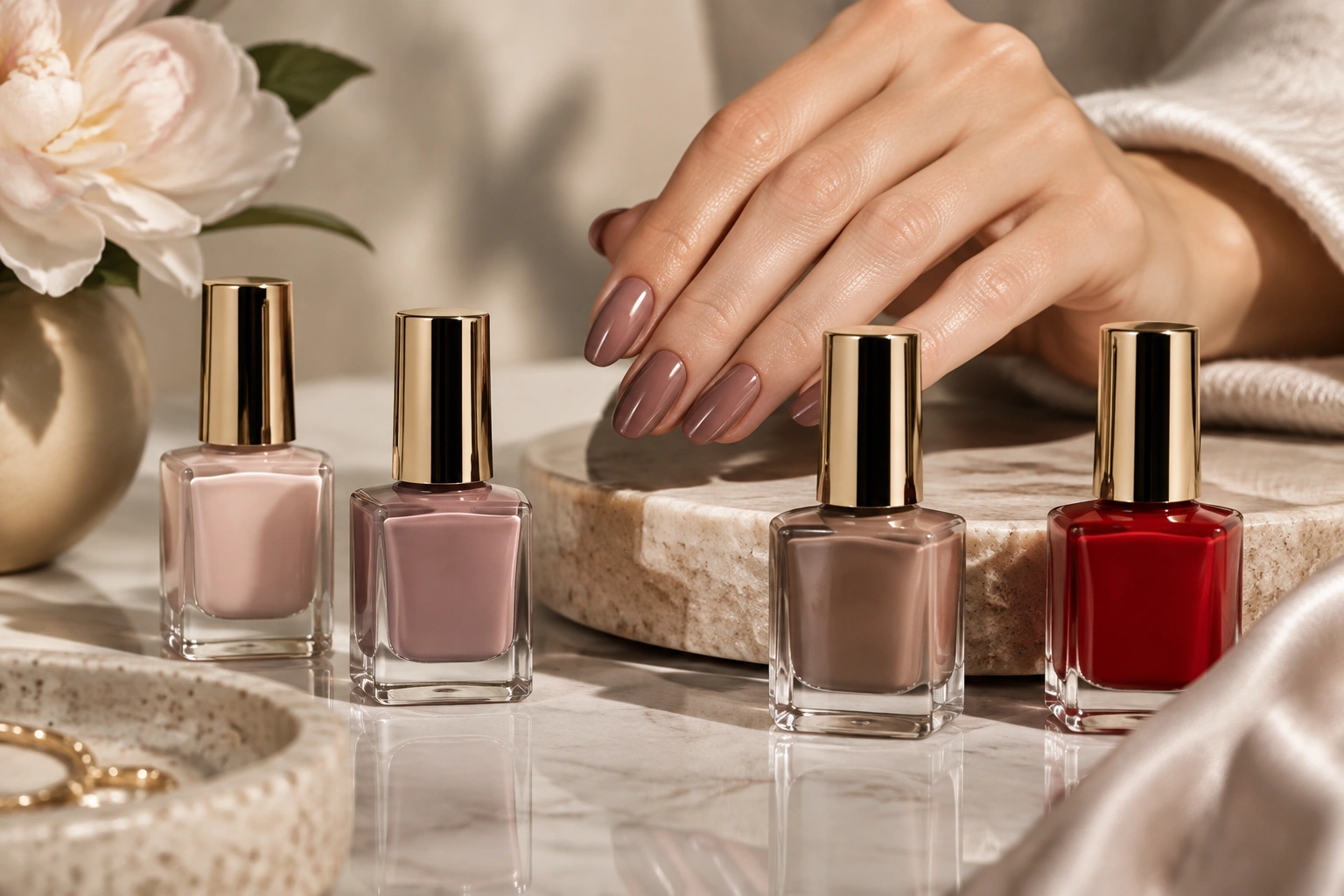
Some shades are useful because they don’t belong to just one season. These are the colors to reach for when you want flexibility more than a strongly seasonal statement.
Nude
A good nude is never wasted. It can look spring-clean, summer-minimal, fall-neutral, or winter-polished depending on the undertone and finish. The trick is choosing a nude that actually matches your skin depth rather than going too pale.
Mauve
Mauve is one of the best bridge colors because it has enough softness for spring and enough depth for fall. It’s especially useful if you want something feminine but not overly sweet.
Taupe
Taupe is the quiet achiever of seasonal nails. It works when you want polish that feels modern and subtle. It can move from late summer into early fall easily, then stay useful through winter.
Classic red
Classic red deserves a place here because it is not locked to one season. It feels festive in winter, but it can also look strong and chic in summer or early fall. The difference is usually in the finish: brighter red for warmer months, deeper red for colder ones.
Sheer pink and French manicure variations
A French manicure remains one of the easiest transitional looks because the base can shift with the season. A milky pink base feels fresh in spring, while a chrome tip or cooler white tip can feel more winter-leaning. If you want a manicure that can move through the calendar without feeling repetitive, this is a smart lane.
Seasonal Nail Colors for Everyday Wear vs. Special Occasions
Everyday nails and event nails do not have to be the same thing.
For everyday wear, choose colors that blend easily with your wardrobe: nude, mauve, taupe, soft pink, muted green, or a classic red if you like a little energy. These shades are easier to repeat because they do not fight with clothing or accessories.
For special occasions, go further. Summer weddings can handle coral or butter yellow. Fall dinners look beautiful with burgundy or deep plum. Holiday events often invite silver, sapphire, deep green, or glossy red. The point is not to be the loudest person in the room. It’s to look intentional.
Quick Guide to Matching Nail Color to Season, Mood, and Occasion
If you’re standing at the salon menu or holding three polishes at home, use this simple filter:
- Choose soft and airy when the season feels light: spring pastel, blush, lilac, mint.
- Choose bright and vivid when you want energy: summer coral, tangerine, aqua, marigold.
- Choose rich and earthy when the weather turns: fall burgundy, brown, rust, forest green.
- Choose deep, icy, or metallic when you want polish with contrast: winter navy, silver, sapphire, red.
- Choose neutral or transitional shades when you want flexibility: nude, mauve, taupe, classic red.
The best manicure is the one that feels seasonally right and personally wearable. If a color is beautiful but feels slightly off on you, adjust the undertone, not the entire idea. That small change is often what makes the difference between “pretty” and “perfect.”
When to See a Nail Technician
If you’re unsure how a seasonal shade will translate to your nail length, skin tone, or wardrobe, a nail technician can help you narrow the options in person. That’s especially useful when you’re deciding between a muted version of a trend shade and a more saturated version. A quick consultation can save you from choosing a color that looked gorgeous in a bottle but not quite right on your hands.
Seasonal color should feel like a shortcut to confidence, not a set of restrictions. The best shades don’t just match the calendar—they match the way you want to feel when you look at your hands.

