
Nail Dehydrator Substitute: What Can You Use?

Quick Answer
Plain isopropyl alcohol or additive-free acetone may serve as a nail-cleaning alternative when your manicure system permits it. Neither is a universal replacement for a dedicated dehydrator or primer: OPI’s preparation instructions, for example, use separate cleansing and BondAid steps.
Check before substituting
- Check compatibility: Follow your polish, gel, acrylic, or adhesive instructions first.
- Choose plain formulas: Avoid added oils, lotions, and fragrance.
- Let it evaporate: Prep liquids must dry before the next product.
- Skip household mixtures: Sanitizer, vinegar, and homemade blends are unreliable substitutes.
An empty prep bottle can leave you wondering whether your manicure needs to wait. I’d start with the instructions on your nail system, because “removes oil” and “replaces every prep step” mean different things.
This guide explains the practical alternatives, their limits, and the mistakes that can undermine adhesion. For 2026, the most useful advice remains product-specific: check the current label rather than copying an old mixing recipe.
In This Guide
- What does nail dehydrator do?
- Which nail dehydrator substitutes are worth considering?
- Can you use rubbing alcohol instead?
- Can acetone replace nail dehydrator?
- Which household substitutes should you avoid?
- How do you prep nails with an approved alternative?
- Does the substitute depend on your manicure?
- What if nails keep lifting or become irritated?
- Frequently asked questions
- Choose the simplest compatible prep
What does nail dehydrator do?
A nail dehydrator is a preparation liquid that temporarily reduces surface moisture and oils on the natural nail plate. The nail plate is the hard, visible part of your nail.
Its purpose is to prepare that surface for the next coating. It doesn’t strengthen a thin nail or repair peeling layers.
- Dehydrator: Temporarily prepares the nail surface by reducing moisture and oils.
- Cleanser: Removes surface contaminants; some formulas also dehydrate.
- Primer or bonder: Promotes adhesion through a product-specific formula.
- Base coat: Forms the foundation of the coating system.
Why product names can be confusing
Some brands combine cleansing and dehydrating in one bottle. Others specify separate products, so the front label alone doesn’t tell you which steps are interchangeable.
For example, Creative Nail Design describes ScrubFresh as a nail surface cleanser that cleans and dehydrates. That combined function doesn’t establish that plain alcohol performs identically.
Practical tip: Read the application instructions alongside the ingredients, because shared solvents don’t prove equivalent performance.
Which nail dehydrator substitutes are worth considering?
Plain isopropyl alcohol and additive-free acetone are the main alternatives to evaluate. Treat them as possible cleaning options, subject to your system’s instructions.
The table compares their practical limitations rather than promising a specific number of chip-free days. No substitute can guarantee wear across every nail product.
| Option | Relevant detail | Main limitation |
|---|---|---|
| Dedicated dehydrator | Formulated for a specified nail-prep role | May still require separate primer |
| 91% isopropyl alcohol | About 9% water in a plain alcohol-and-water formula | Not a verified replacement for every system |
| 99% isopropyl alcohol | About 1% water in a plain formula | Higher concentration doesn’t prove better adhesion |
| 70% isopropyl alcohol | About 30% water in a plain formula | More water; may not meet prep instructions |
| 100% acetone | Solvent without intentionally added moisturizing ingredients | Can affect existing polish, tips, or enhancements |
| Moisturizing remover | May contain conditioning additives | Can leave unwanted prep residue |
| Hand sanitizer | Often includes humectants or thickeners | Not formulated as nail preparation |
Which option would I choose first?
I’d use the manufacturer’s named preparation product when the instructions require it. If the instructions expressly allow plain alcohol, that makes the choice straightforward.
Decision rule: When substitution guidance is missing, ask the manufacturer or postpone the enhancement service.
Can you use rubbing alcohol instead?
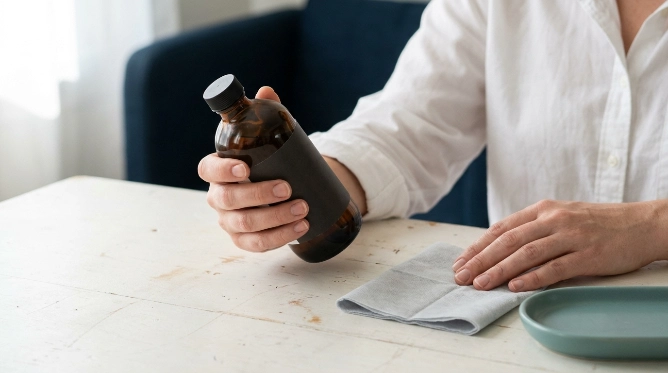
Plain isopropyl alcohol can remove some surface oils and contamination, but it isn’t automatically equivalent to nail dehydrator. Whether it is suitable depends on the coating system.
Does the alcohol percentage matter?
Yes, the percentage changes how much water the liquid contains. It doesn’t establish compatibility by itself.
- 70% alcohol: Contains substantially more water than 91% or 99% formulas.
- 91% alcohol: Contains less water, but still needs to evaporate completely.
- 99% alcohol: Contains little water, yet doesn’t replace adhesion-promoting ingredients.
Don’t choose a concentration solely because someone calls it “stronger.” Use the concentration specified by your nail-product manufacturer.
What should the ingredient label say?
Look for a plain formula with no added conditioners. The term “rubbing alcohol” can cover different formulations, so check the actual alcohol type.
- Avoid products containing added oils or moisturizers.
- Skip fragranced or colored rubbing preparations.
- Don’t assume industrial alcohol is suitable for cosmetic use.
- Keep the original labeled bottle for storage.
I’d check the back label before considering the percentage on the front. A high alcohol content doesn’t cancel out unwanted additives.
Can acetone replace nail dehydrator?
Additive-free acetone can remove surface oils from bare natural nails. It may be an acceptable cleaning alternative where the product instructions allow it.
However, removing oil is only one part of preparing nails. Acetone doesn’t supply the bonding ingredients found in a primer.
Pure acetone versus nail polish remover
A bottle labeled “nail polish remover” may contain more than acetone. Products designed to condition nails during removal can leave ingredients you don’t want beneath a coating.
- 100% acetone: Check that the label identifies the intended cosmetic use.
- Acetone-based remover: Read the full ingredient list for added conditioners.
- Acetone-free remover: Don’t assume its solvents or additives suit nail prep.
Be careful around existing enhancements
Acetone can soften or dissolve certain nail coatings and tips. That matters during fills, repairs, or preparation around an existing extension.
Use only the cleanser approved for the surface you’re working on. Instructions for bare natural nails may not apply to plastic tips.
Application tip: Don’t turn a permitted surface wipe into an acetone soak; soaking is a different procedure.
Which household substitutes should you avoid?
Avoid sanitizer, kitchen acids, and household cleaning products as nail dehydrator substitutes. They aren’t formulated or validated for this preparation step.
Why common household suggestions fall short
- Hand sanitizer: Glycerin, gels, and other additives may remain after the alcohol evaporates.
- Vinegar or lemon juice: These contain water and acids, rather than a controlled nail-prep solvent formula.
- Vodka: Beverage alcohol contains substantial water and isn’t designed for nail preparation.
- Hydrogen peroxide: It is an oxidizing solution, not a substitute for a compatible nail cleanser.
- Perfume: Fragrance mixtures can leave ingredients behind and irritate skin.
- Household cleaners: Never repurpose bleach or surface-cleaning products for a manicure.
Should you mix alcohol and acetone?
I wouldn’t recommend a homemade ratio as a universal dehydrator recipe. A commercial blend containing those solvents doesn’t prove a kitchen mixture performs the same way.
Mixing also makes labeling and repeatability harder. Using one approved product keeps the process easier to follow.
- Don’t dilute products unless their instructions require it.
- Don’t pour homemade mixtures into an old branded prep bottle.
- Don’t add fragrance or essential oils to mask solvent odors.
How do you prep nails with an approved alternative?
Use an alternative only after checking that your manicure system allows it. Then follow the specified preparation order and let the liquid evaporate fully.
A simple preparation sequence
- Read the instructions. Confirm the allowed liquid, concentration, and application method before starting.
- Inspect your nails. Postpone coating nails that are painful, damaged, or surrounded by inflamed skin.
- Clean and dry your hands. Avoid a prolonged soak immediately before preparation unless your system calls for it.
- Complete the required nail preparation. Shape the nails and remove dust without aggressive filing.
- Apply the permitted cleanser. Use a clean, lint-free wipe with enough liquid to clean the surface without flooding skin.
- Allow complete evaporation. Follow the label’s timing rather than assuming every solvent dries equally fast.
- Apply the next specified product. That may be primer, bonder, base coat, or adhesive.
What should happen after the wipe?
Keep your fingers off the cleaned nail surface. Touching it to check dryness can transfer skin oils back onto it.
My practical suggestion is to arrange your tools before that final wipe. Opening drawers or handling a phone creates avoidable chances to contaminate the surface.
- Have the next product ready within reach.
- Don’t rinse after solvent prep unless directed.
- Don’t use a lamp to dry an ordinary solvent dehydrator.
- Follow separate curing directions for gel products.
A chalky-white appearance isn’t a target to chase. Repeated wiping or extra buffing won’t guarantee stronger adhesion.
Does the substitute depend on your manicure?
Yes, regular polish, gel, acrylic, and press-on systems can have different preparation requirements. An alternative suitable for one may be unsuitable for another.
Regular nail polish
Many traditional polish routines don’t require a separate dehydrator. Start with clean, dry nails and follow the base-coat directions.
Check: Some polish systems have proprietary prep products, so don’t assume all air-dry lacquer follows the same routine.
Gel polish and builder gel
Follow the gel manufacturer’s cleanser, primer, and base requirements. Changing prep products also doesn’t change the need for the correct curing lamp.
Check: “Gel cleanser” may describe a product for wiping the sticky layer after curing, rather than preparing bare nails.
Acrylic and dip systems
Use the preparation and bonding steps specified for that system. A solvent wipe cannot replace acrylic primer or a required dip-prep step.
Check: Don’t combine instructions from several brands into a new routine without compatibility guidance.
Press-on nails
Use the supplied preparation pad or the liquid named in the adhesive instructions. Glue and adhesive tabs may have different requirements.
Check: Don’t add a gel primer beneath ordinary nail glue unless the manufacturer directs you to do so.
What if nails keep lifting or become irritated?
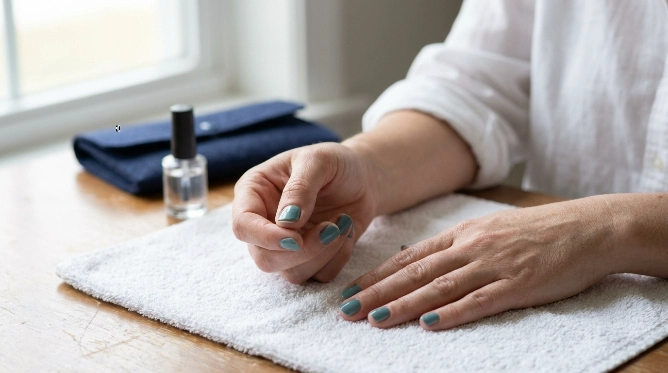
Repeated lifting doesn’t prove you need a stronger dehydrator. Review the whole application process before adding more solvent or filing.
Check the application before changing the prep
- Residue: Dust or leftover product may remain near the nail edges.
- Skin contact: Coating that touches surrounding skin can cause problems.
- Application thickness: Follow the product’s directions for each layer.
- Curing: Use the lamp and exposure time specified for the gel.
- Compatibility: Confirm that your prep, base, and coating work together.
- Nail condition: Thin or peeling nails may need a break from enhancements.
Don’t glue down a lifted coating or cover unexplained discoloration. Arrange appropriate removal and have persistent changes assessed.
Protect skin and reduce unnecessary exposure
The Food and Drug Administration’s nail-product guidance advises following labels and using good ventilation. Nail products can cause adverse reactions, including allergic reactions.
- Keep acetone and alcohol away from flames, sparks, and heat.
- Close bottles promptly and avoid breathing concentrated vapors.
- Keep preparation liquids off broken or irritated skin.
- Stop if application causes burning, itching, or swelling.
The American Academy of Dermatology’s manicure safety advice recommends moisturizing nails after polish removal and leaving cuticles intact. Save oils and creams for after the manicure is complete, following your product instructions.
Dermatologist note: Consult your clinician about persistent pain, rash, swelling, or nail separation before applying another coating.
Frequently asked questions
Can I use 70% alcohol as a nail dehydrator?
Only if your nail system allows it for preparation; 70% isopropyl alcohol contains about 30% water in a plain formula. Let it evaporate completely, and don’t assume it replaces a separate dehydrator or primer required by the manufacturer.
Is 99% alcohol better than 91% for nail prep?
Not automatically: 99% alcohol contains less water, but that doesn’t prove better adhesion with your nail products. Choose the concentration named in the instructions, check for additives, and remember that neither percentage supplies a primer’s bonding ingredients.
Can I skip nail dehydrator completely?
You can skip a separate dehydrator when your manicure system doesn’t require one. Some routines use a combined cleanser and dehydrator, while others specify separate steps; check the instructions rather than adding or removing products based on a generic tutorial.
Can nail primer replace dehydrator?
Usually, you shouldn’t treat them as interchangeable: a dehydrator prepares the nail surface, while primer promotes bonding. Some products combine functions, but only the manufacturer’s instructions can confirm whether one bottle replaces two steps in your particular system.
How long should a nail dehydrator substitute dry?
Follow the timing given for the approved preparation liquid and allow complete evaporation before continuing. There’s no universal seconds-long rule for every concentration, amount, and room condition; ordinary solvent prep air-dries and doesn’t need curing under a nail lamp.
Will a homemade substitute make my manicure last as long?
There’s no reliable universal wear-time promise for homemade substitutes. Adhesion depends on the coating system, preparation, application, and nail condition; use an approved alternative when available, and avoid interpreting one successful manicure as proof of compatibility across products.
Choose the simplest compatible prep
The most useful nail dehydrator substitute is one your manicure system explicitly permits. Plain alcohol or additive-free acetone may fill a cleaning role, but neither replaces every preparation product.
- Check the current instructions before substituting.
- Avoid moisturizing formulas and household mixtures.
- Let approved prep liquids evaporate completely.
- Keep required primer and base-coat steps.
Before your next manicure, compare your prep bottle with the system’s directions. If compatibility remains unclear, ask the manufacturer before applying the coating.
