
Nail Polish Mistakes Beginners Make: A Simple Guide to Better Application and Longer Wear

If your manicure looks streaky, thick, or messy around the edges, you are not alone. Most beginner nail polish problems come from a few easy-to-fix habits: skipping prep, applying too much polish, rushing the dry time, or painting too close to the skin.
The good news is that you do not need salon-level skill to get cleaner results at home. You just need a simple routine and a few smart corrections. I’m Ella Hart, and I teach nail basics in the most practical way possible: fewer steps, better habits, less frustration.
Why beginner nail polish goes wrong so often
Most polish problems start before the color even goes on. If the nail has oil, dust, or moisture on it, polish can slide around instead of gripping well. If the coat is too thick, it can dry unevenly and look lumpy. If you rush the next layer, the surface can wrinkle, dent, or trap air.
That is why the same manicure can look fine at first and then chip, smudge, or peel sooner than expected. The fix is usually not a special product. It is a cleaner surface, thinner coats, and a little patience between steps.
A helpful rule: if a manicure looks messy, the problem is often technique, not the polish itself.
Prep your nails first: clean, shape, and remove oils
Good prep gives polish a smoother surface to stick to. Keep it simple:
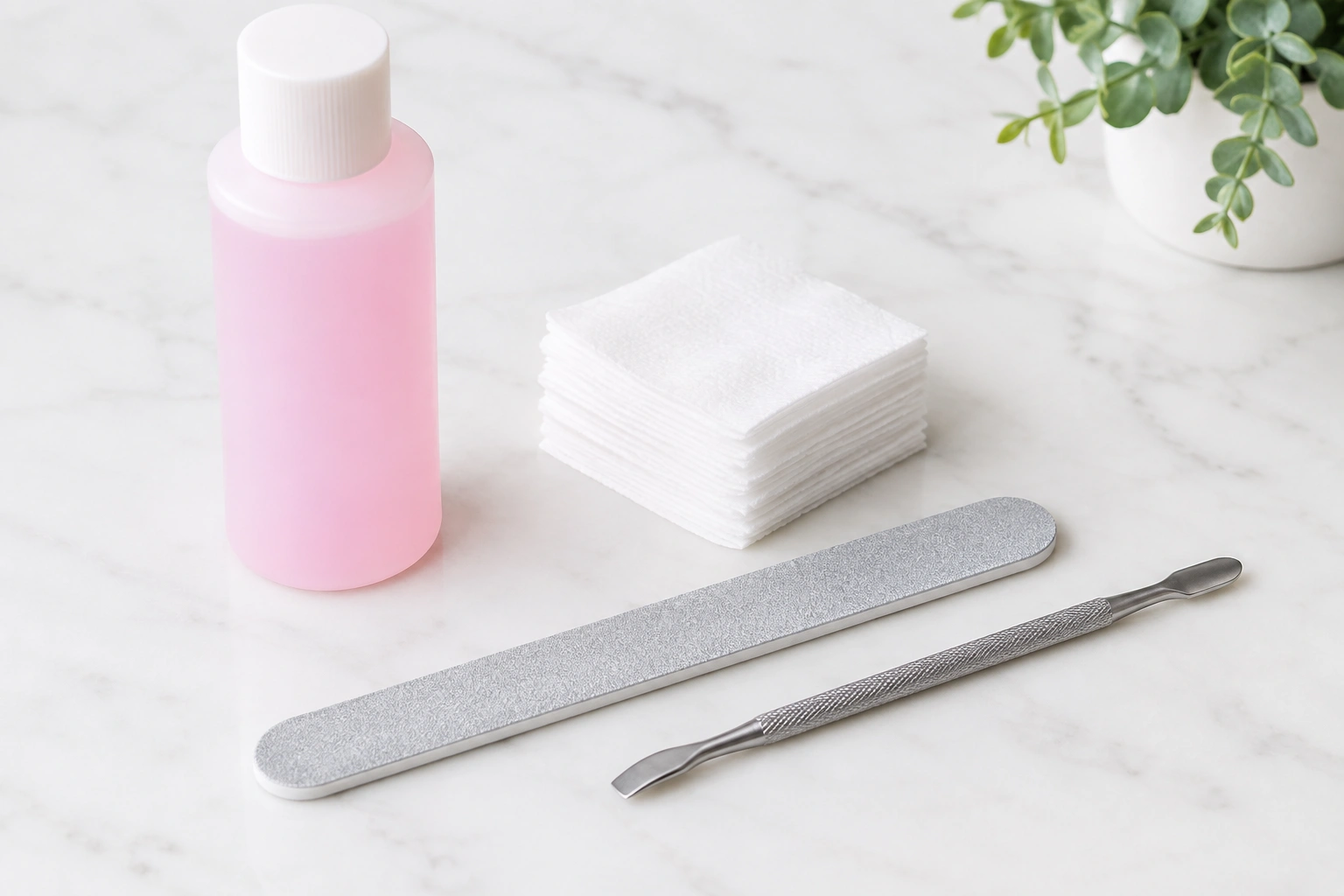
- Remove old polish completely.
- Shape the free edge with a nail file.
- Gently push back the cuticles if needed.
- Wash and dry your hands well, then wipe each nail with nail polish remover or a nail cleanser to remove oils and dust.
That last step matters because polish sticks better to a clean, dry nail plate. One practical note from PN Selfcare’s gel polish guidance: clean thoroughly, and avoid using soap or water right before polishing because moisture can linger on the nail.
If you are new to polish, keep buffing light or skip it altogether. A very gentle buff can smooth small ridges, but beginners do not need to remove much of the nail surface. Over-buffing can make the nail plate feel thinner and less smooth to work on.
If you tend to get polish lifting at the tips, check your free edge too. Even tiny dust particles can make the surface look rough or patchy.
Base coat and top coat: what each one does
A base coat goes on first. It creates a smoother surface and helps color grip the nail. A top coat goes on last. It seals the color, adds shine, and helps protect the finish from everyday wear.
Here is the simplest way to think about them:
- Base coat = foundation
- Top coat = seal
If you skip the base coat, color may look less even and may not wear as well. If you skip the top coat, the manicure often loses shine faster and can chip sooner at the edges. That is why beginner-friendly polish routines usually work better with both.
If you are choosing between the two because you only want to buy one, pick the base coat first for better adhesion. But if you already have color on hand, adding a top coat is still useful for protection and finish.
The most common nail polish mistakes beginners make
Here is a quick reference before we go deeper.
| Mistake | What it causes | Simple fix |
|---|---|---|
| Skipping prep | Lifting, patchiness, uneven wear | Clean, dry, and remove oils first |
| Using thick coats | Slow drying, dents, bubbles, streaks | Apply thinner layers |
| Rushing between coats | Smudges, wrinkling, dragging | Wait until the layer is mostly set |
| Painting too close to the skin | Flooded cuticles and messy edges | Leave a tiny gap around the cuticle |
| Overloading the brush | Thick ridges and pooling | Wipe off excess before painting |
| Skipping base coat | Poor grip and faster wear | Use a thin base coat |
| Skipping top coat | Dull finish and easier chips | Finish with a top coat |
| Reworking wet polish too much | Streaks and texture marks | Make one or two smooth passes, then stop |
How to apply thin, even coats without streaks
Thin coats are the easiest way to get a smoother result. Thick coats often look opaque faster, but they usually dry less evenly and are harder to control.
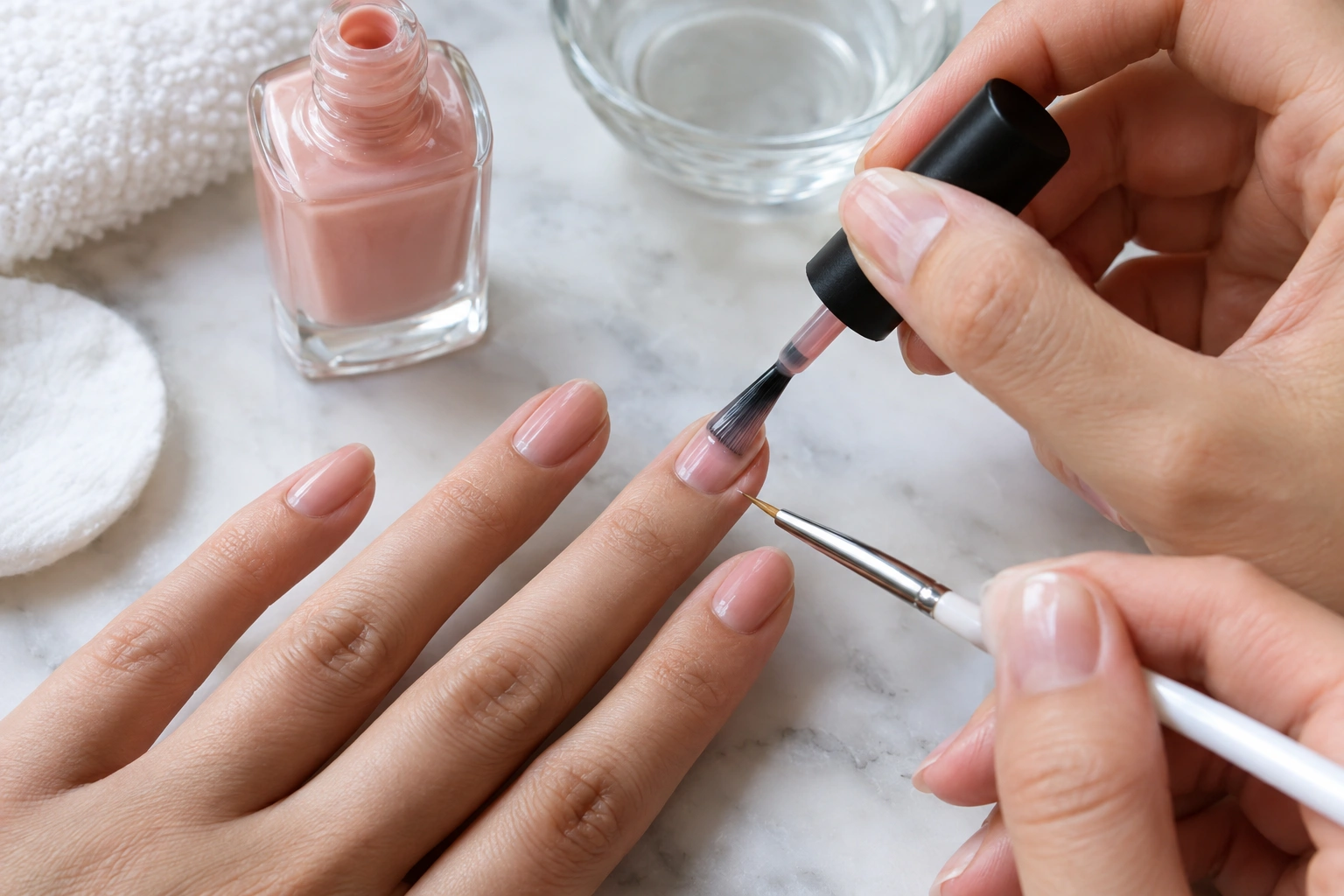
A simple brush method helps:
- Load a small amount of polish on the brush.
- Wipe one side of the brush on the bottle neck so you are not starting with too much product.
- Place the brush near the center of the nail.
- Set it down slightly below the cuticle, then gently nudge the polish upward without touching the skin.
- Pull it back toward the free edge.
- Use one or two more light strokes to fill the sides.
Do not press hard. Let the brush glide. If the brush is overloaded, it can flood the nail and leave a bulky edge near the cuticle.
Brush size and formula thickness can also change how easy the polish feels to control. A flatter, wider brush is often easier for beginners because it covers more of the nail plate with fewer strokes. A tiny brush can work too, but it usually takes more passes. Likewise, a thinner, easier-flowing formula may streak less than a very thick one, while a dense formula may need extra care to avoid ridges.
How many coats to use and how long to wait between them
For many beginner manicures, two thin color coats are enough. Some sheer shades may need a third, but only if the first two are still thin and even.
The better question is not “How many coats can I get away with?” It is “Is the last coat dry enough for the next one?” If the surface still feels soft, tacky, or easy to dent, wait a little longer.
A simple beginner timing guide:
– Between color coats: wait about 1 to 3 minutes, or until the surface is tacky but not wet
– Before top coat: wait until the color is mostly set and does not dent easily, usually a few minutes longer
If you are unsure, touch the edge of one nail very lightly with a fingertip. If it feels wet or pulls, wait. If it feels dry on top but still a little soft underneath, that is usually a better time to continue than when it is visibly shiny and wet.
Rushing here is one of the fastest ways to get smudges and uneven texture. Thin layers take longer overall, but they usually give a cleaner finish than trying to cover everything in one heavy coat.
How to keep polish off your cuticles and sidewalls
Painting too close to the cuticle is one of the most visible beginner mistakes. It makes the manicure look crowded and can cause polish to flood into the sidewalls.
The easiest prevention is spacing. Leave a tiny gap around the skin instead of trying to touch every edge. You can always clean up the border later. If you start right at the cuticle line, one small slip can spread polish into the skin and make the whole nail look less neat.
A more controlled method is this: hold the brush almost parallel to the nail, place it slightly below the cuticle, then gently push the polish upward until it stops just short of the skin. After that, pull the color down the center and side areas. Keep your finger steady and use the brush tip to steer the edge, not the full belly of the brush.
Also, avoid chasing the polish back and forth. If you keep brushing over the same area while it is still wet, you can create ridges and drag marks. One smooth pass is usually better than several corrections.
What to do when you make a mistake
Wet polish on the skin is fixable. The key is to clean it before it dries.
For small mistakes:
– Use a fine cleanup brush dipped in nail polish remover for precise edge work.
– Use a cotton swab if you need a quick, simple fix and do not mind a slightly softer edge.
A cleanup brush is more exact around the cuticle and sidewalls. A cotton swab is easier to grab, but it can leave fuzz or make the edge a little wider if it is too wet.
To avoid disturbing the nail surface, wipe only the skin or the very outer edge of the polish. Do not scrub across the painted area unless you plan to redo that nail. If the polish has already started to set, wait until it is fully dry before trying to remove it from the skin. Wiping too early can smear the color across the nail.
How to fix streaks, bubbles, smudges, and thick-looking polish
Each problem usually has a different cause, so the fix should match the issue.
Streaks
Cause: The coat is uneven or too dry to level out.
Fix: Add one thin, even coat to smooth the finish.
Prevent it: Load a moderate amount of polish and use steady, light strokes.
Bubbles
Cause: The coat is too thick or the layers were rushed.
Fix: Let the nail rest and restart the nail if the bubbles are already set into the surface.
Prevent it: Use thinner coats and give each layer a little more drying time.
Smudges
Cause: The polish was touched before it was ready.
Fix: Smooth only the damaged nail once it is fully dry, or redo that nail if the mark is deep.
Prevent it: Wait until the surface is tacky, not wet, before moving on.
Thick-looking polish
Cause: Too much polish is on the brush or the coat was overworked.
Fix: Remove excess product and repaint with a thinner layer.
Prevent it: Wipe one side of the brush and stop brushing once the coat is in place.
If the finish still looks heavy, removing and restarting one nail is sometimes cleaner than trying to rescue a lumpy layer.
Beginner-friendly tools and polish choices that make application easier
You do not need a full kit, but a few simple tools make a big difference:
- Base coat
- Top coat
- Nail file
- Lint-free wipes
- Nail polish remover
- Cuticle pusher
- Fine cleanup brush
If you are choosing a polish formula, look for one that is easy to control rather than one that promises instant full coverage. Very opaque formulas can be convenient, but they are sometimes less forgiving if your brush control is still developing.
Brush shape matters too. A flatter brush often spreads color more evenly on the nail plate, which means fewer strokes and less chance of streaking.
Simple habits that help your manicure last longer
Once the polish is on, a few small habits help protect it:
- Let each layer set before adding the next.
- Cap the free edge lightly with color or top coat if you can do it neatly.
- Avoid using your nails as tools right after painting.
- Be gentle with water, cleaning, and friction during the first part of wear.
One useful habit is to finish with a top coat after the color is mostly dry. That gives the manicure a smoother, shinier surface and helps protect the color underneath.
For gel polish, follow the product instructions closely and use the correct lamp if the formula requires curing. If you are unsure about lamp compatibility or safe use, check the manufacturer guidance and trusted references such as the FDA’s nail product and lamp safety information and NIH consumer health resources.
When to See a Nail Technician or Dermatologist
If your nails keep lifting, peeling, or reacting badly to products, it is worth getting professional advice. A dermatologist is the better choice if you notice ongoing irritation, redness, or other skin changes around the nails.
For normal beginner mistakes, though, the solution is usually simpler than it feels. Clean nails, thin coats, and a little patience will solve most of the common problems.
FAQs
Do I really need both base coat and top coat?
If you want the cleanest beginner result, yes. Base coat helps with adhesion, and top coat helps protect the finish. They do different jobs.
How many coats of polish should beginners use?
Usually two thin color coats. Some sheer shades may need a third, but only if the layers stay light and even.
Why does my polish bubble?
Bubbling often comes from thick coats or rushing the next layer. Thinner coats and more drying time usually help.
What is better for cleanup: a brush or a cotton swab?
A cleanup brush is more precise. A cotton swab is easier for quick fixes. If you want neat cuticle lines, the brush is usually better.
Should I wash my hands right before painting my nails?
Wash earlier if needed, then make sure nails are fully dry and free of oils before polishing. Fresh moisture can work against adhesion.
What should I do if I get polish on my skin?
Clean it while it is still wet with a fine cleanup brush or a cotton swab dipped in remover. If it has already set, wait until it is dry and then tidy the edge.
Why does my polish chip so fast?
Common reasons are poor prep, skipping base coat, thick layers, or not sealing the free edge well. Fixing those basics usually improves wear more than switching colors.
Can beginners use gel polish?
Yes, but only if you follow the product instructions and use the correct curing lamp for that formula. Gel and regular polish are not applied the same way.

