
How Often to Use Nail Dehydrator? A Safe, Practical Guide

Quick Answer
For most manicures, use nail dehydrator once during nail prep, immediately before your primer, base coat, adhesive, gel, acrylic, dip, or enhancement system. You normally do not need it every day or between manicures unless you are starting a fresh application or your product instructions specifically say otherwise. Professional nail-prep guidance also emphasizes starting with clean, dry nails and removing surface oils before product application, as shown in OPI’s professional nail prep process.
How often should you apply it?
- Fresh full set: Apply during prep before the bonding products go on.
- Gel manicure: Use once after cleaning and preparing the natural nail.
- Acrylic or dip: Use during the initial prep stage according to your system.
- Press-on nails: Use before adhesive when the brand’s instructions allow it.
- Fill or rebalance: Apply mainly to exposed natural nail or new growth when required.
- Daily use: Usually unnecessary and may make already-dry nails or skin feel drier.
Best rule to follow
- Treat dehydrator as an application-prep product, not as a daily nail-care treatment.
If you’re wondering how often to use nail dehydrator, the biggest mistake is thinking that more product automatically creates better adhesion. In practice, good results come from using it at the right stage and only when the nail needs preparation.
I like to think of dehydrator as one part of a complete prep routine. This guide explains when to use it for gel, acrylic, dip, press-ons, fills, and problem nails without turning prep into over-prep.
In This Guide
- How Often Should You Use Nail Dehydrator?
- What Does Nail Dehydrator Actually Do?
- When Should Nail Dehydrator Be Applied?
- How Often Should You Use It for Different Nail Services?
- Can You Use Nail Dehydrator Too Often?
- Should You Reapply Dehydrator for Oily Nails or Lifting?
- When Should You Skip Nail Dehydrator?
- Frequently Asked Questions
- Final Takeaway
How Often Should You Use Nail Dehydrator?
Use nail dehydrator once each time you prepare natural nails for a new manicure or enhancement that requires dehydration. You usually don’t need to apply it again until the next application, fill, or rebalance.
That may mean using dehydrator every week for someone who changes press-ons frequently. Someone wearing longer-lasting enhancements may use it only every few weeks.
Frequency should follow the service, not the calendar
There isn’t a universal rule such as “use dehydrator every seven days.” The correct frequency depends on how often you completely prepare the nail for another product application.
- New manicure: Use during the preparation stage if the nail system recommends it.
- New enhancement set: Apply before primer or other bonding products as directed.
- Fill or rebalance: Use on exposed natural nail when your system calls for it.
- Between appointments: Don’t apply dehydrator simply because several days have passed.
- Finished manicure: Don’t add dehydrator over cured gel, acrylic, dip, polish, or press-ons as routine maintenance.
As of 2026, my simplest rule remains the same: dehydrator belongs in nail prep, not daily aftercare.
Do you need more than one coat?
One thin application is commonly enough, but products vary. Some systems may instruct you to repeat the application for certain clients or nail conditions.
Always let the first application evaporate according to the manufacturer’s directions. Don’t automatically add extra coats because the nail still looks shiny.
Prep tip: Follow the instructions for the exact dehydrator, primer, base, or enhancement system you’re using. Mixing routines from different brands can make troubleshooting harder.
What Does Nail Dehydrator Actually Do?
A nail dehydrator is a prep product designed to temporarily remove surface moisture and oils from the natural nail plate before another nail product is applied. It creates a cleaner surface for the next step of the system.
That definition matters because dehydrator isn’t a nail strengthener or moisturizing treatment. Its job is preparation.
Why removing surface oil matters
Gel, acrylic, dip, glue, and other products need good contact with the nail surface. Oil, moisture, dust, lotion, or cuticle residue can interfere with that contact.
Professional prep routines commonly focus on clean, dry nails before bonding products are applied. OPI, for example, instructs technicians to remove oil and debris before applying its bonding prep product.
Nail dehydrator vs primer
These products are related, but they aren’t automatically interchangeable. A dehydrator mainly prepares the surface, while a primer is designed to improve bonding within specific enhancement systems.
| Product | Main Purpose | Typical Timing |
|---|---|---|
| Cleanser | Removes dust, residue, and surface contamination. | During prep before bonding products. |
| Nail dehydrator | Temporarily removes surface moisture and oil. | After cleaning and before primer or base products. |
| Primer | Promotes adhesion for the specific nail system. | Usually after dehydrator when required. |
The FDA’s nail-care product guidance also makes an important point: nail products should be used according to their labeled directions and warnings. This is especially relevant when you’re working with primers, solvents, and professional-use products.
When Should Nail Dehydrator Be Applied?
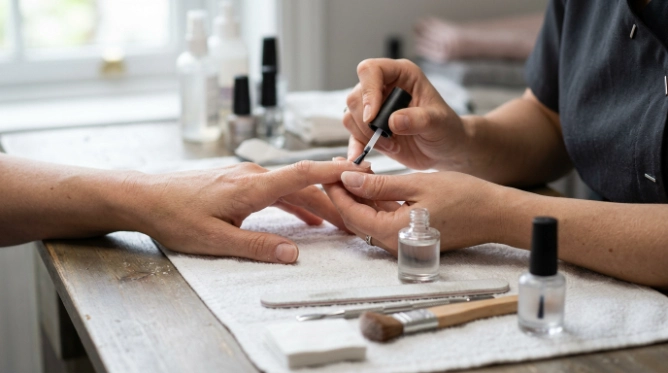
Nail dehydrator normally goes near the end of natural-nail prep and before the bonding or application products. You want the nail shaped, cleaned, and ready before you dehydrate it.
A practical sequence looks like this:
- Remove old product safely.
- Shape the natural nail as needed.
- Gently manage cuticle or nonliving tissue on the nail plate.
- Buff or prepare the surface only if your nail system requires it.
- Remove all filing dust.
- Clean the nail according to the system you’re using.
- Apply nail dehydrator in a thin, controlled layer.
- Allow it to evaporate or dry as directed.
- Apply primer, base coat, glue, gel, acrylic, dip, or another system-specific product.
Avoid touching the nail after dehydration
Once you’ve prepared and dehydrated the nail, avoid rubbing the nail plate with your fingers. Skin contact can transfer oils back onto the surface.
If the nail becomes contaminated, clean and prepare it again as required by your product system. Don’t keep stacking dehydrator over dirt, lotion, or visible residue.
Do nails need to be completely dry first?
Start with clean, dry hands rather than trying to use dehydrator as a substitute for drying wet nails. Professional nail-prep instructions also begin with thoroughly dried hands.
That distinction is useful. Dehydrator handles light surface moisture and oil during prep, but it doesn’t replace basic cleaning and drying.
How Often Should You Use It for Different Nail Services?
The best dehydrator frequency depends on the manicure system you’re applying. Some services rely heavily on adhesion prep, while others may not require a separate dehydrator at all.
| Nail Service | Typical Dehydrator Use | When to Use Again |
|---|---|---|
| Gel polish | Once during fresh prep if required by the gel system. | At the next full gel application. |
| Builder gel or BIAB | During initial prep before the bonding steps. | On exposed natural nail during a fill when required. |
| Acrylic nails | During prep before primer and acrylic application. | On natural new growth during maintenance when directed. |
| Dip powder | During fresh prep if included in that dip system. | At the next fresh application. |
| Soft gel tips | Before bonding products when specified. | When replacing the set. |
| Press-on nails | Before adhesive when compatible with the press-on system. | At the next application, not while the press-ons are attached. |
| Regular nail polish | Optional unless the polish system specifically recommends it. | Only when preparing for another manicure. |
The important word here is system. Don’t assume every gel, acrylic, dip, or press-on brand uses the same preparation steps.
Section Takeaway: Use dehydrator once during the relevant prep session. Reapply at a future service when fresh natural nail needs preparation, not simply because time has passed.
Can You Use Nail Dehydrator Too Often?
Yes, unnecessary repeated use can make the nail area feel excessively dry, especially when strong solvents are involved. More dehydration does not automatically produce stronger adhesion.
The nail plate and surrounding skin can already experience drying from removers, repeated washing, filing, and manicure chemicals. Adding unnecessary prep products may make that routine harsher.
Signs you’re overdoing nail prep
- Nails feel unusually dry or brittle after repeated manicures.
- The skin around the nail becomes irritated, tight, or flaky.
- You keep adding dehydrator even after the nail has already been properly prepared.
- You combine aggressive filing with repeated solvent-based prep.
- You experience stinging or burning rather than normal quick evaporation.
Artificial nail services can already be demanding on natural nails. The American Academy of Dermatology’s artificial nail guidance notes that filing and repeated artificial-nail maintenance can contribute to thinning, brittleness, and dryness.
Does dehydrator damage natural nails?
Correct, occasional use according to product directions is different from excessive use. Problems are more likely when dehydrator becomes one part of an aggressive prep routine.
Avoid soaking the surrounding skin with it. Apply only where the product directions tell you to apply it.
Health note: Stop using a nail product if you develop persistent burning, swelling, redness, blistering, or another significant reaction. Seek advice from a healthcare professional or dermatologist when symptoms are severe or don’t improve.
Should You Reapply Dehydrator for Oily Nails or Lifting?
Oily nails may need careful dehydration, but repeated coats shouldn’t be your first answer to every lifting problem. Early lifting has several possible causes.
When a manicure lifts, I would check the full preparation and application process before assuming the nail needs more dehydrator.
Check these causes of lifting first
- Cuticle residue: Invisible tissue may still be attached to the nail plate.
- Dust: Filing dust can prevent good product contact.
- Skin contact: Gel, base, or enhancement product may be touching the cuticle or sidewall.
- Contamination: Lotion, oil, fingerprints, or water may have reached the nail after prep.
- Incorrect primer use: Too much primer can be as problematic as too little in some systems.
- Application technique: Product thickness, structure, curing, or tip preparation may be wrong.
- Product mismatch: Products from unrelated systems may not work together as expected.
If your manufacturer allows a second dehydrator application for oily nail plates, follow that instruction. Don’t create your own multi-coat routine without checking the label.
What if you accidentally touch the prepared nail?
If you touch the nail after prep, remove the contamination according to your system and repeat only the necessary preparation. A clean restart is usually more logical than simply brushing more dehydrator over the fingerprint.
The FDA advises consumers to read cosmetic labels, follow product directions, and pay attention to warnings. Its broader cosmetics safety guidance is a useful reminder whenever you’re troubleshooting by adding more product.
When Should You Skip Nail Dehydrator?
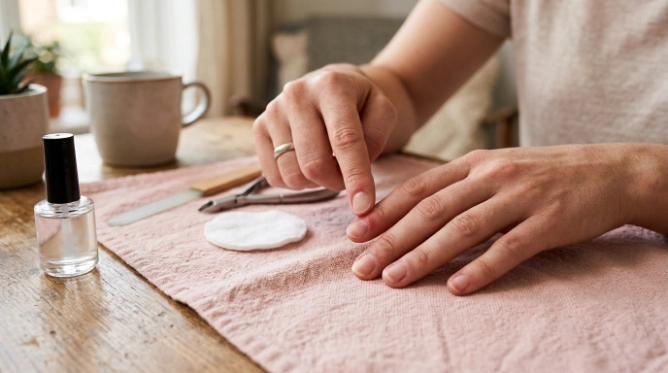
Skip dehydrator when the product system doesn’t call for it or when the nail or surrounding skin is injured or reacting. You don’t need every available prep product for every manicure.
Don’t apply it just because you own it
If a base coat, press-on adhesive, polish, or enhancement brand gives a specific preparation routine, follow that routine. Adding an extra chemical step can change how the system performs.
This is especially important with newer all-in-one bases and bonding products. Some are designed around their own preparation method.
Avoid injured or irritated areas
Don’t treat broken skin, bleeding cuticles, painful nail folds, or open wounds as normal manicure-prep areas. Cosmetic application should wait until the area is safe to work on.
You should also pause if a previous product caused obvious irritation. Continuing to expose irritated skin can make the problem worse.
Don’t use dehydrator as nail treatment
A dehydrator isn’t designed to fix peeling, splitting, thin, discolored, or damaged nails. Those concerns may need gentler care, a break from enhancements, or professional evaluation.
Likewise, don’t use it to “dry out” suspected nail fungus or another medical nail condition. Cosmetic dehydrator isn’t a treatment for infection or disease.
Safety check: Pain, swelling, drainage, spreading redness, severe discoloration, or ongoing nail separation deserves professional attention rather than more DIY prep.
Frequently Asked Questions
Can I use nail dehydrator every day?
No, daily use is usually unnecessary. Nail dehydrator is generally used during preparation for a manicure or enhancement, not as daily nail care.
If you change nail products unusually often, follow the dehydrator and manicure system’s directions instead of automatically applying it each day.
Do I need nail dehydrator before every gel manicure?
Use it before each fresh gel application only when your gel system recommends or requires dehydration. Some systems have their own prep product or cleanser instead.
The safest approach is to follow the full preparation instructions from the gel manufacturer rather than combining random steps.
How many coats of nail dehydrator should I use?
One thin application is commonly used, but the exact amount depends on the formula. If the manufacturer calls for another application, follow those directions.
Avoid soaking the nail or surrounding skin simply because you want stronger adhesion.
Can I use nail dehydrator twice on oily nails?
Some systems may allow a second application for clients with oily nail plates. Check the product instructions before doing this, because formulas and application methods vary.
If lifting continues, investigate cuticle residue, contamination, application technique, curing, and product compatibility too.
Do I use nail dehydrator before or after primer?
Dehydrator normally comes before primer. The usual order is nail preparation, cleaning, dehydrator, primer, and then the bonding or enhancement system.
However, the instructions for your specific products always take priority.
Should I use dehydrator during an acrylic fill?
You may use it on exposed natural nail or new growth if your acrylic system requires it. You usually don’t need to coat the existing acrylic with dehydrator as routine maintenance.
Prepare each area according to the acrylic manufacturer’s fill or rebalance instructions.
Can I use nail dehydrator before press-on nails?
Yes, many press-on routines benefit from an oil-free nail surface, and a compatible dehydrator may help prepare it. Use it only when the press-on or adhesive instructions support that step.
Keep the product away from irritated skin, and let it dry fully before applying adhesive.
Final Takeaway: How Often Should You Use Nail Dehydrator?
For most people, nail dehydrator should be used once during each fresh nail-prep session that requires it. That could be weekly, every two or three weeks, or less often depending on your manicure routine.
Don’t treat it as a daily product. Use it immediately before your bonding steps, then leave the finished manicure alone until maintenance or replacement is needed.
The best results come from balanced prep: clean nails, controlled cuticle work, minimal necessary filing, proper dehydration, and correct product application. More aggressive prep isn’t automatically better prep.
If you’re dealing with repeated lifting, troubleshoot the entire manicure system rather than reaching for another coat of dehydrator. Your natural nails will usually benefit from precision more than excess.

