
Should You Tip at a Nail Salon? A Practical Guide to Nail Salon Tipping

If you’re wondering whether you should tip at a nail salon, the short answer is yes—in the U.S. and other tipping cultures, it’s generally expected when you receive a service you’re happy with. Tipping norms are U.S.-centric, though, and they can differ in other countries and even from one salon to another.
That said, the goal is not to guess. It’s to know what’s standard so you can tip confidently, avoid double-tipping, and adjust for service quality or special situations. In nail salons, a tip is usually added at the end of the visit if you choose to leave one, and common guidance often lands around 15% to 20% of the total bill. V Beauty Pure says that tip is typically added at the end, and Young Nails frames it as a way to show appreciation for a good job.
Quick answer: yes, usually tip your nail tech
In a typical U.S. nail salon, tipping is expected enough that you should plan for it unless the bill already includes gratuity. If you’re happy with the service, a tip is the normal way to acknowledge the technician’s time, skill, and attention.
A simple rule works well:
– Basic manicure or pedicure: tip around 15% to 20%
– Complex or time-intensive services: tip more if the work was detailed or took longer than expected
– Already-included gratuity: don’t tip twice unless you want to leave a little extra for exceptional service
If you’re new to salons, think of the tip as part of the service budget, not a surprise fee. That mindset removes most of the awkwardness.
How much to tip for common nail services
A percentage-based tip is the easiest way to stay consistent, especially if your bill changes from visit to visit. For simple services, a flat amount can also work well if the total is low.
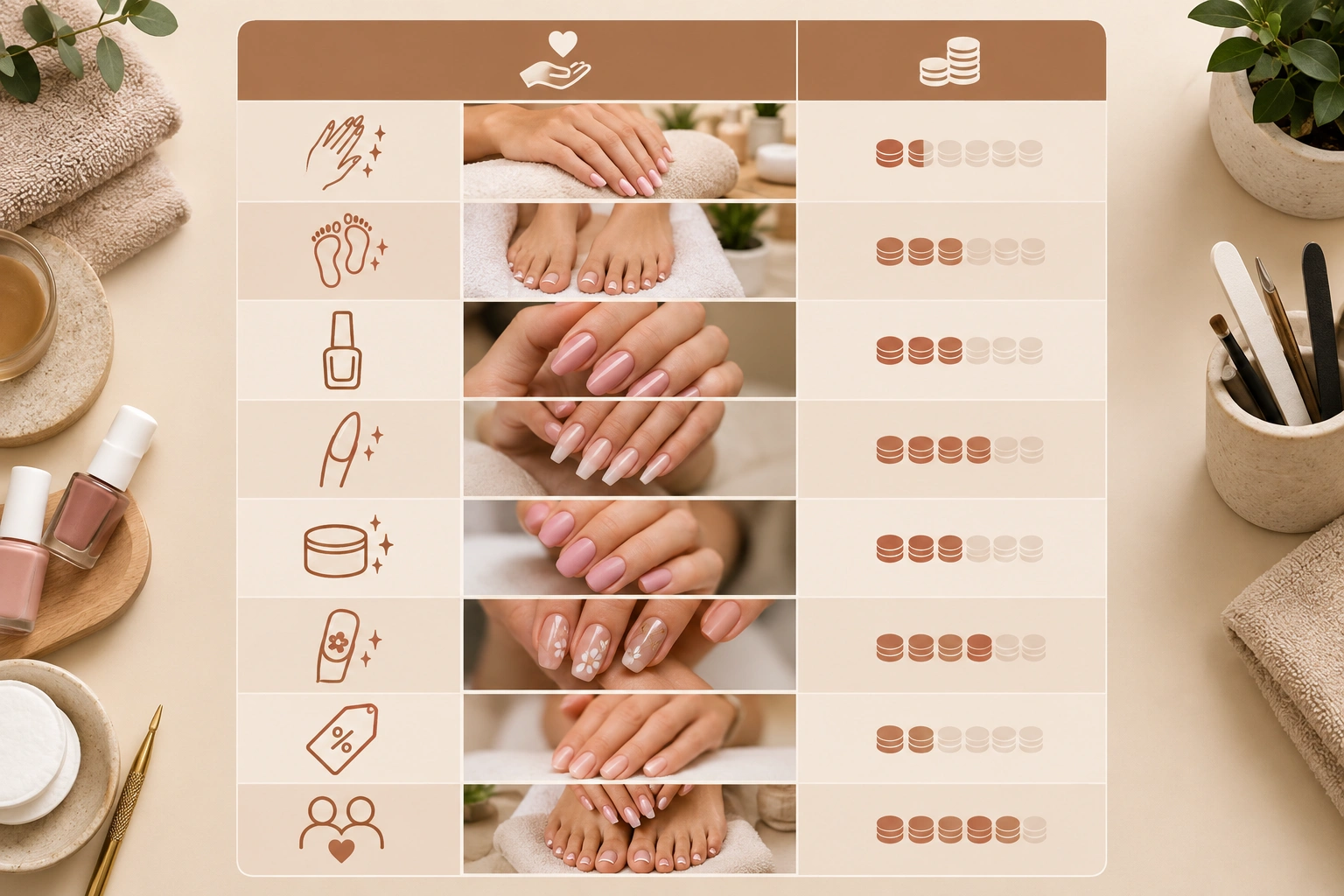
Here’s a practical guide:
| Service type | Common tipping range | Easy example |
|---|---|---|
| Basic manicure | 15%–20% | $20 service → $3–$4 tip; $30 service → $5–$6 tip |
| Basic pedicure | 15%–20% | $35 service → $5–$7 tip; $50 service → $8–$10 tip |
| Gel manicure | 15%–20%, often a little more for detail | $35 service → $5–$7 tip; $60 service → $9–$12 tip |
| Acrylic set or fill | 15%–20% or more for intricate work | $60 service → $9–$12 tip |
| Dip powder | 15%–20% | $50 service → $8–$10 tip |
| Nail art | Add extra if the design is detailed or time-heavy | $5–$10 for simple art; $10–$20+ for complex designs |
| Multi-service visit | Tip each technician separately | One tech for pedi, another for mani |
| Discounted service | Tip based on the service quality, not just the sale price | Tip on the amount you actually paid unless the salon says otherwise |
A few practical examples help:
– A $20 manicure: a $3 to $4 tip is a simple, reasonable cash amount.
– A $30 manicure: a $5 tip is straightforward and generous enough for most visits.
– A $40 pedicure: a $6 to $8 tip fits the usual range.
– A $50 pedicure: a $10 tip lands at 20% and feels appropriate if the service was thorough.
– A $70 acrylic fill with nail art: $12 to $15 is a reasonable range if the work was detailed and took longer than a basic service.
– A $10 nail art add-on: $2 to $3 is a practical cash tip if it was simple, while more detailed art may call for more.
If you prefer flat amounts, that’s fine for quick services. But once the appointment gets more specialized, percentage tipping usually tracks better with the amount of labor involved.
When to tip more for gel, acrylics, dip powder, or nail art
Specialty services often deserve a higher tip because they usually involve more steps, more precision, or more time at the table. That doesn’t mean you must tip dramatically more every time you choose gel over polish. It means the complexity of the work should influence your decision.
A good way to judge it:
– Routine service, no fuss: standard 15%–20%
– Extra shaping, repair, or detailed finish work: tip toward the higher end
– Custom nail art or a long appointment: consider adding a few dollars beyond the percentage
This is where a flat dollar tip can understate the effort. If your nail tech spent extra time perfecting symmetry, hand-painting designs, or fixing a tricky nail shape, a small flat tip may not reflect the work as well as a percentage-based tip.
You do not need to tip every add-on separately unless the salon clearly treats them as separate services. Instead, look at the appointment as a whole and adjust upward if the overall service was more demanding.
How to tip when more than one technician helps
Mixed-service visits can get confusing fast. Maybe one technician does your manicure while another handles your pedicure, or one person preps the nails and another finishes the design. In those cases, it’s usually best to tip each person who directly provided a service.
That means:
– If one tech did your hands and another did your feet, tip both
– If someone else handled a specialty add-on, consider tipping that person too
– If the front desk is collecting tips, ask how they’re distributed before assuming one tip covers everyone
This matters because a single pooled tip may not always be divided the way you expect. If you want to avoid under-tipping, separate cash tips are the clearest option.
For a multi-tech appointment, a simple approach is to decide your total tip budget first, then split it based on who did what. For example, if you planned to leave $20 total and one technician did a longer service than the other, you might give $12 to one and $8 to the other.
Cash tip vs. card tip: what’s better?
Cash is often preferred, and there’s a practical reason for that. NerdWallet notes that cash is instant, while electronic tips can take longer to reach employees. Some salons also use payment systems that handle card tips differently, so cash can be the most direct option when you have it.
Still, card tipping is perfectly acceptable if:
– you don’t carry cash
– the salon’s checkout system makes card tipping easy
– you want the convenience of one payment
A useful trade-off:
– Cash tip: more direct, usually preferred, best for certainty
– Card tip: more convenient, easier if you’re short on cash
If you know you’ll be getting your nails done, bringing a little cash for the tip is the easiest way to keep things simple.
What to do if the bill includes a service fee or gratuity
Before you add a tip, check the receipt carefully. Some salons include an automatic gratuity or automatic service charge, especially for larger parties, package deals, or special events. Those are not always the same thing.
Here’s the difference:
– Automatic gratuity: usually a tip added by the salon, often meant for the staff or technician
– Service charge: a separate fee the salon adds for operating costs or the appointment itself, and it may or may not go to the technician
If the receipt says gratuity is already included, you usually do not need to tip again unless you want to leave a little extra for exceptional service. If it says service charge instead, don’t assume it replaces a tip. Ask the front desk where it goes before deciding whether to add more.
Look for words like:
– gratuity
– service fee
– automatic tip
– appreciation charge
If you’re not sure, ask in a calm, direct way: “Is gratuity already included in this total, or is this just a service fee?” That one question can save you from accidentally double-tipping.
How to tip on discounts, gift cards, packages, or memberships
Discounts can make tipping feel confusing. If your manicure was on promotion, should you tip on the discounted price or the original value? In most everyday salon situations, the simplest approach is to tip based on the actual amount you paid, then adjust upward if the service was especially involved.
A few practical rules:
– Discounted service: tipping on the paid amount is common and acceptable
– Gift card: the gift card covers the service, but you still tip the technician separately
– Package or membership: if the salon says gratuity is included, don’t add more unless you want to; if not, tip based on the service you received
– Prepaid package with no stated gratuity: tip on the value of the service you actually got, not just the amount you happened to hand over that day
For more formal package situations, the clearest approach is to use the pre-discount service value when the package is essentially a prepaid bundle of full-price services, unless the salon’s terms say otherwise. If the salon markets it as a discount or promotional deal, tipping on the post-discount amount is usually acceptable. When in doubt, ask how gratuity is handled before booking or paying.
For gift cards, the cleanest move is to bring cash for the tip. That way, you’re not stuck trying to add a gratuity when the gift card balance only covers the service itself.
What to do about poor service or corrections
Bad service creates the most awkward tipping moment. The best rule is to separate service quality from guilt. You should not feel pressured to leave a standard tip for work that was rushed, careless, or required repeated corrections.
If the issue was minor—say, one small uneven edge or a polish touch-up—you might tip on the lower end rather than skipping the tip entirely. If the service was genuinely poor, it’s reasonable to leave a smaller tip and address the issue directly with the salon.
A practical approach:
1. Give the technician a chance to fix the problem.
2. If the result is still unsatisfactory, speak to the front desk politely.
3. Adjust the tip to match the actual experience.
What you should avoid is over-tipping out of discomfort and then leaving upset. A smaller tip, paired with clear feedback, is often more honest and more useful.
Nail salon tipping etiquette vs. other beauty services
Nail salon tipping is similar to other personal care services in that it’s usually expected when someone performs a hands-on service for you. But nail appointments often have a few extra quirks: multiple technicians, add-ons like nail art, and pricing that can change a lot based on the design or length of the appointment.
Compared with some other beauty services, nail salon tipping is often more straightforward:
– basic services usually fall into a familiar percentage range
– specialty work may justify a higher tip
– cash is often especially appreciated
– gratuity may be split among several people
If you’re used to tipping hair services, the main difference is that nail salons more often involve separate technicians for separate services, so you need to watch who actually did the work.
Simple tipping rules you can use every time
If you want one easy framework, use this:
- Tip at a nail salon in the U.S. unless gratuity is already included
- Use 15% to 20% as your default range
- Tip more for detailed, long, or specialty work
- Tip each technician who directly helped you
- Use cash when possible
- Check the receipt for included gratuity before adding more
- On discounts or gift cards, tip the person for the service you received
- If service was poor, adjust the tip and speak up politely
That’s enough to handle most salon visits without second-guessing yourself.
If you want more help planning a salon visit, you may also find these guides useful: how much to tip at a nail salon, nail salon tipping basics, and another quick nail salon tip guide.

