
How to Build a Simple Toenail Care Routine

Toenails are easy to ignore until one becomes rough, overly long, tender, discolored, or difficult to trim. The good news is that you do not need an elaborate weekly pedicure to keep them looking neat and feeling comfortable.
Learning how to build a simple toenail care routine comes down to a few basic habits: clean and dry your feet well, trim your nails correctly, smooth rough edges, moisturize dry skin, keep your tools clean, and pay attention when something changes.
A consistent routine can also help you avoid common DIY mistakes such as cutting nails too short, digging into the corners, aggressively removing cuticles, or using a file that is much too coarse for natural nails.
Quick Answer
A simple toenail care routine includes washing and thoroughly drying your feet, trimming toenails straight across when needed, gently filing rough edges, moisturizing the surrounding skin, and cleaning your tools after use. Avoid cutting nails extremely short or removing healthy cuticles, and get professional advice if you notice persistent pain, swelling, discoloration, thickening, or infection.
What Does a Healthy Toenail Care Routine Include?
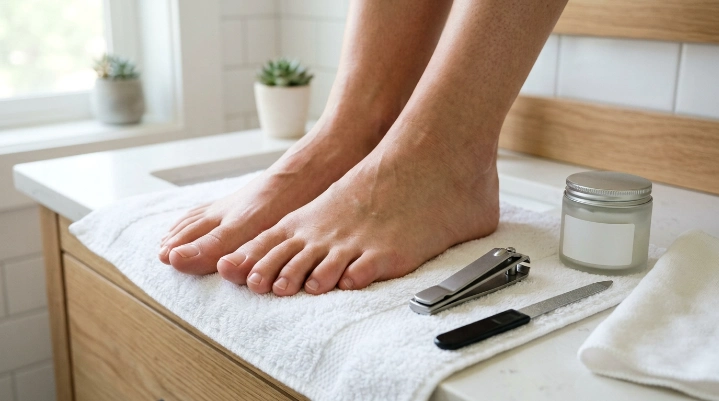
Healthy toenail care is not about making every nail look perfectly polished. The goal is to keep your nails at a comfortable length while protecting the nail plate and the skin surrounding it.
A practical routine normally includes:
- Regular washing and careful drying
- Checking each toenail for changes
- Trimming when the nail grows beyond a comfortable length
- Filing sharp or rough edges
- Moisturizing dry skin around the nails
- Leaving healthy cuticle tissue alone
- Wearing shoes with enough room for your toes
- Keeping clippers and files clean
The nail plate is the hard part you see and trim. The nail bed is the skin underneath it. The cuticle is the protective tissue near the base of the nail that helps create a barrier between the outside environment and the growing nail.
That barrier is one reason aggressive cuticle cutting should not be part of your regular toenail routine.
The Basic Tools You Need for Toenail Care
You do not need a professional pedicure station at home. A small collection of well-maintained tools is usually enough.
| Tool | What It Is For | What to Look For | Main Safety Point |
|---|---|---|---|
| Toenail clipper | Shortening normal toenails | Sharp blades and comfortable grip | Do not cut too deeply into corners |
| Nail file | Smoothing rough edges | Fine or medium grit suitable for natural nails | Avoid aggressive sawing |
| Glass file | Gentle edge finishing | Smooth, washable surface | Use light pressure |
| Nail nipper | Very thick or difficult nails | Strong blades and secure grip | Better suited to experienced users |
| Soft towel | Drying feet and toes | Clean, absorbent material | Dry between toes carefully |
| Moisturizer | Softening dry surrounding skin | Simple, comfortable formula | Avoid putting heavy cream between damp toes |
Choosing a Nail File for Toenails
Your toenail file should smooth the edge without requiring excessive force.
A fine or medium-grit emery board can work for ordinary natural toenails. A glass or crystal file is another useful option because it can create a smooth finish and many versions can be washed between uses.
Very coarse files are more suitable for rapidly reducing hard enhancement products than for routine filing of healthy natural nails.
If your toenail is extremely thick, hard, painful, unusually curved, or difficult to manage with a normal file, do not simply switch to the most aggressive tool you can find. That is a good point to consider professional help instead.
How to Build a Simple Toenail Care Routine Step by Step
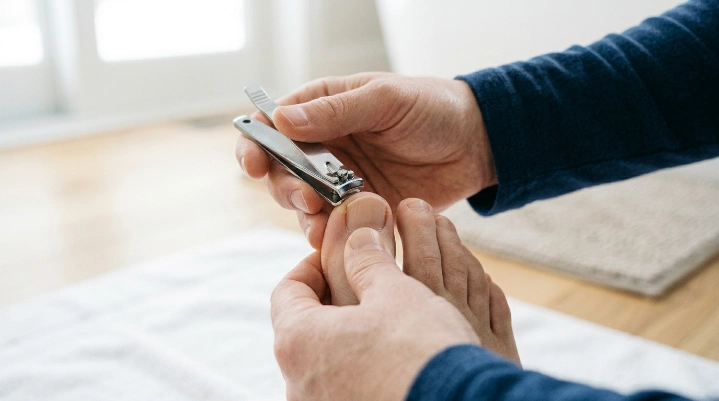
You can complete most of this routine during normal bathing and grooming. Trimming and filing do not have to happen every day.
Step 1: Wash Your Feet
Wash your feet using water and a gentle cleanser during your bath or shower.
Pay attention to:
- The tops and bottoms of your feet
- Around the toenails
- Between your toes
- Any areas where sweat or debris tends to collect
Avoid digging underneath the nail with sharp metal tools. The skin under the free edge contributes to the protective barrier around your nail.
Step 2: Dry Your Feet Thoroughly
Do not stop after washing.
Carefully dry your feet, including the spaces between your toes. Damp, enclosed environments can make it easier for certain fungal problems to develop.
The NHS recommends keeping feet clean and dry as part of helping prevent fungal nail infections. NHS guidance on fungal nail infections
If your feet sweat heavily, changing into clean, dry socks can also be helpful.
Step 3: Check Your Toenails Before Trimming
Take a few seconds to look at each nail.
You are checking for changes such as:
- New yellow, brown, white, or dark discoloration
- Thickening
- Crumbling
- Separation from the nail bed
- Swelling around the nail
- Tenderness or throbbing
- Drainage or pus
- A crack or injury
- Skin growing painfully over a nail edge
Minor cosmetic differences are common, but persistent or worsening changes deserve more attention.
Checking before trimming also prevents you from accidentally cutting into skin that is already irritated.
Step 4: Soften the Nails Before Cutting
Toenails are usually thicker than fingernails.
Trimming after a bath or shower can make ordinary toenails easier to cut. The American Academy of Dermatology also recommends softening nails before trimming. AAD nail-trimming guidance
You do not need an extremely long foot soak for normal grooming. The goal is simply to make the nail easier to trim without forcing the clipper.
Step 5: Trim Toenails Straight Across
This is one of the most important parts of a safe routine.
Cut the toenail mostly straight across rather than carving deeply into each corner.
Work in controlled cuts instead of trying to remove the entire nail edge in one dramatic clip.
Leave a sensible amount of nail rather than cutting all the way down to the skin.
Cutting too short or deeply rounding the sides may increase the chance of a nail edge growing into surrounding skin. Mayo Clinic recommends straight-across trimming and keeping toenails at a moderate length to help prevent ingrown toenails. Mayo Clinic guidance on preventing ingrown toenails
Do not dig down the side of a painful nail with clippers, scissors, or another sharp tool.
Step 6: File Rough Edges
After trimming, feel the edge gently.
If it catches or feels sharp, use a nail file to smooth it.
Use light, controlled strokes rather than aggressively grinding the nail. Filing is for refining the edge, not thinning the entire nail plate.
A basic file can be especially useful when one small corner feels rough but the nail does not need another clip.
Expert Tip: Trim for length and file for finish. Trying to create the perfect toenail shape entirely with clippers can encourage you to cut too deeply around the corners.
Step 7: Leave Healthy Cuticles Alone
Cuticles are not simply unwanted skin.
Healthy cuticle tissue helps protect the area where the nail grows. Cutting or aggressively pushing it back can disturb that protective barrier.
If the area looks dry, moisturizing it is usually a better routine choice than cutting it.
The American Academy of Dermatology advises leaving cuticles alone because damaging them can make it easier for germs to enter around the nail. AAD guidance for trimming and protecting nails
If there is loose, torn skin around your toe, avoid pulling or biting it.
Step 8: Moisturize Dry Skin
Toenail care includes the skin around the nails.
After your feet are clean and dry, use a small amount of moisturizer on dry areas around the toes and nail folds.
This can be especially useful if your skin feels:
- Tight
- Flaky
- Rough
- Dry after bathing
- Irritated by seasonal weather
If the skin between your toes tends to remain damp, avoid packing that space with heavy moisturizer.
People with very sensitive skin may prefer a simple fragrance-free product.
Step 9: Clean and Store Your Tools
Your toenail tools should not live permanently at the bottom of a damp shower caddy.
Remove visible debris after use, clean reusable tools as appropriate for their material, allow them to dry completely, and store them somewhere clean and dry.
The AAD specifically recommends regularly disinfecting nail clippers and scissors.
Do not casually share personal toenail tools with family members or friends, especially if someone has a suspected nail infection.
Disposable emery boards should be replaced when they become:
- Worn smooth
- Bent
- Cracked
- Dirty
- Difficult to clean
- Previously used on a suspicious or infected nail
Washable glass or metal tools can last much longer when they are used and maintained correctly.
How Often Should You Follow Your Toenail Routine?
Not every step needs the same schedule.
Daily or After Bathing
- Wash your feet
- Dry thoroughly
- Notice any new pain or skin changes
- Moisturize dry skin when needed
Weekly
Take a closer look at your toenails and check for rough edges, pressure points, or footwear-related irritation.
You can file a minor snag when necessary.
Trim Only When Needed
Toenails grow more slowly than fingernails, so there is no reason to clip them simply because another week has passed.
Trim when they have grown enough to become uncomfortable, catch on socks, or extend beyond your preferred safe length.
Do not repeatedly cut nails extremely short in an attempt to make grooming last longer.
Keeping Toenails Healthy Between Pedicures
Your routine continues after you put the clipper away.
Choose Shoes That Give Your Toes Room
Shoes with a narrow or tight toe box can place pressure on your toenails.
Your toes should not feel constantly squeezed together or pushed against the front of the shoe.
This becomes particularly important if you are already prone to painful nail edges.
Change Damp Socks
If your socks become sweaty after exercise, work, or hot weather, replace them with a dry pair when possible.
Keeping feet constantly warm and damp can contribute to an environment where fungal problems are more likely.
Use Footwear in Communal Wet Areas
Showers, locker rooms, and pool areas are shared environments.
Wearing appropriate shower sandals or similar footwear is a simple hygiene habit recommended in fungal-infection prevention guidance.
Give Toenails a Break When They Are Irritated
If a nail or surrounding skin is sore after a pedicure, tight shoes, or minor trauma, avoid immediately filing, buffing, polishing, or picking at it again.
More grooming is not always better.
DIY Toenail Care vs. a Professional Pedicure
Both can have a place in your routine.
| DIY Care | Professional Care |
|---|---|
| Convenient at home | Helpful when reaching your feet is difficult |
| Usually low cost once you own tools | Costs more per appointment |
| Easy for normal routine maintenance | Offers professional shaping and grooming |
| You control your own tools | Salon sanitation practices become important |
| Not ideal for painful or medically concerning problems | Nail technicians provide cosmetic care, not medical diagnosis |
A home kit consisting of a good clipper, file, moisturizer, and cleaning supplies can be relatively inexpensive and may last a long time.
Professional pedicures cost more but can be convenient if you have difficulty reaching your feet or prefer salon finishing.
However, a nail technician should not replace a dermatologist, podiatrist, or other qualified healthcare professional when you have signs of infection, significant pain, or an unexplained nail abnormality.
Common Mistakes to Avoid
Even a simple routine can cause problems when grooming becomes too aggressive.
- Cutting toenails extremely short. Leave enough nail to protect the end of your toe.
- Rounding deeply into the corners. A straighter edge is generally safer for preventing ingrown nails.
- Digging out a painful nail corner. This can injure surrounding skin and worsen irritation.
- Cutting healthy cuticles. They provide a protective barrier.
- Using a very coarse file aggressively. Too much filing can thin or damage natural nail.
- Sawing repeatedly with heavy pressure. File gently and stop when the rough edge is smooth.
- Sharing clippers or files. Personal grooming tools can carry debris and microorganisms.
- Putting tools away wet. Dry reusable tools before storage.
- Ignoring persistent discoloration or thickening. Not every nail change is a cosmetic issue.
- Covering a suspicious nail with polish indefinitely. Polish may hide changes you should be monitoring.
Warning Signs That Your Routine Should Stop
Pause DIY grooming if a toe becomes painful, swollen, hot, bleeding, or unusually tender.
You should also pay attention to:
- Pus or drainage
- Redness that appears to be spreading
- A nail that becomes dramatically thicker
- Crumbling or persistent yellowing
- Nail separation
- Significant trauma
- A dark area that does not have an obvious explanation
- Repeatedly ingrown nail edges
Fungal nail infections can cause thickened, brittle, crumbly, or discolored toenails, but those changes can have other causes too. Avoid assuming every yellow or thick nail is fungus.
When to See a Nail Technician or Dermatologist
A nail technician can help with routine cosmetic maintenance when your toenails and surrounding skin are healthy.
Consider a professional nail technician when you simply want:
- Neater cosmetic shaping
- Polish application
- Routine pedicure care
- Help maintaining otherwise healthy nails
A dermatologist, podiatrist, or other appropriate healthcare professional is a better choice when you have:
- Persistent or increasing pain
- Swelling or pus
- Repeated ingrown toenails
- Significant nail thickening
- Persistent discoloration
- A nail separating from the nail bed
- Changes you cannot explain
- A suspected fungal or bacterial infection
- An injury that is not healing normally
People with diabetes, poor circulation, reduced sensation in the feet, or other conditions that make foot injuries more serious should be particularly cautious about aggressive DIY trimming.
If you fall into one of these groups, ask your healthcare professional what level of at-home foot and nail care is appropriate for you.
FAQs
How often should I cut my toenails?
There is no universal weekly schedule. Toenails grow slowly, so trim them when they become long enough to cause discomfort, catch on socks, or extend beyond your preferred safe length.
Should toenails be cut straight or curved?
Toenails are generally best trimmed straight across rather than deeply rounded at the corners. This helps reduce the chance of the nail edge growing into the surrounding skin.
Is it safe to file toenails every day?
Occasionally smoothing a small rough edge is usually reasonable, but there is rarely a need for aggressive daily filing. Excessive filing can unnecessarily thin or irritate the nail.
What type of nail file is best for toenails?
For ordinary natural toenails, a fine or medium-grit emery board or a smooth glass file is usually sufficient. Very thick or abnormal nails may require different care rather than simply using a more aggressive file.
Should I cut my toenail cuticles?
Healthy cuticles are best left alone. They help protect the growing nail area. If the skin looks dry, moisturize it instead of routinely cutting or aggressively pushing it back.
Why are my toenails yellow or thick?
Thick or yellow nails can occur for several reasons, including repeated trauma and fungal infection. Because appearance alone cannot always tell you the cause, persistent changes are worth discussing with a healthcare professional.
Can I do my own toenail care instead of getting pedicures?
Yes, many people can handle ordinary toenail maintenance at home with clean tools and careful technique. Professional help is more appropriate when nails are painful, severely thickened, repeatedly ingrown, infected-looking, or difficult to reach safely.
Conclusion
Learning how to build a simple toenail care routine does not require a drawer full of products or a weekly salon visit.
Start with the basics: keep your feet clean and dry, check your nails regularly, trim straight across when needed, gently file rough edges, moisturize dry surrounding skin, leave healthy cuticles alone, and keep your tools clean.
Most importantly, know when to stop treating a problem as a cosmetic issue. Persistent pain, swelling, drainage, dramatic discoloration, thickening, or repeated ingrown nails deserve professional attention.
Make your routine gentle and consistent rather than aggressive. Your toenails do not need constant work—they need smart maintenance and enough attention to notice when something changes.

