
What Age Can Kids Get Their Nails Done? A Parent’s Guide to Safe, Age-Appropriate Choices

If you’re wondering what age can kids get their nails done, the short answer is that it depends on the service, the child, and the salon’s rules.
For simple, low-risk nail care like clear polish, a gentle manicure, or a basic pedicure, many children can enjoy the experience with a parent’s supervision. More involved services like gel, acrylics, builder gel, or extensions usually make more sense for older kids and teens because they involve stronger products, more filing, and more removal steps.
A practical way to think about it:
- Toddlers and younger children: best kept to short, simple, at-home polish or a very gentle kid-friendly salon service if the salon specifically offers one.
- Children and preteens: usually fine for basic polish, a simple manicure, or a modified pedicure if the child can sit still and the salon uses age-appropriate techniques.
- Teens: more likely to be ready for gel or other enhancements, but only if the salon is careful about sanitation, removal, and product exposure.
One important note: salon rules vary, and legal consent rules are not always the same as salon policy. A salon may allow a service only with a parent present or a signed consent form even if the law does not require it, and some salons may refuse certain services for minors altogether.
So instead of asking, “What’s the one right age?” it helps to ask, “What service is appropriate for my child right now?”
Quick Answer: What Age Can Kids Get Their Nails Done?
Here’s the short version, broken down by service:
- Toddler-friendly polish: often best as a home activity; if used, water-based or peel-off polish is usually the most parent-friendly option.
- Basic nail polish: often okay for younger children, especially for occasional fun or special events.
- Basic manicure or pedicure: often reasonable for school-age children if the service is gentle and age-appropriate.
- Gel polish: usually better suited to older kids and teens, because it requires more care during application and removal.
- Acrylics, builder gel, and extensions: generally best left for older teens, and many salons treat these as adult-leaning services or require parent consent for minors.
- Press-ons: can be a temporary option for older kids or teens, but fit, glue, and removal matter.
If you want the safest path, think simple first, enhancements later.
Age-by-Service Guide: What’s Appropriate for Toddlers, Kids, Preteens, and Teens
The table below gives a practical way to compare services by age stage. This is not a universal rulebook, but it is a useful decision guide.
| Age stage | Usually suitable | Use extra caution with | Best avoided or delayed |
|---|---|---|---|
| Toddlers | Clear or water-based polish at home; very short, gentle “pretend spa” routines | Salon tools, soaking feet, strong scents, long appointments | Acrylics, gel, extensions, aggressive cuticle work |
| Young children | Simple polish, basic manicure, gentle pedicure with parent present | Buffing, cuticle cutting, strong removers, busy salons | Acrylics and longer-lasting enhancements |
| Preteens | Basic manicure/pedicure, nail art, press-ons for a special occasion | Gel polish if the salon is careful; glue-on products if removal is not supervised | Acrylics unless a salon and parent both agree it is appropriate |
| Teens | Polish, manicure, pedicure, gel polish, press-ons | Strong filing, over-trimming cuticles, poor ventilation, rushed removal | Enhancements done in a salon that cannot explain sanitation or removal clearly |
Toddlers: keep it simple
Toddlers usually do best with the most minimal approach. A quick polish at home can feel exciting without turning the appointment into a long or stressful experience. At this age, the goal is fun, not durability.
A toddler who hates sitting still or touches their face constantly may not be a good candidate for salon products, even if the salon is child-friendly. Short attention spans and sensitive skin are enough reason to keep things very basic.
Children: gentle, modified services work best
For many children, a simple manicure or pedicure can be perfectly reasonable if the technician is gentle and the service is adapted for younger nails. That usually means no harsh cuticle cutting, no aggressive filing, and no pressure to “upgrade” to stronger products.
A child who wants “spa nails” for a birthday party may be happier with clear polish and a tiny design than with a long-lasting enhancement that could be uncomfortable to remove later.
Preteens: this is where choices start to widen
Preteens often want something that feels a little more grown-up, but their nails are still developing. This is the stage where parents often have to balance style with restraint.
Press-ons can be a smart middle ground for a dance, holiday, or birthday. They give the look without committing to acrylics or repeated salon fills. The trade-off is that fit and removal matter; a poorly sized press-on can pop off early or tug on the nail.
Teens: more freedom, but still not “anything goes”
Teens are more likely to tolerate gel polish or other enhancements, but that doesn’t mean every service is automatically a good idea. If a teen wants gel, ask how the salon removes it. If the answer is vague, that’s a red flag.
For teens who bite their nails, have thin nails, or have had irritation before, simpler services may actually look better and last longer than a heavy enhancement.
What’s Safe for Kids: Manicures, Pedicures, Polish, Gel, Acrylics, and Press-Ons
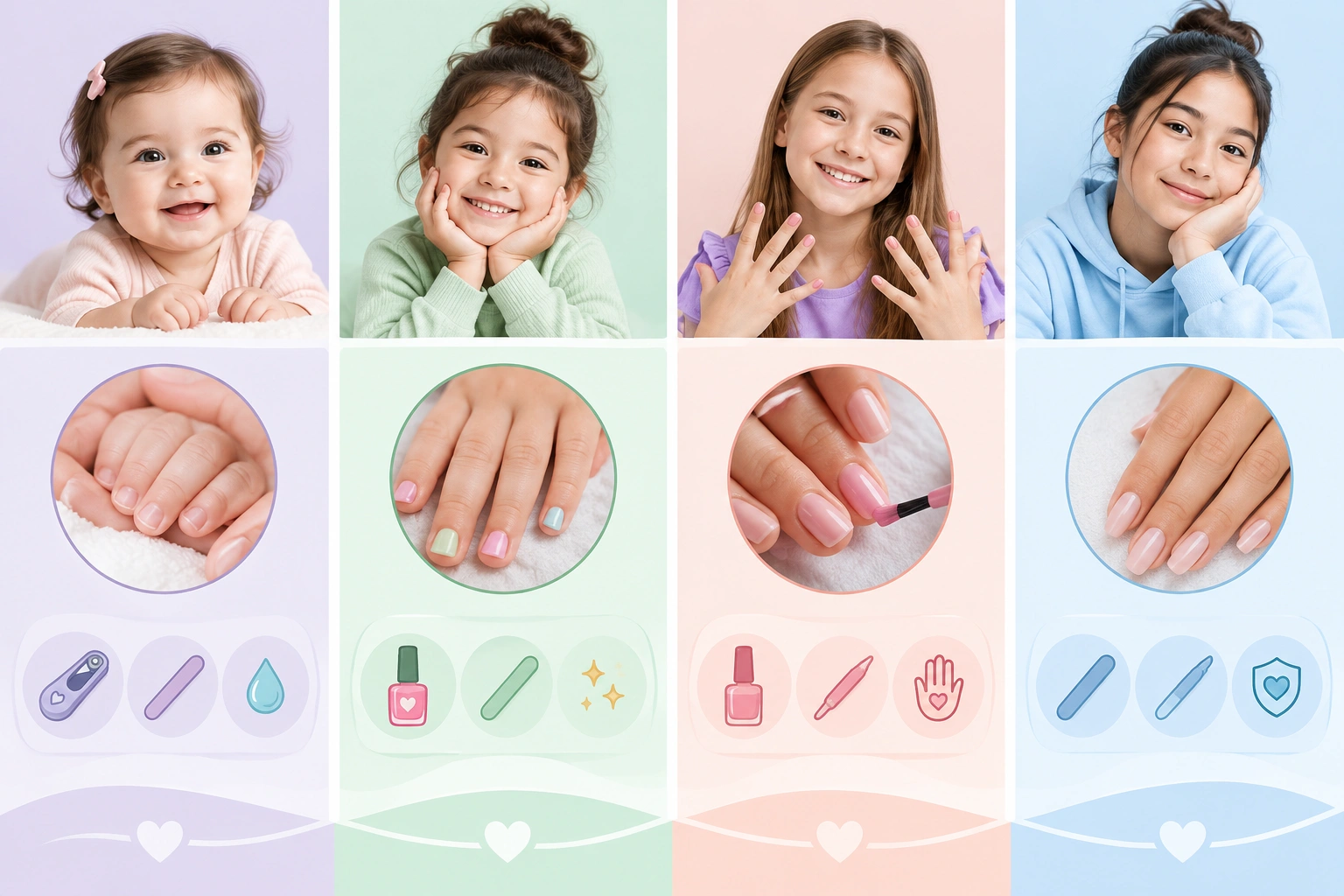
Not all nail services carry the same level of risk or upkeep.
Regular nail polish
Regular polish is the simplest option. It’s easy to remove, easy to change, and usually the least stressful choice for younger children.
The main caution is product choice and removal. Harsh removers and repeated scrubbing can dry out the nail and surrounding skin, so gentle removal matters.
Manicures and pedicures
A manicure or pedicure can be kid-friendly when it stays basic. That means shaping, light moisturizing, and polish—not deep cuticle cutting or heavy filing.
For children, the biggest risk is often not the polish itself but the technique. Over-trimming cuticles or filing too aggressively can leave the skin irritated or the nail plate weak.
Gel polish
Gel can be appealing because it lasts longer, but it comes with more steps and more caution. The service usually involves curing under a UV/LED lamp and a removal process that can be rough if done badly.
That doesn’t mean gel is automatically off-limits for every teen. It does mean parents should ask what brand is used, how removal works, and whether the salon can explain the process clearly.
Acrylic nails and extensions
Acrylics and extensions are the most “adult” option in this group. They require more prep, more maintenance, and more careful removal. They can also put more stress on natural nails, especially if the child picks at them or the set is removed too quickly.
Some salons won’t apply acrylics to minors without a parent or guardian’s consent, and some won’t do them on younger children at all.
Press-on nails
Press-ons can be a fun compromise for older kids and teens. They are temporary and often less damaging than acrylics, but they are not automatically risk-free.
The glue, the fit, and the removal method matter. If a child has sensitive skin, test a small area first or skip glue-on products altogether.
Legal Consent vs. Salon Policy for Minors
It helps to separate two different things:
- Legal consent requirements: what the law in your area says about minors receiving salon services.
- Salon policy requirements: what the business itself requires, which can be stricter than the law.
In practice, a salon may ask for:
– a parent or guardian to be present,
– a signed consent form,
– proof of age,
– or a refusal of certain services for younger minors.
That means a service can be legally allowed but still unavailable at a particular salon. If you’re booking for a child, ask about both the law-sensitive part and the salon’s own rules before you go.
Safety, Hygiene, and Ingredient Concerns to Check Before Booking
This is where parents can make the biggest difference.
Look for clean tools and clean hands
A good salon should be able to explain how tools are cleaned and how stations are sanitized between clients. If a technician seems rushed or casual about hygiene, that’s your cue to leave.
If you want a deeper look at general salon safety, NailPrime also has a practical guide on what you can get done at a nail salon, which helps you compare services before booking.
Be cautious with cuticle work
Children usually do better with minimal cuticle care. The cuticle is there for a reason, and aggressive cutting can create tiny openings that are sore or irritated.
A gentle push-back, if needed, is very different from trimming or cutting deeply. When in doubt, less is better.
Ask about common irritants and removal products
Instead of asking only whether a product is “safe,” it helps to ask what’s in it and how it’s removed. For kids with sensitive skin, common things to ask about include:
- Strong fragrance
- Formaldehyde-related ingredients or hardeners
- Toluene or similar strong solvents
- Methacrylate-based adhesives and enhancement products
- Acetone-heavy removers
- Strong buffing or filing products used before gel or acrylic application
If your child has eczema, contact dermatitis, asthma, or a history of sensitive skin, keep services simple and fragrance-light. If a product smells strong or irritates the skin quickly, that’s enough reason to stop.
Ask about ventilation
Ventilation matters, especially for gel, acrylics, and removers. A salon doesn’t need to smell perfect, but it should not feel overpowering or stuffy.
If you’re bringing a child, choose a place where the air feels fresh and the appointment won’t involve lingering around strong fumes.
Be smart about gel and UV/LED lamps
Gel polish often involves curing under a UV/LED lamp. Parents sometimes assume that means the process is harmless because it’s common, but it still deserves a pause and a question.
If your teen wants gel, ask the salon how often they use the lamp, how they protect the skin, and whether a regular polish option would meet the same goal with less complexity.
For broader skin safety guidance, the American Academy of Dermatology is a helpful place to look for skin-care basics that apply to sensitive skin and irritation concerns.
Salon or At-Home? How to Choose the Better Option for Your Child
Both can work. The better choice depends on the child’s age, temperament, and the service itself.
At home is usually better when:
- your child is very young,
- you want control over ingredients,
- the goal is a one-day treat,
- or your child is sensitive to noise, smells, or strangers.
At-home nail care is also easier to pause. If your child gets restless halfway through, you can stop without wasting a salon appointment.
A salon can make sense when:
- your child is old enough to sit still,
- you want a polished result for a special event,
- the salon is clearly child-friendly,
- and the service is basic rather than high-commitment.
A salon may also be better for teens who want a neater finish than they can manage themselves. The trade-off is that you give up some control over products and sanitation, so you need to vet the salon first.
For younger children, I often think of salon visits as a “special occasion” option, not a routine beauty appointment.
What to Ask a Salon Before Bringing a Child
A quick phone call can save you a lot of guesswork. Ask these questions before you book:

- Do you have an age policy for minors?
- Do you require a parent or guardian to be present?
- Do you require signed consent forms for minors?
- Which services do you offer for children?
- Do you ever refuse certain services for minors, such as gel, acrylics, or extensions?
- Do you modify manicures or pedicures for younger kids?
- How do you sanitize tools and workstations between clients?
- Do you do cuticle cutting on children, or only gentle grooming?
- What products do you use for polish, gel, or removal?
- Is the space well ventilated?
- How do you handle a child who gets uncomfortable during the appointment?
If a salon can answer clearly, that’s a good sign. If the answers are vague or defensive, keep looking.
For parents who want to compare nail services more broadly, this NailPrime guide on manicures, pedicures, and add-ons is a helpful companion read.
Kid-Friendly Alternatives for Younger Children
If your child wants “nails done” but is too young for salon enhancements, you still have options.
Clear or soft-colored polish
This is the easiest substitute. It gives the fun of color without the commitment.
Water-based or peel-off polish
For toddlers and very young children, these can be a more parent-friendly option because they’re usually easier to remove and less of a commitment than standard polish.
Stickers and tiny nail decals
These are great for short-term fun and usually easier to remove than full enhancements.
Press-ons for a special event
For an older child or preteen, press-ons can be a good middle ground if you supervise the fit and removal.
A mini at-home manicure
Warm water, gentle hand lotion, a little filing, and one coat of polish can feel special without being too much.
If your child is especially young, the “spa” part may matter more than the polish. A little hand massage with lotion and a pretty color on one or two nails can be enough.
When to Be Extra Cautious: Nail-Biting, Sensitivities, and Skin Conditions
Some children need a simpler approach than others.
Nail-biting
If your child bites their nails, enhancements can be tempting to pick at. That can lead to lifting, damage, or irritation around the nail.
In that case, a short, natural nail with clear polish is often a better choice than anything long-lasting.
Sensory sensitivities
Some kids hate the smell of products, the sound of filing, or the feeling of having their feet touched. A salon visit can quickly go from exciting to overwhelming.
For sensory-sensitive kids, at-home care in short steps is often the kinder option.
Skin conditions
If your child has eczema, a rash, or repeated redness around the nails, keep the routine simple and skip anything that causes burning, itching, or stinging.
If symptoms keep coming back, that’s not a nail preference issue anymore.
When to See a Pediatrician or Dermatologist
If your child has:
– swelling,
– repeated redness,
– pain around the nail,
– nail lifting,
– a rash after products,
– or frequent infections around the fingertips,
it’s worth checking with a pediatrician or dermatologist before trying more nail services.
That’s especially true if you suspect an allergy or if a nail product seems to trigger a reaction every time. A salon can help with appearance, but it can’t diagnose the reason a nail is irritated.
For ingredient and skin-safety basics, the National Institutes of Health is a reliable place to look for health information, and the FDA is useful for general cosmetic safety guidance.
FAQ: Common Parent Questions About Kids Getting Their Nails Done
Is there a legal minimum age for nail services?
Not one universal age. Policies vary by salon, location, and service type. Some businesses are more flexible with polish and basic manicures, while others set stricter minimum ages for minors.
Do kids need a parent or guardian to consent?
Often, yes. Many salons require a parent or guardian for minors, especially for gel, acrylics, or other enhancements. Always check the salon’s policy before booking.
Can a 5-year-old get a manicure?
A very basic, modified manicure may be fine at some salons if the child can sit still and the service is gentle. Keep it simple and avoid aggressive cuticle work or strong products.
Are gel nails okay for kids?
Gel is usually better suited to older kids and teens. The application and removal process is more involved than regular polish, so it deserves more caution.
Are acrylic nails safe for children?
Acrylics are generally a more advanced choice and are often avoided for younger kids. They can stress natural nails and require careful removal.
What’s the safest option for a young child?
Clear polish, a gentle at-home manicure, or a very simple salon service is usually the safest place to start.
Can press-ons be better than acrylics?
Yes, especially for a special event. Press-ons are temporary, but they still need a good fit and gentle removal.
How do I know if my child is ready?
Ask three questions: Can they sit through the service? Can they tolerate the products and smells? And is the service simple enough that removal won’t be a problem later? If any answer is no, keep it basic.
Final Takeaway
If you’re deciding what age can kids get their nails done, the safest answer is to match the service to the child, not just the birthday. Simple polish and gentle manicures can be fine for many kids, while more involved services like gel, acrylics, and extensions make more sense for older children and teens.
When in doubt, choose the least invasive option that still feels fun. That’s usually the sweet spot for kids’ nails.

