
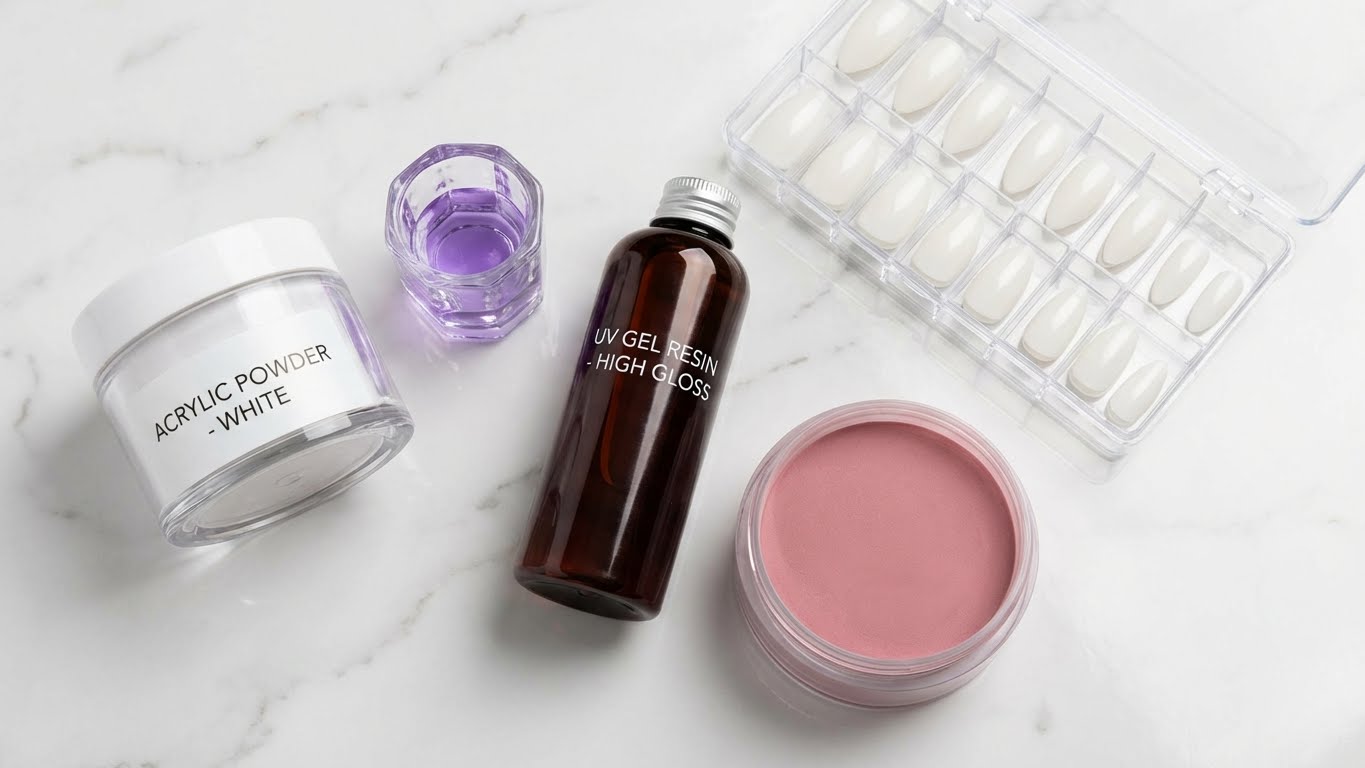
You probably want quick facts, not a chemistry lesson. Fake nails are made from a few main materials: acrylic polymers, UV-cured gel resins, fiberglass or silk fabrics, dip powders, and preformed plastic press-ons. Each type mixes polymers and catalysts or uses molded plastics to create a hard, lasting layer that bonds to your natural nail or a nail tip.
Pick the material that fits your needs—durability, look, removal ease, or skin sensitivity—because each one behaves differently and affects your nail health and upkeep. Acrylics use liquid monomer plus powdered polymer, gels cure under UV/LED light, dip powders layer resin and pigment, and press-ons are molded plastics you glue on.
You’ll learn which materials suit short-term styles, long wear, safe removal, and eco or health concerns as you keep reading.
Key Takeaways
- Fake nails use polymer-based systems, cured or molded, plus fabrics or powders for strength.
- Different materials change how long nails last and how you apply or remove them.
- Material choice affects nail health, maintenance needs, and environmental impact.
Core Materials Used in Fake Nails
Fake nails commonly use hard polymers, light-cured resins, or powdered formulas to build length and strength. Each material has different application steps, curing needs, and removal methods you should know before choosing.
Acrylic
Acrylic nails form when you mix a liquid monomer with a powder polymer. You dip a brush into the liquid, pick up powder to create a soft bead, then shape that bead on your natural nail or a tip. The mixture hardens at room temperature, so you don’t need a lamp.
Acrylics are strong and hold up well to daily wear. You can file and sculpt them into many shapes, and technicians often use acrylic for long extensions and heavy nail art.
Removal requires soaking in acetone or filing down the acrylic. If you remove them yourself, take time and be gentle to avoid damaging your natural nails.
Gel
Gels use polymer resins that cure under UV or LED light. You apply a base gel, then builder or hard gel to build length, and each layer cures in the lamp for seconds to minutes depending on the product.
Gel nails give a glossy, natural finish and feel slightly more flexible than acrylic. They often require less odor during application and can look shinier right after curing.
To remove gel, you typically file the top coat and soak in acetone, or have a technician drill or file them off. Improper removal can peel layers from your natural nail, so follow safe methods.
Dip Powder
Dip powder uses acrylic powder but applies it differently: you brush a resin or base on the nail and dip the finger into colored powder. Repeat layers build color and strength, then you seal with an activator and top coat.
Dip systems cure chemically at room temperature; they don’t need a lamp. They combine color and durability, and they tend to chip less than regular polish.
Removal normally involves filing the top layer and soaking in acetone. You must file enough for the acetone to penetrate; otherwise removal can take much longer or damage your nail.
Structure and Composition of Acrylic Nails
Acrylic nails form when a liquid and a powder join to create a hard, plastic-like layer over your natural nail. The finished material is mostly a methacrylate-based polymer network with small amounts of additives that change flexibility, cure speed, and finish.
Monomer and Polymer Interaction

Acrylic systems use two main parts: a liquid monomer (commonly ethyl methacrylate) and a powder polymer (usually polymethyl methacrylate, PMMA). When you dip a brush into the liquid and then into the powder, the powder partially dissolves at the surface and forms a sticky bead called the polymerizing mixture.
That mixture undergoes a chemical reaction called free-radical polymerization. Initiators in the powder start the reaction, causing monomer molecules to link into long polymer chains. The chains crosslink and harden within minutes, producing a tough, rigid layer that bonds to your nail.
Key points to note:
- The liquid controls work time and flow.
- The powder controls strength and bulk.
- Proper ratio and technique affect bonding and cure quality.
Additives and Plasticizers
Manufacturers add small amounts of other chemicals to change performance. Initiators (e.g., benzoyl peroxide) trigger polymerization so the mix hardens reliably. Stabilizers prevent premature curing during storage. Fillers like silica modify texture and strength.
Plasticizers sometimes appear in lower-quality formulas to make the cured material less brittle. These increase flexibility but can reduce long-term durability and may migrate over time. Colorants, UV absorbers, and surface gloss agents give finished nails their shade, protect against yellowing, and improve shine.
You should watch for allergens and strong odors. Higher-quality products use fewer volatile additives and lower odor monomers to reduce irritation during application.
Gel Nail Formulations
Gel nails harden into a durable, glossy layer using light-activated chemistry and specific additives that control flow, thickness, and adhesion. You’ll find products designed for thin polish, thicker builder gels, and soak-off systems; each uses similar core ingredients but in different ratios.
UV and LED Curing Agents

Curing agents absorb light and start the chemical reactions that turn the gel from a liquid into a hard film. UV lamps emit broad ultraviolet wavelengths (typically around 320–400 nm) and work with older gel formulas. LED lamps emit narrower bands (often 365–405 nm) and cure faster. Check the gel label: some gels are “LED only,” some are “UV/LED,” and some need longer exposure under UV.
Lamp power matters too. Higher-wattage or multi-LED lamps shorten cure time and reduce sticky residue. Poor curing leaves a soft or tacky surface and weak adhesion, which can cause lifting or chipping. Always follow the manufacturer’s time and lamp recommendations for each product.
Photoinitiators
Photoinitiators are molecules that absorb the lamp’s light and form reactive species (free radicals) to start polymerization. Common photoinitiators include benzoyl peroxide derivatives and thioxanthone or camphorquinone compounds modified for gel systems. Different photoinitiators work best at different wavelengths, so formulas match initiators to the lamp type.
Photoinitiator concentration affects cure speed and depth. Too little and the gel won’t fully harden; too much can cause yellowing or skin sensitivity. Some newer gels use blends of photoinitiators to balance fast curing with color stability and lower irritation risk. If you notice prolonged tackiness or skin redness after curing, try a product matched to your lamp or one labeled for sensitive skin.
Dip Powder Nail Ingredients
Dip powder systems rely on a sticky bonding liquid and a finely milled colored powder. The bonding liquid creates the initial layer that the powder sticks to, while the powder contains polymers, pigments, and hardening agents that form the finished nail.
Cyanoacrylate Glue
Cyanoacrylate is the fast-drying glue used in many dip systems as a base layer or in combo products. It bonds quickly to your natural nail and to the powder, creating the first tacky layer that holds the powder in place.
This glue cures by reacting with moisture on the nail and in the air, so you must work quickly to avoid clumping. It gives strong adhesion, which helps layers stack without lifting, but it can be brittle if applied too thickly.
Use caution if you have sensitive skin or breathe fumes easily. Proper ventilation and avoiding contact with cuticles reduce irritation. If you need removal, soaking in acetone will break the bond more safely than prying the product off.
Colored Polymer Powders
Colored powders are mostly fine acrylic polymers mixed with pigments and small additives. The polymer base is often polymethyl methacrylate (PMMA) or similar acrylic esters that harden when activated by the bonding liquid.
Manufacturers add benzoyl peroxide or other initiators to help the powder set and cure evenly. Pigments, mica, or glitter create the color and finish, and titanium dioxide often boosts opacity in lighter shades.
The powder’s particle size matters: finer powders give smoother finishes and better adhesion. You should store powders in dry, sealed containers to prevent clumping and moisture-triggered reactions.
Press-On and Preformed Fake Nails
Press-on and preformed nails give you ready-made nail shapes that attach to your natural nails. They usually use a hard plastic base and a separate adhesive system so you can apply or remove them at home.
ABS Plastic
ABS plastic is the most common material for press-on nails. It is lightweight, durable, and holds polish and printed designs well. Manufacturers mold ABS into many shapes and thicknesses, so you can find short, long, curved, slim, or square styles.
ABS resists chipping better than thin sheet plastic, but it can crack under heavy impact. You can file or buff ABS gently to adjust fit or shape. If you want a glossy finish, ABS takes gel top coats and UV-cured finishes without softening.
Check packaging for medical-grade or BPA-free labels if you have sensitivities. Reusable sets often use thicker ABS; single-use sets tend to be thinner and cheaper.
Adhesive Types
Two main adhesives attach press-ons: glue and adhesive tabs. Glue gives the longest wear — often 7–14 days — and bonds quickly. Use a thin layer and avoid skin contact to reduce lifting and irritation.
Adhesive tabs are double-sided stickers that prioritize easy removal. Tabs usually last a few days and work well if you frequently change styles or worry about nail damage. Tabs can slip if they get oily, so clean your nail surface with alcohol before applying.
Some kits include hybrid adhesives (thin glue plus a tab) or peel-and-stick gels that balance wear and gentle removal. Always follow the product’s directions and test a small amount if you have sensitive skin.
Nail Tips and Forms
You’ll learn how nail tips and nail forms differ in material, fit, and how they affect the final nail. One uses pre-shaped plastic you glue on; the other gives you a sculpted extension made directly on the nail.
Polystyrene Construction
Nail tips are usually made from polystyrene plastic. This material is lightweight and rigid, so tips hold shape well and resist bending. Tips come in many preformed shapes and sizes, which helps you pick one that matches your natural nail width and desired length.
Polystyrene tips glue to the free edge of your nail and then get covered with acrylic or gel for strength. Because the base is a solid plastic plate, you’ll see a clear edge where the tip meets your natural nail unless you blend it with filing and product. Polystyrene is not porous, so it doesn’t soak up liquids or adhesives, but that also makes them harder to refit after removal.
Reusable vs Disposable Forms
Nail forms are sheets or rings you place under the free edge to sculpt extensions with acrylic or gel. Reusable forms are usually made from coated metal or heavy plastic. They hold their shape well and give precise sculpting lines for repeat use, so they cost more up front but save money if you do many sets.
Disposable forms are thin paper or plastic with a sticky tab. They’re convenient for one-time use and hygienic for clients, but they can shift more easily and offer less rigid support for long or heavy extensions. Choose reusable forms for control and consistency; pick disposable forms for speed and cleanliness.
Specialty Materials for Artistic Designs
These materials add texture, shine, and raised elements to nail art. They demand care in placement and proper sealing so your design lasts without catching or lifting.
3D Embellishments
3D pieces include acrylic flowers, rhinestones, metal studs, and tiny charms. You attach them with nail glue, gel adhesive, or embed them into builder gel or acrylic. Press-on nails often use glue; salon applications usually press the piece into wet gel or acrylic, then cure or let the product harden.
Think about size and weight. Large charms can lift or break the nail if not balanced. Place heavier items near the nail center or cuticle base and use multiple drops of adhesive for security.
Finish and maintenance matter. Topcoat or a layer of clear builder gel around the base helps lock pieces in. Remove carefully—soak or file adhesive away rather than prying—to avoid damaging the natural nail.
Foils and Glitters
Foils are thin metal or holographic sheets pressed onto a tacky gel surface. You apply foil by transfer: press a cut piece onto the sticky layer, then lift it to leave the pattern. Seal with a no-wipe topcoat or clear gel to prevent peeling.
Glitter comes as fine powder, chunky flakes, or loose glitter. Mix fine glitter into clear polish or gel for a smooth finish. For chunky glitter, press pieces into wet gel or topcoat and finish with multiple clear layers for a flat surface.
Both foils and glitters require a strong topcoat and cure when using gel. Use a lint-free brush to remove excess particles before sealing to keep edges clean and to reduce lifting over time.
Health and Safety Considerations

Fake nails can cause skin and nail problems if not applied or removed correctly. You may get allergic reactions to ingredients like acrylates or adhesives. If you notice redness, itching, or swelling, stop use and see a clinician.
Powdered acrylic and filing dust can irritate your eyes and lungs. Wear a mask and eye protection when filing or removing nails, and work in a well-ventilated area. Salon technicians should use gloves and ventilation systems to reduce exposure.
Some products once used in salons, such as methyl methacrylate (MMA), carry higher risk and are now mostly banned. Ask your technician which chemicals they use. Prefer salons that list products and follow safety rules.
Improper removal can lift or thin your natural nails. Avoid peeling or prying off fake nails. Use recommended solvents and gentle filing, or have a trained technician remove them.
Press-on nails and soft gels tend to be gentler for short-term wear. If you have frequent manicures, give your nails regular breaks to recover. Keep nails clean and dry to lower infection risk.
Quick reference (safe practices)
- Choose licensed technicians and clean salons.
- Ask about product ingredients and avoid unknown chemicals.
- Use PPE: masks, gloves, and eye protection when needed.
- Do not peel off nails; use proper removal methods.
Environmental Impact of Fake Nail Materials
Fake nails are often made from plastics like acrylics, polyurethanes, and other polymers. These materials come from nonrenewable fossil fuels and do not break down easily, so they add to long-term plastic waste.
Production and transport use lots of energy and emit greenhouse gases. Chemicals used in manufacturing and curing, such as solvents and monomers, can also enter air and water if not handled properly.
When you remove or discard fake nails, tiny pieces can become microplastics. These particles can travel through waterways and soil and may persist for decades, harming wildlife and ecosystems.
Some products include glitter or pigments that are microplastics or contain heavy metals. These additives increase environmental harm and complicate recycling or safe disposal.
You can reduce impact by choosing lower-waste options: press-on nails with recyclable packaging, water-based polishes, or biodegradable experimental materials like chitosan or agar.
Bold label of common issues:
- Non-biodegradable waste
- Energy-intensive production
- Chemical pollution
- Microplastic generation
If you work in nail services, follow safe disposal rules for chemical waste and unused products. Proper handling lowers the chance these materials reach your community and the environment.
Advances in Synthetic Nail Materials
You now see more variety in fake nail materials than before. Manufacturers use improved acrylics, gel resins, and engineered plastics to make nails stronger and lighter.
New gel formulas cure faster under LED lights and give a glossier finish with less heat. Those resins also tend to flex more, which reduces lifting and cracking during wear.
Acrylic systems have shifted from older, harsher monomers to safer blends and better catalysts. This change cuts strong odors and lowers some skin irritation risks when applied correctly.
Press-on nails moved from basic plastics to high-grade ABS and composite blends. These materials hold shape better, snap on more securely, and come pre-designed for easier application.
You can check material features at a glance:
- Acrylic: Durable, easy to sculpt, improved odor control.
- UV/LED Gel: Flexible, high shine, faster curing.
- ABS / Composite Press-ons: Lightweight, precise fit, reusable.
Manufacturers also add surface coatings and primers that increase adhesion and resist chipping. Some newer products include breathable or thinner bases aimed at reducing stress on your natural nail.
If you’re sensitive or want safer options, look for products that list ethyl methacrylate (EMA) instead of methyl methacrylate (MMA), and follow proper salon or home application steps to avoid damage.
FAQs
What are the main types of fake nails and how do they differ?
You can choose acrylic, gel, dip powder, press-ons, or silk/fiberglass wraps. Acrylics use a powder and liquid that harden; gels cure under UV/LED light. Press-ons stick on and are easy to remove. Each type varies in durability, cost, and nail health impact.
Are fake nails safe for your natural nails?
They are generally safe when applied and removed correctly. Poor application, long wear, or harsh removal can cause thinning or damage. For medical risks or infections, check guidance from trusted sources like the CDC or a dermatologist.
How long do fake nails usually last?
Acrylics and gels last about 2–3 weeks before a fill is needed. Dip powder can last similar to acrylics. Press-ons often last a few days to two weeks depending on adhesive and your activities.
How should you remove fake nails?
Soak acrylics and gels in acetone and gently lift them off; avoid prying. Press-ons come off with warm soapy water or oil and slow peeling. If nails feel sore or damaged, stop and consult a pro.
Can fake nails cause allergies or infections?
Yes, some people react to nail glue, monomers, or adhesives. Keep nails clean and dry, and watch for redness, pain, or swelling. If you suspect an infection or allergy, see a healthcare provider or dermatologist for advice. For safety tips and signs to watch, review information from WebMD.
Conclusion
You can choose fake nails that match your needs: acrylics for strength, gels for shine and flexibility, dip powders for durability, and press-ons for quick wear. Each type uses synthetic polymers or resins that bond to your natural nail.
Think about wear time, maintenance, and removal. Some options need a UV lamp or salon skills, while others come off at home with minimal tools.
Pay attention to safety and nail health. Proper application and safe removal reduce damage and infection risk. If you have a reaction or pain, stop and see a professional.
Use this simple checklist to pick nails wisely:
- Match the material to your lifestyle.
- Follow application and removal steps.
- Replace or repair damaged sets promptly.
You can enjoy different looks while keeping your natural nails healthy. Choose thoughtfully, and care for your nails after each set.