
What Can I Use Instead of Nail Dehydrator?

Quick Answer
If you’re wondering what you can use instead of nail dehydrator, plain isopropyl alcohol is usually the most practical substitute. Pure acetone can also remove surface oil, but it can be more drying and should stay off the surrounding skin. For gel or acrylic systems that lift easily, a purpose-made dehydrator remains the more reliable option. Follow the FDA’s nail-product safety guidance whenever you work with nail solvents and prep products.
Best Nail Dehydrator Alternatives
- Isopropyl alcohol: The best all-around temporary substitute for removing surface oil before press-ons, gel, or regular polish.
- Pure acetone: A strong degreaser that works quickly but can dry the nail and nearby skin.
- Alcohol prep pads: Convenient for press-ons because they clean the nail without leaving an oily residue.
- Nail cleanser: Suitable when the formula is designed to remove oil and doesn’t contain moisturizing additives.
- Soap and water: Useful for basic cleaning, but nails must dry completely before application.
Skip These DIY Substitutes
- Avoid hand sanitizer, lotion-containing remover, cuticle oil, and fragranced cleansers because they can leave residue that weakens adhesion.
If you’ve run out of nail dehydrator halfway through your manicure, you don’t necessarily need to abandon the set. Several common nail-prep products can temporarily do the same basic job.
The important part is understanding what a dehydrator actually removes. Once you know that, choosing a substitute becomes much easier.
In This Guide
- What Does a Nail Dehydrator Actually Do?
- What Are the Best Nail Dehydrator Substitutes?
- Can I Use Rubbing Alcohol Instead of Nail Dehydrator?
- Can I Use Acetone as a Nail Dehydrator?
- What Should You Not Use Instead of Nail Dehydrator?
- How Do You Prep Nails Without Dehydrator?
- When Is a Substitute Not Good Enough?
- Frequently Asked Questions
- Final Takeaway
What Does a Nail Dehydrator Actually Do?
A nail dehydrator temporarily removes surface moisture and natural oil from the nail plate. That creates a cleaner, drier surface for glue, gel, acrylic, or other nail products to grip.
A nail dehydrator is a fast-evaporating nail-prep liquid designed to degrease and temporarily dry the natural nail plate before another product is applied.
Dehydrator vs. primer
A dehydrator and nail primer aren’t the same product. This difference matters when you’re looking for a substitute.
- Dehydrator: Removes surface oil and moisture.
- Primer: Helps an enhancement system bond to the prepared nail.
- Base coat: Creates the first coating layer underneath polish or gel color.
Using alcohol instead of dehydrator doesn’t automatically replace your primer. If your acrylic or gel system calls for primer, continue following its instructions.
Prep matters because even a small film of oil can interfere with adhesion. Moisture, hand cream, cuticle oil, and some soaps can all leave the surface less suitable for bonding.
Why the nail looks chalky after prep
A properly dehydrated nail often looks temporarily matte or slightly chalky. That usually means surface oil has been removed.
You don’t need to keep applying more liquid until the nail looks extremely dry. A thin, controlled application is normally enough.
What Are the Best Nail Dehydrator Substitutes?
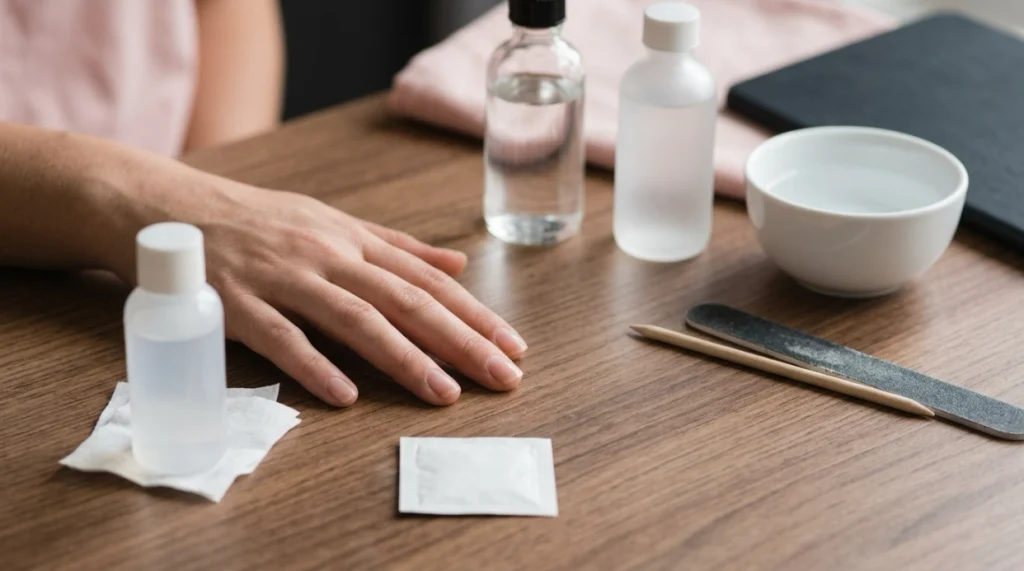
The best substitute depends on what you’re applying. Press-ons are usually more forgiving than acrylic, builder gel, or extensions that need maximum retention.
As of 2026, alcohol-based prep pads are still commonly included with press-on systems. That makes plain isopropyl alcohol the most sensible emergency substitute for many home manicures.
| Substitute | Oil Removal | Best For | Main Drawback |
|---|---|---|---|
| Isopropyl alcohol | Good | Press-ons, gel prep, regular polish | Lower-strength formulas contain more water |
| Alcohol prep pad | Good | Press-ons and adhesive tabs | Small pads may not clean heavy residue |
| Pure acetone | Strong | Oily nail plates and enhancement prep | More drying to nails and skin |
| Residue-free nail cleanser | Varies | Gel manicures | Some formulas contain additives |
| Soap and water | Mild | Initial cleaning only | Adds water and may leave residue |
For a quick press-on manicure, I’d choose a plain alcohol prep pad before reaching for complicated DIY mixtures. It’s simple, predictable, and less likely to leave something oily behind.
For acrylic or long-wear gel extensions, I prefer keeping a dedicated dehydrator in the routine. These systems tend to expose weak prep much faster.
Can I Use Rubbing Alcohol Instead of Nail Dehydrator?
Yes. Plain isopropyl alcohol is usually the best household alternative to nail dehydrator because it removes surface oils and evaporates quickly.
Commercial press-on kits often include alcohol-based prep pads for exactly this type of surface cleaning. OPI, for example, lists isopropyl alcohol and water in its press-on prep pads.
What strength rubbing alcohol should you use?
A higher isopropyl-alcohol concentration contains less water, so it generally evaporates faster. Use a plain formula without fragrance, aloe, lotion, or other conditioning ingredients.
You don’t need to flood the nail. A lightly dampened lint-free wipe is enough.
How to use alcohol for nail prep
- Wash your hands if they’re visibly dirty.
- Dry your hands and nails completely.
- Push back excess cuticle from the nail plate.
- Lightly buff only if your nail system requires it.
- Remove all filing dust.
- Wipe each nail with plain isopropyl alcohol.
- Allow the nails to air-dry completely.
- Avoid touching the nail surface afterward.
- Continue with primer, base coat, glue, or gel as directed.
That last step is easy to overlook. Touching your nail with a fingertip can put skin oil straight back onto the prepared surface.
If you need more guidance on avoiding unnecessary damage during artificial-nail wear, the American Academy of Dermatology’s artificial nail guidance is worth reading.
Can I Use Acetone as a Nail Dehydrator?
Pure acetone can work as a temporary nail dehydrator because it is an effective solvent and evaporates quickly. It can remove oils before many nail applications.
However, acetone can be drying. Keep it mainly on the nail plate rather than soaking the surrounding skin during prep.
Use pure acetone, not oily remover
Check the label before using nail polish remover as a substitute. Many removers contain conditioners, fragrance, oils, or other ingredients designed to reduce dryness.
Those additives may be useful during polish removal. They’re not necessarily what you want immediately before applying nail glue or gel.
When acetone makes the most sense
- Oily nail plates: It can cut through stubborn surface oils.
- After filing: A small amount can help remove fine residue when used with a lint-free wipe.
- Before some enhancements: It can provide temporary degreasing when a dedicated dehydrator isn’t available.
Acetone is also highly flammable, so keep it away from flames, heat, cigarettes, and ignition sources. Use nail solvents in a well-ventilated area.
The AAD’s gel manicure guidance also recommends rehydrating nails and cuticles between gel manicures because repeated manicure processes can leave nails dry or brittle.
Safety note: If your nail or surrounding skin becomes painful, swollen, blistered, or persistently irritated after using a nail product, stop using it and seek advice from a qualified medical professional or dermatologist.
What Should You Not Use Instead of Nail Dehydrator?
A good substitute should clean the nail and evaporate without leaving a film. Products that moisturize, fragrance, or coat the nail can work against that goal.
Hand sanitizer
Hand sanitizer may contain isopropyl alcohol or ethanol, but that’s only part of the formula. Many gels also contain humectants, moisturizers, thickeners, or fragrance.
Those ingredients can leave residue. Plain rubbing alcohol is a more predictable choice.
Cuticle oil
Cuticle oil does the opposite of nail dehydrator. It adds oil around the nail and can reduce adhesion if used immediately before application.
Save it for after your manicure is complete, unless your product manufacturer instructs otherwise.
Moisturizing nail polish remover
Removers containing added oils or conditioners aren’t ideal for final prep. If you use one to remove old polish, follow with a residue-free cleaning step.
Witch hazel
Witch hazel products vary widely. Many contain significant water, fragrance, or skin-conditioning ingredients.
Because the formula is unpredictable, I wouldn’t choose it over plain alcohol.
White vinegar or lemon juice
Acidic kitchen ingredients sometimes appear in DIY nail advice, but they aren’t necessary for routine professional-style nail prep. They also aren’t direct replacements for a formulated nail dehydrator.
Stick with a known, residue-free solvent instead of mixing homemade solutions.
How Do You Prep Nails Without Dehydrator?
Good nail prep involves more than wiping on one liquid. If your manicure keeps lifting, improving the entire prep routine can matter more than finding a perfect dehydrator substitute.
Step 1: Start with dry nails
Avoid soaking your hands immediately before applying enhancements. Water temporarily affects the nail surface and can make consistent adhesion harder.
If you wash your hands first, dry them thoroughly before moving on.
Step 2: Clear the nail plate
Gently push back the visible cuticle area. Remove only loose tissue from the nail plate rather than aggressively cutting living skin.
The goal is a clean application area, not an overworked cuticle line.
Step 3: Shape and buff only as needed
Follow the instructions for your nail system. Some products need slight surface roughness, while others require minimal buffing.
Aggressive filing can thin and weaken the natural nail. More filing doesn’t automatically create better retention.
Step 4: Remove every trace of dust
Use a clean, lint-free wipe or suitable nail brush. Dust trapped under gel, glue, or acrylic can interfere with a smooth bond.
Step 5: Degrease the nail
Wipe the nail with plain isopropyl alcohol or a small amount of pure acetone. Let the solvent evaporate fully.
Don’t touch the prepared nail afterward.
Step 6: Apply the next product correctly
Use primer if your system requires it. Then apply your base coat, extension gel, acrylic, or nail glue according to its directions.
- Press-ons: Clean, dry nails and alcohol prep may be enough for many systems.
- Regular polish: Removing oil can help the base coat grip more consistently.
- Gel polish: Careful prep becomes more important because oil around the cuticle can encourage lifting.
- Acrylic or extensions: Follow the manufacturer’s complete dehydrator and primer system whenever possible.
Section Takeaway: Clean, dry, oil-free nails matter more than complicated DIY prep mixtures. Keep the routine simple and follow the product system you’re applying.
When Is a Substitute Not Good Enough?
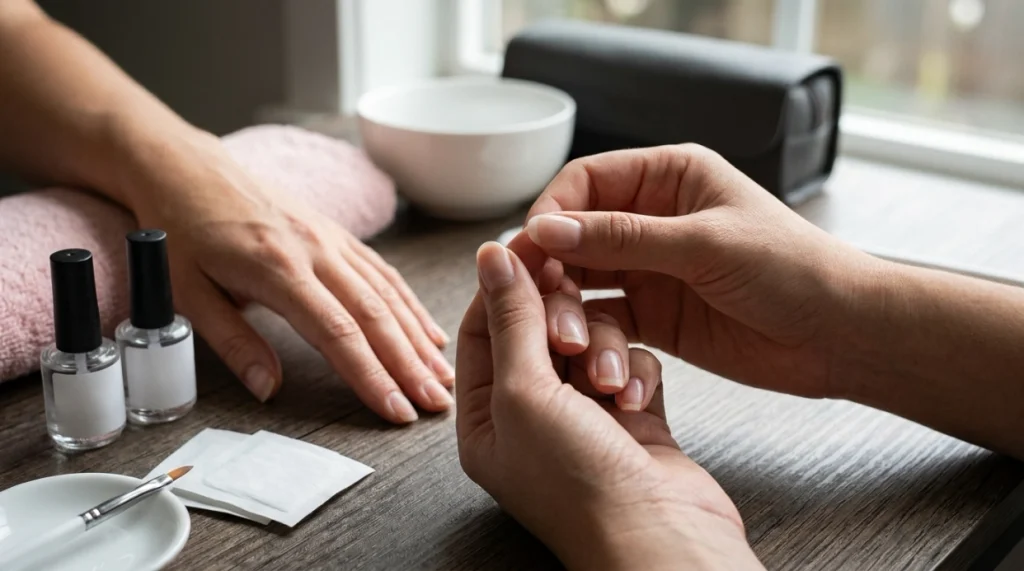
A temporary substitute can save one manicure, but it won’t solve every adhesion problem. Persistent lifting often means something else in the prep or application process needs attention.
Your enhancements repeatedly lift
If gel, acrylic, or extensions consistently lift within a few days, use the prep products recommended by the system manufacturer. Mixing unrelated products can make troubleshooting difficult.
You have naturally oily nails
Some people struggle with retention even after careful cleaning. A dedicated dehydrator followed by the correct primer may produce more consistent results than alcohol alone.
You’re doing professional client services
For salon work, improvising with household products is rarely the best long-term strategy. Consistent products and repeatable application steps make results easier to control.
Your nails or skin are already irritated
Don’t keep adding stronger solvents to painful, cracked, inflamed, or damaged skin. Nail cosmetics and artificial-nail chemicals can cause irritation or allergic reactions in some people.
The FDA advises consumers to follow product labels, use good ventilation, and pay attention to warning statements on nail products.
Safety note: Persistent redness, itching, swelling, separation of the nail, or skin reactions deserve medical attention rather than another round of DIY prep.
Frequently Asked Questions
Can I use 70% rubbing alcohol instead of nail dehydrator?
Yes, plain 70% isopropyl alcohol can clean surface oil from nails when that’s what you have available. Because it contains more water than higher concentrations, give the nail enough time to air-dry completely before applying glue, gel, or other products.
Can I use nail polish remover instead of dehydrator?
It depends on the formula. Pure acetone can work as a degreaser, but many nail polish removers contain oils, fragrance, or moisturizing ingredients. Those additives may leave residue, so check the ingredient list rather than assuming every remover works for prep.
Do I need nail dehydrator for press-on nails?
Not always. Many press-on systems use an alcohol prep pad to remove surface oil before application. Proper cleaning, complete drying, correct sizing, and avoiding the nail surface after prep can all improve adhesion even without a separate dehydrator bottle.
Can I use acetone before Gel-X or gel extensions?
Pure acetone can temporarily degrease the nail, but extension systems often perform best with their recommended prep products. If you’re experiencing repeated lifting, use the manufacturer’s dehydrator, primer, and adhesive steps instead of relying on acetone alone.
Is nail dehydrator the same as rubbing alcohol?
No. Nail dehydrators are formulated specifically for nail preparation and may contain different fast-evaporating solvents. Rubbing alcohol can perform part of the same job by removing surface oil, but the two products aren’t chemically identical or interchangeable in every nail system.
Can I skip dehydrator and just use primer?
You can only do that if your particular nail system says it’s acceptable. Dehydrator removes oil and moisture, while primer supports bonding. Because they perform different jobs, using primer over an oily nail doesn’t always correct incomplete preparation.
Final Takeaway
If you’ve run out of nail dehydrator, plain isopropyl alcohol is the best place to start. It’s simple, fast-drying, easy to find, and commonly used for nail-surface cleaning.
Pure acetone is another workable option, especially for an oily nail plate. Use it sparingly because it can dry the nails and nearby skin.
For press-ons, an alcohol prep pad may be all you need. For acrylics, Gel-X, builder gel, or other long-wear systems, the manufacturer’s dehydrator and primer combination is usually the safer choice for consistent retention.
Most importantly, don’t replace nail dehydrator with oily or moisturizing products. Your final prep step should leave the nail clean, dry, residue-free, and ready for adhesion.
