
What Causes Thick Toenails? Common Reasons and What to Do

A toenail that suddenly looks thicker, harder, yellower, or more difficult to trim can be frustrating—especially when you are not sure whether it is simply normal wear or something that needs treatment.
So, what causes thick toenails? There is no single answer. Toenails can become thicker because of aging, repeated pressure from shoes, previous injuries, fungal infections, psoriasis, or other nail changes.
The important thing is not to automatically assume that every thick nail is fungus. Several nail conditions can look surprisingly similar, and aggressive filing or cutting can make an already damaged nail worse.
Below, you will learn the most common causes of thick toenails, what different changes may mean, how to care for a thick nail safely, and when it is better to stop DIY nail care and get professional help.
Quick Answer
What causes thick toenails? Common causes include normal aging, toenail fungus, repeated pressure from tight shoes, previous toe injuries, and nail psoriasis. A thick nail that is also yellow, crumbly, painful, lifting, or rapidly changing deserves extra attention because the underlying cause may need professional diagnosis or treatment.
Why Do Toenails Become Thick?
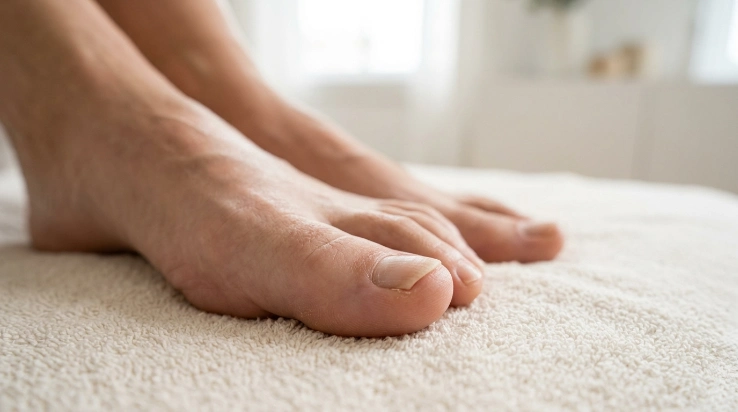
Your toenail is made from layers of keratin, the same type of protein found in your hair and skin.
When the way a nail grows changes, the nail plate can gradually become thicker, harder, uneven, or curved. Sometimes the change is mostly cosmetic. In other cases, thickening develops because the nail or surrounding tissue has been repeatedly injured or affected by a skin condition or infection.
The Mayo Clinic’s guide to thickened toenails lists aging, psoriasis, toe injury, tight-fitting shoes, and fungal infections among common reasons toenails become thick.
Looking at thickness alone usually is not enough to identify the cause. Pay attention to color, texture, pain, shape, buildup underneath the nail, and whether the nail is still firmly attached to the nail bed.
1. Normal Aging
Aging is one of the most straightforward reasons toenails gradually become thicker.
Toenails grow more slowly as people get older. With slower growth and years of repeated pressure, the nail plate may become harder and thicker than it was when you were younger.
Age-related thickening often:
- Develops gradually
- Affects more than one toenail
- Is not suddenly painful
- Does not cause major redness or swelling
- Makes trimming more difficult
Even when age is the likely reason, a nail that becomes unusually painful, discolored, distorted, or much thicker than neighboring nails should not simply be dismissed as aging.
2. Toenail Fungus
A fungal nail infection, also called onychomycosis, is another common cause of thick toenails.
Fungus can enter through tiny openings around or underneath the nail. Warm, damp environments can make fungal growth easier, which is one reason toenails are affected more frequently than fingernails.
According to the American Academy of Dermatology’s nail fungus guide, fungal nails may become thickened, discolored, brittle, crumbly, misshapen, lifted, or painful.
Possible signs include:
- Yellow, white, or brown discoloration
- Thickening that gets progressively worse
- Crumbly or ragged edges
- Debris underneath the nail
- Nail lifting away from the nail bed
- Changes affecting several toenails
- An unpleasant smell in some cases
Do not assume a yellow or thick nail automatically means fungus. Nail psoriasis and previous injuries can create similar changes.
A dermatologist may need to examine or test a nail sample before recommending antifungal treatment. Filing the surface thinner may make the nail easier to manage, but filing alone cannot eliminate fungus living within and underneath the nail.
3. Repeated Pressure From Shoes
Your shoes can affect your toenails more than you might expect.
A toe repeatedly pressing against the front or top of a shoe experiences small amounts of trauma over and over. Eventually, that pressure can change how the nail grows.
This is more likely if you regularly wear:
- Shoes with narrow toe boxes
- Shoes that are too short
- High heels that push the toes forward
- Tight athletic footwear
- Work shoes that repeatedly press against the toes
Running, hiking, dancing, and other activities involving repetitive toe impact may also contribute.
A practical clue is location. If the thickened nail is on a toe that constantly rubs against your shoe, pressure may be playing a role.
Check your footwear before trying to aggressively thin the nail. Giving your toes enough room may help prevent continuing trauma.
4. An Old Toenail Injury
You do not have to remember a dramatic accident for trauma to affect nail growth.
Dropping something on your toe, stubbing it badly, repetitive athletic impact, or damaging the nail during a pedicure can injure the area where the nail grows.
After an injury, the new nail may grow:
- Thicker
- Ridged
- Uneven
- Discolored
- Slightly curved
- Different from neighboring nails
Because toenails grow slowly, a change caused by an injury can remain visible for months.
If the nail keeps becoming more distorted, starts hurting, or develops signs that also resemble fungus, professional evaluation can help determine whether something else is happening.
5. Nail Psoriasis
Psoriasis is usually associated with patches of skin, but it can affect fingernails and toenails too.
The American Academy of Dermatology’s nail psoriasis guide explains that nail psoriasis can cause discoloration, crumbling, buildup under the nail, lifting, pitting, and nail thickening.
This matters because nail psoriasis can sometimes be mistaken for fungus.
Watch for combinations such as:
- Small dents or pits in the nail
- Yellow, white, or brown discoloration
- Crumbling
- Thick buildup beneath the nail
- Nail separation
- Other signs of psoriasis on the skin
Avoid scraping buildup from beneath the nail yourself. Doing so can loosen the nail further and increase the chance of irritation or infection.
How Can You Tell What Is Causing a Thick Toenail?
There is no reliable DIY visual test that identifies every cause.
Use the following differences only as clues—not a diagnosis.
| Toenail change | Possible explanation | What to consider |
|---|---|---|
| Slowly thickens with age | Normal aging | Usually gradual and not severely painful |
| Thick, yellow and crumbly | Possible fungal infection | Especially suspicious with debris or spreading changes |
| Thick nail after repeated shoe pressure | Trauma | Check footwear and activity patterns |
| One distorted nail after an injury | Previous nail damage | May grow differently for months |
| Thickening plus pits or buildup | Nail psoriasis | Dermatologist evaluation may help |
| Pain, swelling or redness | Injury or infection | Stop aggressive DIY care |
| Rapid unexplained change | Several possibilities | Professional evaluation is safest |
The appearance of the nail provides useful information, but similar-looking nails can have different causes.
That is particularly important before using antifungal products for months or trying to grind away a thick nail.
Can You File Down a Thick Toenail?
Sometimes—but gently.
A nail file can smooth sharp edges and reduce minor roughness after trimming. It should not be used to aggressively grind a severely thickened or suspicious nail until it becomes very thin.
For everyday grooming, consider:
- Emery board: inexpensive and easy to find, but usually disposable.
- Glass or crystal file: costs more upfront but can be reusable and easier to clean when designed for washing.
- Metal file: durable, but aggressive pressure can be uncomfortable on sensitive nails.
- Coarser file: removes material faster but requires more control.
- Finer file: removes less nail at a time and provides a smoother finish.
For an unusually thick toenail, control matters more than speed.
Never keep filing when you feel pain, heat, tenderness, or sensitivity. Those are signs to stop.
Expert Tip
Expert Tip: If you cannot comfortably tell where the thick nail ends and sensitive tissue begins, do not try to thin it aggressively. A podiatrist or dermatologist can evaluate the nail and, when appropriate, reduce excess thickness more safely.
How to Trim and File Thick Toenails Safely
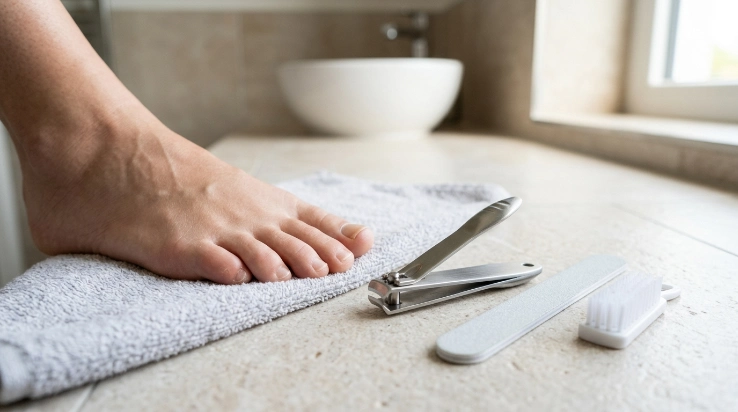
For a mildly thick nail that is painless and otherwise looks healthy, careful routine grooming may be reasonable.
The American Academy of Dermatology’s nail-trimming guidance recommends cutting toenails straight across and smoothing rough edges with a nail file.
Step 1: Use the Right Tool
Use a sturdy toenail clipper rather than a small fingernail clipper.
For thicker nails, look for:
- Sharp, well-aligned blades
- Enough jaw opening for the nail
- A secure handle
- Stainless steel or another easy-to-clean material
A dull clipper may crush or split the nail instead of making a controlled cut.
Step 2: Clean Your Tools
Clean reusable grooming tools before and after use and allow them to dry completely.
Do not share nail clippers, files, or other pedicure tools when an infection may be present.
Porous disposable files should not be passed between people.
Step 3: Make Small Cuts
Do not try to remove a thick toenail in one giant clip.
Small, controlled cuts give you better visibility and reduce the amount of force needed.
Trim generally straight across rather than digging deeply into the corners.
Step 4: Smooth the Edge
After clipping, lightly file sharp or rough areas.
You are trying to remove snags—not grind deeply into the nail plate.
If the nail is extremely hard, curved, painful, or difficult to reach safely, professional trimming may be the better choice.
Hygiene Matters With Thick Toenails
Good hygiene is especially important when fungal infection is possible.
Keep feet clean and dry, change damp socks, choose shoes that fit comfortably, and avoid sharing nail-care tools.
If one file has been used on a nail that may have an infection, do not casually use that same uncleaned tool on healthy nails.
Reusable files should only be reused according to their cleaning instructions. Disposable porous files are usually better replaced once contaminated or significantly worn.
Also avoid covering a suspicious nail repeatedly with artificial enhancements just to hide its appearance. Cosmetics may camouflage the change while making it harder to monitor what the natural nail is doing.
Common Mistakes to Avoid
When a toenail becomes thick, the temptation is often to cut, scrape, or file harder. That can create additional problems.
Avoid these common mistakes:
- Assuming every thick yellow nail is fungus. Other conditions can look similar.
- Cutting too deeply into the corners. This may irritate surrounding skin or contribute to ingrown-nail problems.
- Peeling or tearing away loose nail. You can injure attached tissue.
- Aggressively scraping buildup from underneath. This can loosen the nail or damage skin.
- Using excessive filing pressure. Stop if the nail becomes hot, painful, or sensitive.
- Sharing nail tools. Contaminated tools can spread fungal infections.
- Using dull clippers. They may crush rather than cleanly cut a thick nail.
- Ignoring persistent pain or swelling. Cosmetic grooming is not a substitute for medical evaluation.
- Trying to hide a worsening nail indefinitely with polish. Periodically examine the bare nail so you can notice changes.
DIY Care vs. Professional Care
Routine DIY grooming works best when the nail is only mildly thick and you can trim it comfortably without pain.
A professional may be a better choice when:
- The nail is extremely thick
- The nail curls or grows irregularly
- You cannot reach your feet safely
- Cutting requires excessive force
- The surrounding skin is tender
- The cause is unclear
- You suspect an infection
A nail technician can help with cosmetic grooming of otherwise healthy nails, but should not be expected to diagnose or medically treat fungus, psoriasis, or another health condition.
For medically suspicious nails, a dermatologist or podiatrist is more appropriate.
Professional care costs more than a basic home clipper and file, but trying to save money by aggressively cutting a painful or abnormal nail can create a much bigger problem.
When to See a Nail Technician or Dermatologist
Consider a trained nail technician when your toenails are basically healthy but you want careful cosmetic shaping, filing, or pedicure maintenance.
Choose a dermatologist, podiatrist, or other qualified healthcare professional when the change appears medical.
Seek professional advice if you notice:
- Increasing nail thickness
- Persistent yellow, brown, white, green, or dark discoloration
- Crumbling or significant splitting
- Nail lifting from the nail bed
- Redness or swelling around the nail
- Bleeding
- Drainage
- Significant pain
- Difficulty walking or wearing shoes
- Several nails becoming abnormal
- A change that continues despite basic nail care
If you have diabetes, poor sensation in your feet, circulation problems, or difficulty seeing or reaching your toenails, be particularly cautious about cutting difficult nails yourself.
Do not rely on a salon to diagnose a suspicious nail.
How to Help Prevent Toenails From Getting Thicker From Trauma
Not every cause of nail thickening can be prevented, but reducing unnecessary trauma can help protect healthy nail growth.
Try these habits:
- Wear properly fitting shoes. Your toes should not constantly strike the front of the shoe.
- Keep toenails at a manageable length. Very long nails receive more pressure from footwear.
- Trim straight across.
- File sharp edges gently.
- Keep feet clean and dry.
- Wear protective footwear in public showers and locker rooms.
- Do not share clippers or files.
- Replace worn or difficult-to-clean disposable tools.
- Pay attention to changes instead of hiding them immediately.
Healthy nail care is mostly about consistency rather than aggressive treatments.
FAQs
Are thick toenails always caused by fungus?
No. Toenail fungus is a common cause, but thick toenails can also develop because of aging, repeated pressure, an old injury, psoriasis, or other nail problems. If you are unsure, professional evaluation is more reliable than diagnosing the nail by appearance alone.
Why is only my big toenail thick?
The big toenail often receives more pressure and impact from shoes and physical activity. Previous injuries can also change how one nail grows. However, fungus and other conditions can affect a single nail too, so watch for discoloration, crumbling, lifting, or worsening changes.
Can I file a thick toenail thinner?
You can gently smooth and reduce minor roughness, but aggressive thinning is not a good DIY approach. Stop if you experience pain, warmth, tenderness, or sensitivity. Extremely thick nails may require professional reduction.
Can thick toenails become normal again?
It depends on the cause. A nail affected by temporary trauma may eventually grow out more normally, while fungal infection or psoriasis may require treatment. Age-related changes may persist. Because toenails grow slowly, visible improvement can take many months.
Why are my toenails thick and yellow?
Fungal infection is one possible reason, but psoriasis, previous trauma, aging, and other nail changes can also produce discoloration and thickening. Yellow color alone does not confirm fungus.
Should I go to a nail salon for thick toenails?
A nail technician may help groom a healthy but difficult-to-trim nail. However, nails that are painful, swollen, bleeding, badly discolored, crumbling, lifting, or possibly infected should be evaluated by a medical professional instead.
What nail file is best for thick toenails?
A sturdy file that allows slow, controlled material removal is usually easier to manage than an overly fine file, but extremely coarse files can remove nail quickly and require caution. Choose a clean tool, use light pressure, and finish rough edges gently rather than aggressively grinding the entire nail.
Conclusion
So, what causes thick toenails? Aging, fungal infections, repeated shoe pressure, old injuries, and nail psoriasis are among the most common possibilities.
The appearance of a thick nail can offer clues, but it cannot always tell you the exact cause.
For a mildly thick, painless nail, good footwear, proper hygiene, careful straight-across trimming, and gentle filing may be enough for routine maintenance. If the nail becomes painful, crumbly, discolored, lifted, inflamed, or increasingly difficult to manage, stop treating it as a simple cosmetic issue.
Pay attention to what your toenail is telling you, use your tools gently, and get professional help when the cause or safest treatment is unclear.

