
What Causes Unhealthy Toenails? Common Causes, Warning Signs, and Care Tips

Toenails can change slowly, so it is easy to miss a problem until a nail becomes yellow, thick, brittle, ridged, or uncomfortable. You may notice the change while removing polish, filing an uneven edge, or getting ready for a pedicure and wonder whether you are dealing with simple cosmetic damage or something more important.
So, what causes unhealthy toenails? Common causes include fungal infections, repeated pressure from shoes, injuries, aggressive filing or trimming, moisture, skin conditions, aging, and certain health problems.
The appearance of a toenail cannot always tell you the exact cause. Some conditions look surprisingly similar. This guide explains the most common causes, what signs deserve attention, how to care for your toenails safely at home, and when professional help is the smarter choice.
Quick Answer
What causes unhealthy toenails? Common causes include fungal infections, repeated shoe pressure, nail injuries, excessive moisture, aggressive filing or trimming, psoriasis, aging, and some medical conditions. Yellowing, thickening, crumbling, lifting, pain, swelling, or sudden color changes deserve attention, especially when symptoms continue or become worse.
What Do Unhealthy Toenails Look Like?
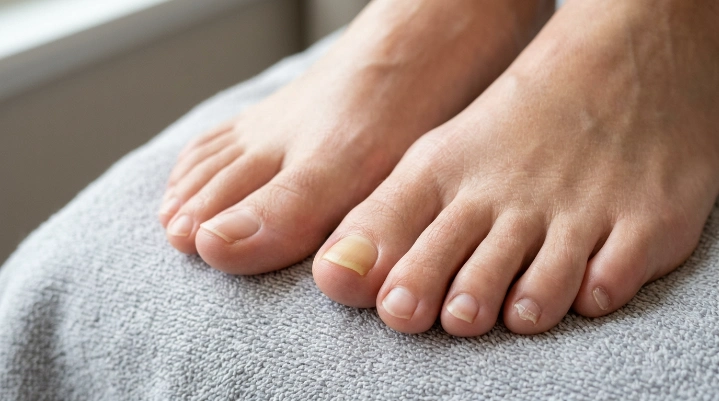
A healthy toenail is generally attached firmly to the nail bed, comfortable, and relatively smooth. Natural variations in color, thickness, and shape are normal.
Possible warning signs include:
- Yellow, white, brown, green, or unusually dark discoloration
- Thickening
- Cracking or splitting
- Brittle or crumbly edges
- Deep ridges or unusual grooves
- Nail lifting away from the skin underneath
- A nail becoming distorted or misshapen
- Redness or swelling around the nail
- Persistent tenderness or pain
- An unpleasant odor
- Bleeding or drainage around the nail
According to the American Academy of Dermatology’s guide to nail changes, changes in nail color, shape, attachment, or surrounding skin can sometimes require evaluation by a dermatologist.
One unusual-looking toenail does not automatically mean you have a disease. Your recent shoes, pedicure habits, sports activities, polish use, and injuries all matter.
What Causes Unhealthy Toenails?
1. Fungal Nail Infections
Fungal nail infection, also called onychomycosis, is one of the best-known reasons toenails become unhealthy-looking.
Fungi prefer warm, moist environments. Toenails can therefore be vulnerable when feet remain sweaty for long periods or when you frequently walk barefoot in shared damp areas.
According to the American Academy of Dermatology’s nail fungus symptom guide, an infected nail may become discolored, brittle, thickened, crumbly, misshapen, or partially separated from the nail bed.
Possible signs include:
- Yellow, brown, or whitish areas
- Thickened nail material
- Flaky or crumbly edges
- Debris beneath the nail
- Lifting
- Gradual distortion of the nail
Do not assume every yellow or thick toenail is fungal. Nail injury, psoriasis, and other problems can create similar changes.
2. Repeated Pressure From Shoes
A beautiful pair of shoes can still be rough on your toenails.
Shoes with a narrow toe box can repeatedly press the nail against the shoe. Running, hiking, dancing, or spending long hours on your feet can create even more pressure.
Over time, you may notice:
- Thickening
- Bruising
- Dark discoloration
- Tenderness
- Nail lifting
- A toenail eventually falling off after significant trauma
The big toenail and second toenail are especially likely to experience repeated friction.
Make sure you have enough room to move your toes comfortably. Your shoes should not constantly push the tips of your toes backward.
3. Toenail Injuries
Dropping something on your toe or hitting it against furniture can damage both the visible nail plate and the tissue beneath it.
A mild injury may cause a small white mark or temporary ridge. More significant trauma can result in bruising, bleeding beneath the nail, lifting, or abnormal growth.
Toenails grow slowly, so visible damage can remain for months.
The Mayo Clinic’s information about nail fungus and other nail changes also notes that injuries and other nail conditions can sometimes resemble infection.
If an injured toe becomes severely painful, swollen, increasingly red, or difficult to walk on, do not keep filing or covering it with polish. Get appropriate medical advice.
4. Aggressive Filing or Buffing
Nail files are useful, but more filing is not always better.
Using a file that is too coarse, filing aggressively across the surface, or repeatedly thinning the nail can make the nail plate weaker.
You may create:
- Thin or sensitive areas
- Rough edges
- Peeling
- Splitting
- Surface scratches
- Tenderness from excessive thinning
For ordinary natural toenails, use a reasonably fine file and light pressure. Concentrate on smoothing the free edge rather than grinding down the entire nail surface.
Stop filing if the nail feels warm, painful, or unusually thin.
Metal files and very coarse abrasives can remove material quickly, but speed is not an advantage if you lose control.
5. Incorrect Toenail Trimming
Cutting toenails extremely short may seem neat, but it can create problems.
A safer basic approach is to trim toenails mostly straight across instead of dramatically rounding the corners. Digging down into the sides can irritate the surrounding tissue and contribute to ingrown-nail problems.
Also avoid:
- Ripping off broken corners
- Cutting into living skin
- Digging beneath the nail with sharp tools
- Cutting painful or swollen nail edges aggressively
If a nail is very thick, shortening it in small stages can provide more control than forcing clippers through the entire nail at once.
6. Too Much Moisture Around the Feet
Fungi thrive in warm, damp environments, and constantly sweaty feet can make the area around the toenails less healthy.
Risk may increase when you regularly:
- Wear damp socks
- Spend hours in sweaty footwear
- Rewear shoes before they dry
- Walk barefoot in shared showers or locker rooms
- Leave feet wet for long periods
The AAD’s nail fungus prevention recommendations include keeping nails short, avoiding shared grooming tools, wearing footwear in damp communal spaces, and addressing moisture inside shoes.
Change damp socks when needed and give frequently worn shoes time to dry.
Other Possible Causes of Unhealthy Toenails
Psoriasis and Other Skin Conditions
Psoriasis can affect the nails as well as the skin.
Nail psoriasis may produce pitting, thickening, discoloration, crumbling, or separation from the nail bed. These signs can sometimes resemble fungal disease.
That is one reason self-diagnosing a toenail problem from appearance alone can be unreliable.
Aging
Toenails commonly change with age. They may grow more slowly and become thicker, harder, or more difficult to trim.
A change that develops gradually over many years is different from a nail that suddenly becomes painful, black, swollen, or detached.
Do not automatically dismiss every nail change as aging, especially if only one nail changes dramatically.
Medical Conditions and Medications
Some illnesses and medications can affect nail appearance or growth. Circulation problems and certain systemic conditions can also influence foot and nail health.
This does not mean a strange-looking toenail automatically signals a serious disease.
It means persistent or unexplained changes deserve medical evaluation rather than endless DIY treatments.
How to Tell Cosmetic Nail Damage From a Possible Health Problem
| Nail Change | Possible Explanation | Safer Next Step |
|---|---|---|
| Slightly rough free edge | Normal wear or minor filing damage | Smooth gently with a fine file |
| Yellow or thickening nail | Fungus, injury, polish staining, or other causes | Watch progression and consider medical evaluation |
| Dark mark after obvious impact | Bruising | Monitor as it grows out |
| New dark streak without a clear injury | Multiple possible causes | See a dermatologist |
| Nail lifting | Trauma, fungus, psoriasis, or irritation | Avoid digging underneath it; seek advice if persistent |
| Red, swollen, painful skin | Irritation, ingrown nail, or infection | Stop DIY treatment and seek professional guidance |
| Thick nail that is difficult to cut | Aging, trauma, fungus, or other nail changes | Consider professional trimming/evaluation |
| Pus, drainage, or spreading redness | Possible infection | Seek medical care promptly |
A Simple Routine for Healthier-Looking Toenails
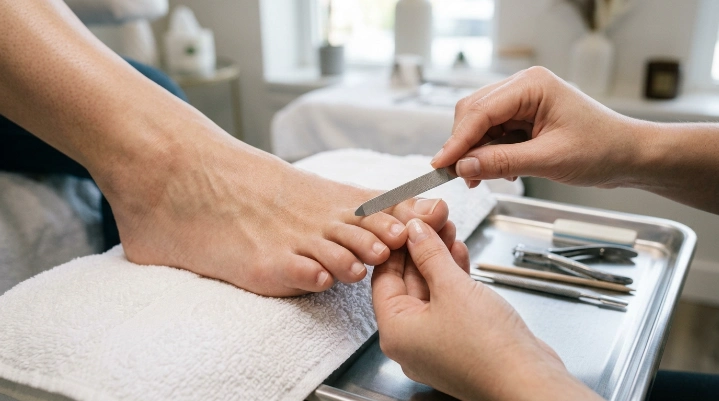
For nails without significant pain, infection, injury, or unexplained changes, gentle maintenance is usually better than aggressive treatment.
Step 1: Wash and Dry Your Feet
Clean your feet normally and dry carefully, including between your toes.
You do not need to soak your feet for a long time before every nail-care session. Excessive moisture can soften skin and make it easier to accidentally cut too deeply.
Step 2: Trim Carefully
Use clean toenail clippers.
Trim mostly straight across and avoid cutting the nail extremely short.
If the nail is thick, take smaller clips instead of trying to cut the entire width in one motion.
Step 3: File Rough Edges Gently
Use a clean, appropriate file to smooth sharp corners and rough edges.
A fine or medium-fine file gives most beginners better control than an extremely coarse file.
Do not repeatedly file the nail surface simply because it looks thick.
Step 4: Moisturize Dry Skin
Apply a gentle moisturizer to dry skin around the feet and nails.
Avoid forcing creams, oils, or tools underneath a nail that has already lifted.
Step 5: Keep Tools Clean
Personal nail tools should be kept clean and dry.
Do not casually share:
- Nail clippers
- Files
- Cuticle tools
- Pedicure implements
If you are using inexpensive disposable emery boards, replacing them is often more practical than trying to disinfect a worn, porous file.
Step 6: Watch Changes Over Time
Toenails grow slowly.
A quick photo every few weeks can make it easier to tell whether discoloration or damage is growing outward with the nail or spreading into new areas.
Expert Tip: When a toenail suddenly changes, take a clear photo before filing, trimming, or applying polish. Comparing photos later can help you see whether the problem is growing out, staying stable, or becoming worse.
Can a Nail File Fix an Unhealthy Toenail?
A nail file can improve shape and comfort, but it cannot correct every cause of an unhealthy toenail.
Gentle filing can help with:
- Rough free edges
- Minor snags
- Mild surface unevenness
- Keeping an already-thick nail more manageable when a professional has said home filing is appropriate
A nail file cannot cure:
- Fungal infection
- Bacterial infection
- Psoriasis
- Significant trauma
- An unexplained dark streak
- Problems involving the tissue beneath the nail
Trying to file away discoloration can remove healthy nail material without treating the underlying problem.
Nail File Types, Cost, and Safety Considerations
You do not need an expensive professional kit for basic toenail care.
Emery Boards
Typical cost: Low
They are convenient, inexpensive, and easy to replace. Because many are porous, they are best treated as personal or disposable tools.
Glass Files
Typical cost: Low to moderate
Glass files can provide smooth, controlled shaping. A quality file may last a long time when handled and cleaned correctly.
Metal Files
Typical cost: Low to moderate
They are durable but can feel aggressive on thin or fragile nails. Beginners should use light pressure.
Electric Nail Files
Typical cost: Moderate to high
Electric files remove nail material quickly. That also means mistakes happen quickly.
For thick, damaged, painful, or possibly infected toenails, an electric file is not automatically a better DIY solution. Professional guidance may be safer.
Common Mistakes to Avoid
- Filing until discoloration disappears. Color changes may extend deeper than the surface.
- Using the same file on a suspicious nail and healthy nails. This may spread contaminants.
- Sharing nail tools. Keep personal grooming tools personal.
- Cutting nails extremely short. This can irritate the skin and contribute to painful edges.
- Digging beneath a lifted nail. You can damage sensitive tissue underneath.
- Covering every unusual change with polish. Cosmetic camouflage can make it harder to monitor progression.
- Assuming every thick nail is fungus. Several conditions can look similar.
- Ignoring persistent pain or swelling. Toenail care should not routinely hurt.
- Using aggressive salon or DIY filing on fragile nails. Over-filing can make a cosmetic problem worse.
- Expecting an unhealthy toenail to look normal immediately. Healthy new nail must grow forward gradually.
DIY Care vs. Professional Help
Basic trimming and filing are inexpensive and convenient when your toenails are otherwise healthy.
A salon pedicure can help with appearance and routine grooming, but nail technicians are not a substitute for medical diagnosis.
A nail technician may help you shape normal nails and may notice that something looks unusual. However, suspected fungus, unexplained discoloration, infection, severe pain, or persistent nail separation should be evaluated by an appropriate healthcare professional.
A dermatologist diagnoses diseases involving the nails and skin. Depending on the problem, a podiatrist or another medical professional may also be appropriate.
When to See a Nail Technician or Dermatologist
Consider a qualified nail technician for ordinary cosmetic maintenance when the nail and surrounding skin are healthy.
Consider seeing a dermatologist or another appropriate healthcare professional when you notice:
- A new or changing dark streak
- Significant nail lifting
- Increasing thickening or distortion
- Persistent yellow, brown, white, green, or black discoloration
- Pain, swelling, warmth, or bleeding
- Drainage or pus
- A nail that repeatedly breaks down despite gentle care
- Difficulty walking because of the nail
- Changes that continue spreading to other nails
- A suspected fungal infection that does not improve
People with diabetes, poor circulation, weakened immunity, or other conditions affecting foot healing should be especially cautious about cutting, filing, or treating abnormal toenails without professional advice.
FAQs
What is the most common cause of unhealthy toenails?
There is no single cause for every person, but fungal infection, repeated trauma, shoe pressure, and grooming damage are common possibilities. Thickening or yellowing should not automatically be assumed to be fungus.
Why are my toenails yellow but not painful?
Yellowing may happen from nail polish staining, fungus, repeated trauma, aging, or other causes. If it persists, spreads, or comes with thickening, crumbling, or lifting, consider having the nail evaluated.
Can unhealthy toenails become healthy again?
Often, yes, depending on the cause. However, toenails grow slowly. Even after the underlying problem improves, damaged nail may need many months to grow out.
Should I file down a thick toenail?
Light filing may make some thick nails easier to manage, but aggressive thinning can injure the nail. If the thickening is significant, painful, or unexplained, find out why the nail is thick before repeatedly filing it.
Can nail polish cause unhealthy toenails?
Polish may temporarily stain nails, while repeated manicures, harsh removal, or aggressive preparation can contribute to dryness or surface damage. Persistent thickening, pain, crumbling, or lifting should not simply be blamed on polish.
Can a pedicure fix an unhealthy toenail?
A pedicure can improve the appearance of otherwise healthy toenails, but it cannot diagnose or cure fungal infections, psoriasis, or other medical nail conditions. Avoid cosmetic services on painful, swollen, bleeding, or obviously infected areas until they have been evaluated.
How long does a damaged toenail take to grow out?
Toenails grow much more slowly than fingernails. Major damage can remain visible for many months, and complete replacement of a toenail may take roughly a year or longer depending on the toe and individual growth rate.
Conclusion
So, what causes unhealthy toenails? The answer ranges from ordinary shoe pressure and filing mistakes to fungal infections, injuries, skin conditions, aging, and other health-related changes.
Start with gentle care: keep feet clean and dry, trim carefully, file only as much as necessary, use clean tools, wear properly fitting shoes, and pay attention to changes instead of hiding them immediately.
Most importantly, remember that DIY nail care has limits. A nail technician can help with normal grooming, but persistent discoloration, thickening, lifting, pain, swelling, drainage, or unexplained dark changes deserve medical attention.
Use your next pedicure as an opportunity to inspect your toenails as well as beautify them. Catching unusual changes early is one of the simplest ways to make smarter, safer nail-care decisions.

