
What Causes Weak Toenails? Common Reasons and How to Care for Them

Weak toenails can be frustrating. You may notice that the edges split when you trim them, layers peel away after a pedicure, or a nail cracks every time it grows past a certain point.
So, what causes weak toenails? Sometimes the reason is as simple as repeated shoe pressure, dryness, or aggressive filing. In other cases, brittle or crumbling toenails can be connected with fungal infection, an old injury, aging, or an underlying health condition.
The important part is figuring out whether your nail simply needs gentler everyday care or whether the change deserves professional attention. Below, you will learn the most common causes of weak toenails, how nail files can help or hurt, which tools are safest, and when DIY care is no longer the best choice.
Quick Answer
Weak toenails can be caused by dryness, repeated pressure or injury, aggressive filing, frequent polish or product removal, aging, fungal infections, and some skin or health conditions. Gentle trimming, careful filing, moisturizing, roomy shoes, and good hygiene may help, but persistent discoloration, crumbling, pain, or nail separation should be professionally evaluated.
What Does a Weak Toenail Look Like?
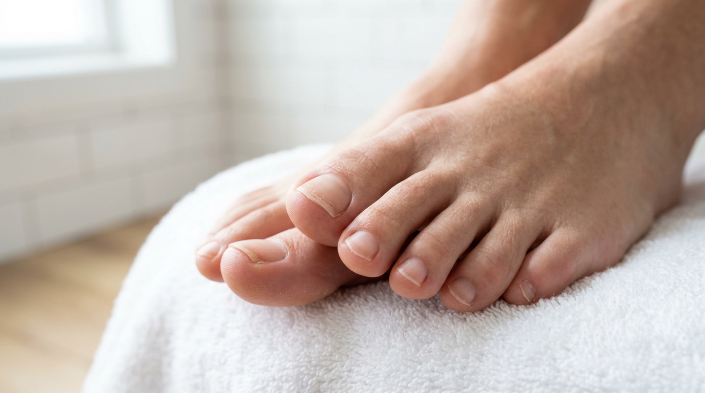
A weak toenail does not always look the same from person to person.
You might notice:
- Peeling layers at the edge
- Small cracks or splits
- A nail that bends more easily than usual
- Rough or ragged edges
- Frequent breakage
- Crumbling around the corners
- Thinning after repeated filing
- A nail that catches on socks
- Changes in color or texture
A single small split after bumping your toe is usually different from a nail that keeps breaking for no clear reason.
Pay attention to whether one toenail or several toenails are affected. Also look for pain, thickening, discoloration, lifting, redness, or swelling. Those extra clues may point to something beyond ordinary dryness or grooming damage.
What Causes Weak Toenails?
There is no single cause of weak toenails. Several everyday habits and nail conditions can make the nail plate—the hard keratin surface you see—more likely to split or crumble.
1. Dryness and Loss of Flexibility
Toenails are hard, but they still need enough moisture to stay reasonably flexible.
Very dry nails may become easier to crack or split. Repeated exposure to drying products, polish removers, or environmental conditions can make brittleness more noticeable.
The American Academy of Dermatology recommends moisturizing nails and surrounding skin because dry nails tend to split more easily. Petroleum jelly or a simple moisturizing cream can be useful between pedicures. American Academy of Dermatology nail-care guidance
For everyday care, apply a small amount of moisturizer to the toenails and surrounding skin after bathing, once your feet are clean.
Do not apply heavy moisturizer between the toes if that area tends to stay damp. Keeping the spaces between the toes dry helps reduce the moist environment in which fungal problems can thrive.
2. Repeated Shoe Pressure
Your toenails experience more pressure than your fingernails.
Tight shoes, narrow toe boxes, high heels, running shoes that do not fit correctly, and repeated impact during sports can all put stress on the nail.
Over time, that repeated trauma may make a toenail:
- Split
- Develop rough edges
- Become thicker
- Loosen
- Grow irregularly
- Feel tender
If your longest toe repeatedly touches the front of your shoe, changing your footwear may help more than buying another nail treatment.
Choose shoes that give your toes enough room to move without constantly rubbing against the upper or front of the shoe.
3. Aggressive Nail Filing
A nail file can make weak toenails easier to manage, but it can also make them weaker when used too aggressively.
Problems are more likely when you:
- Use an extremely coarse file on a thin natural nail
- Press hard while filing
- Keep filing until the nail becomes very thin
- Buff the entire nail surface repeatedly
- Use an electric nail drill without good control
- Continue after the nail feels hot, tender, or sensitive
For fragile natural toenails, think of your file as a smoothing tool, not a tool for grinding away large amounts of nail.
The American Academy of Dermatology recommends smoothing rough nail edges with a file or emery board and moving the file in the same direction rather than repeatedly sawing backward and forward. AAD guidance on trimming and filing nails
4. Nail Polish, Gel, Acrylic, and Removal Damage
Pedicures can make your toenails look polished and neat, but repeated cosmetic treatments may temporarily leave natural nails feeling thinner or drier.
The biggest problems often happen during preparation and removal.
Heavy buffing can remove part of the natural nail surface. Aggressive scraping or filing during removal can do the same.
Acetone-based removal may also leave nails feeling dry afterward.
The American Academy of Dermatology notes that artificial-nail preparation and removal can thin and weaken natural nails when the surface is heavily filed. AAD advice for reducing artificial-nail damage
If your toenails feel noticeably weak after repeated gel or artificial nail services, consider taking a break and keeping your next pedicure simple while the damaged area grows out.
5. Fungal Nail Infection
A weak or crumbly toenail is not automatically fungal, but fungus is one possible cause—especially when brittleness comes with other changes.
According to the Mayo Clinic, fungal nail infections can cause toenails to become thickened, discolored, brittle, crumbly, ragged, misshapen, or separated from the nail bed. Mayo Clinic nail fungus symptoms and causes
Watch for:
- Yellow, brown, or whitish discoloration
- Increasing thickness
- Crumbling underneath or around the edge
- Nail lifting
- Misshapen growth
- Several nails developing similar changes
Do not aggressively grind down a suspicious nail just because it looks thick or rough.
A file can improve a jagged edge, but it cannot diagnose or cure an infection.
6. An Old Nail Injury
Toenails grow slowly, so damage from an injury can remain visible for months.
You may have dropped something on your toe, stubbed it, worn shoes that repeatedly hit the nail, or injured it during exercise without thinking much about it at the time.
Later, the nail may grow:
- Ridged
- Uneven
- Split
- Thickened
- Loose
- Weaker than neighboring nails
If the damaged portion is gradually moving toward the end as the nail grows, gentle maintenance may be enough.
If the nail continues changing without improvement, however, get it checked.
7. Aging
Toenails naturally change with age.
They may grow more slowly, become thicker, or break more easily. The NHS lists increased brittleness and thickness among common age-related nail changes. NHS guide to common nail problems
Age-related changes do not mean you should aggressively file the nail thinner.
Instead, adjust your tools and technique. A thicker toenail may need a sturdier clipper or file, while a brittle nail may benefit from a finer filing surface and lighter pressure.
8. Skin or Health Conditions
Sometimes persistent nail weakness is connected with something that cannot be fixed through pedicure habits alone.
The NHS notes that nail changes can sometimes occur with conditions such as psoriasis, iron-deficiency anemia, thyroid disorders, and diabetes.
That does not mean every brittle toenail indicates a medical condition.
However, unexplained changes affecting several nails—or changes accompanied by other symptoms—are worth discussing with a healthcare professional instead of trying increasingly aggressive DIY treatments.
Which Nail File Is Best for Weak Toenails?
Choosing a gentler file can make a noticeable difference.
| Nail File Type | Best Use | Typical Cost | Main Benefit | Main Caution |
|---|---|---|---|---|
| Fine emery board | Basic edge smoothing | $1–$5 | Affordable and beginner-friendly | Difficult to disinfect thoroughly |
| Glass/crystal file | Fragile natural nails | $5–$15 | Smooth, precise filing | Can break if dropped |
| Fine metal file | Firmer toenail edges | $3–$10 | Durable and washable | May feel aggressive on thin nails |
| Buffer block | Very light surface smoothing | $3–$10 | Easy to control | Over-buffing can thin the nail |
| Electric nail file | Specialized material removal | $20+ | Fast | Easy to over-file or create heat |
Prices vary by brand, material, and quality.
For most weak natural toenails, a fine glass file or fine emery board gives a beginner better control than an extremely coarse file.
You do not need the most expensive file. You need one that lets you smooth the nail without removing too much material.
How to File Weak Toenails Safely
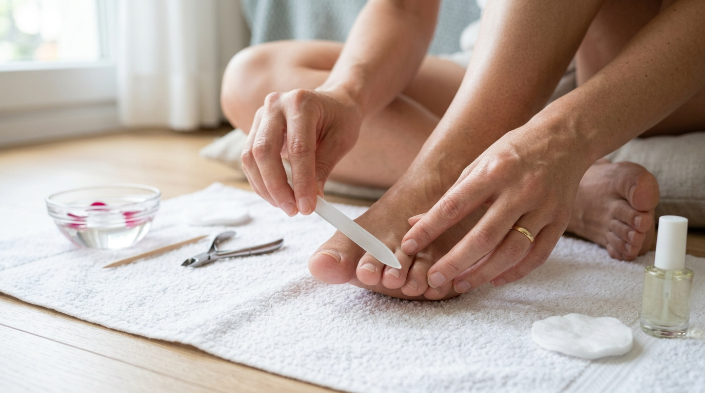
If the nail is not infected, severely damaged, painful, bleeding, or lifting, gentle filing can keep small cracks from catching and spreading.
1. Inspect the Toenail First
Before filing, look for redness, swelling, drainage, significant discoloration, bleeding, severe crumbling, or nail lifting.
If the nail looks medically abnormal, filing should not be your first priority.
2. Use a Clean Tool
Do not share personal nail files.
Reusable glass or metal files should be cleaned according to the material and manufacturer instructions. Disposable emery boards should be replaced once they become dirty, damaged, or heavily worn.
Clean tools matter even more when one nail may have a fungal infection.
3. Focus on the Free Edge
The free edge is the part extending beyond the skin.
That is usually where a weak toenail needs the most help.
Use light, controlled strokes to smooth:
- Sharp corners
- Small snags
- Uneven clipping marks
- Rough edges
Avoid grinding the entire top surface just because it has natural ridges.
4. File Conservatively
Remove only enough nail to stop the rough edge from catching.
Pain, heat, burning, or tenderness means stop immediately.
More filing does not automatically create a healthier-looking nail. Once a natural toenail becomes overly thin, you cannot instantly replace the material you removed. You have to wait for new nail to grow.
5. Moisturize Afterward
After trimming or filing, apply a small amount of moisturizer to the nail plate and surrounding skin.
This is particularly helpful when your toenails tend to feel dry after polish removal.
Expert Tip: After filing, gently move a cotton pad or soft tissue across the nail edge. If fibers catch on one tiny area, file only that spot instead of continuing to thin the whole nail.
A Simple Routine for Stronger-Looking Toenails
You cannot transform damaged nail overnight, but you can protect new growth.
Try this routine:
- Wear shoes that fit correctly. Make sure your toes are not hitting the front.
- Trim conservatively. Cut toenails mostly straight across rather than digging into the sides.
- Smooth rough edges gently. Use a fine file with light pressure.
- Keep feet clean and dry. Dry carefully after bathing or exercise.
- Moisturize dry nails. Apply cream or petroleum jelly to the nail and surrounding skin.
- Take breaks from aggressive cosmetic treatments. Give damaged natural nails time to grow.
- Watch for changes. Discoloration, lifting, pain, swelling, or increasing thickness deserve attention.
Toenails grow slowly, so visible improvement requires patience. Focus on protecting the new nail instead of trying to make today’s damaged section look perfect.
Do Supplements Help Weak Toenails?
Biotin is frequently marketed for stronger nails, but it should not automatically be your first solution.
The National Institutes of Health Office of Dietary Supplements says biotin deficiency is rare in the United States and that there is limited scientific evidence supporting biotin supplements for improving hair, skin, or nails in people who already get enough biotin. High-dose biotin can also interfere with certain laboratory tests. NIH biotin fact sheet for consumers
A balanced diet is a sensible foundation.
If you suspect a nutritional deficiency or are considering a high-dose supplement, talk with your healthcare provider rather than guessing based on the appearance of your toenails.
DIY Care vs. Professional Help
| Situation | DIY Nail Care May Be Reasonable | Professional Care Is Smarter |
|---|---|---|
| Small rough edge | Yes | Usually unnecessary |
| Mild dryness | Yes | If it persists or worsens |
| Nail damaged by recent polish removal | Often | If painful or severely thinned |
| Repeated splitting | Gentle care first | If persistent or unexplained |
| Yellow, thick, crumbly nail | Limited grooming only | Medical evaluation may be needed |
| Red, swollen skin | No aggressive filing | Seek professional evaluation |
| Loose or lifting nail | Protect it | Especially if painful or unexplained |
| New dark streak | Do not cover or file aggressively | Dermatologist evaluation |
A nail technician can help with routine grooming of otherwise healthy nails. A nail technician cannot diagnose fungal infections, nutritional deficiencies, psoriasis, or other medical conditions.
When to See a Nail Technician or Dermatologist
A nail technician may be helpful when your toenails are healthy but you need assistance with shaping, polish removal, or routine cosmetic maintenance.
Choose a salon that keeps stations clean, uses properly disinfected reusable tools, and does not aggressively cut surrounding skin. The American Academy of Dermatology recommends paying attention to salon hygiene and avoiding forceful cuticle cutting because damaged skin can increase infection risk. AAD manicure and pedicure safety guidance
A dermatologist, podiatrist, or other healthcare professional is a better choice when you notice:
- Pain or throbbing
- Redness or swelling
- Pus or drainage
- Bleeding
- Nail separation
- Rapid thickening
- Significant yellow, brown, green, or black discoloration
- Severe crumbling
- A new unexplained dark streak
- Several nails changing at once
- A persistent problem that does not improve with gentle care
If you have diabetes, circulation problems, reduced sensation in your feet, or another condition that makes foot injuries harder to detect or heal, ask your healthcare provider about the safest way to manage toenails rather than aggressively trimming or filing them yourself.
Common Mistakes to Avoid
- Using the roughest file available. Coarse does not automatically mean effective.
- Filing until the nail feels hot. Heat is a warning that you are creating too much friction.
- Trying to remove every ridge. Natural nail surfaces do not need to be perfectly flat.
- Sawing aggressively back and forth. Gentle, controlled filing is kinder to fragile nails.
- Digging a file under the toenail. This may irritate the nail bed or surrounding skin.
- Sharing nail files. Personal tools are more hygienic.
- Ignoring discoloration or crumbling. These changes can sometimes indicate fungal or other nail problems.
- Covering an unexplained change with polish. Cosmetic coverage can make it harder to monitor what the nail is doing.
- Taking supplements without considering the cause. Weak toenails are not automatically caused by vitamin deficiency.
- Expecting overnight results. Damaged nail must gradually grow out.
FAQs
Can weak toenails become strong again?
Often, yes. If weakness is caused by dryness, repeated shoe pressure, aggressive filing, or cosmetic damage, changing those habits may allow healthier nail to grow. Because toenails grow slowly, improvement may take months rather than days.
Why are my toenails weak but my fingernails are strong?
Toenails experience different conditions. They spend hours inside shoes and may receive repeated pressure from walking, exercise, or tight footwear. A problem affecting only the toenails may therefore have a different cause from generalized nail brittleness.
Is a glass file good for weak toenails?
A fine glass or crystal file can be a good choice because it gives you controlled, smooth filing. Use light pressure and concentrate on the free edge rather than repeatedly buffing the surface.
Can nail polish make toenails weak?
Regular polish itself is not always the problem. Frequent removal, aggressive buffing, picking polish off, and repeated gel or artificial-nail services can contribute to dryness or thinning. Give visibly damaged nails time between treatments.
Should I file peeling toenails?
You can gently smooth a loose rough edge so it does not catch, but do not peel layers off or aggressively grind the nail surface. If peeling is severe, painful, or persistent, professional evaluation is a better next step.
Does toenail fungus make nails weak?
It can. Fungal nail infections may cause brittleness, crumbling, thickening, discoloration, or nail separation. Because other conditions can look similar, avoid assuming every weak nail is fungal without proper evaluation.
How often should I file weak toenails?
There is no need to follow a strict schedule. File when a rough or sharp edge needs smoothing. Frequent filing simply to make the nail look thinner or more polished can make a fragile toenail worse.
Conclusion
So, what causes weak toenails? The answer can range from simple dryness and repeated shoe pressure to aggressive filing, cosmetic damage, fungal infection, aging, or certain health conditions.
For mildly weak nails, start with the basics: wear comfortable shoes, keep your feet clean and dry, moisturize dry nail surfaces, trim conservatively, and use a fine nail file only where rough edges need smoothing.
Most importantly, pay attention to what your toenails are telling you. Pain, swelling, nail lifting, unusual discoloration, or persistent crumbling should not be treated as a simple beauty problem.
Protect the nail first, avoid aggressive DIY fixes, and get professional advice when the cause is unclear. A gentle routine today gives healthy new toenail growth the best chance to stay intact.

