
What Essential Oils May Help With Nail Fungus: A Practical Guide

If you’re dealing with a mildly discolored, thickened, or brittle nail and want a natural option to try at home, essential oils are often the first remedy people look into. The short answer is that a few oils are commonly recommended for nail fungus, but the evidence is limited, human research is mixed, and there is no guarantee of a cure.
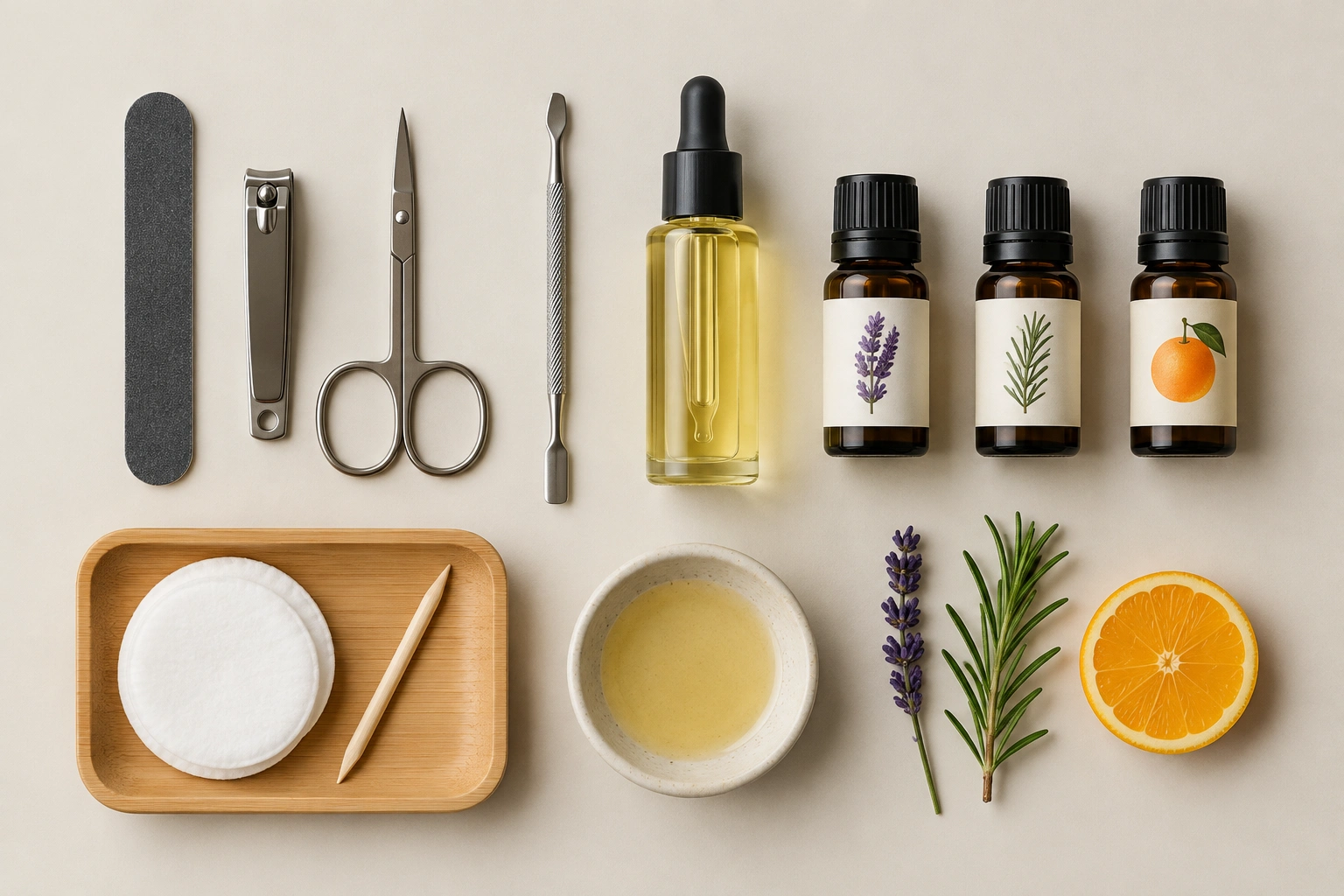
Nail fungus, also called onychomycosis, is slow to clear. That matters because essential oils are not quick fixes. They may help create an environment that’s less friendly to fungus, but they do not replace proper diagnosis or stronger treatment when the infection is advanced.
What Essential Oils Are Good for Nail Fungus?
The oils most often discussed for fungal nails are tea tree oil, oregano oil, clove oil, thyme oil, lavender oil, eucalyptus oil, cinnamon oil, lime oil, and sandalwood oil. Among these, tea tree oil is usually the first one to try because it is the most commonly recommended for nail use and is generally easier to tolerate when diluted properly.
If you’re looking for a simple priority list:
1. Tea tree oil — best first choice for most people
2. Lavender oil — gentler, but less compelling as a stand-alone antifungal option
3. Oregano, thyme, clove, and cinnamon oils — higher-irritation options that should be used only with extra caution and heavy dilution
Here’s a practical way to think about the common options:
| Essential oil | Likely irritation risk | Common use | Practical suitability |
|---|---|---|---|
| Tea tree oil | Moderate | Most common first choice | Best starting point for mild cases if diluted well |
| Oregano oil | High | Often used in blends or very diluted | Better for experienced users; not ideal for sensitive skin |
| Clove oil | Moderate to high | Sometimes used for antifungal support | Can be useful, but patch test first |
| Thyme oil | Moderate to high | Less common, sometimes blended | More of a secondary option than a first pick |
| Lavender oil | Lower | Usually used in blends | Gentler, but not the strongest antifungal choice |
If you want the simplest first trial, tea tree oil is usually the most practical place to begin. If your skin is sensitive, lavender is gentler, but it is also less compelling as a stand-alone choice for fungus. Oregano, thyme, clove, and cinnamon may be stronger, but that does not automatically make them better if they irritate the skin and you cannot use them consistently.
Do Essential Oils Actually Work for Toenail or Fingernail Fungus?
They may help, but they are not reliable cures. That distinction matters.
The evidence is limited, human studies are small, results are mixed, and essential oils should not be expected to clear every case. They may be worth trying for mild nail changes, but they are not a guaranteed fix and should not replace medical care when the nail is worsening.
Anecdotally, some people see gradual improvement when they use essential oils consistently over time, especially when the infection is mild and the nail is kept dry and trimmed. But the overall research base is not strong enough to treat essential oils as a proven solution.
Compared with prescription antifungal medications, essential oils have weaker evidence. Compared with many over-the-counter products, they also tend to have less consistent support. That doesn’t mean they are useless. It means they are better viewed as a cautious home-care option for mild cases, not as the main plan for a nail that is thick, painful, spreading, or lifting from the nail bed.
If you want a natural option and the nail changes are minor, essential oils can be reasonable to try. If the infection is obvious, long-standing, or affecting multiple nails, the odds of success with home treatment alone drop quickly.
Tea Tree Oil vs. Oregano Oil for Nail Fungus
If you are deciding between these two, think in terms of tolerance, not just potency.
Tea tree oil is usually the better first choice because it is more commonly used on nails and generally easier to tolerate when properly diluted. It still can irritate some people, and a small percentage may develop skin irritation, but it is usually the more manageable option for a first trial.
Oregano oil has a stronger reputation for antifungal activity, but it is also more likely to sting or cause redness. That makes it a poor choice for anyone with sensitive skin, cracked cuticles, or a history of reacting to essential oils. It can be useful in a blend, but I would not make it the first thing to test if you’re trying to figure out whether your skin can tolerate essential oils at all.
A simple decision rule:
– Choose tea tree oil first if you want the most practical balance of familiarity and tolerability.
– Consider oregano only if you already know your skin handles essential oils well and you are willing to dilute it carefully.
– Skip oregano altogether if the skin around the nail is inflamed, broken, or easily irritated.
How to Dilute Essential Oils Safely for Nails
Undiluted essential oils are a common mistake. Even if the nail itself looks hard and unaffected, the skin around it is not. Cuticles and the surrounding skin absorb oil easily and are usually where irritation shows up first.
A carrier oil helps reduce that risk. Good carrier options include jojoba oil, coconut oil, almond oil, or plain olive oil. The goal is not to “drown” the nail in oil. The goal is to make the essential oil gentler and easier to apply consistently.
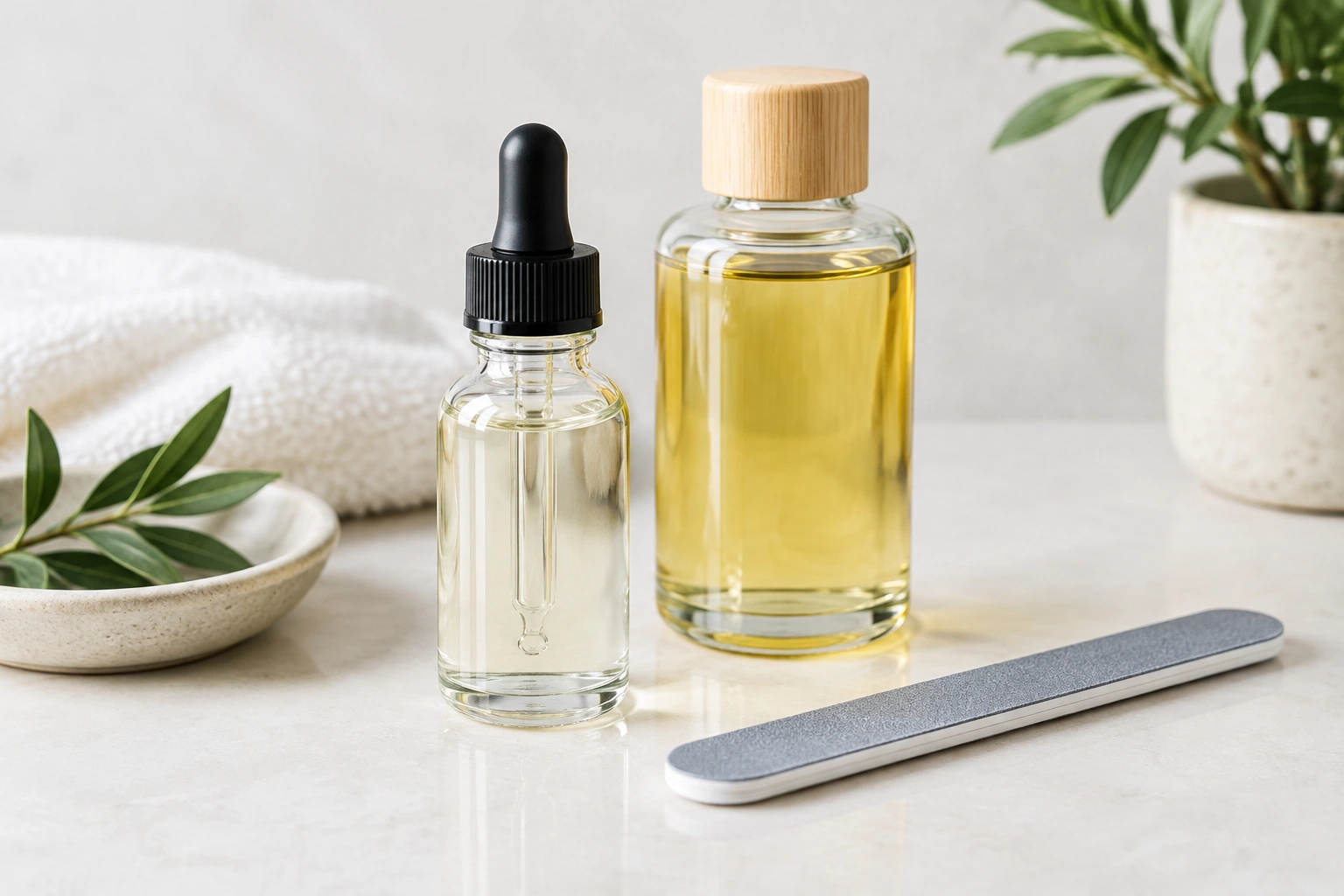
For first-time use, start conservatively:
– 1% dilution: about 1 drop essential oil per 1 teaspoon carrier oil
– 2% dilution: about 2 drops essential oil per 1 teaspoon carrier oil
For a first try, 1% is the safer starting point. If your skin tolerates it well, you can consider moving up to 2% for tea tree oil. Stronger oils like oregano, thyme, clove, and cinnamon should stay on the lower end and be used only with extra caution.
A practical patch-test approach:
1. Mix the oil with a carrier oil.
2. Apply a small amount to a patch of skin near, but not on, broken skin.
3. Wait 24 hours.
4. If you see redness, itching, burning, or swelling, do not use it on the nail.
If you are unsure, less is better. A milder mix used consistently is more useful than a stronger mix that burns and gets abandoned after two days.
How to Apply Essential Oils to a Fungal Nail
Application matters as much as the oil itself. Nails are dense, and fungus often sits under or within the nail plate, so the oil needs regular, careful use.
A practical routine looks like this:
- Wash and dry the nail completely.
- Trim the nail straight across if it is long.
- Lightly file the surface if the nail is thick, using a clean file.
- Apply the diluted essential oil to the affected nail and the skin around it.
- Let it dry before putting on socks or shoes.
For toenails, this is easiest after a shower or foot soak, once the feet are fully dry. For fingernails, apply after handwashing and before bed so the oil has time to sit on the nail without being rubbed off.
A clean, gentle file can help remove some surface buildup, but don’t over-file a painful or very thin nail.
How Often to Use Essential Oils and How Long Results Take
Consistency matters more than intensity. A once-in-a-while application is unlikely to do much.
For mild nail fungus, daily use is the most realistic schedule if the skin tolerates it. Some people prefer applying it at night because socks, shoes, and handwashing can remove the oil during the day. If irritation appears, reduce frequency or stop.
Do not expect fast changes. Toenails grow slowly, and even a successful treatment can take months before the nail looks normal again because the infected nail has to grow out. Fingernails improve faster than toenails, but visible progress still tends to be gradual.
A better sign than “the nail looks cured” is this:
– the infected area stops spreading,
– new nail growth looks clearer,
– the nail becomes less crumbly,
– and the surrounding skin stays calm.
If nothing changes after several weeks of consistent use, that’s a sign the oil may not be enough on its own.
Safety Risks, Side Effects, and When to Stop Using an Oil
Essential oils are natural, but that does not make them automatically gentle. Burning, itching, redness, rash, and swelling are all reasons to stop. So is any worsening around the nail, especially if the skin becomes tender or broken.
Be extra careful if:
– the skin around the nail is cracked,
– the cuticle is inflamed,
– you have a history of contact allergies,
– or you are using a strong oil like oregano, thyme, clove, or cinnamon.
Do not use essential oils in the eyes, mouth, or on mucous membranes. And if you notice the nail itself is becoming more painful or detached, stop self-treatment and get it checked.
For readers who prefer conditioning products for nail care, it can help to separate cosmetic nail oils from treatment expectations. Moisturizing may support comfort, but it is not the same as antifungal treatment.
How to Tell if It Is Really Nail Fungus
Not every yellow, thick, or brittle nail is fungal. That’s one reason home treatment can miss the mark.
Signs that often fit nail fungus include:
– yellow, white, or brown discoloration,
– thickening,
– crumbling at the edge,
– lifting from the nail bed,
– and debris under the nail.
But similar changes can come from trauma, repeated pressure from shoes, psoriasis, eczema, or nail polish staining. If only one nail is affected and it followed an injury, fungus may not be the cause. If the nail is pitted, very inflamed, or changing in a pattern that doesn’t look typical for fungus, a professional diagnosis is worth getting before you spend months on home treatment.
Essential Oils vs. OTC and Prescription Antifungal Treatments
This is where expectations need to stay realistic.
Over-the-counter antifungal products usually have clearer directions and more predictable ingredients than essential oils, though they still may not work well for deeper nail infections. Prescription antifungal medications generally have stronger evidence and are more appropriate when the infection is moderate to severe, spreading, or long-standing.
Essential oils can be appealing because they feel more natural and are easy to buy, but they usually trade convenience for weaker evidence. They may be worth trying if:
– the infection appears mild,
– you are comfortable with a slow timeline,
– and you are willing to monitor for irritation.
If you are using an OTC or prescription antifungal already, ask a pharmacist or clinician before adding essential oils. The main concerns are irritation, overuse, and making the surrounding skin more inflamed, which can make treatment harder to tolerate.
If you want a natural support strategy, essential oils can sit alongside hygiene habits and, in some cases, an OTC antifungal. They should not be used as a reason to delay treatment when the nail is clearly worsening.
Hygiene Habits That Support Treatment and Help Prevent Reinfection
Even the best oil will struggle if the feet stay damp.
Keep nails short and clean. Dry carefully after bathing, especially between toes. Change socks daily, and more often if your feet sweat heavily. Rotate shoes so they can dry fully between wears. If possible, avoid sharing nail tools and disinfect the ones you use.
Moisture control is a big part of reducing fungal growth. That means:
– breathable shoes when possible,
– dry socks,
– careful foot drying,
– and trimming away loose nail edges that trap debris.
If you’re treating a toenail, pay attention to the shoes you wear most often. Tight, sweaty footwear can keep feeding the problem even when the oil is applied correctly.
When to See a Podiatrist or Dermatologist
If the nail is painful, rapidly changing, lifting off the nail bed, or affecting several nails, home treatment is not the right place to stop. The same is true if you have diabetes, poor circulation, or a weakened immune system, because small foot problems can become bigger ones faster.
See a podiatrist or dermatologist if:
– the nail is spreading to other nails,
– there is swelling or drainage,
– the skin becomes red and hot,
– or you have used an essential oil consistently for months with no improvement.
A nail technician can help with cosmetic care and safe grooming, but a podiatrist or dermatologist is the right choice when you need diagnosis and treatment planning. If you’re not sure whether it’s fungus at all, that alone is a good reason to get it checked.
Bottom Line
If you’re asking what essential oils are good for nail fungus, tea tree oil is usually the first one to consider because it is the most commonly recommended and the easiest to work with. Oregano, clove, thyme, and sandalwood also come up often, but stronger is not always better when skin irritation is a real risk.
For mild cases, a diluted essential oil used consistently may be worth trying. For anything painful, spreading, or stubborn, home care should give way to professional treatment.

