

You wear fake nails to change how your nails look or to add length and strength without waiting for natural growth. A fake nail is an artificial extension or cover made from materials like acrylic, gel, or press-on polymers that you attach to your own nail to alter shape, color, or durability.
You can pick quick press-ons for a fast, temporary look, or choose acrylic or gel for longer wear and sculpted styles. Knowing how they apply, how long they last, and how to remove them helps you avoid damage and pick the right option for your needs.
Key Takeaways
- Fake nails are artificial covers or extensions you attach to your nails.
- Options range from temporary press-ons to longer-wear acrylics and gels.
- Proper application, removal, and care reduce damage and extend wear.
Definition of Fake Nail
Fake nails are man-made nail enhancements you attach to your natural nails to change their length, shape, or appearance. They can be temporary or last several weeks, and they come in different materials and application styles.
What Qualifies as a Fake Nail
A fake nail is any artificial extension or overlay placed on your natural nail. That includes press-on nails, acrylics sculpted with a liquid and powder mix, hard gels cured under UV/LED light, and silk or fiberglass wraps glued and sealed over the nail. The common element is that the product adds material that is not part of your original nail plate.
You can apply fake nails in a salon or at home. Some types adhere with glue or adhesive tabs, while others are built directly on the nail and require curing or drying. Removal methods also differ: some soak off with acetone, others peel or need professional filing.
Differences from Natural Nails

Natural nails are made of a protein called keratin and grow from the nail matrix. Fake nails sit on top of or replace part of that natural plate. Because of that, fake nails change how your nail feels and how it responds to pressure or moisture.
Fake nails can add strength and length but may also trap moisture or stress the natural nail if applied or removed incorrectly. Your natural nail will continue to grow underneath, so you’ll see a gap at the cuticle over time. Proper prep, fit, and removal are key to avoid lifting, breakage, or infection.
Types of Materials Used
Common materials include:
- Acrylic (polymer powder + liquid monomer): durable, easy to sculpt, often filled every 2–3 weeks.
- Hard gel and builder gel: flexible, cured with UV/LED light, remove by filing or soaking.
- Press-on (pre-made plastic or resin): ready-to-wear, attached with glue or tabs, good for short-term use.
- Silk or fiberglass wraps: thin fabric bonded with resin for reinforcement, often used to fix broken nails. Each material has trade-offs in appearance, strength, cost, and removal technique. Choose the one that fits your lifestyle and how long you want the enhancement to last.
Main Types of Fake Nails
You’ll learn how each type is applied, how long it lasts, and what it feels like on your natural nails. This helps you pick one that fits your budget, schedule, and nail health.
Acrylic Nails
Acrylic nails use a powder and liquid monomer that you mix and shape over your natural nail or on a plastic tip. They cure at room temperature, so you sculpt them by hand and file them into shape.
Expect durable, stiff nails that resist chipping and hold long lengths well. A full set at a salon typically lasts 2–3 weeks before you need fills. Removal requires soaking in acetone or professional filing to avoid damage.
Acrylics can thin your natural nails if a technician over-files or if you keep them on too long. Ask for thin application, regular fills, and proper removal to protect your nail beds.
Gel Nails

Gel nails use a special gel that you brush on and harden under an LED or UV lamp. You can get extensions by using pre-made tips or form-sculpting with builder gel.
They feel slightly more flexible than acrylics and often look glossier without top coat. Gel manicures last about 2–3 weeks, with less lifting if applied well.
Removal also uses acetone, but many technicians buff off the bulk first. Gel is less likely to yellow over time, but improper curing or repeated use without breaks can stress your natural nails.
Press-On Nails
Press-ons are pre-shaped plastic or acrylic nails you glue or stick onto your nails at home or in the salon. They range from thin disposable sets to reusable, high-quality press-ons.
You control wear time: some last a day, others up to two weeks with proper glue and prep. They require the least skill to apply and cause minimal filing or filing, if you use proper removal techniques.
Press-ons are the cheapest short-term option and let you change styles often. They pose lower risk to your natural nails when removed gently, but poor glue removal can pull or lift the nail plate.
Dip Powder Nails
Dip powder uses a resin base coat and colored powder you dip your nail into, repeated in layers, then sealed with activator and top coat. Technicians can use tips or natural nails.
This method produces a strong, chip-resistant surface with a finish thicker than regular polish but lighter than acrylics. You can expect 3–4 weeks of wear with proper application and no peeling.
Removal needs acetone soaks or professional filing. Dip is less flexible than gel and can stress nails if applied too thickly; ask for thin layers and give your nails breaks between services.
Application Methods
You can get fake nails applied by a pro or do them at home. The right tools, good prep, and careful glue or gel work affect how natural and long-lasting the results will be.
Professional vs. At-Home Application
A salon uses trained technicians, stronger adhesives, and curing lamps for gel or acrylic systems. You get custom shaping, precise cuticle work, and longer-lasting bonds that resist lifting for weeks. Professionals also mix powders and liquids for acrylic or sculpt nails for a seamless fit.
At-home options include press-on nails, glue-on tips, and DIY gel kits with LED/UV lamps. Press-ons are fastest and least permanent; they use adhesive tabs or thin glue and last several days to two weeks. DIY acrylics and gels can be cheaper but need practice and proper ventilation.
Choose a salon when you want durability, complex shapes, or repair. Choose at-home when you want quick changes, lower cost, or to practice basic styles.
Tools and Supplies Needed
For glue-on or press-ons, you need: adhesive tabs or nail glue, a nail file, buffer, cuticle pusher, nail clippers, and rubbing alcohol. Keep a small bowl for soak-off if you use acetone later. For gel or acrylic, add a UV/LED lamp, base and top coats, monomer and powder (for acrylic), gel polish, and brush tools.
Sanitizing items matter: use alcohol wipes and clean the work surface. Have a nail tip size kit and a nail glue with a fine tip for control. For shaping and finishing, include a 180/240 grit file and a soft buffer.
Keep spare adhesive and remover on hand. Good tools cut application time and reduce lifting or bubbles.
Common Steps in Application
Start by removing old polish and washing your hands. Gently push back cuticles and trim hangnails. Lightly buff the nail surface to remove shine; clean with alcohol to remove dust and oils.
Pick the correct nail size, test-fit each piece, and file the edges if needed. Apply glue or adhesive tab to the nail or tip, press down from cuticle to free edge for 10–30 seconds, and hold steady to set. For gels or acrylics, follow the product steps: apply primer, build the layer, and cure each layer under the lamp.
Finish by shaping and buffing, then apply top coat or sealant. Avoid water for at least an hour and use cuticle oil daily to keep the nail and skin healthy.
Appearance and Styles
Fake nails change your hands’ look through shape, color, and added art. You can choose a bold length and sharp edge, a natural curve and short length, or detailed designs like gemstones and hand-painted patterns.
Shape Options
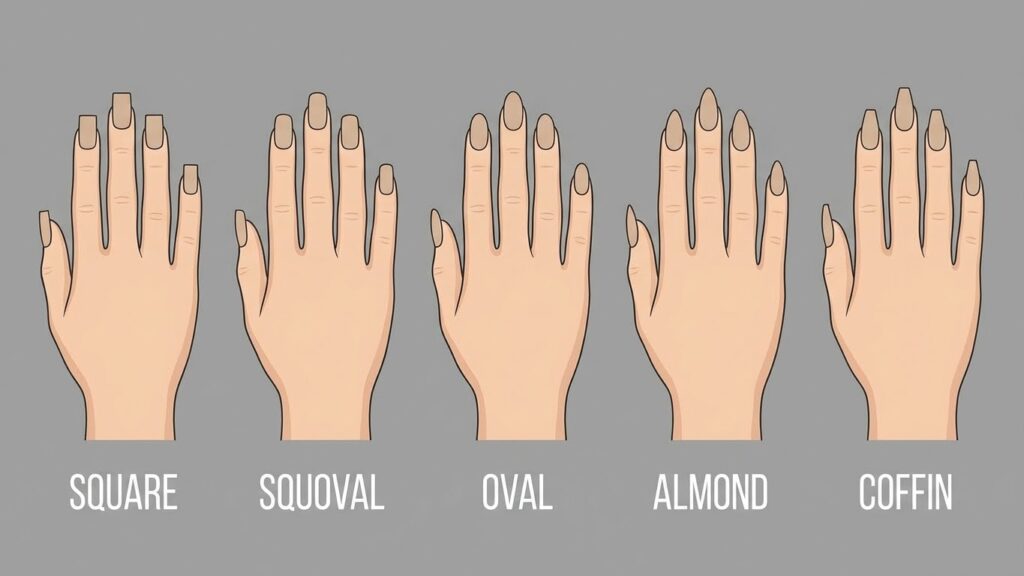
You can pick from common shapes that alter how your fingers look and how nails wear.
- Square: Flat tip with sharp corners. It gives a modern, sturdy look and resists breaking at short to medium lengths.
- Squoval: Square with rounded corners. It looks natural and reduces snagging without losing a clean edge.
- Oval: Rounded tip that follows the finger’s curve. It lengthens short nails visually and suits most hand shapes.
- Almond: Tapered sides and a rounded point. It looks elegant and slim but can be weaker at the tip.
- Stiletto / Coffin (Ballerina): Very long with pointed or squared tips. They deliver dramatic style but need care to avoid chipping.
Choose a shape based on daily tasks: short square or squoval for durability, almond or oval for a softer look, and stiletto/coffin if you want high-impact style and low manual wear.
Color and Design Variations
Color and finish change the mood of fake nails quickly. You can choose simple polish or complex art.
- Solid colors: Classic choices like red, nude, black, and white. Matte or glossy topcoats alter shine.
- French and reverse French: Tip-focused contrast that looks clean and timeless.
- Ombre / Gradient: Smooth color fades from base to tip for a modern effect.
- Glitter and chrome: Add sparkle or metallic shine for events.
- Textures: Satin, matte, or glossy finishes change the perceived weight of a design.
- Trends: Minimal negative space, tiny decals, and soft neutral palettes are popular now.
Pick colors that match your wardrobe and skin tone. Use a small accent nail or one detailed design to keep maintenance low while showing personality.
Customization Techniques
You can customize fake nails in-salon or at home with several common methods.
- Hand painting: A nail tech can paint lines, florals, or tiny scenes with polish or gel brushes for precise art.
- Stickers and decals: Pre-made designs press or glue on. They save time and give consistent results.
- Rhinestones and jewels: Glue-on gems add dimension. Use a strong topcoat or nail glue for longer hold.
- Foils and chrome powders: Transfer foils or rub-on powders create mirrored or holographic effects.
- Nail wraps and press-ons: Printed wraps and pre-designed press-ons offer quick, uniform looks without tools.
- Encapsulation: Clear gel or acrylic encases glitter, dried flowers, or objects for a 3D effect.
Decide by durability and skill level: stickers and press-ons work well for quick changes, while hand painting and encapsulation give long-lasting, bespoke results.
Durability and Longevity
Fake nails last from a few days to several weeks depending on the type and how you care for them. Shape, material, application quality, and daily habits all change how long they stay strong and look good.
Wear Time by Nail Type
- Acrylics: Typically last 2–3 weeks before a fill is needed. They bond well to your natural nail and resist chipping, so they suit active hands and frequent washing.
- Gel nails (hard gel): Last about 2–3 weeks too, with a smoother finish that resists scratches. They may need a salon soak-off to remove safely.
- Polygel and dip powder: Often last 2–4 weeks. Polygel feels lighter; dip powder can add strength without UV light.
- Press-ons: Last a few days to 2 weeks depending on adhesive and activity level. They’re the least damaging and easiest to remove.
- Soft gel tips and hybrids: Wear time varies widely; expect 1–3 weeks based on the technician’s skill and product quality.
Factors Affecting Lifespan
Application quality matters. If a nail tech doesn’t prep your natural nail (clean, buff, proper adhesive), lifting and early failure happen fast.
Your daily routines play a big role. Frequent hand washing, cleaning with solvents, gardening, or heavy typing can shorten wear time. Use gloves for chores to protect nails.
Nail shape and length affect durability. Shorter, rounded shapes reduce snagging and breakage. Long, sharp styles are more likely to crack.
Aftercare extends life. Apply cuticle oil daily, avoid picking at edges, and get fills or repairs at the first sign of lifting. Quality of products—acrylic powders, gel brands, and adhesives—also changes how long nails last.
Removal Process
You will learn professional and at-home ways to take off fake nails, plus what can go wrong. Follow the steps carefully and use the right tools to protect your natural nails and skin.
Salon Removal Methods
A salon uses tools and products that speed up removal while limiting damage. For gel or acrylic nails, a technician will usually clip the tips short, file the surface thin, and soak the nails in pure acetone. They often wrap each finger in foil with a soaked cotton pad for 10–20 minutes to soften the adhesive. After soaking, the tech gently pushes off softened product with a metal pusher or orangewood stick.
If your nails are press-ons, the tech may apply a remover that breaks the adhesive bond or use steam to loosen glue. A trained technician watches the nail bed for thinning or lifting and stops to prevent harm. Ask the salon about acetone strength and follow aftercare steps they recommend.
Safe DIY Removal
At home, gather acetone, cotton pads, aluminum foil, a nail clipper, a coarse file, and a cuticle pusher. Clip nails short and file the top layer to break the seal. Soak cotton in pure acetone, place on each nail, and wrap with foil for 10–20 minutes. Check one nail first; if product peels with light pressure, gently push it off. If not, rewrap and wait longer.
For press-ons, soak in warm soapy water for 15–30 minutes to soften glue, then lift edges with an orangewood stick. Avoid prying hard or peeling fast. Use cuticle oil and a moisturizer after removal to rehydrate the skin and nails. If you feel pain or see raw skin, stop and seek professional help.
Potential Risks During Removal
Removal can thin, split, or peel your natural nails if done improperly. Ripping or forceful prying strips layers of the nail plate and can cause pain, bleeding, or infection. Over-filing removes too much nail and weakens the nail bed over time.
Acetone dries skin and cuticles; repeated exposure can cause cracking or dermatitis. Using metal tools roughly or pushing too hard can injure the matrix (the nail’s growth area), which may cause slow or misshapen growth. Watch for prolonged redness, swelling, pus, or severe pain—these signs mean you should see a clinician or a trained nail tech.
Benefits and Downsides
Fake nails can boost your look, save time on daily polishing, and protect weak nails. They can also cause thinning, lifting, or infections if not applied or removed properly.
Aesthetic Advantages
Fake nails let you choose exact length, shape, and finish. You can pick square, almond, or stiletto tips and hard gels, acrylics, or press-ons to match that style.
Colors and nail art last longer than regular polish. Gel and acrylic systems keep polish intact for 2–4 weeks, so you get consistent color and shine.
You can hide ridges, chips, or uneven nail beds. Extensions give uniform length instantly, which helps if you have nails that break easily.
If you need a specific look for an event or job, fake nails deliver a reliable, polished appearance that’s hard to maintain with natural nails alone.
Ease of Maintenance
Many fake nails cut your weekly upkeep. Gel and acrylic nails often need fills every 2–3 weeks instead of daily polish touch-ups.
Press-on nails let you swap styles at home with little skill. You can remove or replace them in minutes, making them a good short-term choice.
Routine care still matters: file edges, avoid harsh chemicals, and keep cuticles moisturized. Proper salon fills or at-home maintenance prevents lifting and extends wear.
If you choose salon application, expect a light cost but professional shaping and stronger adhesion, which reduces mid-week chips and breaks.
Possible Health Concerns
Fake nails can damage your natural nails if applied or removed incorrectly. Over-filing thins the nail plate, and aggressive removal can peel layers away.
Lifting between the fake nail and natural nail traps moisture and bacteria. That gap can lead to fungal or bacterial infections if not treated promptly.
Chemicals like monomers and solvents may irritate skin or cause allergic reactions in some people. If you get redness, swelling, or pain, stop use and see a clinician.
To reduce risk, use licensed technicians, follow recommended fill and removal schedules, and give your natural nails breaks between sets.
Aftercare and Nail Health
Proper care helps your natural nails stay strong and lowers infection risk. Use gentle methods for removal, keep nails dry and clean, and give your natural nails time to recover between sets.
Keeping Natural Nails Healthy
File the free edge lightly with a fine grit file to prevent snags. Do not over-buff the nail plate; only smooth rough spots. Avoid aggressive filing that thins your natural nail.
When removing fake nails, soak in acetone or follow a salon’s removal process instead of prying them off. Prying can lift and tear layers of your nail, causing long-term weakness.
Give your nails a break for at least one to two weeks between full sets. During breaks, trim nails short, apply a nail-strengthening treatment, and avoid heavy hand work that can split or peel the nail plate.
Watch for signs of infection: persistent redness, swelling, pus, or a foul smell. If you see these, stop wearing artificial nails and see a healthcare provider.
Recommended Aftercare Products
Use a cuticle oil with jojoba or vitamin E daily to keep the nail fold and surrounding skin hydrated. Apply after washing hands and before bed for best absorption.
Choose a protein-based nail strengthener (formaldehyde-free) to help rebuild layers. Apply thin coats and follow the product’s instructions to avoid peeling or yellowing.
Buy an acetone-based soak specifically labeled for nail extensions for safe removal. Pair it with a gentle hand cream and an antibacterial hand wash to keep skin healthy during the recovery phase.
Keep a small nail kit: fine grit file, wooden cuticle pusher, cuticle oil, and a ridge-filling base coat. Replace tools regularly and disinfect metal tools between uses.
Trends in Fake Nails
You can pick from bold, minimalist, or tech-driven styles depending on how long you want them to last and how much upkeep you’ll do. Seasonal color shifts and easy-apply press-ons shape what people buy most.
Current Popular Styles
Gel and acrylic remain common for long wear and sculpted shapes like coffin and almond. Gel nails search volume stays high because they give a glossy, natural look and last 2–3 weeks with fills.
Press-on nails grew fast on retail sites for being cheap and quick. They come pre-designed in styles like French, chrome, galaxy, and K-nails, so you can swap looks at home in minutes. Short, rounded press-ons suit active hands; longer, sculpted sets suit statement looks.
Minimalist designs—thin lines, negative space, and sheer shades—stay popular for work-friendly nails. Seasonal trends push brighter neons in summer and muted browns or mauves in fall.
Celebrity and Social Media Influence
Celebrities and influencers set trends through red carpets, music videos, and TikTok clips. When a high-profile celebrity debuts a new shape or color, salons book up, and retailers list similar press-on sets within days.
TikTok and Instagram reels speed trend cycles. A viral creator can popularize mismatched nails or glass finishes, driving both DIY tutorials and sales of pre-made sets. You’ll often see designers and nail techs tag products and step-by-step reels, which makes it easy to copy looks or buy exact kits.
FAQs
What are fake nails made of?
Fake nails use several materials: acrylic powders and liquid monomer, UV-cured gel resins, press-on plastic, and sometimes silk or fiberglass wraps. Each material feels and lasts different, so pick one that fits your routine.
How long do fake nails last?
Press-on nails can last up to about 2 weeks with careful wear. Acrylics and dip powders often last 3–4 weeks before needing fills or replacement. Gel extensions sit between those ranges, depending on care.
Will fake nails damage my natural nails?
They can if applied or removed poorly. Lifting, thinning, and breakage happen when nails are filed too thin, glued on wrong, or pried off. Follow safe removal methods and let nails rest between sets.
Can you wear fake nails if you have short or weak nails?
Yes. Nail professionals can use tips or forms to extend short nails and strengthen weak ones with overlay systems like gel or dip powder. A trained tech will choose the right method for your nail health.
Where can you learn safe application and removal?
Look for tutorials from licensed nail techs and trusted medical sites like the American Academy of Dermatology for nail care advice. Your salon should also explain aftercare and safe removal before you leave.
Conclusion
Fake nails give you fast, polished results and a lot of style options. You can pick acrylics, gels, press-ons, or silk wraps to match your budget and how long you want them to last.
They can damage natural nails if you skip proper care. Keep nails clean, avoid rough removal, and give your nails breaks to let them recover.
If you want low maintenance, press-ons or short-term salon sets work well. For longer wear and strength, gels or acrylics may suit you better — but expect regular fills and upkeep.
Follow these simple rules to reduce risks:
- Get removal done gently with acetone or by a pro.
- Moisturize cuticles and avoid picking at the nails.
- Take breaks between sets to let natural nails grow.
You decide based on your priorities: convenience, cost, appearance, and nail health. Make small changes and watch how your natural nails respond so you keep hands that look good and stay healthy.