
What Oils Are Good for Nail Growth? A Practical Guide to the Most Practical Options

If your nails are peeling, splitting, or never seem to get past a certain length, nail oil can help more than most people expect — but usually not by making nails grow dramatically faster. The real benefit is simpler and more useful: the right oils help keep the nail plate and cuticle area hydrated, which can reduce breakage so nails have a better chance to grow out. Nail oils mainly reduce dryness and breakage rather than directly accelerating nail growth.
For most people, the most practical oils for nail growth support are jojoba oil, sweet almond oil, argan oil, olive oil, coconut oil, and vitamin E oil. If you want one oil that works well for daily use, jojoba is usually the most practical place to start because it feels light and absorbs well. If your nails are very dry, richer oils like coconut or olive oil can feel more protective. If you prefer a ready-made option, a simple cuticle oil blend can be easier to use consistently than a single oil.
The short version: oil is most useful when the problem is dryness, peeling, brittleness, or frequent snags. It is not a magic growth accelerator, but it can absolutely support healthier-looking nail growth by helping nails stay intact long enough to grow.
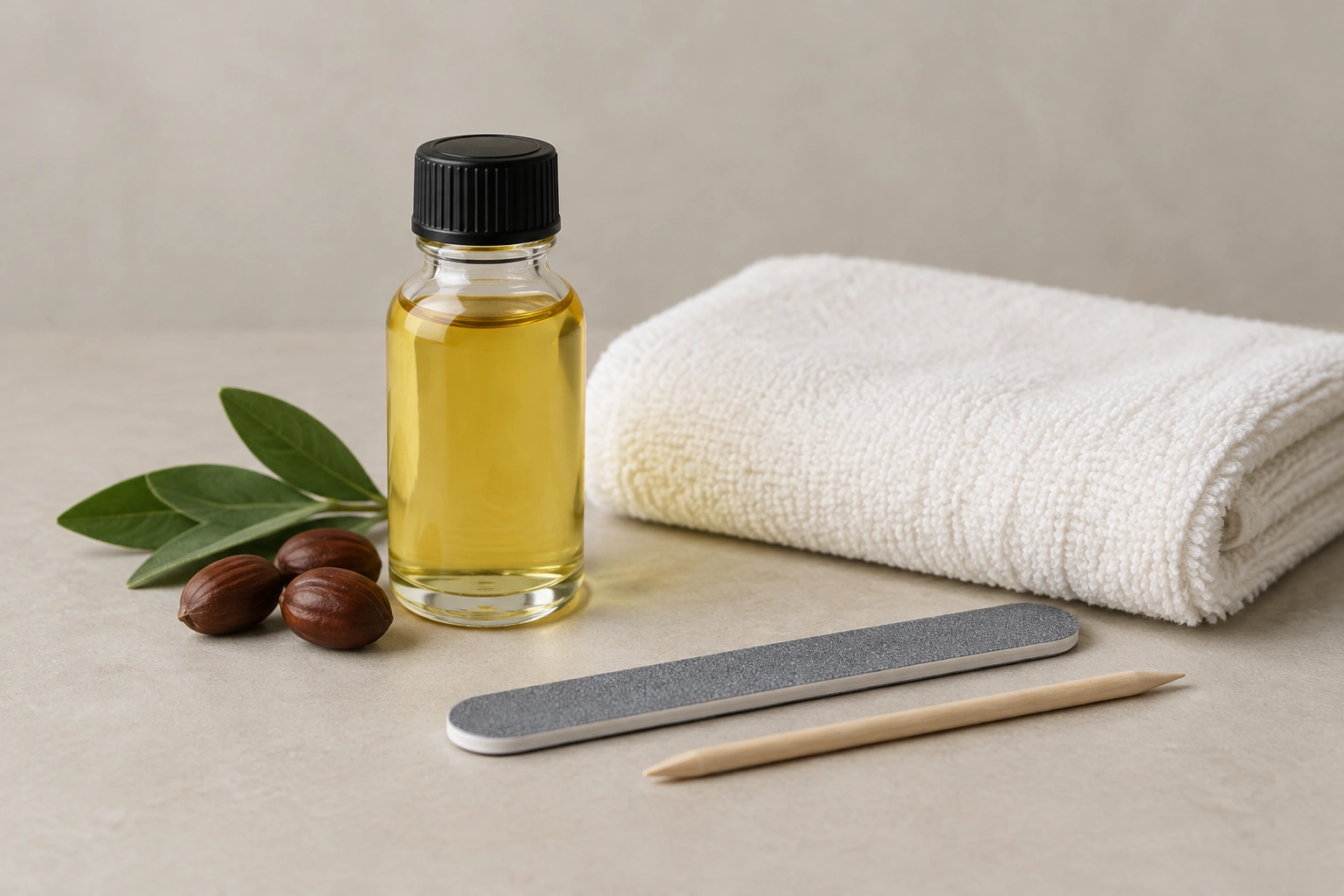
How nail oil actually helps nails
Nails are made of keratin, and the nail plate can lose flexibility when it gets dry. That dryness shows up as peeling edges, splitting, rough texture, and breakage near the tip. Nail oil helps by softening the surrounding skin and reducing water loss from the nail area, which can make nails feel less fragile. Oils mainly reduce transepidermal water loss and improve flexibility in the surrounding skin and nail area rather than deeply hydrating the nail plate itself.
The practical effect is this: if your nails break every time they reach a certain length, oil may help you keep that length by reducing the damage that happens along the way. That is why nail oil often seems to “help growth” even though it is really helping retention.
A simple way to think about it:
– Dry nails crack and peel more easily.
– More flexible nails tend to bend instead of snap.
– Less breakage means more visible length over time.
That is also why the cuticle area matters. The cuticle and nearby skin help protect the new nail as it grows out. If that area stays dry and irritated, the whole nail can look rougher and feel weaker.
Best oils for nails: what to choose and why
Here is a practical comparison of the oils most often worth considering for nail care. Evidence comparing these oils directly for faster nail growth is limited, so this table is mainly about comfort, usability, and how well each oil fits a nail-care routine. Jojoba is often preferred for cosmetic and functional reasons, not because it has been proven to make nails grow faster.
| Oil | Absorption | Feel | Best for | Notes |
|---|---|---|---|---|
| Jojoba oil | Fast, lightweight | Silky, not greasy | Daily use, peeling nails, cuticle care | Often preferred because it closely resembles the skin’s natural sebum |
| Coconut oil | Moderate | Rich, protective | Very dry nails, nighttime use | Good when nails feel rough or dehydrated |
| Olive oil | Moderate to slower | Heavier, nourishing | Dry, brittle nails and at-home soaks | Common pantry option; can feel a bit heavy for daytime |
| Argan oil | Moderate | Smooth, softening | Dry, peeling nails | Often chosen for a balance of richness and comfort |
| Sweet almond oil | Moderate | Lightweight to medium | Regular maintenance, sensitive-feeling nails | Popular in cuticle oil blends |
| Vitamin E oil | Slower, thicker | Dense, occlusive | Targeted dry spots and cuticle massage | Best used as part of a blend rather than alone |
Jojoba oil
Jojoba is often the favorite for nail care because it absorbs well and does not sit heavily on the skin. If you want something you can use several times a day without feeling greasy, this is usually the easiest option. It is especially useful for people who wash their hands often or want a low-mess product at their desk.
Coconut oil
Coconut oil is a good choice when nails are very dry and need a richer feel. It can be especially helpful at night, when a thicker oil is less likely to bother you. The trade-off is that it can feel more coating than jojoba, so it is not always the most convenient daytime option.
Olive oil
Olive oil is easy to find and works well as a simple, affordable nail soak or massage oil. It tends to feel heavier, which some people like for very dry hands and nails. If you want a kitchen-cabinet option for occasional use, olive oil is practical.
Argan oil
Argan oil is a nice middle ground: nourishing without being as heavy as olive oil. It is a good fit if your nails peel but you still want something comfortable enough for regular use. Many people choose it when they want a more polished feel than coconut oil.
Sweet almond oil
Sweet almond oil is one of the most versatile carrier oils for nails. It often works well in blends because it spreads easily and feels pleasant on the skin. If you want a simple oil that is easy to massage into the nail folds and cuticles, this is a strong option.
Vitamin E oil
Vitamin E oil is commonly added to cuticle products, but by itself it is usually thick and slow to absorb. It can be useful for very dry spots or as part of a blend, especially if you want a more conditioning feel. I would not make it your only oil if you want something easy for daily use.
Jojoba oil vs. coconut oil for nail hydration
If you are deciding between jojoba and coconut oil, the choice usually comes down to texture and routine.
Choose jojoba oil if:
– you want something light enough for daytime use
– your nails peel but feel oily products bother you
– you prefer quick absorption
– you are likely to apply it often
Choose coconut oil if:
– your nails and cuticles feel very dry
– you like a richer, more coating feel
– you want something for overnight use
– you do not mind a heavier finish
For many people, jojoba wins on convenience, while coconut wins on richness. If you are building a routine you will actually stick with, convenience matters more than choosing the thickest oil.
Are essential oils safe for nail growth?
Essential oils can be used in nail care, but they are not the main event. They are much more concentrated than carrier oils and should be diluted properly before use. For DIY blends, a common conservative approach is to keep essential oils very low, around 1% or less, and avoid applying them undiluted to the skin around the nails. If you are not comfortable measuring dilution carefully, fragrance-free commercial cuticle oil is usually the safer everyday choice.
On their own, essential oils can irritate the skin around the nails, especially if you already have dryness, hangnails, or sensitivity. That is why I recommend treating essential oils as optional, not necessary. If you do use an essential oil, keep it very diluted and stop if you notice stinging, redness, or itching.
A few practical rules:
– never apply essential oils undiluted to nails or cuticles
– avoid fragrance-heavy blends if your skin is reactive
– skip them entirely if your main goal is low-irritation daily care
For sensitive users, fragrance-free jojoba or sweet almond oil is usually the better choice.
How to apply nail oil for best results
Nail oil works best when it is applied where the nail grows and dries out most: the nail plate, the cuticle area, and the skin along the sides of the nail.
A simple routine:
1. Wash and dry your hands.
2. Place a drop of oil on each nail or use a brush applicator.
3. Massage the oil into the cuticle, the nail fold, and the top of the nail.
4. Let it sit for a minute or two before washing again.
5. If possible, follow with hand cream to help seal in moisture.
The massage matters because it helps spread the oil evenly and encourages you to cover the whole nail area, not just the center of the nail plate. If you wear polish, apply oil around the edges and cuticles, then use hand cream on top.
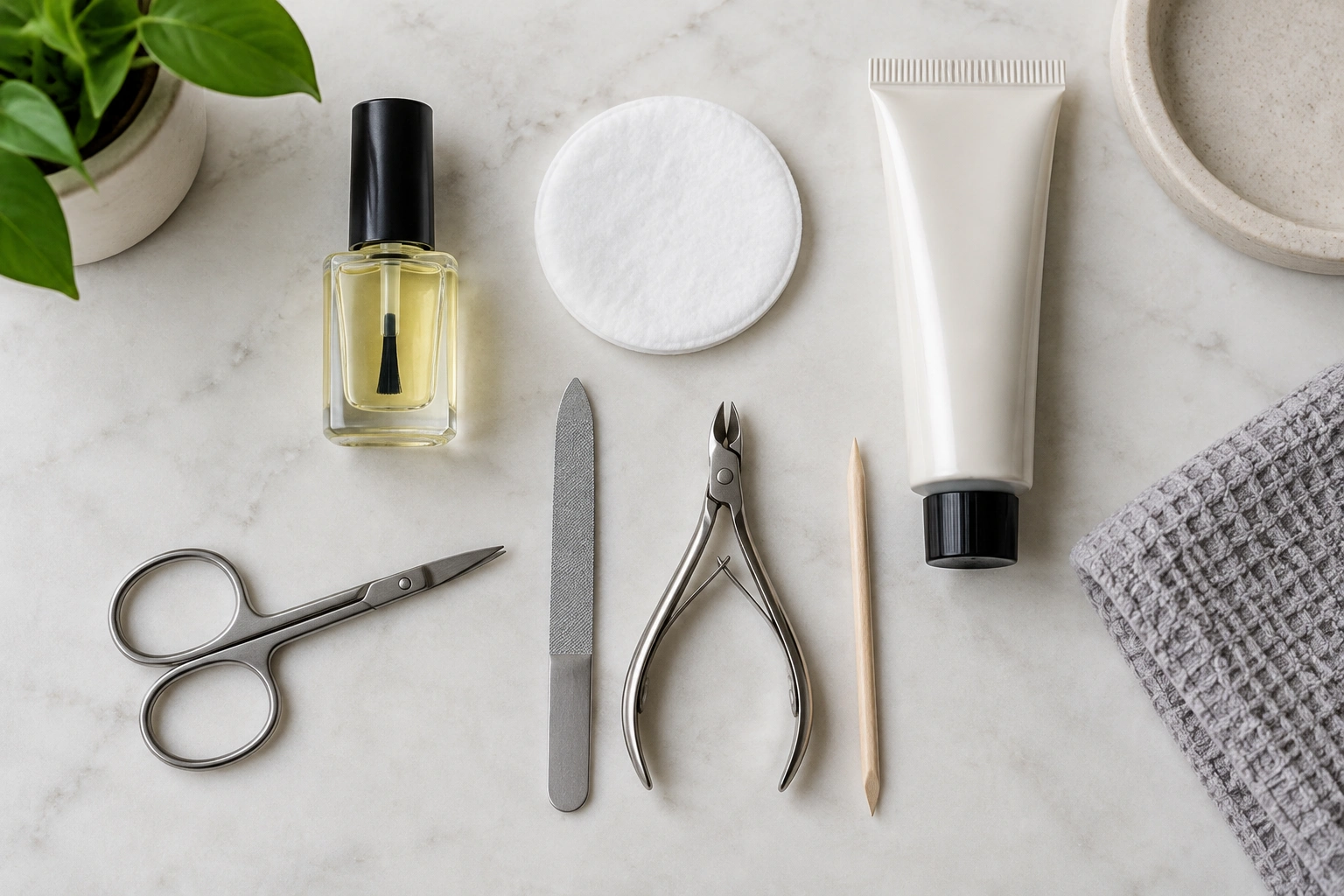
For a very dry nail routine, I often suggest using oil after handwashing and before bed. That gives the product time to stay on the skin instead of being wiped off right away.
How often to use nail oil
Consistency matters more than choosing a “stronger” oil.
A practical schedule:
– Very dry or brittle nails: 2 to 3 times daily
– Normal nails with occasional dryness: once daily or after handwashing
– Maintenance during manicures: daily, especially around the cuticle area
– Nail biters: after washing hands and before bed, so the area stays less dry and less tempting to pick
If your nails are extremely dry, the most practical routine is often a light oil during the day and a richer oil at night. That gives you both convenience and a more protective feel when you sleep.
What results to expect and how long they take
Nail oil usually shows its first benefits in appearance and comfort, not in dramatic length.
Early signs that it is helping:
– less peeling at the tips
– fewer snags on clothing or hair
– smoother cuticles
– nails that feel less rigid and brittle
– better-looking shine, even without polish
Visible improvement often takes a few weeks of regular use, mainly because nails grow slowly and the damaged portion has to grow out. If you stop after a few applications, it is hard to judge whether the oil helped.
A realistic expectation is this: oil may help your nails break less, which can make them look like they are growing better. That is a real improvement, even if the growth rate itself has not changed much.
Choosing the right oil for your nail type and sensitivity
Here is the simplest way to decide.
If your nails peel easily
Choose jojoba oil or sweet almond oil. Both are easy to use often, which is what peeling nails usually need.
If your nails are very dry and rough
Try coconut oil or olive oil, especially at night. These can feel more protective on parched nails.
If you want one oil for regular daily use
Pick jojoba oil.
If you want a richer feel without going too heavy
Choose argan oil.
If your skin is sensitive
Look for fragrance-free, essential-oil-free formulas. Simpler is safer when the skin around the nails gets irritated easily.
If you are on a budget
Olive oil can work as a basic at-home option, though it is not as elegant for daily wear. A small bottle of jojoba or almond oil is usually a better long-term buy if you want convenience.
Nail oil vs. hand cream vs. cuticle cream
These products overlap, but they are not identical.
Nail oil
– best for softening the nail and cuticle area
– helps reduce dryness and flexibility loss
– works well for frequent, targeted use
Hand cream
– better for overall skin hydration
– helpful after oil, especially if your hands are dry too
– more practical for larger areas of skin
Cuticle cream
– usually thicker and more occlusive
– good for nighttime or very dry cuticles
– can be useful if you prefer a balm-like texture
If your hands are dry as well as your nails, using oil first and cream on top can be a smart combination. The oil conditions the nail area, and the cream helps keep moisture from escaping too quickly.
Common mistakes to avoid
A few habits can make nail oil feel ineffective even when the oil itself is fine.
- Expecting instant growth. Oil supports healthier-looking nails, but it does not transform growth overnight.
- Using it too rarely. One application a week is usually not enough for brittle nails.
- Skipping the cuticle area. That is one of the most important places to treat.
- Using undiluted essential oils. This can irritate skin and make the routine backfire.
- Choosing only by trend. The most practical oil is the one you can use consistently without discomfort.
- Stopping too soon. Nails need time to grow out before the improvement is obvious.
When to see a nail technician or dermatologist
Nail oil is for dryness, maintenance, and breakage support. It is not the right answer for every nail problem.
See a nail technician or dermatologist if you notice:
– pain around the nail
– significant discoloration
– thickening or unusual texture changes
– lifting, swelling, or drainage
– a problem that keeps getting worse instead of improving
If the nail changes look unusual, it is better to get them checked than to keep layering oil on top and hoping for the best.
A simple way to choose your first nail oil
If you want the easiest decision, use this rule:
- Choose jojoba oil if you want the most practical daily option.
- Choose coconut or olive oil if your nails are very dry and you want a richer feel.
- Choose sweet almond or argan oil if you want something balanced and comfortable.
- Choose a commercial cuticle oil if convenience will help you stay consistent.
- Skip essential oils unless you already know your skin tolerates them well.
If you are building a stronger nail routine from scratch, pair your oil with regular hand cream and a gentle manicure habit. That combination does more for brittle nails than any single product alone.
For readers comparing formulas, our Brother Cosmetics Viral Nail Oil review and C CARE Sweet Almond Cuticle Oil review can help you see how different blends perform in real-world use. If you prefer a more decorative option, the Blossom Rose Cuticle Oil review covers a scented cuticle oil with a more giftable presentation.
FAQ
Does nail oil actually make nails grow faster?
Usually, no. Nail oil mainly helps reduce dryness and breakage, which can make nails appear to grow better because they stay intact longer.
What is the most practical oil for nails?
Jojoba oil is often the most practical everyday choice because it feels lightweight, absorbs well, and is easy to use consistently.
Can I use essential oils on my nails?
Yes, but only if they are properly diluted. If you do not know how to dilute them safely, fragrance-free commercial cuticle oil is the safer option.
How often should I apply nail oil?
Many people do well with once daily, while very dry or brittle nails may benefit from 2 to 3 applications a day.
Is cuticle oil better than plain oil?
Not necessarily. A good cuticle oil is often just a convenient blend of carrier oils, which can make it easier to use regularly.
Which oil is best for very dry nails?
Coconut oil or olive oil can feel more protective for very dry nails, while jojoba is often better for frequent daytime use.

