
What to Ask for at a Nail Salon: A Practical Guide to Getting the Nails You Want

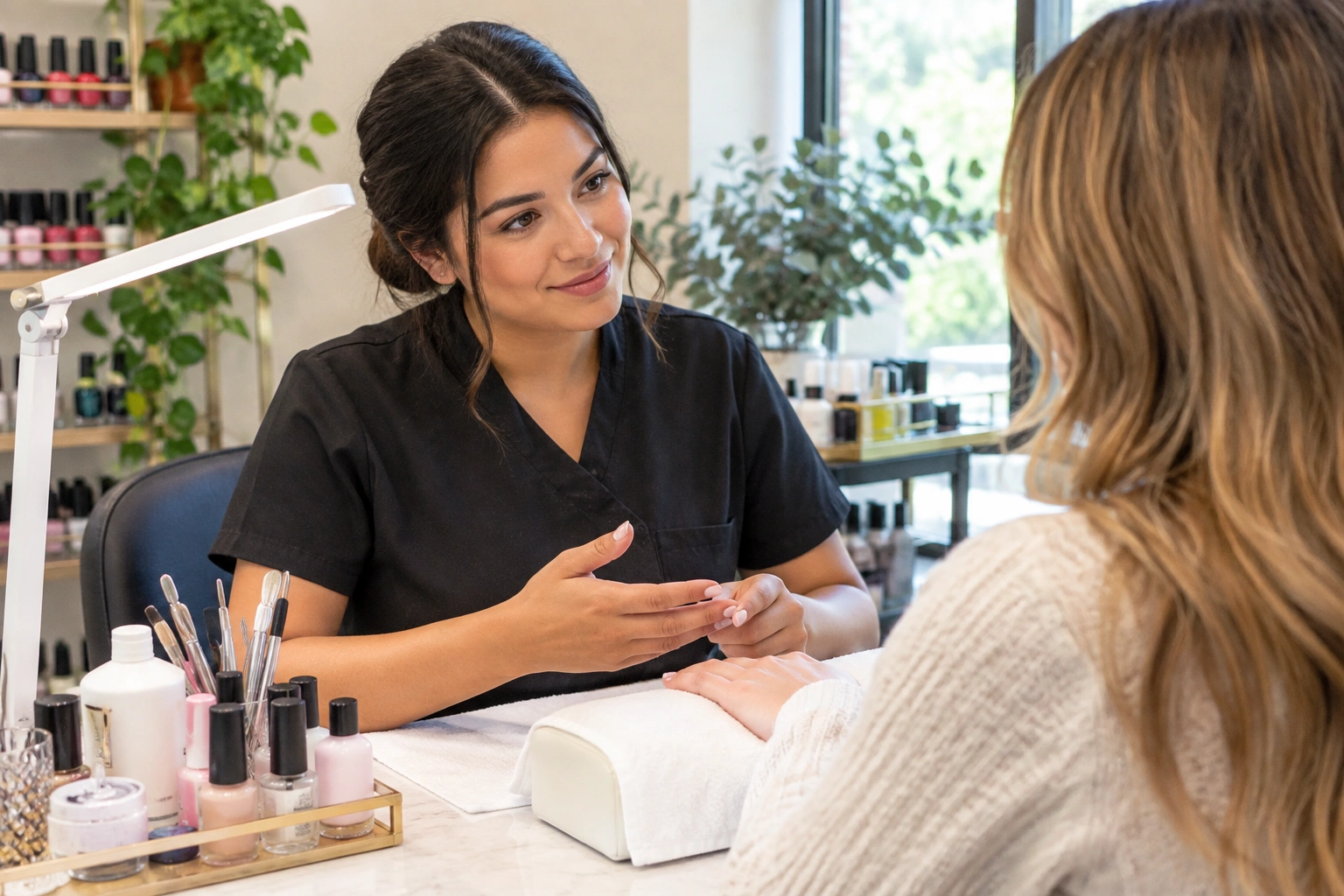
Walking into a nail salon can feel simple until the technician asks, “What would you like today?” If you freeze, you are not alone. The easiest way to avoid confusion is to think in this order: service, length, shape, finish, and maintenance.
If you can explain those five things, you can usually get close to the result you want without awkward back-and-forth. And if you are unsure, that is exactly what a good consultation is for.
Here is the fast version: tell the salon what you want the nails to do for you. Do you want them to last longer, look natural, add length, stay low-maintenance, or include nail art? That goal matters more than the trend name you saw online.
What to Ask for at a Nail Salon: The Fast Answer
If you want a simple script, use this:
“I’d like a [service] with [length], [shape], and [finish]. I want it to last about [time frame], and I’m okay with [maintenance level].”
For example:
- “I’d like a gel manicure with short almond nails and a sheer nude finish.”
- “I’d like a basic pedicure with clear polish and no added extras.”
- “I’d like acrylic extensions, medium length, square shape, and French tips.”
That one sentence gives the technician the information they need to guide you. It also helps prevent the most common mistake clients make: booking by name only and assuming the salon means the same thing you do.
Know the Main Nail Service Types Before You Book
Salon names vary, so it helps to know what each service usually means in practice.
Basic manicure
A basic manicure usually focuses on nail shaping, cuticle care, and polish. It is a good choice if you want a clean, natural look and do not need extra durability.
Spa manicure
A spa manicure usually includes the basics plus extras like exfoliation, massage, masks, or more extended hand care. If you are deciding between a basic manicure and a spa manicure, ask yourself whether you want the same nail result with a more relaxing experience, or whether you just want the quickest, simplest service.
Pedicure
A pedicure is the foot version of a manicure and may include nail shaping, cuticle care, polish, and foot care. Ask what is included, because some salons treat callus care or exfoliation as add-ons.
Regular polish
Regular polish is the most familiar option and usually the easiest to change later. It works well if you want flexibility, a shorter appointment, and the least commitment.
Gel polish
Gel polish is cured under a lamp and is generally chosen for longer wear and more shine than regular polish. If you want a longer-lasting color but do not need added length or structure, gel polish is often the middle ground between regular polish and a full enhancement.
Acrylic nails
Acrylic is an enhancement used to create strength and length. It can be a practical choice if you want a dramatic shape or added durability, but it also comes with more upkeep than a simple manicure.
Dip powder
Dip powder is another enhancement service many salons offer. Some clients like it for its durability and the way it feels on the nail, but it is still an enhancement, so you should ask about removal and maintenance just as you would with acrylic.
Nail extensions
Extensions add length beyond your natural nail. They can be built with different systems, so “extensions” is not a full answer by itself. Ask what material the salon uses and how that choice affects wear, upkeep, and removal.
If you want a broader safety checklist before booking, our guide on how to find a safe nail salon can help you compare options before you sit down.
Compare the Main Services Before You Choose
Here is a practical way to think about the trade-offs.
| Service | Durability | Removal | Upkeep | Best for |
|---|---|---|---|---|
| Regular polish | Shorter wear | Usually simplest | Low | Flexible color changes, low-commitment visits |
| Gel polish | Longer wear than regular polish | Needs proper removal | Moderate | People who want shine and longer-lasting color |
| Acrylic | Durable enhancement | Best handled carefully | Higher | Added length, stronger structure, dramatic shapes |
| Dip powder | Often long-lasting | Needs proper removal | Moderate to higher | Clients who want a durable enhancement |
| Extensions | Depends on system used | Varies by system | Higher | Creating length quickly |
The key trade-off is simple: the more structure and durability you ask for, the more maintenance you should expect later. If you want nails that stay low-effort, a basic manicure or gel manicure may fit better than a full enhancement.
Quick decision guide: gel vs acrylic vs dip
If you are stuck between the most common enhancement options, use this rough guide:
- Choose gel polish if you want longer wear than regular polish but still want a simpler, lighter service.
- Choose acrylic if you want the most obvious structure, added strength, or a more dramatic length and shape.
- Choose dip powder if you want a durable enhancement and your salon offers it as a routine option, but still ask how it is removed and maintained.
- Choose regular polish if you want the easiest change later and do not need extra durability.
If your nails are weak, damaged, or prone to breakage, ask the technician which option is gentlest for your current nail condition rather than assuming the strongest system is the best choice. Sometimes the better answer is a shorter manicure, a protective gel service, or simply waiting before getting extensions.
What to Ask About Nail Shape, Length, Color, and Finish
This is where many appointments go wrong. A photo may show the overall vibe, but shape and length are what make the result look right on your hands.
Nail shape
Ask for a shape by name if you know it:
– Round
– Square
– Squoval
– Oval
– Almond
– Coffin or ballerina
If you are not sure, describe the effect:
– “I want a soft shape that looks natural.”
– “I want the sides tapered, but not too pointy.”
– “I want a clean square edge.”
Nail length
Length is easier to get right when you use a reference. You can say:
– “Short, just past the fingertip.”
– “Medium length, practical for typing.”
– “Long, but not too dramatic.”
If you use your hands a lot for work, be honest about that. A beautiful long shape may not be worth it if you will spend all week catching it on clothing or struggling with daily tasks.
Color
Color is more than “pink” or “nude.” Better descriptions include:
– Sheer or opaque
– Cool-toned or warm-toned
– Neutral, milky, soft pink, beige, mauve, red, or bold
– Solid color, French tip, ombré, or accent nail
Finish
Finish changes the whole look:
– Glossy
– Matte
– Natural sheen
– Chrome or metallic
– Soft, sheer, or jelly-like
A useful phrase is: “I want the color to look soft and natural, with a glossy finish.” That tells the technician both the shade direction and the final effect.
Questions to Ask Before Getting Gel, Acrylic, Dip, or Extensions
Before choosing an enhancement, ask questions that connect the service to your nail condition and lifestyle.
Try these:
– “How much maintenance will this need?”
– “How is it removed?”
– “What happens if it starts lifting?”
– “Would this be a good choice for my natural nails?”
– “How often would I need fills or touch-ups?”
If your nails are weak, damaged, or sensitive, ask which option is safest for your current nail condition and whether the salon would recommend a simpler service first. If you want length but your natural nails are fragile, the technician may suggest a less aggressive approach or a shorter enhancement.
Acrylic and other enhancements can be useful when you want extra strength or length, but they are not the same as a simple polish service. If you plan to keep the enhancement for a while, ask about fill appointments before you book. A fill is usually for maintenance when the enhancement has grown out; removal is for taking the product off completely.
If you are unsure whether a stronger system suits your nails, ask the technician to compare options based on your goals. A shorter, simpler service may be a smarter choice if you want easy upkeep or you are new to enhancements.
For product-related questions, it can also help to understand what the salon uses. Our nail prep and cleanser guide is useful if you want to learn why prep products matter before polish or enhancement.
What to Ask About Add-Ons, Nail Art, and Extra Treatments
Add-ons are where surprise charges often happen. Nail art, French tips, rhinestones, chrome, extra massage time, callus care, or specialty removal can all change the final bill.
Ask before the service begins:
– “Is nail art priced per nail or as a set?”
– “Does French tip count as an add-on?”
– “Is this pedicure the full service, or are some parts extra?”
– “How much more time will that add?”
– “Can you show me the price before you start?”
If you want a simple look, say so directly. “Just a plain polish, no extras” is a perfectly clear request. If you want something more detailed, bring that up before the technician starts shaping or painting.
How to Ask if the Salon Is Clean and Safe
A tidy salon is nice, but visual cleanliness is not the same thing as proper sanitation. You are allowed to ask questions.
Good questions include:
– “Do you disinfect or sterilize metal tools between clients?”
– “Are new files or buffers used for each client?”
– “Do you use liners for pedicures?”
– “How do you handle reusable tools?”
You can also watch for practical signs: tools opened in front of you, single-use items discarded after use, and a workstation that looks organized rather than cluttered.
More specific cues can help you tell whether a salon is truly sanitary or just neat. Look for sealed tool packets, clean towel changes between clients, and staff who wash or sanitize their hands before starting. A tidy desk is not enough if used tools are sitting out or the technician seems to move from one client to another without changing supplies.
If you want a broader consumer overview of cosmetic ingredient concerns, FDA guidance on cosmetics is a good place to start.
What to Say If You Have Weak, Damaged, Sensitive Nails, or Allergies
Be direct before the service begins. The earlier you mention a concern, the easier it is for the technician to adjust.
You can say:
– “My nails are weak, so I want the gentlest option.”
– “I’ve had sensitivity before. What products are you using?”
– “I’m not sure my nails are ready for extensions. What would you recommend instead?”
– “I have an allergy concern. Can you tell me what’s in the products?”
That last question matters because ingredient sensitivity is not something to guess about in the chair. If you have a known reaction history, ask what products will touch your skin and nails before anything starts.
If your nails are already damaged, keep the appointment focused on protection and realistic results rather than forcing a stronger look. Sometimes a shorter, simpler service is the better call.
How to Use a Reference Photo the Right Way
Photos are useful, but only if you explain what part of the photo you want copied.
When you show a picture, say:
– “I like the shape and length here.”
– “I want this color, but a glossier finish.”
– “I like the overall look, but shorter.”
– “I want the French tip style, not the exact nail length.”
That makes the photo a tool, not a guessing game. Without those details, a technician may copy the wrong part of the image and still technically “match” your photo.
A good photo also helps when you are choosing between systems. If the picture shows a dramatic almond shape and your natural nails are very short, the technician may need to explain what is realistic for your nail length and strength.
Useful Scripts You Can Say at the Salon
If you feel awkward, use these ready-made lines.
When booking
- “I’d like a gel manicure with short almond nails. Is that appointment type available?”
- “I want a pedicure with regular polish. What does that service include?”
- “I’m calling to book a manicure. Which appointment should I choose for a basic manicure versus a spa manicure?”
- “I’d like a fill for my existing acrylics. What appointment name should I select?”
- “I need removal only. Should I book a removal appointment or a full service?”
- “Can you tell me the price for [service] with [add-on] before I book?”
At the chair
- “I want to keep the length practical.”
- “Please leave the shape soft and natural.”
- “I’d like the finish glossy, not matte.”
- “Please keep cuticle care gentle. I do not want them trimmed too much.”
- “Push back the cuticles, but do not cut them unless you need to.”
If you want clarification
- “Can you show me the difference between these options?”
- “Is that an extra charge?”
- “How should I maintain this at home?”
If you want to keep it simple
- “Just a clean, natural look today.”
- “No nail art, no add-ons, just the basic service.”
Polite and specific is usually the easiest combination for both you and the technician.
Questions to Ask About Timing, Maintenance, Fills, and Removal
Before you leave the chair, make sure you understand what happens next.
Ask:
– “How long should this appointment take?”
– “When should I come back for maintenance?”
– “If I choose this enhancement, do I need fills?”
– “Is removal included, or does that cost extra?”
– “What should I do if I notice lifting or discomfort?”
For more durable systems, maintenance is part of the service, not an optional extra. If you want to keep the look for several weeks, ask about fill appointments up front so you can plan your schedule.
Use the right appointment for the job:
– Book a fill if you already have an enhancement in place and need the grown-out area maintained.
– Book a removal if you want the enhancement taken off completely.
– Book a maintenance appointment if the salon offers regular upkeep for your current service.
– Book a new set if you want a fresh enhancement and do not already have one that needs upkeep.
Salon removal is usually the safer route for enhancements than trying to force them off at home. Do not attempt at-home removal for acrylic, dip, or other enhancements unless the product or system is specifically designed for safe at-home removal and the salon has told you how to do it. If you are unsure how a service should be removed, ask before you leave.
Common Mistakes to Avoid When Asking for Nails
A few small missteps cause most salon disappointments:
- Booking a service name without checking what it includes
- Waiting until after filing starts to mention shape or length
- Assuming gel, acrylic, and dip are interchangeable
- Forgetting to ask about extra charges for art or special treatments
- Bringing a photo but not explaining what you like about it
- Staying silent about weak nails, allergies, or sensitivities
- Choosing a high-maintenance look without asking what upkeep it needs
The fix is simple: speak in outcomes, not just trends. “Short, natural, glossy, and easy to maintain” is clearer than “something cute.”
When to See a Nail Technician or Dermatologist
See a nail technician for service advice if you are trying to choose between options, need help matching a photo, or want a safer style for weak nails.
See a dermatologist if you have persistent pain, swelling, unusual nail changes, or a reaction that does not settle after stopping the product. A salon can help with appearance and maintenance, but it should not be the place where ongoing nail or skin concerns are ignored.
Final Takeaway
The best thing to ask for at a nail salon is not just a service name. It is a clear plan: what you want, how long you want it to last, how much upkeep you are comfortable with, and what your natural nails can realistically handle.
If you can say that in plain language, you will get better results, fewer surprises, and a much smoother appointment.

