
What to Do When a Nail Salon Cuts You: A Calm, Practical Guide

A cut during a manicure or pedicure can catch you off guard, especially when you were expecting a routine, relaxing appointment. The good news is that most small salon cuts can be handled safely if you act quickly and keep the wound clean.
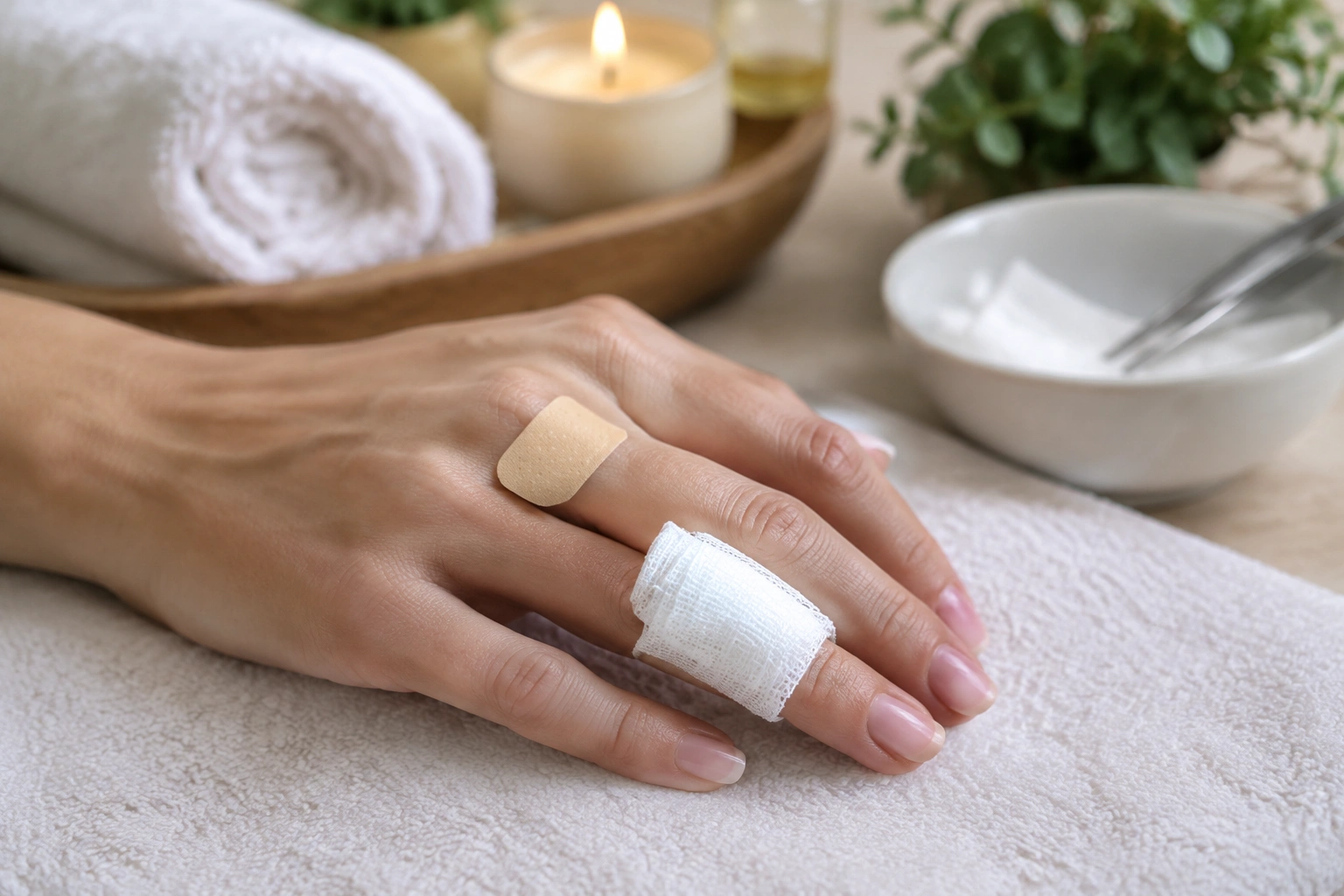
The first priority is not the manicure, the polish, or even the apology. It’s stopping bleeding, reducing contamination, and deciding whether the cut is minor enough for home care or serious enough for medical attention.
What to do right away if a nail salon cuts you
If the cut is still bleeding, pause the service. Don’t let the appointment continue over an open wound. A salon injury can be something as small as a nicked cuticle or torn skin, but even a small break in the skin deserves immediate attention.
Here’s the safest order:
-
Tell the technician to stop.
If the skin is actively bleeding or stinging, the tool work should pause. -
Apply firm, direct pressure.
Use clean gauze, a cotton pad, or a clean cloth and press steadily on the cut for 10 to 15 minutes without checking it constantly. If you’re on blood thinners, bleeding may take longer to stop, so keep pressure on and lower your threshold for medical advice. -
Escalate if bleeding does not stop.
If the cut is still bleeding after 10 to 15 minutes of firm pressure, or if blood is soaking through repeated layers, seek urgent care or medical evaluation. -
Wash your hands if needed, then rinse the cut.
Once bleeding slows, gently rinse with clean running water and mild soap. If the cut is still bleeding heavily, pressure comes first. -
Cover it.
Use a clean bandage or gauze once the area is dry enough. A covered wound is less likely to pick up dirt, polish residue, lotion, or tool contamination. -
Watch for signs the cut is more than superficial.
If it keeps bleeding, gapes open, or hurts more than a small nick should, stop the service and consider medical care.
If you develop facial swelling, hives, trouble breathing, or rapidly spreading redness after the cut, seek immediate medical care. Those can be signs of a serious allergic reaction or a fast-moving infection.
How to stop the bleeding and clean the cut safely
For a minor cut, direct pressure is the most useful first step. Keep steady pressure on the area for several minutes. If blood soaks through, add more gauze on top rather than peeling the first layer away.
Once the bleeding is controlled:
- rinse with clean running water
- wash gently with mild soap around the area
- pat dry with clean gauze or a clean towel
- apply a clean bandage
Avoid repeatedly pouring alcohol or hydrogen peroxide on the wound. Those products can irritate tissue and slow comfortable healing. If you want to use an antiseptic, keep it minimal and use it cautiously.
If the cut is on a finger or toe that will be rubbed by shoes, gloves, or water, a bandage is worth the inconvenience. Friction reopens small cuts more often than people expect.
For general wound care basics, the CDC’s first aid guidance and the FDA’s consumer health information are useful starting points. If you want a salon-specific example of standard precautions after a client cut, this nail technician safety guidance describes common cleanup steps such as fresh gloves, pressure, antiseptic, and sealed disposal of contaminated items.
Minor cut or urgent care? Use this simple decision table
A lot of people worry they’re overreacting. The easiest way to decide is to look at bleeding, depth, and function.
| What you see | What it usually means | Best next step |
|---|---|---|
| Small nick, bleeding stops with pressure, mild soreness | Often minor | Clean, bandage, monitor |
| Bleeding continues after sustained pressure | May need medical evaluation | Urgent care or doctor |
| Wound edges gape open or look deep | Possible stitches needed | Seek prompt care |
| Severe pain, numbness, or trouble moving the finger/toe | Possible deeper injury | Get evaluated soon |
| Redness, warmth, swelling, pus, or fever later | Possible infection | See a clinician |
| You have diabetes, take blood thinners, or are immunocompromised | Higher-risk situation | Lower threshold for medical advice |
A practical rule: if you can control it quickly, keep it clean, and it looks like a shallow skin nick, home care may be enough. If it won’t stop bleeding, opens widely, or affects movement, don’t wait it out.
When a nail salon cut needs stitches or urgent care
Not every cut needs a doctor, but some do. Go for urgent care or medical evaluation if:
- bleeding does not stop after sustained pressure
- the cut is deep or the edges separate
- the wound is on or near a joint and opens when you move
- you have numbness, tingling, or trouble using the finger or toe
- there is visible fat, tissue, or a large flap of skin
- the injury came from a dirty or contaminated tool and looks significant
If the cut is deep or dirty, ask about tetanus status too. A clinician can help you decide whether you need a tetanus booster, especially if your last shot was not recent or you are not sure when you were vaccinated.
Signs the cut may be infected in the next few days
A little tenderness right after the injury is normal. What you want to watch for is a pattern that gets worse instead of better.
Possible infection warning signs include:
- redness that spreads beyond the cut
- increasing warmth
- swelling that grows after the first day
- pus or cloudy drainage
- worsening pain instead of gradual improvement
- fever or feeling unwell
These symptoms can appear over the next several days, not always immediately. That’s why a cut that looks “fine” when you leave the salon still deserves a few days of attention.
If redness is small and fading, that’s usually different from redness that expands. If the wound becomes more painful on day two or three, that’s a stronger reason to get checked.
Special precautions if you have diabetes, take blood thinners, or are immunocompromised
If you have diabetes, poor circulation, take blood thinners, or have a weakened immune system, treat even a small salon cut more seriously.
Why? Because these conditions can make bleeding harder to control, healing slower, or infection more likely to become a bigger problem. A cut that might be a simple home-care issue for someone else may deserve a clinician’s look for you.
A lower threshold for care is smart if you notice:
- bleeding that seems harder to stop than expected
- swelling that builds quickly
- a cut on the foot or toe that feels hot or tender
- delayed healing after a pedicure
- any sign of infection, even if the wound looks small
If you’re not sure, it is better to call a doctor or urgent care than to assume it will settle on its own.
Should you continue the manicure or pedicure after being cut?
Sometimes the answer is no, even if the cut looks small.
Continue only if all of these are true:
– bleeding has stopped
– the wound is cleaned and protected
– the area is no longer painful enough to interfere with the service
– nothing dirty or abrasive will contact the cut
Stop the appointment if:
– the cut is still bleeding
– the skin is open and exposed
– you feel burning, throbbing, or sharp pain
– the service would put lotion, acetone, polish, or dust into the wound
– you’re uncomfortable proceeding
There’s a trade-off here. Finishing the service may feel efficient, but continuing over an open cut can increase irritation and contamination risk. In practice, stopping is usually the safer choice when the injury is more than a tiny nick.
If you want to understand what a salon service normally includes before returning another day, our guide to what to get at the nail salon can help you plan a better, safer appointment.
What to tell the salon and how to document the injury
Say what happened clearly and calmly. You do not need to argue to be taken seriously.
A simple script works well:
“I’ve been cut and it’s bleeding. Please stop the service while I clean and cover it.”
After that, ask the manager or technician to note:
– the date and time
– which service you were receiving
– where the cut happened
– what tool or step caused it, if known
– whether any first aid was provided
Take photos before you leave, especially if there is bleeding, swelling, or an obvious break in the skin. Save your receipt and the salon’s name. If the wound worsens later, those details may matter.
If the salon seems unsure how to handle the situation, that’s useful information too. A clean, professional response should prioritize stopping the bleeding, protecting the wound, and preventing contamination.
Refunds, complaints, and when to report unsafe salon practices
A refund and a complaint are not the same thing.
A refund request is about the service you paid for. It may be appropriate if the injury disrupted the appointment, the service was unfinished, or you feel the salon should make amends.
A formal complaint is about safety. Consider it if:
– the salon dismissed the injury
– tools appeared unsanitary
– the technician kept working over the wound
– you believe the salon’s hygiene practices were unsafe
If the salon is cooperative, a refund may be enough. If the response is careless or the injury seems tied to poor sanitation, a complaint may be the better next step.
For salon-side hygiene context, some guidance recommends avoiding cuticle cutting when possible and using sterile snippers only when necessary. A salon injury can be more than a cosmetic issue if it creates a pathway for infection, so sanitation matters. The Healthy Nail Salon Recognition Program is a useful example of how some programs frame higher safety standards.
If you want to report sanitation concerns locally, contact your city or county health department, state cosmetology or licensing board, or local consumer protection agency. Keep your photos, receipt, date, time, and a short written summary ready when you call or file a complaint.
How long to keep the wound covered and what healing should look like
For a small cut, keep it covered until the skin is closed enough that it won’t reopen with normal movement or friction. That may be just a day or two for a very minor nick, or longer if the cut is in a high-friction spot like a finger joint or toe.
Normal healing usually looks like this:
– the bleeding stops
– tenderness slowly decreases
– the wound dries and closes
– redness stays limited and fades
Concerning healing looks like this:
– pain increases instead of easing
– the area becomes hotter, redder, or more swollen
– drainage appears
– the cut keeps reopening
If you’re unsure whether the wound is healing normally, compare it to the first day. Better is gradual improvement. Worse is a sign to get checked.
If the injury happened during a service and you later need a repair appointment for the nail itself, our article on what is nail repair at a salon may help you separate cosmetic repair from wound care.
Quick checklist for the first 24 hours after a salon cut
Use this as your simple aftercare plan:
- stop the service if the cut is bleeding or painful
- apply firm pressure until bleeding slows
- rinse with clean water and mild soap
- pat dry gently
- cover with a clean bandage or gauze
- avoid picking, scrubbing, soaking, or returning to pools, hot tubs, or other water activities until the skin has closed
- watch for increasing redness, swelling, warmth, pus, or fever
- take photos and save the salon receipt
- seek medical care sooner if you have diabetes, take blood thinners, or are immunocompromised
If the injury is minor, this routine is often enough. If it is not improving, trust that signal and get it checked.
When to see a nail technician or dermatologist
If the skin is still open, the cut is deep, or you’re worried about infection, a medical professional should evaluate it. A nail technician is not the right person to assess an open wound or decide whether you need stitches, antibiotics, or another medical treatment.
That distinction matters: a nail tech can help with appearance and future prevention, but a clinician should handle open wounds, infection concerns, or anything that may need stitches or prescription treatment.
FAQs
Can I put antibiotic ointment on a salon cut?
It may be used for some minor cuts, but not every wound needs it. If you’re unsure, a clean bandage and careful cleaning are the safest basics. If you have concerns about allergy or irritation, ask a clinician or pharmacist.
Should I use alcohol or hydrogen peroxide?
Repeated use can irritate the tissue. Mild soap and clean running water are usually the gentler choice for cleaning a small cut.
How long should I keep it covered?
Keep it covered while it’s open, tender, or likely to rub against shoes, gloves, or daily activities. Small cuts may only need short-term protection; deeper or more exposed cuts may need longer.
Is a tiny cuticle cut a big deal?
Usually not if it stops bleeding quickly and heals normally. The concern is when the cut keeps bleeding, becomes contaminated, or starts showing infection signs later.
Should I ask the salon to stop the appointment?
Yes, if the wound is bleeding, painful, or exposed. Finishing the service is not worth turning a small injury into a bigger one.
What if the salon refuses to document it?
Take your own photos, save your receipt, note the time and service, and keep your written record. If you later need to make a complaint, your documentation will matter.
Can I report the salon?
Yes, if you believe the injury involved unsafe practices or the salon handled it poorly. A complaint is especially reasonable if sanitation looked questionable or the salon dismissed obvious bleeding.
What if I have diabetes or take blood thinners?
Have a lower threshold for medical advice. Even a small salon cut can deserve attention sooner if healing is likely to be slower or bleeding harder to control.
Should cuticles be cut during a manicure?
Some professionals avoid cuticle cutting when possible and use softening plus gentle pushing back instead. If cutting is necessary, it should be minimal and done carefully.
If you leave with one rule from this guide, make it this: treat a salon cut like a real wound, not an inconvenience. Clean it, cover it, watch it, and get help early if it stops acting like a minor nick.

