
Why Are My Toenails Thick and Hard? Causes, Care, and Safe Filing

If you have ever looked down and wondered, “Why are my toenails thick and hard?”, you are definitely not alone. Toenails can slowly become harder to cut, rougher around the edges, more yellow, or noticeably thicker than they used to be.
Sometimes this is simply related to aging or years of pressure from shoes. In other cases, thick toenails can be linked to fungal infection, repeated injury, or certain skin conditions.
The important thing is not to immediately grind, scrape, or cut away as much nail as possible. Understanding why the nail changed helps you choose a safer way to care for it.
This guide explains the common causes of thick and hard toenails, which nail files and trimming tools may help, how to care for them safely at home, and when the problem deserves professional attention.
Quick Answer
Why are my toenails thick and hard? Common causes include normal aging, fungal nail infections, repeated pressure or injury from footwear, and skin conditions such as psoriasis. Mild thickening may be managed with careful trimming and filing, but painful, discolored, crumbling, lifting, or rapidly changing nails should be evaluated by a healthcare professional.
What Does It Mean When a Toenail Becomes Thick and Hard?
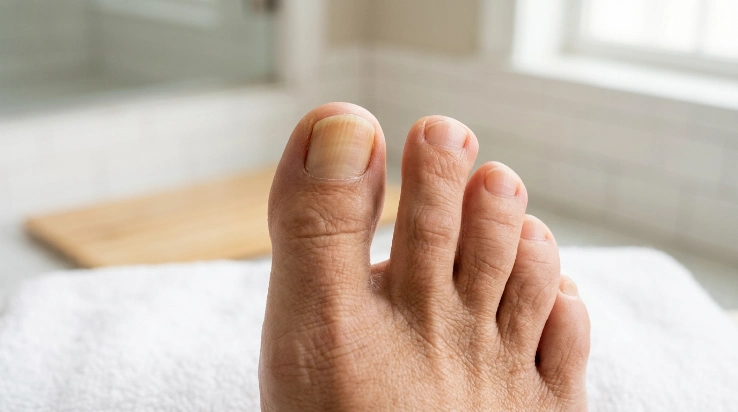
A healthy toenail is naturally firmer than a fingernail, but it should still be reasonably easy to trim with an appropriate toenail clipper.
A thickened nail may:
- Feel unusually dense or difficult to cut.
- Become yellow, white, brown, or dull.
- Develop ridges or an uneven surface.
- Curve more than it used to.
- Crumble or split at the edge.
- Collect debris underneath.
- Press against the inside of your shoes.
- Become uncomfortable when walking.
The change can affect one toenail or several.
Thickness itself does not tell you exactly what is wrong. Several different nail conditions can look similar, which is why trying to diagnose the problem from appearance alone can be misleading.
Common Reasons Your Toenails Become Thick and Hard
1. Normal Aging
Toenails often change gradually as we get older. Nail growth can slow, and the nail plate may become thicker and harder.
The Mayo Clinic guide to thickened toenails lists aging as one of the most common reasons toenails become thicker.
Age-related thickening usually happens slowly rather than appearing suddenly.
If your toenails have gradually become tougher over many years without pain, swelling, significant discoloration, or crumbling, normal aging may be contributing.
However, age does not automatically explain every nail change. New or dramatic changes still deserve attention.
2. Fungal Nail Infection
A fungal nail infection, also called onychomycosis, is another common reason a toenail becomes thick, hard, brittle, or discolored.
According to the American Academy of Dermatology’s guide to nail fungus symptoms, fungal nails may become thickened, discolored, brittle, crumbly, misshapen, or separated from the nail bed.
Signs that make fungus more suspicious include:
- Yellow, brown, or whitish discoloration.
- Crumbling edges.
- Debris underneath the nail.
- Nail lifting.
- More than one nail gradually becoming affected.
- Thickening that continues to worsen.
- Athlete’s foot occurring at the same time.
Do not assume every yellow or thick nail is fungal. Trauma and other nail conditions can look similar.
If you suspect fungus, aggressively filing the surface may make the nail thinner temporarily, but it does not eliminate the underlying infection.
3. Repeated Pressure or Nail Trauma
Your toenails deal with more impact than you may realize.
Common sources of repeated trauma include:
- Shoes that are too tight or short.
- High heels that push the toes forward.
- Running or hiking.
- Sports involving frequent stopping and starting.
- Repeatedly bumping the same toe.
- Dropping something on the nail.
- Previous nail injuries.
When the nail matrix—the area responsible for producing the nail—is repeatedly irritated, the new nail may grow differently.
It can become thicker, harder, uneven, or ridged.
A single major injury can also cause long-lasting changes, especially if the nail was badly bruised or partially detached.
4. Psoriasis and Other Nail Conditions
Psoriasis can affect more than the skin. It may also change the nails.
Nail psoriasis can cause thickening, pitting, discoloration, lifting, or debris underneath the nail.
Because these changes can resemble fungus, it is difficult to reliably tell the difference at home.
If you already have psoriasis or another chronic skin problem and suddenly notice toenail changes, mention them to your dermatologist.
5. Shoes That Do Not Fit Properly
Shoes may be contributing even when they do not feel painfully tight.
If the toe repeatedly hits the front or top of the shoe, low-grade pressure can occur every day.
Over time, the affected nail may become thicker or distorted.
Look at your everyday shoes and ask:
- Does my longest toe touch the front?
- Is the toe box narrow?
- Do my toenails hurt after walking?
- Does one specific toe repeatedly rub against the shoe?
- Do my toenails develop dark areas after exercise?
Changing footwear will not instantly reverse an already thickened nail, but reducing repeated pressure may help prevent continued trauma.
Can a Nail File Fix Thick, Hard Toenails?
A nail file can make a thick toenail easier and more comfortable to manage, but it cannot necessarily fix the reason the nail became thick.
Filing is most useful for:
- Smoothing rough edges after trimming.
- Removing small snags.
- Slightly reducing an uneven free edge.
- Preventing the nail from catching on socks.
- Improving comfort when a rough edge rubs against a neighboring toe.
It should not become an aggressive attempt to grind the nail down until it looks normal.
If you create heat, tenderness, redness, or sensitivity while filing, stop.
A file is a grooming tool—not a diagnostic or medical treatment.
Which Nail File Is Best for Thick Toenails?
Different files remove nail material at different speeds.
| Nail File Type | Best Use | Advantages | Main Caution | Cost Level |
|---|---|---|---|---|
| Emery board | Light smoothing | Inexpensive and easy to control | Wears out quickly and can hold debris | Low |
| Glass/crystal file | Finishing rough edges | Smooth, washable surface | Slow on extremely thick nails | Medium |
| Metal file | Tougher edges | Durable and reusable | Can feel aggressive on sensitive nails | Low-Medium |
| Coarse nail file | Very hard free edges | Removes material faster | Easy to over-file natural nails | Low-Medium |
For most people, a medium or moderately fine file offers better control than an extremely coarse surface.
If the nail is so thick that you feel you need prolonged heavy grinding to make progress, professional help may be safer.
Clippers vs. Nail Nippers for Thick Toenails
Ordinary fingernail clippers may not open wide enough or provide enough leverage for a very thick toenail.
A dedicated toenail clipper is stronger.
For particularly dense nails, nail nippers may provide additional leverage. Their larger handles and strong cutting jaws can make small controlled cuts easier.
However, nippers are also extremely sharp.
If you have difficulty seeing your toes, reaching your feet, controlling the tool, or feeling your feet normally, trying to force a sharp nipper through a hard nail may create more risk than benefit.
How to Safely Trim and File Thick Toenails
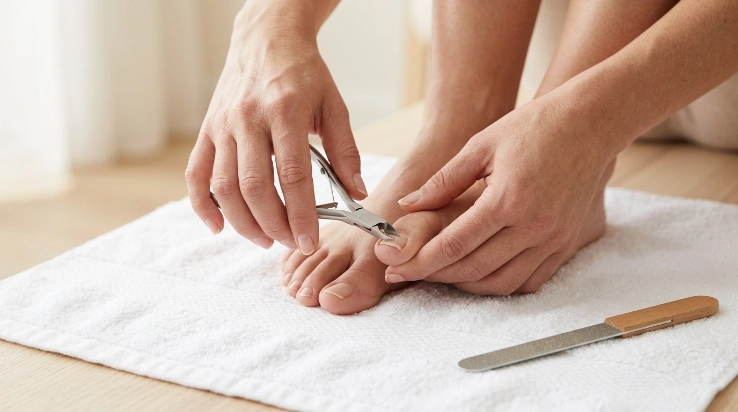
The American Academy of Dermatology’s nail-trimming guidance recommends softening nails before trimming, using appropriate clean tools, cutting toenails straight across, and smoothing rough edges afterward.
For manageable thick nails, follow these steps.
1. Soften the Nail
Trim after a bath or shower, or soak the feet briefly in lukewarm water.
Softening the nail can make cutting easier and reduce the temptation to force the clipper.
Dry the feet thoroughly afterward.
2. Inspect the Nail First
Before cutting, look for:
- Redness.
- Swelling.
- Drainage.
- Bleeding.
- Significant lifting.
- Dark pigmentation you cannot explain.
- Severe yellow or brown discoloration.
- Crumbling.
- Pain.
If something looks clearly abnormal, consider getting the nail assessed before aggressively grooming it.
3. Use the Correct Tool
Choose a sharp toenail clipper or controlled nail nipper rather than forcing a small fingernail clipper through a thick nail.
Never use household scissors, blades, knives, or other improvised sharp tools.
4. Make Small Cuts
Do not try to cut the entire thick nail in one dramatic clip.
Instead, make several small controlled cuts across the nail.
This gives you more control and decreases the chance of cracking or tearing the nail.
5. Cut Generally Straight Across
Avoid cutting deeply down the sides.
Leaving the corners visible helps reduce the risk of encouraging an ingrown toenail.
6. File the Rough Edge
Once the length is comfortable, use a clean nail file to smooth sharp or jagged areas.
Use gentle pressure.
You do not need to remove every ridge or make the nail perfectly thin and smooth.
7. Stop if It Hurts
Routine trimming and light filing should not involve significant pain.
Stop if you experience:
- Sharp pain.
- Bleeding.
- Burning.
- Heat from filing.
- New tenderness.
- Skin injury.
Pain is not a sign that you simply need to “push through.”
Hygiene Matters More Than You May Think
Toenail tools repeatedly contact skin, nail debris, and potentially microorganisms.
Good hygiene is especially important if a nail may be infected.
Keep personal grooming tools clean and dry, and avoid casually sharing nail clippers, files, or nippers with family members.
The American Academy of Dermatology notes that fungi responsible for nail infection can spread through contaminated personal items, making shared grooming tools a concern.
Disposable emery boards should be replaced once they become dirty, worn, or difficult to clean.
Reusable glass or metal tools should be cleaned according to their material and manufacturer instructions and dried thoroughly before storage.
What About Sensitive Skin and Fragile Nails?
Not every thick toenail is equally strong.
A nail can be thick in one area yet brittle at the edge. Using an extremely coarse file may cause pieces to crumble away unexpectedly.
If the skin around your nails is sensitive:
- Avoid filing directly against the skin.
- Do not dig beneath the nail.
- Use less pressure.
- Choose tools you can comfortably grip.
- Stop if the skin becomes irritated.
Moisturizer can be applied to dry surrounding skin after grooming, but avoid packing lotions or oils beneath a separated nail.
Expert Tip
Expert Tip: If your toenail suddenly seems unusually difficult to trim, focus on identifying why it changed before buying a more aggressive file. A stronger tool may make grooming easier, but it cannot treat fungus, psoriasis, injury, or another underlying nail problem.
DIY Care vs. Professional Care
Mild, stable thickening may be manageable at home when you can comfortably see, reach, and safely trim the nail.
Professional care becomes more appropriate when the nail is extremely thick, painful, distorted, or difficult to manage.
A qualified nail technician may be able to help with cosmetic grooming of otherwise healthy nails, but nail technicians do not diagnose fungal infections or medical nail disorders.
If the problem appears medical, a dermatologist, podiatrist, or other qualified healthcare professional is the better choice.
For fungal infections, the American Academy of Dermatology’s treatment overview explains that treatment can include prescription medications and professional reduction of nail thickness in appropriate cases.
That is very different from simply filing the nail thinner at home.
When to See a Nail Technician or Dermatologist
Consider professional help if your toenail:
- Keeps getting thicker.
- Becomes painful.
- Changes color significantly.
- Crumbles or breaks apart.
- Separates from the nail bed.
- Develops swelling or drainage around it.
- Has an unexplained dark streak or dark area.
- Makes walking or wearing shoes uncomfortable.
- Cannot be safely trimmed with ordinary grooming tools.
A nail technician may be appropriate when the nail is healthy but simply difficult to shape or maintain.
A dermatologist or podiatrist is more appropriate when infection, injury, disease, inflammation, or another medical problem may be involved.
Extra caution is important if you have diabetes, poor circulation, reduced sensation in your feet, or another condition that makes foot injuries harder to detect or heal. Mayo Clinic specifically advises people with diabetes, poor circulation, or reduced foot sensation to be cautious with thickened-toenail trimming.
Common Mistakes to Avoid
- Assuming every thick nail is fungus. Several nail problems can look similar.
- Filing until the nail feels hot. Heat and tenderness are signs to stop.
- Using a dirty file repeatedly. Worn grooming tools can be difficult to keep hygienic.
- Trying to cut the whole nail in one clip. Small cuts provide more control.
- Using a fingernail clipper that barely opens wide enough. Forcing a weak tool can make it slip.
- Digging into the nail corners. This can irritate the surrounding skin and encourage ingrown nail problems.
- Trying to remove discolored nail material yourself. Scraping does not diagnose or cure the cause.
- Continuing after bleeding starts. Stop, protect the area, and monitor it.
- Covering a suspicious nail with polish indefinitely. Cosmetic coverage can make it harder to notice changes.
- Ignoring footwear. Treating the nail without reducing repeated shoe pressure may allow trauma to continue.
- Using salon care as a substitute for medical diagnosis. Cosmetic professionals and healthcare professionals have different roles.
FAQs
Why are my toenails getting thicker as I get older?
Toenails may naturally grow more slowly and become thicker with age. However, fungal infections, shoe pressure, injuries, and other nail conditions also become common, so a new or unusual change should not automatically be blamed on aging.
Can I file down a thick toenail?
You can gently file a manageable thick toenail to smooth rough edges or slightly reduce an uneven free edge. Avoid aggressively grinding the entire surface. If substantial thinning seems necessary, professional evaluation is safer.
Does a thick yellow toenail always mean fungus?
No. Fungus can cause thick yellow nails, but trauma, psoriasis, aging, and other nail disorders may create similar changes. A healthcare professional can determine whether testing or treatment is needed.
Should I soak thick toenails before cutting them?
Softening thick toenails can make them easier to trim. Cutting after bathing or briefly soaking the feet in lukewarm water may help. Dry your feet thoroughly afterward.
Is a glass nail file good for thick toenails?
A glass or crystal file can work well for smoothing rough edges because it provides good control and can often be washed. Very thick nails may require more patience than with a coarser file.
Can a pedicure fix thick toenails?
A pedicure may improve the appearance of a healthy thick nail, but it cannot diagnose or treat conditions such as fungal infection or psoriasis. Painful, crumbling, inflamed, or suspicious nails should receive medical attention rather than purely cosmetic treatment.
How do I know when a thick toenail needs a dermatologist?
Seek professional advice if the nail is painful, rapidly changing, increasingly thick, badly discolored, crumbling, lifting, or surrounded by swollen or draining skin. You should also seek help if you cannot trim it safely yourself.
Conclusion
If you have been asking, “Why are my toenails thick and hard?”, start by remembering that thickness is a symptom rather than a diagnosis.
Normal aging, fungal infection, repeated shoe pressure, previous injuries, and certain skin conditions can all change the way a toenail grows.
For mild, stable thickening, proper tools, gentle softening, small straight cuts, careful filing, and good hygiene may make routine grooming much easier.
What you should not do is aggressively grind, scrape, or cut away a suspicious nail simply to improve its appearance.
Watch for pain, discoloration, crumbling, lifting, inflammation, or continued worsening. When those warning signs appear, make the safer choice and have the nail evaluated instead of relying on increasingly aggressive DIY care.
Your goal is not just a thinner-looking toenail. It is a toenail you can maintain comfortably, hygienically, and without causing unnecessary damage.

