
Why Do Cats Bite Nail Files? Reasons, Risks, and Safety Tips

If your cat grabs your nail file, bites the edge, or tries to lick it while you do your nails, you are not alone in wondering what makes that little beauty tool so interesting.
So, why do cats bite nail files? There is no single proven reason. In many cases, the rough texture, movement, smell, or simple urge to explore may attract them. Some cats may also enjoy chewing as a form of stimulation.
A quick nibble is not always a sign that something is wrong. But repeatedly chewing or actually swallowing pieces of a nail file deserves more attention.
Below, I’ll explain the likely reasons, which nail files present the most risk, what to do when your cat keeps coming back for one, and when the behavior may justify a call to your veterinarian.
Quick Answer
Cats may bite nail files because the rough texture, movement, smell, or chewing sensation catches their interest. Some cats also explore objects with their mouths. However, why do cats bite nail files can become a safety question if a cat swallows abrasive grit, cardboard, glass, metal, or other pieces of the file.
Why Do Cats Bite Nail Files?
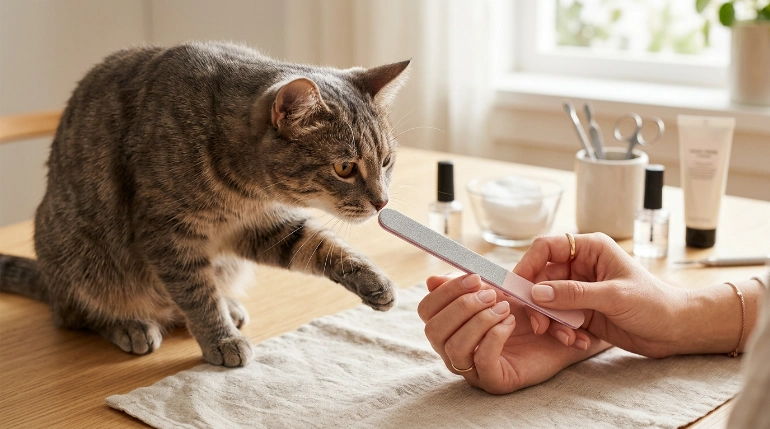
The first thing to understand is that a nail file is interesting to a cat in several different ways.
It is small enough to grab. It moves when you use it. It makes a scraping sound. It has an unusual texture. And after use, it carries your scent along with tiny traces of nail dust and whatever products may have been on your hands.
We do not have good evidence showing that cats bite nail files because of one specific ingredient or because they somehow “need” minerals from the file.
It is better to think of the behavior as a combination of curiosity, texture, play, scent, and sometimes an urge to chew.
1. The Rough Texture May Feel Interesting
An emery board has a coarse surface unlike most objects around the house.
When a cat puts it between its teeth, the gritty surface creates a strong physical sensation. That alone may make an otherwise ordinary object worth investigating again.
Chewing can also be part of a cat’s normal behavioral repertoire. The Feline Veterinary Medical Association discusses chewing as one component of appropriate indoor enrichment, alongside hunting, scratching, and viewing activities. You can learn more from its guidance on indoor enrichment and normal feline behavior.
That does not mean a nail file is an appropriate chewing toy. It simply helps explain why a textured item might catch a cat’s attention.
2. Your Cat May Be Investigating Your Scent
Cats investigate their surroundings through smell as well as touch.
A file that has just been in your hands may carry skin oils, hand cream, nail dust, cuticle oil, polish residue, or other scents.
That can make a used file more interesting than a completely clean object sitting across the room.
However, I would not assume that the cat is specifically attracted to human nail material. There is not strong evidence showing that nail dust itself is what causes this behavior.
3. The Movement Can Trigger Play Behavior
Think about what happens while you file your nails.
The file moves quickly back and forth. Your fingers move with it. The tip may suddenly disappear and reappear.
To a playful cat, that can look much more like an interactive object than a beauty tool.
A cat may bat it first and then grab it with the mouth, especially if you accidentally encourage the game by pulling the file away quickly.
The Feline Veterinary Medical Association recommends providing cats with appropriate opportunities for play and predatory behavior rather than letting hands or inappropriate household objects become toys. Its cat-friendly enrichment guidance also emphasizes safe play resources.
4. Your Cat May Simply Be Curious
Cats do not have hands that work like ours.
They often use a combination of their paws, nose, and mouth when examining something new.
A kitten may be especially likely to test unusual household items this way.
One quick bite followed by complete loss of interest is very different from a cat that searches for nail files and repeatedly tries to consume them.
That difference matters.
Is It Safe for a Cat to Bite a Nail File?
I would not intentionally let a cat chew one.
Even when the file seems harmless, it was designed for shaping human nails—not for a cat’s mouth or digestive system.
The exact risk depends partly on the material.
| Nail File Type | Main Concern for Cats | Practical Safety Level |
|---|---|---|
| Cardboard/emery board | Torn cardboard, abrasive particles, coating or adhesive | Best kept away |
| Glass file | Chipping or breakage could create sharp pieces | High concern if damaged |
| Metal file | Hard surface may injure teeth or gums | Not appropriate for chewing |
| Foam buffer | Foam or abrasive layers may be torn off and swallowed | Best kept away |
| Electric nail file | Rotating parts, cords, attachments, nail dust | Keep completely inaccessible during use |
The safest choice is simple: do not use any human nail file as a cat toy.
Can the Abrasive Surface Hurt a Cat’s Mouth?
Potentially.
A rough file dragged repeatedly across the gums, tongue, or lips could cause irritation.
A cat that bites very hard could also damage a tooth on a rigid metal or glass file.
VCA notes that persistent chewing or ingestion of inappropriate objects can contribute to dental problems, including tooth injury in some cats with pica.
If you notice bleeding, sudden drooling, pawing at the mouth, trouble eating, or obvious mouth pain after your cat bites a file, contact your veterinarian.
What If My Cat Swallows Part of an Emery Board?
This is more concerning than simply biting it.
Small amounts of paper or cardboard do not automatically mean your cat will become ill. However, you cannot safely assume that every swallowed piece will pass without trouble.
Nail files may contain several materials, including:
- Cardboard or foam
- Abrasive mineral particles
- Adhesives
- Coatings
- Plastic layers
- Metal
- Glass
The bigger concern is a cat swallowing enough material to irritate or block the digestive tract.
According to VCA’s guide to pica in cats, swallowed non-food material can cause gastrointestinal obstruction. Warning signs can include vomiting, reduced appetite, and abdominal discomfort.
If a noticeable piece is missing and you think your cat swallowed it, call your veterinarian rather than trying to make the cat vomit at home.
Could Biting Nail Files Be Pica?
Sometimes, but one nibble does not equal pica.
Pica means persistently eating or trying to eat things that are not food.
A cat with pica might repeatedly chew or swallow items such as paper, fabric, plastic, string, or other household materials.
Veterinary sources note that pica can have behavioral or medical associations. These can include anxiety, compulsive behavior, digestive disease, nutritional problems, anemia, diabetes, and hyperthyroidism.
That is why the pattern matters more than one isolated encounter.
Signs That Deserve More Attention
Watch your cat more closely if you notice:
- Searching for nail files specifically
- Swallowing pieces rather than simply biting
- Chewing plastic, fabric, paper, cords, or other non-food objects
- Vomiting
- Reduced appetite
- Weight loss
- Weakness
- Changes in normal behavior
- Broken or damaged teeth
- Excessive drooling
- Difficulty passing stool
A veterinarian can determine whether the behavior is simply exploratory or whether something medical needs to be ruled out.
Are Used Nail Files More Dangerous?
They can present extra hygiene concerns.
A used nail file may contain nail dust, skin cells, oils, lotion, polish, gel residue, or other cosmetic products.
That is one reason I would avoid letting a cat lick or chew a file even if the file itself appears intact.
The same rule becomes even more important if you have recently used products such as:
- Nail polish remover
- Acetone
- Gel products
- Nail glue
- Artificial nail products
- Cuticle remover
- Medicated nail products
Keep tools contaminated with cosmetic chemicals away from pets until they have been cleaned or safely discarded.
What Should I Do If My Cat Keeps Biting My Nail File?
The goal is not to punish your cat.
You want to make the nail file boring and inaccessible while giving your cat something safer to do.
1. Put the Nail File Away Immediately
Store files inside a closed drawer, box, cosmetic bag, or cabinet.
Do not leave one on a bedside table or vanity if your cat has already developed an interest in it.
2. Do Not Turn It Into a Game
It is tempting to wave the file away when your cat reaches for it.
Unfortunately, fast movement can make the object even more exciting.
Instead, calmly remove it and put it away.
3. Redirect Your Cat
Offer an appropriate toy before returning to your manicure.
Good options include toys designed for batting, chasing, pouncing, or supervised interactive play.
Environmental enrichment and appropriate play opportunities can help satisfy normal feline behavioral needs.
4. Reward the Behavior You Want
If your cat moves away from the nail file and engages with a proper toy, reward that choice.
You might use praise, a small treat, or continued play.
Positive reinforcement is preferable to frightening or punishing a cat. The Feline Veterinary Medical Association’s positive reinforcement guidance explains how rewards can be used to build desirable feline behaviors.
5. Watch for a Pattern
Keep mental notes for a few days.
Does your cat chew only the nail file?
Or is she also chewing packaging, fabric, plastic bags, cardboard, strings, cords, and other objects?
The second pattern is much more useful information to share with a veterinarian.
Expert Tip: Keep your manicure tools in a closed container instead of simply moving the file to another table. Once a cat learns that a certain object is fun to chew, an exposed file can quickly become tempting again.
Which Nail File Materials Need the Most Caution?
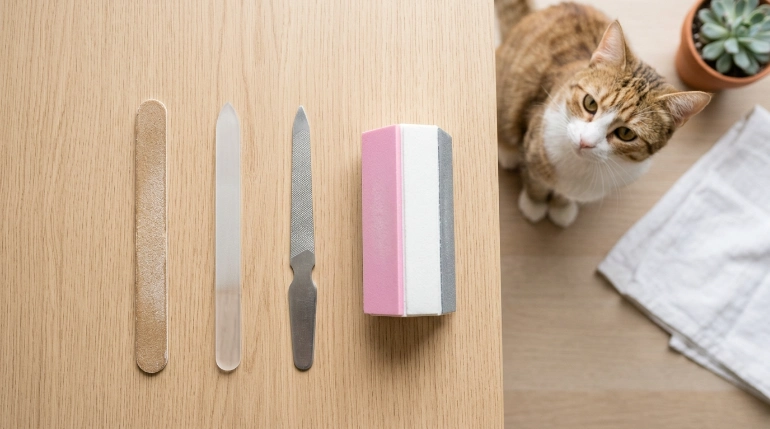
Emery Boards
These are common because they are light, inexpensive, and easy to use.
That same construction also makes them easy for a determined cat to tear.
Once the outer abrasive layer or cardboard starts coming apart, discard the file.
Glass Nail Files
Glass files are smooth and durable when used correctly for nails, but they are not pet toys.
A chipped or broken file can have sharp edges.
If your glass file falls and cracks, keep your cat away while you clean the area thoroughly.
Metal Nail Files
Metal does not tear apart as easily as cardboard, but that does not make it safe to chew.
The rigid material could hurt a cat’s mouth or teeth, especially during forceful biting.
Nail Buffers
Buffers may look soft, but many contain several bonded layers.
A cat can potentially tear pieces from the foam or abrasive surface.
Replace a buffer once it begins separating.
How to Keep Nail Tools Clean Around Pets
Basic hygiene protects both your manicure routine and your pet.
Try these habits:
- Use your file only for its intended purpose.
- Remove visible nail dust after use.
- Clean reusable tools according to the manufacturer’s instructions.
- Let washable tools dry completely before storing them.
- Throw away disposable files when they become worn or contaminated.
- Store tools in a closed, clean container.
- Keep files that have touched nail chemicals completely away from your cat.
I would also avoid sharing personal nail files between people whenever possible, especially if someone has a nail or skin infection.
Common Mistakes to Avoid
A cat biting a nail file can look funny, but a few reactions can accidentally make the situation worse.
Avoid these common mistakes:
- Letting your cat chew the file because she “only does it for a minute.” Repeated access makes swallowing a piece more likely.
- Using the file as a teaser toy. This can teach your cat that manicure time means playtime.
- Assuming cardboard is harmless. A file can contain abrasive material, coatings, foam, or adhesive in addition to cardboard.
- Ignoring missing pieces. Check a chewed file carefully.
- Punishing your cat. Yelling can increase fear or stress without teaching a safer alternative.
- Giving the cat an old nail file as a toy. Old does not mean pet-safe.
- Ignoring repeated non-food chewing. Persistent chewing or swallowing can deserve veterinary investigation.
- Leaving chemical-covered manicure tools exposed. Store them immediately after use.
When Should I Call a Veterinarian?
Call your veterinarian if your cat has swallowed part of a nail file or develops signs such as:
- Repeated vomiting
- Loss of appetite
- Abdominal pain
- Lethargy
- Difficulty passing stool
- Drooling
- Blood from the mouth
- Difficulty swallowing
- Persistent gagging
- Sudden behavior changes
VCA reports that non-digestible objects swallowed by cats can become lodged in the digestive tract, and sharp material can cause more serious internal injury.
Do not wait for severe symptoms if you know a significant or sharp piece was swallowed.
When to See a Nail Technician or Dermatologist
For the cat, a nail technician or dermatologist is not the right professional. A veterinarian should evaluate repeated chewing, swallowed objects, mouth injuries, or unusual eating behavior.
This section becomes relevant to you if the nail file involved has been used on damaged or unhealthy human nails.
Consider professional help if you have:
- Persistent redness or swelling around a nail
- Pus or drainage
- Significant nail discoloration
- Pain that does not improve
- A nail repeatedly lifting from the nail bed
- Suspected fungal infection
- Deep cuts around the nail
- Major nail trauma
A nail technician can help with routine cosmetic nail care, but suspected infection, unexplained nail changes, or painful skin problems belong with a dermatologist or other healthcare professional.
And if a cat has chewed a file you normally use, replacing an inexpensive disposable file is usually more sensible than continuing to use a damaged or contaminated one.
How Can I Make Manicure Time Easier With a Curious Cat?
Sometimes the simplest solution is changing the setup.
Before you start:
- Give your cat a short play session.
- Put loose manicure items in a tray.
- Keep files and buffers out of reach.
- Close bottles immediately after using them.
- Keep cotton pads and small disposable items contained.
- Provide your cat with an appropriate toy nearby.
- Put everything away when finished.
If your cat becomes highly focused on your manicure tools, doing your nails in another room may be easier.
You do not need to “win” a battle over the nail file. You just need to prevent access.
FAQs
Why does my cat lick my nail file?
Your cat may be investigating its unusual texture, scent, or residue left from your hands and nails. An occasional lick does not prove a medical problem, but nail files should still be kept away because they are not designed to be chewed or swallowed.
Why does my cat bite an emery board?
The rough texture and lightweight shape may make an emery board interesting to bite or grab. Its movement during filing can also encourage play. Do not intentionally allow chewing because layers of the board may eventually tear off.
Is nail dust harmful to cats?
Small accidental exposure is different from deliberately eating nail debris. Because a used file may also contain cosmetic residue, skin oils, coatings, or other material, it is safer to prevent licking and chewing rather than assume the residue is harmless.
Can cats eat cardboard nail files?
Cats should not be encouraged to eat them. Emery boards may contain cardboard along with abrasives, adhesives, coatings, or foam. Swallowing non-food material can create digestive problems, particularly if larger pieces are consumed.
Why is my cat suddenly chewing non-food objects?
Curiosity and play can explain occasional chewing. Persistent chewing or swallowing may also fit pica behavior and can sometimes be associated with behavioral or medical issues. A new, repeated pattern is worth discussing with a veterinarian.
Should I throw away a nail file after my cat bites it?
If the file has deep bite marks, torn layers, cracks, saliva contamination, or missing pieces, replacing it is the safest and simplest option. Damaged files may also perform poorly on your nails.
How do I stop my cat from stealing nail files?
Store the file in a closed container, avoid waving it like a toy, redirect your cat to an appropriate play item, and reward the cat for choosing the alternative. If your cat repeatedly seeks out and eats non-food items, talk with your veterinarian.
Conclusion
So, why do cats bite nail files? In most casual situations, the answer may be fairly simple: the file is rough, movable, easy to grab, covered in familiar scents, and interesting to explore.
What matters most is what happens next.
A quick curious nibble is very different from tearing apart or swallowing a file. Emery boards, buffers, glass files, and metal files all have potential hazards and should be treated as manicure tools rather than cat toys.
Store your tools when you finish using them, redirect your cat toward safe enrichment, and watch for repeated chewing of non-food objects.
If your cat swallows part of a file, develops digestive or mouth symptoms, or begins compulsively chewing other household objects, contact your veterinarian rather than trying to solve the problem with a DIY fix.
A safe manicure routine protects your nails—and keeps your curious cat out of trouble.

