
Why Do Cats Eat Nail Files? Causes, Risks, and What to Do

You set your nail file down for one minute, and suddenly your cat is licking it, biting the edge, or trying to carry it away.
It can look funny at first. But if you are asking why do cats eat nail files, it is worth paying attention. A quick lick or curious bite is different from a cat that repeatedly chews and swallows pieces of emery board, foam, plastic, or another non-food material.
Cats may investigate nail files because of their smell, rough texture, movement, or simple curiosity. Repeatedly eating the material may also be linked with a behavior called pica.
In this guide, I will explain the likely reasons, the risks of different nail file materials, what to do if your cat swallowed part of one, and how to stop the habit safely.
Quick Answer
Cats may chew nail files because they are curious about the smell, texture, or movement of the tool. However, if your cat actually eats nail file pieces or repeatedly seeks out other non-food objects, the behavior may be pica. Swallowed pieces can cause mouth injuries or potentially dangerous digestive blockages.
Why Do Cats Eat Nail Files?
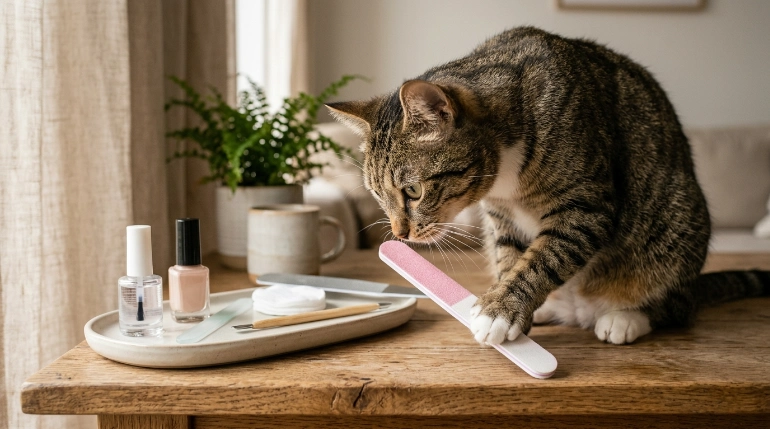
Most cats are not eating nail files because they somehow need the minerals in the file or because nail files taste good.
Often, the first bite is simple investigation.
According to VCA Animal Hospitals’ guide to foreign-body ingestion in cats, cats naturally investigate unfamiliar sights, smells, and tastes. That curiosity sometimes results in cats swallowing paper, rubber, wool, string, and other objects that are not food.
A nail file can check several of those curiosity boxes at once. It smells different, feels rough against the tongue, moves easily when pawed, and is small enough for a cat to pick up.
The important question is whether your cat is simply investigating the file or is repeatedly trying to chew and swallow it.
1. The Nail File Has an Interesting Texture
An emery board feels very different from most objects your cat encounters.
One side may feel coarse and gritty. The center often feels like thin cardboard or flexible fiber. Foam nail files and buffers can also compress slightly when bitten.
For a curious cat, that combination can make the file interesting to mouth or chew.
This does not mean the texture is safe. Small pieces can separate from damaged files and become easy to swallow.
2. A Used Nail File Carries Familiar Smells
A nail file that has been sitting in your manicure kit may smell like cardboard, plastic, nail products, lotion, or other materials.
A used file can also carry tiny amounts of nail dust and oils from your hands.
Cats rely heavily on smell when investigating their environment. A familiar object that also has an unusual texture may get more attention than a clean object stored away in a drawer.
That attraction is a possible explanation for occasional licking or sniffing, but it does not prove why an individual cat is chewing the file.
3. Your Cat Thinks the File Is a Toy
Think about what happens when you file your nails.
The file moves quickly from side to side. Your fingers move. The file may scrape against your nail and make a soft sound.
To a playful cat, all that movement can look like an invitation to pounce.
Once your cat catches the file with a paw, biting it may become part of the game.
That is especially easy to reinforce if you move the file around when trying to take it away. From your cat’s point of view, the “toy” may suddenly become even more exciting.
4. Your Cat Is Bored and Looking for Something to Chew
Cats need opportunities to climb, scratch, stalk, chase, explore, and play.
When those outlets are limited, some cats begin creating their own entertainment.
That might mean knocking products off your vanity, opening drawers, chewing packaging, or stealing your nail tools.
Boredom alone should not be assumed to explain persistent swallowing of non-food objects. However, environmental enrichment is part of the management veterinarians may recommend for behavioral pica. VCA specifically recommends appropriate toys, scratching posts, hiding areas, and feeding toys as part of environmental management.
5. Chewing May Get Your Attention
Cats are very good at learning which actions make us react.
Imagine that every time your cat picks up an emery board, you immediately look at her, walk toward her, talk to her, and try to retrieve it.
Even though you are trying to protect her, she has just received a lot of attention.
That can make stealing the file more rewarding.
Avoid turning the situation into a chase. Calmly remove access when possible and redirect your cat toward an appropriate toy.
Punishment is not a good solution. Veterinary guidance for behavioral pica recommends positive reinforcement and warns that punishment can increase anxiety and potentially make the behavior worse.
Could Eating Nail Files Be Pica?
Yes. Repeatedly swallowing nail files or other non-food materials can be consistent with pica.
Pica describes persistent ingestion of things that are not food. Cats with pica may eat materials such as plastic, paper, fabric, string, or thread.
Pica is more than a quirky habit.
Possible underlying factors can include anxiety, compulsive behavior, gastrointestinal disease, anemia, nutritional problems, diabetes, hyperthyroidism, and other medical conditions. That is why persistent behavior deserves veterinary attention rather than simply being treated as bad behavior.
Cornell veterinary researchers have also studied non-food eating behaviors such as fabric eating in cats and noted that behavioral and medical explanations may need to be considered.
If your cat regularly eats cardboard, fabric, plastic, foam, thread, hair ties, or nail-file pieces, tell your veterinarian exactly what you have observed.
Is Eating a Nail File Dangerous for Cats?
Potentially, yes.
The biggest concern is often not the abrasive surface itself. It is the possibility of your cat swallowing material that the digestive system cannot safely handle.
Foreign objects can lodge in the stomach or intestines and cause an obstruction. VCA describes foreign-body obstruction in cats as potentially life-threatening.
Sharp or rigid pieces can create additional problems.
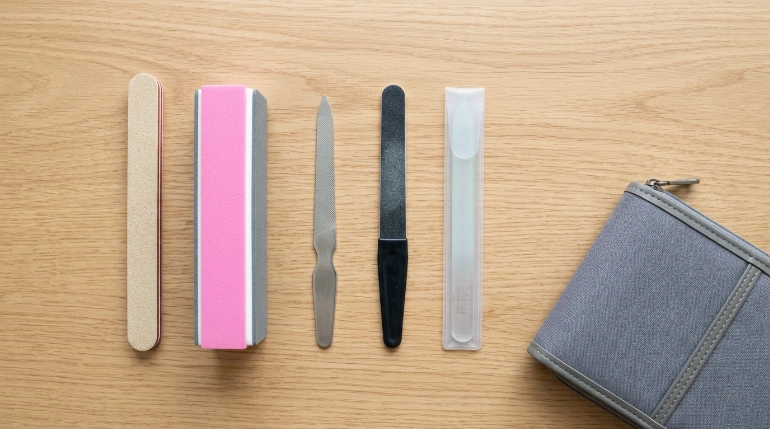
Nail File Risk by Material
| Nail File Type | Possible Concern if Chewed | What I Would Do |
|---|---|---|
| Emery board | Cardboard/fiber pieces and abrasive material may break off | Take it away and replace it |
| Foam buffer | Foam may tear into swallowable pieces | Keep completely out of reach |
| Plastic file | Broken plastic can develop sharp edges | Discard if bitten or cracked |
| Metal file | Hard edges may injure teeth or mouth | Never allow chewing |
| Glass/crystal file | Can break and create sharp fragments | Store in a protective case |
| File with polish/product residue | Adds possible chemical exposure | Contact a vet or poison expert if ingestion is suspected |
A basic nail file is easy to replace. There is no practical reason to keep using a disposable file once your cat has chewed through the surface or damaged the edges.
What Happens If a Cat Swallows a Piece of Nail File?
The result depends on the amount swallowed, material, shape, and size of the piece.
Some small foreign materials may pass through the digestive tract. Others do not.
A blockage can cause signs such as:
- Vomiting
- Reduced appetite
- Abdominal pain or tenderness
- Diarrhea
- Straining to poop
- Producing unusually small amounts of stool
- Lethargy
- Behavioral changes when the abdomen is touched
These signs are listed among the symptoms associated with foreign-body ingestion in cats.
Do not assume that your cat is safe simply because she seems normal immediately after swallowing something.
If a noticeable section of the file is missing, the material is sharp, or you saw your cat swallow it, contacting your veterinarian is the safer choice.
What to Do If Your Cat Ate a Nail File
If you discover a half-chewed emery board on the floor, do not panic. But do take the situation seriously.
Step 1: Remove the Remaining File
Take the file away so your cat cannot swallow more material.
Check the surrounding area for broken pieces.
If possible, keep what remains of the file. It can help you estimate how much material might be missing.
Step 2: Identify the Material
Was it:
- Cardboard or emery board?
- Foam?
- Plastic?
- Metal?
- Glass?
- Coated with nail polish, remover, glue, gel, acrylic residue, or another product?
This information can help your veterinarian assess the risk.
Step 3: Check Your Cat
Look for immediate problems such as:
- Drooling
- Pawing at the mouth
- Bleeding
- Gagging
- Repeated swallowing
- Vomiting
- Trouble eating
- Sudden hiding or unusual behavior
Do not force your fingers deep into your cat’s mouth to search for a fragment.
Step 4: Call Your Veterinarian if Material Was Swallowed
Tell the clinic what your cat swallowed, approximately how much is missing, when it happened, and whether your cat is showing symptoms.
Foreign-body problems can become more serious when an object becomes trapped in the digestive tract. Veterinary assessment may involve an examination and, when needed, X-rays or ultrasound.
Step 5: Do Not Try to Make Your Cat Vomit at Home
This is especially important.
The ASPCA’s guidance on inducing vomiting in pets states that there is no safe home method for making a cat vomit and specifically warns against giving hydrogen peroxide to cats.
Do not give your cat hydrogen peroxide, salt, oil, mustard, or other home remedies in an attempt to cause vomiting.
If chemical residue may have been swallowed, contact your veterinarian. For a possible toxic exposure in the United States, the ASPCA Animal Poison Control Center provides 24-hour guidance; consultation fees may apply.
How to Stop Your Cat From Eating Nail Files
Prevention is much easier than dealing with a swallowed fragment.
Store Your Nail Tools in a Closed Container
Do not leave files loose on:
- Bathroom counters
- Bedside tables
- Vanities
- Sofas
- Desks
- Open manicure carts
Use a closed drawer, zippered manicure pouch, or container your cat cannot open.
This is especially important for glass files and pointed manicure tools.
Give Your Cat Better Things to Chase and Explore
If your cat attacks the file while you use it, redirect that hunting energy.
Try appropriate cat toys that let her stalk, chase, bat, and pounce.
Rotating toys can also keep them more interesting.
For cats with behavioral pica, environmental changes such as feeding toys, scratching posts, appropriate play items, and hiding areas may form part of the management plan.
Do Not Turn Nail-File Theft Into a Game
Chasing a cat through the house with a stolen emery board can make the behavior much more exciting.
Instead, stay calm.
Offer an appropriate toy or treat away from the file when practical, then secure the manicure tool.
Watch for Other Non-Food Eating
Pay attention to whether your cat also chews:
- Plastic bags
- Fabric
- Cardboard
- Rubber bands
- Hair ties
- String
- Foam
- Paper
- Electrical cords
Repeated ingestion of non-food objects is more concerning than occasional investigation.
Keep a short note of what your cat eats, how often it happens, and when the behavior occurs. That information may help your veterinarian identify a pattern.
Expert Tip: Keep a small closed manicure case beside the place where you normally do your nails. Put every file, buffer, clipper, and loose accessory back into it immediately after use. Removing access is much more reliable than trying to teach a curious cat that one specific nail file is off-limits.
Should You Keep Using a Nail File After Your Cat Chews It?
I would replace it.
A chewed file may have torn edges, damaged abrasive material, saliva, fur, or dirt on its surface.
This is especially true for porous emery boards and foam buffers, which are difficult to clean thoroughly without damaging them.
Reusable glass or metal tools may sometimes be cleaned according to their manufacturer’s care instructions, but check carefully for cracks, chips, rough edges, or damage before using them again.
Never use a cracked glass file.
Replacing a low-cost manicure tool is a much better choice than filing your nails with a damaged or contaminated surface.
Hygiene Matters for Both You and Your Cat
Keeping manicure tools away from pets is not only about preventing ingestion.
Nail tools come into close contact with your nails and surrounding skin. A tool that has been inside your cat’s mouth should not immediately go back onto damaged cuticles, hangnails, or irritated skin.
Keep your manicure tools:
- Clean
- Dry
- Protected from pets
- Stored separately from household objects
- Replaced when damaged
Do not share heavily used porous files between people either.
Common Mistakes to Avoid
When you discover your cat chewing a nail file, a few reactions can make the situation worse.
Avoid these common mistakes:
- Leaving files on the vanity. If your cat has taken one before, assume she may try again.
- Chasing your cat for the file. This can accidentally turn stealing it into a game.
- Ignoring missing pieces. A noticeably shorter or torn file may mean material was swallowed.
- Trying to make your cat vomit. Home methods can harm cats.
- Assuming chewing always means boredom. Persistent non-food eating may require veterinary investigation.
- Continuing to use a damaged file. A fresh file is safer and more hygienic.
- Punishing the cat. Punishment can increase anxiety and is not recommended as a treatment for behavioral pica.
When to Call a Veterinarian
Contact your veterinarian if you know or strongly suspect that your cat swallowed part of a nail file.
Veterinary advice is especially important if the file was made from glass, metal, hard plastic, or another material that could form sharp pieces.
Seek prompt veterinary care if your cat develops:
- Repeated vomiting
- Loss of appetite
- Abdominal pain
- Severe lethargy
- Difficulty passing stool
- Repeated gagging
- Significant drooling
- Blood from the mouth
- Trouble swallowing
- Sudden unusual behavior
Foreign-body obstruction can become serious, and treatment becomes more complicated if digestive tissues are damaged.
Also schedule a veterinary appointment if your cat repeatedly eats nail files or other non-food objects even when no emergency symptoms are present.
Persistent pica can have behavioral or medical causes that need proper assessment.
When to See a Nail Technician or Dermatologist
This situation is mainly a veterinary issue for your cat, but do not forget about your own nail health.
A professional nail technician can help if a damaged file has left your nails rough, split, or difficult to shape. However, nail technicians should handle cosmetic nail care—not diagnose infections or medical nail conditions.
Consider seeing a dermatologist or other medical professional if you develop persistent redness, swelling, pain, pus, nail separation, or another concerning change around your nail or surrounding skin.
If your manicure tool has been chewed by your cat, replacing or properly cleaning it before it touches your skin again is the simplest approach.
FAQs
Why does my cat lick my nail file?
Your cat may be investigating its smell, texture, or the residue left from handling and filing your nails. Occasional licking is different from repeatedly chewing and swallowing pieces. If your cat regularly consumes non-food material, ask your veterinarian about pica.
Why does my cat chew emery boards?
Emery boards are lightweight, rough, flexible, and easy for a cat to grab. Those features can make them interesting to investigate or play with. Do not allow chewing because pieces of the board or abrasive layer may come loose.
Is a nail file toxic to cats?
Not every nail file is chemically toxic, but that does not make it safe to eat. The larger concern may be physical injury or gastrointestinal obstruction from swallowed material. Files contaminated with nail products create additional exposure concerns.
My cat ate a small piece of an emery board. What should I do?
Remove the rest of the file and contact your veterinarian for advice, especially if you cannot determine how much was swallowed. Watch for vomiting, reduced appetite, abdominal discomfort, lethargy, or problems passing stool.
Can I make my cat throw up after eating a nail file?
No. Do not attempt to make your cat vomit at home. ASPCA guidance states that there is no safe at-home method for inducing vomiting in cats, and hydrogen peroxide should not be given to them.
Does eating nail files mean my cat has pica?
Not necessarily. One curious bite does not automatically mean pica. However, repeatedly ingesting nail-file material or other non-food objects can fit the definition of pica and deserves veterinary evaluation.
How can I keep my cat away from my manicure tools?
Store files, buffers, clippers, and other nail tools in a closed drawer or zipped manicure case immediately after use. Give your cat appropriate toys, scratching areas, and daily opportunities to play and explore instead.
Conclusion
So, why do cats eat nail files?
A cat may first become interested because the file smells unusual, moves like a toy, or has a texture that is fun to investigate. But repeatedly chewing and swallowing pieces is different from harmless curiosity.
Persistent non-food eating may be pica, and swallowed nail-file material can sometimes cause dental injury or a dangerous digestive obstruction.
The safest solution is simple: keep manicure tools in a closed container, replace any file your cat has damaged, provide better outlets for play, and watch for repeated non-food eating.
And if you think your cat actually swallowed part of a nail file, call your veterinarian rather than trying a home remedy.
Protecting both your cat and your manicure kit only takes a few small changes.

