
Why Do Toenails Become Rough? Common Causes and Safe Care

If your toenails used to feel smooth but now look ridged, uneven, thick, flaky, or crumbly, it is natural to wonder what changed. Why do toenails become rough? Sometimes the answer is as simple as dryness, shoe pressure, or everyday wear. In other cases, rough texture can be connected to nail fungus, psoriasis, previous injury, or changes in how the nail grows.
The good news is that not every rough toenail needs aggressive treatment. Gentle filing, good hygiene, comfortable shoes, and a little patience may be enough for minor cosmetic roughness. However, a nail that is becoming thicker, discolored, painful, loose, or increasingly damaged deserves more attention.
This guide explains the most common causes of rough toenails, how nail files fit into safe care, which mistakes can make the problem worse, and when it is smarter to see a nail technician or dermatologist.
Quick Answer
Toenails can become rough because of dryness, repeated shoe pressure, aging, previous injury, improper filing, fungal infection, or skin conditions such as psoriasis. Mild surface roughness may improve with gentle care, but roughness combined with thickening, discoloration, crumbling, pain, swelling, or nail lifting should be professionally evaluated.
What Does a “Rough Toenail” Actually Mean?
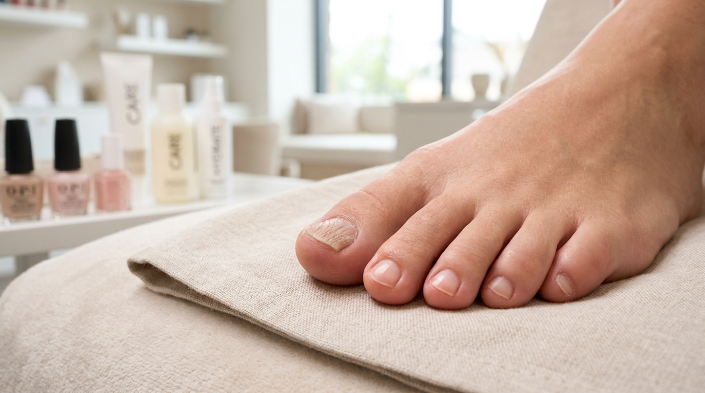
“Rough” can describe several different nail changes.
Your toenail may:
- Feel bumpy when you run a finger over it.
- Develop vertical or horizontal ridges.
- Have flaky or peeling edges.
- Look dry or dull instead of smooth.
- Become thick and difficult to trim.
- Develop tiny pits or dents.
- Feel crumbly around the free edge.
- Look uneven after filing.
- Develop buildup beneath the nail.
The appearance matters because different types of roughness can have different causes.
A slightly ridged but otherwise normal-colored toenail is different from a nail that suddenly becomes thick, yellow, crumbly, and partially detached. Do not assume every rough nail simply needs more filing.
The American Academy of Dermatology notes that changes in nail texture, color, or shape can sometimes signal a nail disorder or another health concern. AAD guidance on nail changes a dermatologist should examine
Why Do Toenails Become Rough?
Several everyday and medical factors can change the texture of a toenail.
1. Dryness Can Make the Nail Feel Uneven
Toenails contain layers of keratin, the same type of protein found in fingernails and hair. When the nail becomes dry, its surface and edges may feel less flexible and more prone to splitting.
Frequent exposure to water followed by drying, harsh products, aggressive polish removal, or simply naturally dry nails may contribute to a rough appearance.
A dry nail may have:
- Fine surface ridges.
- Brittle edges.
- Small splits.
- A dull appearance.
- Snags that catch on socks.
Moisturizing the surrounding skin and avoiding unnecessary abrasion can help protect a mildly dry nail.
2. Repeated Pressure From Shoes Can Change the Nail
Your toenails deal with much more pressure than your fingernails.
Shoes that are too tight around the toes can repeatedly push the nail against the front or top of the shoe. Running, hiking, dancing, and other activities can create similar repetitive trauma.
Over time, the toenail may become:
- Thicker.
- Ridged.
- Uneven.
- Discolored.
- Slightly distorted.
Mayo Clinic includes trauma and tight-fitting shoes among the possible reasons toenails become thickened. Mayo Clinic’s guide to thickened toenails
If one toenail is rough and it is also the toe that constantly rubs against your shoe, footwear pressure is worth considering.
3. Previous Nail Injuries Can Affect New Growth
You do not need to lose a toenail completely for an injury to affect its texture.
Stubbing a toe, dropping something on your foot, repeated sports-related impact, or damaging the nail during a pedicure may temporarily disturb normal nail growth.
Because toenails grow slowly, the damaged portion may remain visible for months while healthier nail gradually grows from the base.
Trying to buff the entire damaged area away usually does not speed that process up.
If the roughness is part of the nail plate itself, it normally has to grow forward before it can be trimmed away.
4. Aging Can Make Toenails Thicker and More Uneven
Toenails commonly change as people get older.
They may grow more slowly and become thicker, harder, or more ridged. A thicker nail can naturally feel rougher and may be more difficult to shape with a lightweight emery board.
Mayo Clinic notes that aging is a common reason for thickened toenails because the nail plate’s growth rate slows over time.
Age-related texture changes are not automatically dangerous. However, a sudden or dramatic change should not simply be blamed on aging.
5. Nail Fungus Can Cause Rough, Crumbly Toenails
Fungal nail infection, also called onychomycosis, is one of the more important causes to recognize.
A fungal toenail may become:
- Thickened.
- Yellow, white, or brownish.
- Brittle.
- Ragged.
- Crumbly.
- Misshapen.
- Partially separated from the nail bed.
Mayo Clinic explains that fungal infection can cause toenails to discolor, thicken, and crumble around the edges. Mayo Clinic nail fungus symptoms and causes
Filing can smooth an uncomfortable rough edge, but it does not cure nail fungus.
The infection can involve nail tissue that a surface file cannot reach. If you suspect fungus, proper diagnosis matters because injuries, psoriasis, and other nail problems can sometimes resemble fungal infection.
6. Nail Psoriasis Can Create Pits and Rough Texture
Psoriasis does not affect only the skin.
It can also involve fingernails and toenails. Nail psoriasis may cause tiny pits, discoloration, buildup beneath the nail, lifting, abnormal growth, and a rough or crumbling appearance.
The American Academy of Dermatology specifically lists pitting and crumbling or rough nails among possible signs of nail psoriasis. AAD signs and symptoms of psoriasis affecting the nails
If you already have psoriasis elsewhere on your body and begin noticing unexplained nail changes, mention them to your dermatologist.
7. Over-Filing Can Make a Toenail Rougher
Sometimes the tool intended to fix roughness becomes part of the problem.
Repeatedly grinding the nail surface can remove too much of the nail plate. This can leave the nail thinner, sensitive, scratched, or uneven.
Problems are more likely when you:
- Use very coarse grit on a natural nail.
- Apply heavy pressure.
- File the top surface repeatedly.
- Use an electric file without proper technique.
- Continue filing after feeling heat or tenderness.
The goal of home filing should usually be smoothing an edge or reducing a small irregularity, not grinding a natural toenail until every ridge disappears.
How to Tell Cosmetic Roughness From a Possible Nail Problem
This simple comparison can help you decide what to do next.
| What You Notice | Possible Explanation | Reasonable Next Step |
|---|---|---|
| Mild ridges with normal color | Dryness, everyday wear, normal growth | Gentle maintenance and monitoring |
| Rough edge after trimming | Uneven clipping or minor snag | Smooth lightly with a fine file |
| One nail thickened after repeated shoe pressure | Repetitive trauma | Check footwear and monitor |
| Yellow, thick, crumbly nail | Possible fungal infection | Consider medical evaluation |
| Tiny pits with rough or lifting nail | Possible nail psoriasis | Dermatologist evaluation |
| Pain, redness, warmth, or swelling | Injury or infection | Stop DIY treatment and seek professional care |
| Nail lifting away from nail bed | Trauma, fungus, psoriasis, or another condition | Avoid filing underneath and get evaluated |
| New dark streak or major color change | Requires proper assessment | See a dermatologist |
Can You File Rough Toenails?
Yes, minor rough edges can usually be filed gently, provided the nail is not painful, infected-looking, bleeding, badly damaged, or significantly detached.
Filing works best when your goal is simply to make an edge feel smoother.
It is less appropriate when you are trying to remove unexplained thickness, discoloration, deep ridges, or diseased-looking nail.
The American Academy of Dermatology recommends smoothing uneven or rough nail edges with a nail file or emery board and advises filing in the same direction rather than aggressively sawing back and forth. AAD guidance on properly trimming and filing nails
Choosing a Nail File for Rough Toenails
The best file depends on what you are actually trying to correct.
Fine Emery Board
A fine emery board is inexpensive and easy to control.
It works well for:
- Small rough edges.
- Occasional home pedicures.
- Nails that are not extremely thick.
Because many emery boards are difficult to sanitize thoroughly, replacing them regularly is sensible.
Glass or Crystal Nail File
Glass files can provide a smoother, controlled finish.
They are useful when you want:
- Gentle edge refinement.
- A reusable tool.
- Less aggressive abrasion.
A quality glass file may cost more initially than a disposable board, but it can last much longer if it remains intact and is cleaned correctly.
Metal Nail File
Metal files are durable but can feel aggressive on thin or sensitive nails.
Use light pressure and avoid repeatedly scraping across a fragile nail.
Electric Nail File
Electric files remove material quickly, but speed is not always an advantage.
For an inexperienced home user, an e-file can remove too much nail before you realize it. It may also generate uncomfortable heat.
Do not use an electric file to aggressively thin a painful, infected-looking, loose, or unexplained rough toenail.
How to Smooth a Mildly Rough Toenail Safely
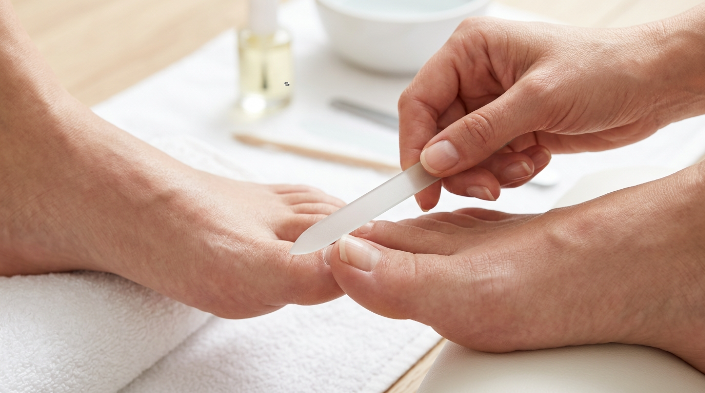
If the toenail looks healthy apart from a rough edge, use a conservative approach.
- Wash your feet and hands.
Start with clean skin and nails. - Dry the nail thoroughly.
Good visibility and control matter. - Inspect the entire nail.
Look for unusual color, lifting, swelling, bleeding, or obvious crumbling before filing. - Choose a gentle file.
A fine emery board or glass file is easier for beginners to control. - Support the toe.
Keep the nail steady rather than pulling on it. - File only the rough area.
Do not automatically buff the whole nail surface. - Use light, controlled strokes.
Stop once the snag or uneven edge feels smooth. - Stop if you feel pain or heat.
Filing should not hurt. - Clean or replace the file appropriately.
Do not share personal nail tools. - Moisturize the surrounding skin.
Avoid pushing moisturizer underneath a separated nail.
Expert Tip: When you cannot tell whether you are filing harmless roughness or an unhealthy section of nail, stop early. Removing less nail is much easier to correct than repairing an over-filed toenail.
Nail File Hygiene Matters
A reusable nail tool comes into contact with keratin debris, skin, and sometimes microorganisms.
For safer home care:
- Do not share nail files between people.
- Replace worn disposable files.
- Clean reusable files according to their material and manufacturer instructions.
- Allow washable tools to dry completely before storage.
- Do not put a file used on a suspicious infected nail back into a shared manicure kit without proper cleaning.
- Replace cracked, peeling, rusty, or damaged tools.
Hygiene becomes particularly important if the nail is thickened, crumbly, or possibly infected.
Common Mistakes to Avoid
- Trying to file every ridge away. Natural nail texture does not need to be perfectly flat.
- Using a very coarse file on a healthy natural nail. Faster removal can also mean faster damage.
- Filing until the nail becomes tender. Tenderness is a sign to stop, not a reason to keep smoothing.
- Digging underneath the nail. This can injure delicate tissue and may worsen separation.
- Assuming yellow or crumbly nails are only cosmetic. Fungus and other nail disorders need proper evaluation.
- Sharing nail tools. Keep personal pedicure tools personal.
- Using an e-file without enough control. Electric tools can remove nail rapidly and generate heat.
- Ignoring footwear. Continually squeezing the same toenail inside tight shoes can undermine your nail-care routine.
- Covering unexplained damage immediately with enhancements. Hiding the nail can make it harder to monitor changes.
DIY Care vs. Salon or Professional Care
DIY filing is useful when the problem is genuinely minor.
DIY Care Makes Sense When:
- The roughness is mild.
- The nail has a normal color.
- There is no pain.
- The nail remains firmly attached.
- You only need to smooth a snag.
- You can comfortably reach and see your toenail.
Professional Help Makes More Sense When:
- The nail is extremely thick.
- You cannot safely reach your feet.
- You repeatedly cut or injure yourself during nail care.
- The nail shape makes trimming difficult.
- You have unexplained discoloration or crumbling.
- Filing produces pain.
- You suspect fungus, psoriasis, or another health condition.
A licensed nail technician can help with cosmetic maintenance, but nail technicians do not replace medical diagnosis.
Suspected infection, significant nail disease, unexplained pain, or major changes should be evaluated by an appropriate healthcare professional.
When to See a Nail Technician or Dermatologist
A nail technician may be helpful for uncomplicated grooming and cosmetic shaping when the nail is otherwise healthy.
See a dermatologist or other qualified healthcare professional when the rough toenail is accompanied by:
- Increasing thickness.
- Yellow, brown, green, black, or unusual discoloration.
- Crumbling.
- Nail lifting.
- Redness or swelling.
- Bleeding.
- Drainage.
- Persistent tenderness or pain.
- A new or changing dark streak.
- Changes affecting several nails.
- Symptoms that continue getting worse despite gentle care.
The threshold for professional evaluation should also be lower if you have diabetes, poor circulation, reduced sensation in your feet, or another condition that can make foot injuries more serious.
Do not attempt to aggressively thin or cut away a suspicious toenail simply because it looks unattractive. A diagnosis is more useful than repeatedly treating the appearance without knowing the cause.
How to Help Prevent Rough Toenails
Not every nail-texture change is preventable, but these habits can reduce avoidable damage:
- Wear shoes with enough room around your toes.
- Keep toenails comfortably trimmed.
- Trim toenails mostly straight across rather than digging deeply into the corners.
- Smooth sharp edges gently.
- Avoid unnecessary surface buffing.
- Keep feet clean and dry.
- Change damp socks.
- Wear protective footwear in shared wet areas such as locker rooms and communal showers.
- Use clean nail tools.
- Do not share clippers or files.
- Moisturize dry surrounding skin.
- Give injured toenails time to grow out.
Consistency matters more than aggressive treatment.
FAQs
Why are my toenails suddenly rough?
Sudden roughness can result from injury, shoe pressure, aggressive filing, infection, or another nail condition. If the change is new and accompanied by discoloration, thickening, pain, crumbling, or lifting, have the nail evaluated.
Can vitamin deficiency cause rough toenails?
Nail changes can sometimes be associated with overall health or nutrition, but rough toenails alone cannot diagnose a vitamin deficiency. Avoid self-diagnosing based only on nail texture. Persistent or widespread nail changes are worth discussing with a healthcare professional.
Should I buff rough toenails smooth?
Only very lightly, if at all. Aggressive surface buffing can thin the nail plate. For ordinary home care, smoothing a rough free edge is generally safer than repeatedly trying to flatten the entire nail surface.
Why is my big toenail rough but the others are normal?
The big toe often receives more pressure from footwear and physical activity. Previous injury can also affect one nail. However, fungal infection and other conditions can begin in a single toenail, so monitor additional changes.
Do rough toenails mean I have fungus?
No. Roughness can come from dryness, trauma, aging, psoriasis, improper filing, and other causes. Fungus becomes more suspicious when roughness appears with thickening, discoloration, crumbling, debris, or nail separation.
What type of nail file is best for rough toenails?
For mild roughness on an otherwise healthy natural nail, a fine emery board or gentle glass file provides good control. Very coarse files and electric files should be used cautiously because they can remove nail quickly.
How long does it take a rough toenail to become smooth again?
It depends on the cause. A small rough edge can be smoothed immediately, while damage within the nail plate must gradually grow forward. Because toenails grow slowly, visible improvement from growth can take months.
Conclusion
So, why do toenails become rough? The answer can range from simple dryness and everyday shoe pressure to nail injury, aging, fungal infection, psoriasis, or overly aggressive filing.
A mildly uneven edge on an otherwise healthy nail can often be managed with a clean, gentle file and basic nail care. But filing is not a cure for every texture change. Thickening, discoloration, crumbling, pain, swelling, or nail lifting are signs to stop treating the problem as purely cosmetic.
Choose gentle tools, use light pressure, keep your pedicure routine hygienic, and pay attention to how the nail changes over time. When something looks unusual or keeps getting worse, getting the cause properly evaluated is the safest next move.

