
Why Do Toenails Get Thicker Over Time? Causes, Care, and Safe Filing Tips

If your toenails seem harder, thicker, or more difficult to trim than they used to be, you are not imagining it. Toenail texture can change gradually, and the difference may become especially noticeable on the big toes.
So, why do toenails get thicker over time? Aging is one common reason because toenails tend to grow more slowly as we get older. But thickness can also develop after repeated shoe pressure, an old injury, psoriasis, or a fungal nail infection.
The tricky part is that these causes can look surprisingly similar. That means aggressively cutting, grinding, or filing a thick toenail without knowing why it changed is not always a good idea.
This guide explains the common causes of thick toenails, how to care for manageable thickness at home, which nail files and tools are appropriate, and the warning signs that deserve professional attention.
Quick Answer
Toenails often get thicker over time because nail growth naturally slows with age. Repeated pressure from shoes, previous injuries, fungal infections, and psoriasis can also cause thickening. Mild, healthy thickness may be managed with careful trimming and filing, but painful, discolored, crumbling, lifting, or rapidly changing nails should be professionally evaluated.
Why Do Toenails Get Thicker Over Time as You Age?
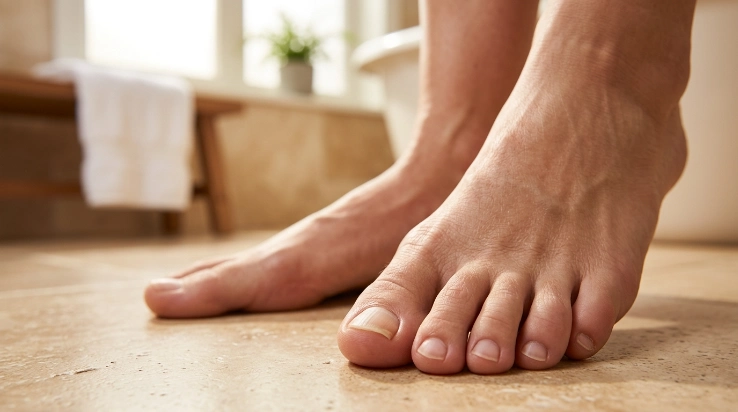
Age-related change is one of the simplest explanations for gradually thicker toenails.
According to Mayo Clinic’s guide to thickened toenails, toenail growth slows as people age, and aging is a common cause of increased nail thickness.
Toenails already grow much more slowly than fingernails. When their growth becomes even slower, they may gradually become harder, denser, and more difficult to trim.
Age also gives your toenails more time to experience years of everyday stress from:
- Closed-toe shoes
- Walking and exercise
- Repeated pressure on the big toe
- Minor injuries you may not remember
- Previous nail damage
- Moisture and sweating inside shoes
This is why a toenail that was thin and easy to clip when you were younger may require more careful maintenance later.
However, do not assume every thick toenail is simply caused by aging. A new change in thickness, especially when it affects only one or two nails or comes with discoloration, deserves a closer look.
Common Causes of Thick Toenails
Several different nail conditions can produce similar-looking thickness.
| Possible Cause | What You May Notice | DIY Care? |
|---|---|---|
| Normal aging | Gradual thickening without major pain or discoloration | Usually manageable |
| Repeated shoe pressure | Thick or distorted nail, often on a big toe | Mild cases may be manageable |
| Previous injury | One nail may grow differently after trauma | Depends on severity |
| Nail fungus | Thickening, discoloration, crumbling or lifting | Diagnosis may be needed |
| Nail psoriasis | Thickening, pitting, buildup, lifting or discoloration | Dermatologist recommended |
| Severe nail distortion | Very thick, curved or difficult-to-cut nail | Professional care is safer |
1. Natural Aging
A toenail that slowly becomes a little thicker over many years without pain, major discoloration, or surrounding skin changes may simply reflect normal aging.
The important word is gradually.
A sudden change deserves more attention than a slow, stable change.
2. Fungal Nail Infection
Toenail fungus, medically called onychomycosis, is another common reason nails become thick.
The American Academy of Dermatology’s guide to nail fungus symptoms notes that fungal nails may become thickened, discolored, brittle, crumbly, misshapen, or separated from the nail bed.
You may notice:
- Yellow, white, brown, or darker discoloration
- Crumbling around the edge
- Debris beneath the nail
- An unusual nail shape
- Nail lifting
- Several nails gradually becoming affected
- Sometimes discomfort or odor
Fungus cannot be confirmed simply because a toenail looks yellow and thick. Psoriasis, injury, and other nail problems can resemble it.
A dermatologist may examine or test a nail sample before recommending treatment.
3. Repeated Pressure From Shoes
Shoes that repeatedly press against your toenails can create ongoing minor trauma.
Common situations include:
- Shoes with a narrow toe box
- Shoes that are too short
- High heels that push the toes forward
- Running or hiking footwear that allows the toes to repeatedly strike the front
- Long periods of standing or walking
Mayo Clinic includes tight-fitting shoes and trauma among possible causes of thickened toenails.
The big toenail is often especially vulnerable because it takes significant pressure during walking.
Check your shoes before assuming your nail itself is the entire problem. Your toes should have enough room to move without repeatedly hitting the front or sides.
4. An Old Nail Injury
Dropping something on your toe, stubbing it badly, playing sports, running, or repeatedly bumping your nail can affect the way the nail grows afterward.
Sometimes the injury is obvious.
Other times, repeated small injuries gradually change the nail.
A previously injured nail may develop:
- Uneven thickness
- Ridges
- Irregular shape
- Temporary discoloration
- Slower-looking growth
A mild old injury may require nothing more than careful grooming. Persistent pain, lifting, significant color changes, or severe distortion should be evaluated.
5. Nail Psoriasis
Psoriasis does not only affect the skin. It can affect fingernails and toenails as well.
The American Academy of Dermatology’s nail psoriasis guide describes possible changes including pitting, discoloration, crumbling, nail separation, and buildup beneath the nail.
That buildup can make the nail appear much thicker.
If you already have psoriasis elsewhere on your body, mention toenail changes to your dermatologist rather than trying to file away the thickness yourself.
Is a Thick Toenail Always Unhealthy?
No.
Some toenails are naturally thicker than others, and mild age-related thickening is not automatically dangerous.
Pay attention to the whole picture.
A thick nail is more reassuring when it:
- Changes very slowly
- Remains a fairly normal color
- Does not hurt
- Does not smell
- Is not separating from the nail bed
- Does not crumble
- Has healthy-looking surrounding skin
You should be more cautious when thickness appears together with pain, swelling, discoloration, bleeding, drainage, crumbling, lifting, or a rapidly changing shape.
Can You File Down a Thick Toenail?
Sometimes, but filing should be used mainly for grooming, not for diagnosing or treating the cause.
A nail file can help:
- Smooth rough edges
- Remove snags
- Make the free edge more comfortable
- Refine the nail after trimming
It should not be used aggressively to grind an unexplained thick nail until it looks thin again.
Excessive filing can create heat, tenderness, thinning, splitting, or accidental injury to the surrounding skin.
Choosing a Nail File
Different file materials suit different needs.
| Nail File Type | Best Use | Cost | Main Consideration |
|---|---|---|---|
| Emery board | Occasional smoothing | Low | Replace when worn or dirty |
| Glass/crystal file | Gentle finishing | Low–Medium | Washable but breakable |
| Fine professional file | Controlled shaping | Low–Medium | Avoid overly coarse grit |
| Metal file | Light edge smoothing | Low | Can feel aggressive |
| Electric file | Specialized reduction | Medium–High | Easy to over-file without training |
For routine natural-toenail care, a fine or moderately fine file is usually easier to control than an extremely coarse one.
A coarse file may remove material faster, but faster is not automatically safer.
Expert Tip: If you have to press hard, file for a long time, or use a very coarse surface just to make a toenail manageable, stop. Finding out why the nail became so thick is smarter than repeatedly grinding it thinner.
How to Trim and File a Manageable Thick Toenail
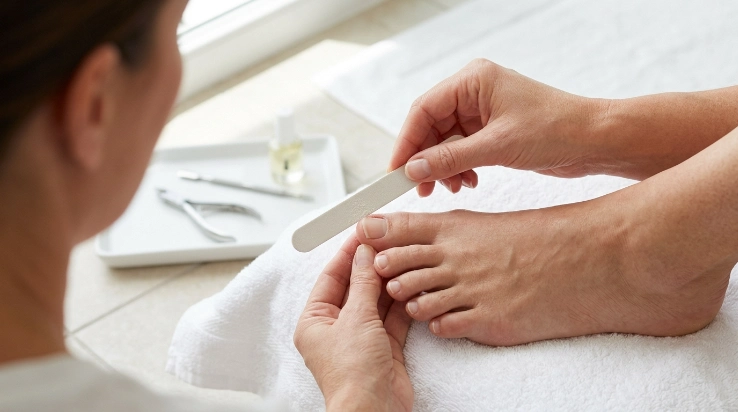
If your nail is only mildly thick, looks otherwise healthy, and can be trimmed without pain, careful home grooming may be reasonable.
The American Academy of Dermatology’s nail-trimming guidance recommends softening nails before trimming, using appropriate tools, cutting toenails straight across, and smoothing rough edges with a nail file or emery board.
Step 1: Soften the Nail
Trimming is often easier after a bath or shower.
A slightly softened thick toenail generally requires less force than an extremely hard, dry nail.
Step 2: Dry Your Foot and Check the Nail
Before cutting, look for:
- Redness
- Swelling
- Drainage
- Bleeding
- Significant discoloration
- Nail lifting
- Open skin
- Severe tenderness
If any of these are present, consider professional assessment instead of continuing.
Step 3: Choose the Right Clipper
Standard fingernail clippers may be too small for a thick big toenail.
For routine care, consider:
- Sturdy toenail clippers
- Wide-jaw toenail clippers
- Nail nippers for harder nails
A basic quality toenail clipper may cost roughly $8–$20, while heavier nail nippers often fall around $10–$30 or more depending on construction.
Never force a clipper that is bending, twisting, or slipping.
Step 4: Make Small Cuts
Do not try to cut an extremely thick nail in one dramatic squeeze.
Use several controlled cuts and keep the final toenail edge generally straight across.
Avoid digging deeply into the corners because this can irritate the surrounding skin and contribute to ingrown nail problems.
Step 5: File Rough Edges
After clipping, use a clean file with light pressure.
You only need to smooth sharp areas that could:
- Catch on socks
- Scratch neighboring toes
- Press uncomfortably inside shoes
Stop once the edge feels smooth.
Step 6: Clean Your Tools
Hygiene matters, particularly because microorganisms involved in nail infections can spread through contaminated grooming tools. The AAD notes that fungi can be transferred through improperly sanitized nail-grooming equipment.
Do not casually share:
- Toenail clippers
- Nail nippers
- Nail files
- Pedicure tools
Disposable emery boards are convenient because you can replace them when they become dirty or worn.
Reusable glass or metal tools should be cleaned and dried according to their care instructions.
Thick Toenails: DIY Care vs. Professional Care
The right choice depends more on the condition of the nail than on how much you enjoy doing your own pedicure.
DIY May Be Reasonable When:
- Thickness is mild
- The nail does not hurt
- The surrounding skin is healthy
- There is no drainage or bleeding
- The nail is not severely distorted
- You can comfortably see and reach your toes
- Your tools cut without excessive force
Professional Help Is Smarter When:
- The nail is extremely thick
- Cutting causes pain
- You cannot safely reach the nail
- The nail is badly curved or distorted
- You suspect infection
- The nail repeatedly grows abnormally
- You have medical conditions that make foot injuries more concerning
A nail technician may be able to help cosmetically maintain otherwise healthy nails, but a salon visit should not replace medical evaluation of a suspicious or infected-looking toenail.
Common Mistakes to Avoid
Thick toenails make people tempted to become more aggressive with their tools. That is exactly when accidents can happen.
Avoid these common mistakes:
- Grinding the entire nail extremely thin. You may damage the nail instead of solving the reason it thickened.
- Forcing small clippers through a hard nail. The tool can slip or crack the nail.
- Digging under the nail with sharp objects. This can injure sensitive tissue and introduce germs.
- Cutting deeply into the corners. This may encourage irritation and ingrown nail problems.
- Assuming yellow means fungus. Several nail conditions can resemble fungal infection.
- Sharing files and clippers. Nail-grooming tools can spread infection.
- Ignoring persistent pain. Healthy cosmetic grooming should not routinely hurt.
- Continuing after bleeding starts. Stop, protect the area, and allow it to heal.
- Using an electric nail drill without experience. Removing nail material too quickly can create heat and injury.
How to Reduce Future Toenail Problems
You cannot stop normal aging, but you can reduce unnecessary stress on your toenails.
Wear Shoes That Fit
Your toes should not repeatedly hit the front of your shoes.
Pay particular attention to footwear used for running, hiking, or long periods of walking.
Keep Toenails Neatly Trimmed
Overgrown toenails are more likely to hit shoes and experience repeated trauma.
Keep them at a comfortable length without cutting them down into the skin.
Keep Feet Clean and Dry
Warm, damp environments can encourage fungi.
Change sweaty socks and allow damp shoes to dry thoroughly before wearing them again.
Do Not Share Pedicure Tools
Keep personal files, clippers, and nippers for your own use.
Pay Attention to Gradual Changes
Toenails grow slowly, so changes can be easy to overlook.
Taking an occasional clear photograph in similar lighting can help you notice whether thickness, color, or shape is actually changing.
When to See a Nail Technician or Dermatologist
Knowing when not to DIY is one of the most important parts of toenail care.
Consider a nail technician for routine cosmetic grooming when your nails appear healthy but are simply difficult for you to shape neatly.
Consider a dermatologist, podiatrist, or other qualified healthcare professional when you notice:
- Increasing nail thickness
- Significant yellow, brown, white, greenish, or black discoloration
- Nail crumbling
- Nail lifting from the nail bed
- Swelling
- Persistent redness
- Bleeding
- Drainage
- Significant pain
- Difficulty walking because of the nail
- A nail you cannot safely trim yourself
- A suspicious new dark streak
- Thickening that continues to worsen
Mayo Clinic recommends seeking medical advice when thick toenails continue becoming thicker, become painful, or cannot be safely trimmed at home.
People with diabetes, circulation problems, or a weakened immune system should be especially cautious about foot and nail problems because seemingly small injuries or infections may require professional care.
FAQs
Do toenails naturally get thicker with age?
Yes. Toenails can gradually become thicker as you age because nail growth slows. However, fungus, pressure, injury, and psoriasis can also cause thickness, so a changing nail should not automatically be blamed on age.
Why is my big toenail thicker than the others?
The big toe often experiences more pressure from shoes, walking, exercise, and repeated minor trauma. An old injury or fungal infection may also affect one nail more than the others.
Can I use a nail file to thin a thick toenail?
You can gently smooth a healthy, manageable thick toenail, especially around rough edges. Avoid aggressively grinding the entire nail surface. Severe or unexplained thickness should be assessed before you repeatedly file it down.
Does a thick yellow toenail always mean fungus?
No. Fungus is a common cause of thick, yellow nails, but psoriasis, trauma, aging, and other nail changes can sometimes look similar. A dermatologist can test the nail when the diagnosis is uncertain.
What nail file is best for thick toenails?
For ordinary grooming, use a clean file you can control comfortably. A fine or moderately fine professional file, glass file, or emery board can smooth edges. Avoid using extremely coarse grit aggressively on a natural nail.
Can a pedicure fix a thick toenail?
A pedicure can improve the appearance and shape of a healthy thick nail, but it cannot diagnose or medically treat fungus, psoriasis, or another nail disorder. Suspicious changes should be evaluated medically.
Should I cut a very thick toenail myself?
Only if you can clearly see, reach, and trim it comfortably with an appropriate tool. If the clipper slips, requires extreme force, or the nail is painful, distorted, infected-looking, or difficult to reach, professional trimming is safer.
Conclusion
So, why do toenails get thicker over time? Natural aging is a major reason because toenail growth gradually slows. But years of shoe pressure, repeated injuries, fungal infections, and conditions such as nail psoriasis can also contribute.
For a mildly thick but otherwise healthy toenail, careful trimming, a suitable nail file, clean tools, and comfortable footwear may be all you need.
The goal is not to make every toenail perfectly thin. It is to keep your nails comfortable and recognize changes that need more than cosmetic care.
If a toenail becomes increasingly thick, painful, discolored, crumbly, lifted, or difficult to trim safely, stop trying to fix it aggressively at home and have it properly evaluated.

