
Why Does My Big Toenail Hurt at the Corner?

If the corner of your big toenail hurts when you walk, put on shoes, or press lightly beside the nail, it can be surprisingly distracting. You may notice only tenderness at first, or the skin may also look red, swollen, or irritated.
So, why does my big toenail hurt at the corner? One of the most common explanations is an ingrown toenail, where the edge of the nail presses or grows into the surrounding skin. But trimming mistakes, tight shoes, minor injuries, infection, thick nails, and irritated skin can cause similar discomfort.
The location of the pain, how the skin looks, and whether you have swelling, drainage, or a recent injury can help you decide whether simple home care is reasonable or whether your toe needs professional attention.
Quick Answer
Pain at the corner of your big toenail is commonly caused by an ingrown edge, cutting the nail too short, tight shoes, or minor trauma. Mild irritation may improve with roomy footwear and gentle nail care. Increasing redness, swelling, pus, severe pain, or spreading inflammation should be evaluated by a medical professional.
Why the Corner of a Big Toenail Can Become Painful
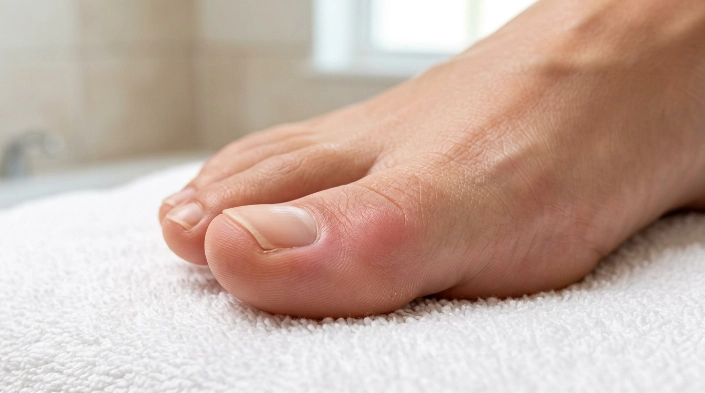
The big toenail takes a lot of pressure.
It pushes against shoes, absorbs force while you walk, and is commonly trimmed more aggressively than the smaller toenails. Because the nail is also wide and relatively thick, even a tiny sharp corner can press firmly against the skin beside it.
The medical term for an ingrown toenail is onychocryptosis. It happens when the side or corner of the nail grows into or presses against the surrounding skin.
The Mayo Clinic notes that ingrown toenails commonly affect the big toe and may cause pain, tenderness, inflamed skin, swelling, and sometimes infection. Mayo Clinic’s guide to ingrown toenails
However, pain does not automatically mean the nail is truly ingrown. Several other issues can make the same small corner feel sore.
Common Causes of Pain at the Corner of Your Big Toenail
| Possible Cause | What You May Notice | Best First Step |
|---|---|---|
| Ingrown toenail | Tender corner, redness, swelling | Reduce pressure and monitor closely |
| Nail cut too short | Tender exposed skin after trimming | Stop trimming and let it grow |
| Rounded or dug-out corner | Sharp edge pressing into skin | Do not keep cutting deeper |
| Tight shoes | Pain worse while wearing footwear | Switch to roomy shoes |
| Minor injury | Tenderness, bruising, throbbing | Protect the toe and watch for changes |
| Skin irritation | Soreness beside nail without deep nail pain | Keep clean, dry, and protected |
| Possible infection | Increasing redness, warmth, swelling, drainage | Seek medical evaluation |
| Thick or curved nail | Repeated pressure at one or both sides | Gentle maintenance; consider professional assessment |
1. An Ingrown Toenail
An ingrown toenail is probably the first thing most people think about when a nail corner becomes painful.
It may begin with mild tenderness where the nail touches the skin. As irritation increases, the skin can become red, puffy, and painful when you walk.
Sometimes the nail is clearly curved into the side of the toe. Other times, the offending corner is difficult to see.
Common contributors include:
- Cutting the nail too short
- Rounding the corners
- Tight or narrow footwear
- Repeated pressure on the toe
- Naturally curved toenails
- Previous injury
- Picking or tearing at the nail
MedlinePlus identifies poorly fitting shoes and improper trimming as common causes and advises cutting toenails straight across rather than rounding the corners. MedlinePlus information on ingrown toenails
2. You Cut the Toenail Too Short
A freshly trimmed nail can feel neat until you put on shoes and realize the corner hurts.
Cutting too short removes part of the nail that normally protects sensitive tissue underneath and beside it.
The problem can become worse if you try to “fix” the corner by clipping away even more nail.
If the nail was comfortable before your pedicure and became tender immediately afterward, over-trimming is a reasonable possibility.
Do not keep cutting simply because the nail looks uneven. Letting it grow forward is usually safer than repeatedly removing more of the corner.
3. You Rounded or Dug Into the Corner
Toenails are different from fingernails.
A softly rounded fingernail shape may look attractive, but aggressively curving the sides of a toenail can leave a pointed piece of nail beside the skin.
As the nail grows, that small edge may push into the nail fold—the strip of skin running alongside the nail.
This is why straight-across trimming is widely recommended for toenails.
4. Your Shoes Are Pressing on the Toe
Sometimes the nail is not the main problem.
The pressure around it is.
Pointed heels, narrow flats, snug sneakers, and shoes that are slightly too small can push the big toe inward. The nail edge then presses repeatedly against the surrounding skin.
You may notice that the toe feels fairly comfortable when barefoot but starts hurting after several hours in shoes.
For a few days, try footwear with:
- A wider toe box
- Enough length for your toes
- Soft material around the forefoot
- Minimal pressure against the painful corner
If the discomfort improves dramatically, shoe pressure may be contributing.
5. You Injured the Nail Without Realizing It
You do not need to drop something heavy on your toe to irritate a big toenail.
Running, long walks, repeated contact with the front of a shoe, kicking a hard object, or even a minor stub can make the corner tender.
Look for:
- New bruising
- A dark spot beneath the nail
- Swelling
- Tenderness across more than one area
- A loose nail
- Pain that began after exercise or an impact
If the nail is loose, bleeding, badly bruised, or very painful, avoid aggressive trimming or filing.
6. The Nail Is Thick or Strongly Curved
Some toenails naturally curve more than others.
Others become thicker after repeated trauma or because of changes affecting the nail itself.
A thick, curved nail can place greater pressure on the side of the toe even when it has been trimmed carefully.
Do not assume a thick nail simply needs aggressive filing. Significant new thickening, discoloration, crumbling, lifting, or pain deserves assessment because cosmetic filing cannot determine the underlying cause.
7. The Skin Around the Nail Is Inflamed or Infected
A painful corner can progress from simple irritation to infection.
Watch especially for:
- Increasing redness
- Warm skin
- Noticeable swelling
- Pus or other drainage
- Worsening tenderness
- Redness spreading beyond the immediate corner
- Fever or feeling unwell
The NHS lists pain, redness, swelling, and pus among signs that may accompany an ingrown or infected toenail and recommends medical care when symptoms worsen or home treatment is not helping. NHS ingrown toenail guidance
Do not try to cut, scrape, squeeze, or file an infected-looking corner yourself.
How to Tell Whether It May Be an Ingrown Toenail
Look at the toe in bright light without poking at the sore area.
A mild ingrown edge may cause:
- Tenderness directly beside one corner
- Mild redness
- Slight puffiness
- Pain when the side of the toe is pressed
- Increased discomfort in tight shoes
A more irritated or infected toe may develop:
- Significant swelling
- Bright or spreading redness
- Increasing pain
- Drainage or pus
- Warmth around the nail
You do not need to find a dramatic piece of nail buried in the skin for an ingrown edge to be possible.
At the same time, pain alone cannot confirm the diagnosis.
What You Can Do at Home for Mild Corner Pain
If the pain is mild, there is no pus or spreading redness, and you do not have a condition that makes foot injuries higher risk, conservative care may be reasonable.
1. Stop Digging Into the Nail Corner
This is one of the most important steps.
Do not use:
- Clippers
- Scissors
- Tweezers
- Cuticle nippers
- A pointed nail cleaner
- A metal file
to dig underneath the painful corner.
Removing more nail may temporarily reduce pressure, but it can leave another sharp edge deeper along the side.
2. Give the Toe More Space
Switch to comfortable shoes or sandals that do not squeeze the big toe.
Repeated pressure can keep an irritated corner sore even if the underlying problem is relatively minor.
3. Keep the Toe Clean
Wash the foot gently and dry it carefully.
Pay attention to the skin beside the nail.
If it becomes increasingly wet, swollen, warm, or produces drainage, stop treating it as an ordinary cosmetic nail problem.
4. Avoid Another Pedicure Until the Area Settles
Polish can hide changes in the nail and surrounding skin.
Aggressive cuticle work, buffing, clipping, or filing can also increase irritation.
Give the toe time to calm down before your next pedicure.
5. Let an Over-Trimmed Nail Grow
If you recently cut the nail extremely short, patience is usually more useful than another round of trimming.
Toenails grow slowly.
Your goal is to prevent additional pressure and avoid creating another sharp corner while the nail grows forward.
Can You Use a Nail File on a Painful Toenail Corner?
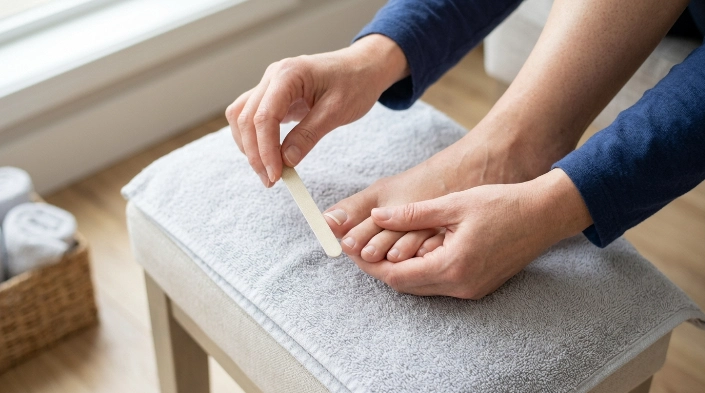
Sometimes—but only on an exposed rough free edge that is not surrounded by painful, swollen, or broken skin.
A nail file should be a finishing tool. It should not be used to dig down the side of an ingrown nail.
Choosing a File
For ordinary natural toenails, a fine or medium manual file usually provides better control than a very coarse file or electric nail drill.
| File Type | Typical Cost | Best Use | Main Limitation |
|---|---|---|---|
| Emery board | Low | Minor rough edges | Wears out quickly |
| Glass file | Low to moderate | Gentle smoothing | Can break if dropped |
| Metal file | Low to moderate | Firmer nails | Easier to over-file with pressure |
| Coarse file | Low to moderate | Very thick nail material | Too aggressive for sore skin |
| Electric file | Moderate to high | Specialized nail work | Higher DIY injury risk |
Exact prices vary, but you do not need an expensive professional tool simply to smooth a small healthy free edge.
How to File Safely
If the nail is otherwise healthy and you only have a rough exposed point:
- Wash your hands.
- Make sure the toe and file are clean.
- Support the toe comfortably.
- File only the exposed free edge.
- Use gentle, controlled strokes.
- Stop once the snag feels smooth.
- Stop immediately if filing causes pain.
Never slide the file deeply between the nail and skin.
The painful corner is not an area to “sand away.”
Expert Tip: If you cannot reach a sharp nail corner without pressing the file into tender skin, leave it alone. A difficult-to-reach painful edge is a sign to stop DIY shaping rather than use a sharper or more aggressive tool.
Nail Tool Hygiene Matters
A painful nail corner may already have tiny breaks in the surrounding skin, even if you cannot see them clearly.
That makes hygiene especially important.
Before trimming or filing healthy nails:
- Wash your hands.
- Start with clean tools.
- Do not share personal nail files or clippers.
- Replace disposable emery boards when dirty or worn.
- Clean reusable tools according to their material and manufacturer instructions.
- Avoid using the same dirty tool on several nails.
If there is blood, drainage, broken skin, or suspected infection, postpone cosmetic nail work.
A salon manicure or pedicure should also wait until an active medical problem has been addressed.
Common Mistakes to Avoid
A sore big-toenail corner often becomes worse because someone keeps trying to make the nail look better.
Avoid these common mistakes:
- Cutting a V-shaped notch in the middle of the nail. It does not reliably control how the sides grow.
- Digging out the corner. You can injure the skin and create another sharp nail edge.
- Rounding the sides aggressively. This can encourage future pressure at the nail folds.
- Cutting the nail extremely short. Leave enough nail to protect the skin underneath.
- Filing painful skin. Files belong on nail material, not inflamed tissue.
- Using an electric drill on an unexplained painful nail. Speed makes accidental thinning and skin injury easier.
- Wearing narrow shoes while waiting for the toe to improve. Continued pressure can prolong irritation.
- Covering worsening redness with polish. Cosmetic coverage does not treat infection.
- Sharing nail tools. Personal tools should be kept clean and separate.
- Ignoring repeated episodes. A corner that becomes painful again and again deserves professional evaluation.
DIY Care vs. Salon or Medical Care
Knowing who should handle the problem matters just as much as knowing what caused it.
| Situation | DIY Nail Care | Nail Technician | Medical Professional |
|---|---|---|---|
| Small painless rough edge | Usually reasonable | Optional | Usually unnecessary |
| Mild pressure after trimming | Conservative care | Wait until comfortable | If worsening |
| Cosmetic shaping of healthy nail | Reasonable | Appropriate | Usually unnecessary |
| Repeated ingrown corner | Limited | Not a medical treatment | Appropriate |
| Significant swelling | Avoid | Postpone service | Appropriate |
| Pus or drainage | Avoid | Postpone service | Appropriate |
| Severe or spreading pain | Avoid | Not appropriate | Appropriate |
| Major injury or loose nail | Protect only | Postpone service | Consider evaluation |
| Diabetes, poor circulation, or reduced sensation | Extra caution | Only with appropriate guidance | Seek medical guidance |
When to See a Nail Technician or Dermatologist
A nail technician can help with cosmetic care of healthy toenails, including careful trimming, filing, and pedicure maintenance.
A technician should not be expected to diagnose or treat an infected, severely ingrown, injured, or otherwise medically concerning toenail.
Consider a dermatologist, podiatrist, primary-care clinician, or other qualified healthcare professional if:
- Pain is severe
- Redness is spreading
- The toe feels increasingly warm
- You see pus or drainage
- Swelling continues to increase
- You cannot comfortably walk
- Home care is not helping
- The problem keeps returning
- The nail becomes significantly distorted or detached
- You have an unexplained major color change
Medical treatment for a persistent ingrown toenail may involve removing only the troublesome portion of the nail rather than the entire nail. The exact treatment depends on the severity and whether infection or recurrence is involved.
A Special Warning for Diabetes and Circulation Problems
Do not aggressively self-treat a painful toenail if you have diabetes, reduced foot sensation, nerve problems, or poor circulation.
Foot wounds and infections can be more serious in these situations. Mayo Clinic specifically advises people with diabetes or conditions causing poor blood flow to seek appropriate medical care for concerning foot problems.
How to Prevent the Corner From Hurting Again
Prevention mostly comes down to reducing pressure and avoiding aggressive trimming.
Trim Mostly Straight Across
Do not carve deep curves into the corners.
The goal is a practical toenail shape rather than a perfectly rounded manicure-style edge.
Do Not Cut Too Short
Leave a visible, manageable edge instead of trimming down to sensitive skin.
Smooth Only Genuine Snags
If the freshly cut nail has a tiny rough point, gently smooth the exposed edge.
Do not reshape the entire sidewall just because one corner looks uneven.
Wear Shoes That Fit Properly
Your toes should not be compressed together or repeatedly hit the front of the shoe.
This matters especially for running, long walks, dancing, and other activities that repeatedly load the forefoot.
Pay Attention to Recurring Patterns
If the same corner becomes sore every few weeks, the issue may involve the nail’s natural shape, your trimming technique, footwear, or another underlying problem.
Repeatedly cutting deeper is unlikely to be the best long-term solution.
FAQs
Why does only one corner of my big toenail hurt?
One-sided pain often happens because that particular nail edge is pressing against or irritating the surrounding skin. An ingrown nail, sharp corner, tight shoe pressure, or recent trimming can all cause this pattern.
Can a toenail hurt even if it does not look ingrown?
Yes. An over-trimmed nail, minor injury, pressure from footwear, irritated skin, or early inflammation may hurt before you see an obvious ingrown edge.
Should I cut out the painful corner?
Usually not. Digging into a painful corner can injure the skin and may leave another sharp nail edge behind. If the corner is buried, swollen, draining, or repeatedly painful, professional assessment is safer.
Can I file down an ingrown toenail?
Do not push a file into the side of an ingrown or inflamed nail. You may gently smooth a clearly exposed rough free edge when the surrounding skin is healthy, but filing is not a treatment for an ingrown nail.
Why does my big toenail corner hurt when I wear shoes?
Tight or narrow footwear can squeeze the toe and push the nail edge against the skin. If discomfort improves when barefoot or in wider shoes, pressure may be contributing.
How do I know if the corner is infected?
Increasing redness, warmth, swelling, worsening pain, pus, drainage, or spreading inflammation are warning signs. Fever or feeling unwell also deserves prompt medical attention.
Will an ingrown toenail go away on its own?
A mild case may improve when pressure and irritation are reduced, but persistent, worsening, infected, or repeatedly ingrown nails may require treatment from a healthcare professional.
Conclusion
If you have been wondering, “Why does my big toenail hurt at the corner?”, start by looking at the simple possibilities: an ingrown edge, cutting the nail too short, rounding the corner, tight footwear, or a small injury.
For mild irritation, give the toe room, keep it clean, stop digging into the corner, and let an over-trimmed nail grow.
Use a nail file only to smooth a harmless exposed snag—not to dig into painful skin or reshape an inflamed nail.
Most importantly, watch the direction your symptoms are moving. Increasing redness, swelling, drainage, severe pain, or spreading inflammation means the problem has moved beyond routine DIY nail care.
Choose gentle maintenance when the nail is healthy, professional cosmetic help when you simply need better grooming, and medical care when pain or infection is involved.

