
Why Does My Cat Bite Nail Files? Reasons, Risks, and What to Do

You sit down to fix a chipped nail, pull out your emery board, and suddenly your cat is right beside you. She sniffs it, rubs against it, grabs the end, or tries to bite it.
So, why does my cat bite nail files?
There is not one proven reason that explains every cat. Your nail file may smell like your hands, contain tiny bits of nail dust, feel interesting against the teeth, or move in a way that triggers playful curiosity. Some cats simply enjoy investigating unusual textures.
Occasional interest is usually very different from repeatedly chewing or swallowing nail-file material. The second behavior deserves more attention because nail files are human grooming tools, not cat toys.
Here is how to tell harmless curiosity from a potential safety problem—and what to do when your cat refuses to leave your manicure supplies alone.
Quick Answer
Cats may bite nail files because of their rough texture, your scent, nail dust, movement, or simple curiosity. Some cats also enjoy chewing unusual objects. A quick sniff or nibble may not be serious, but do not let your cat chew or swallow nail-file pieces, especially from emery, glass, or metal files.
Why Does My Cat Bite Nail Files?
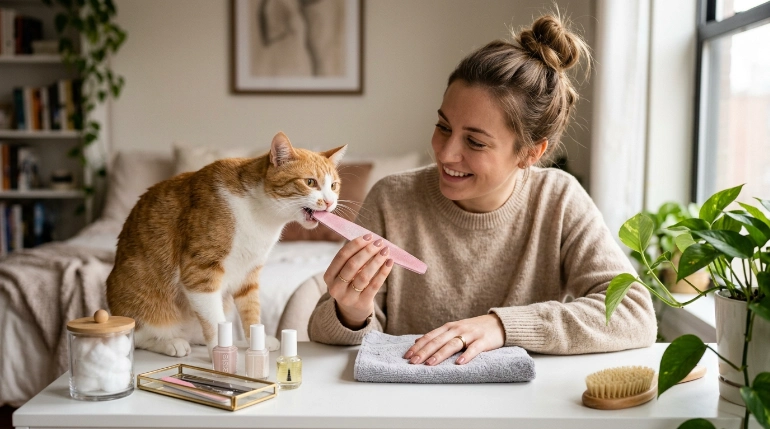
A nail file gives your cat several interesting things to investigate at once.
It has an unusual texture. It carries smells from your hands. A used file may contain nail dust and traces of hand products. When you move it back and forth, it also creates motion and sound.
For a curious cat, that can make an ordinary manicure tool surprisingly interesting.
1. The Nail File Smells Like You
One simple explanation is that your cat recognizes your scent.
You handle a nail file with your fingers every time you use it. Skin oils and other scents can remain on the surface, especially on porous emery boards.
Cats also use scent as an important part of communication. According to VCA Animal Hospitals’ explanation of feline face rubbing, cats have scent glands around areas including the cheeks, mouth, chin, and ears. Rubbing these areas against objects can deposit pheromones.
That is why your cat might first sniff the nail file, then rub her cheek against it, and finally test it with her teeth.
The biting may simply be another stage of investigation.
2. The Rough Texture Feels Interesting
An emery board is very different from most household objects.
It is:
- Rough and gritty
- Lightweight
- Thin enough to grab
- Easy to carry
- Slightly flexible
- Easy to bite at the edges
Cats naturally investigate objects with their paws, noses, mouths, and teeth. A gritty surface may provide an unusual sensation that encourages more exploration.
This is especially noticeable when a cat grabs the file, chews briefly, drops it, and then bats it around.
In that situation, the attraction may have more to do with texture and play than taste.
3. A Used Nail File Contains Nail Dust
Filing removes tiny particles from the surface of your fingernails.
Those particles can become trapped in the rough surface of an emery board. A used file may also collect skin oils, dust, cuticle oil, hand lotion, polish residue, or other products from your manicure routine.
Your cat’s interest does not prove that she is specifically attracted to nail material. It simply means a used file can smell and feel noticeably different from a new one.
Do not deliberately offer a used file to your cat to see whether nail dust attracts her. The potential for chewing and swallowing outweighs the value of testing the theory.
4. Movement Can Turn the File Into a “Toy”
Watch when your cat becomes interested.
Does she ignore the file when it is lying on a table but immediately pounce when you start filing?
If so, movement may be the biggest trigger.
Your hand repeatedly moves the narrow file back and forth. The file changes direction quickly and makes a light scratching sound.
To a playful cat, that can resemble an object worth chasing.
Your cat may grab the file because she wants to catch what is moving—not because she wants to eat it.
5. Your Reaction May Make the Game More Exciting
Imagine your cat steals the nail file.
You jump up.
She runs.
You chase her.
She runs faster.
From your perspective, you are retrieving a grooming tool. From your cat’s perspective, she may have discovered a reliable way to start an exciting interaction.
Repeatedly chasing a cat after she steals an object can accidentally make stealing more rewarding.
Instead, stay calm and trade the nail file for an appropriate toy or treat.
6. Some Cats Simply Like Chewing Objects
Cats sometimes chew household objects even when those objects are not food.
Strings, plastic, paper, fabric, cardboard, and similar materials can all attract certain cats. VCA notes that chewing or swallowing unsuitable household objects can become dangerous if those objects enter the digestive tract.
An emery board can fit into the same general pattern.
A cat who takes one experimental bite is different from a cat who repeatedly searches for nail files and tries to consume them.
That distinction matters.
7. Persistent Eating Could Be Pica
If your cat actually eats nail files or regularly consumes other non-food objects, discuss the behavior with your veterinarian.
Veterinarians use the term pica for persistent ingestion of non-food material. VCA’s guide to pica in cats explains that affected cats may repeatedly eat items such as plastic, paper, fabric, string, or thread.
Pica can have behavioral or medical contributors, so it should not automatically be blamed on boredom or a nutritional deficiency.
Simply sniffing or playing with a nail file does not mean your cat has pica.
Actual repeated ingestion is the warning sign.
Is It Dangerous for a Cat to Bite a Nail File?
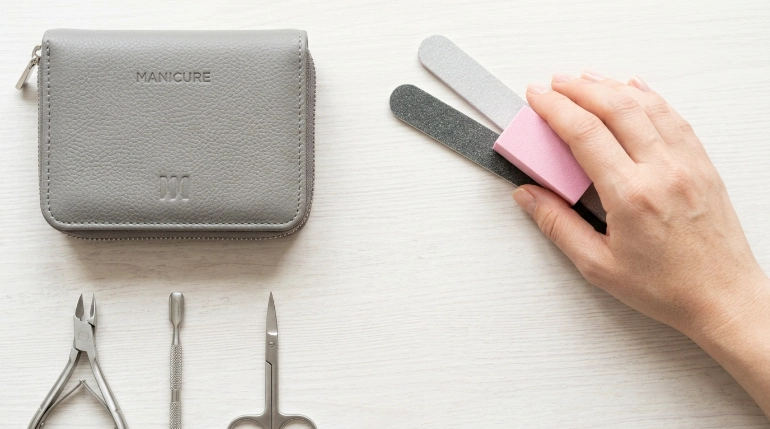
It can be.
The risk depends on the file material, its condition, and whether your cat merely mouths it or actually tears pieces off.
| Nail File Type | Why It May Attract a Cat | Main Concern | Relative Cost |
|---|---|---|---|
| Emery board | Rough, light, easy to grab | Can fray or break into swallowable pieces | Low |
| Glass file | Hard textured surface | May chip or break if damaged | Medium |
| Metal file | Firm texture and familiar scent | Hard surface or sharp edges may hurt the mouth | Medium |
| Electric file | Sound and fast movement | Moving bit, cord, heat, small attachments | Higher |
| Buffer block | Soft, light, easy to carry | Foam or abrasive material can be torn off | Low |
Emery Boards
Disposable emery boards are probably among the most tempting because cats can grab and shred them easily.
The problem is that the layers can become damaged with repeated chewing.
Once the board begins breaking apart, pieces may be swallowed.
Glass Nail Files
Glass files should never be treated as cat toys.
A high-quality glass file may feel sturdy, but dropping or damaging it can potentially create broken or sharp material. Keep it in its protective case when you are finished.
Metal Nail Files
Metal files are less likely to be shredded, but that does not make them good chew toys.
A cat biting hard metal could injure sensitive tissues around the mouth or teeth, particularly if the file has pointed or rough edges.
Electric Nail Files
Keep cats away from an operating electric file.
The rotating bit, cord, small accessories, dust, and sudden movement introduce risks that do not exist with a simple manual file.
Turn the device off before your cat approaches your manicure area.
What Should I Do When My Cat Bites My Nail File?
You do not need to punish your cat.
Instead, make access difficult and give her something safer to investigate.
1. Calmly Take the File Away
Avoid grabbing aggressively or turning the situation into a chase.
If your cat refuses to release it, try exchanging the file for a favorite treat or toy.
2. Check the Nail File for Damage
Look closely at the tool.
Ask yourself:
- Is part of the emery board missing?
- Has the edge been shredded?
- Is a glass file chipped?
- Is the metal file bent or damaged?
- Could a piece have been swallowed?
If a noticeable piece is missing, treat the situation differently from a harmless lick.
3. Put Manicure Tools in a Closed Container
Store nail files in:
- A closed drawer
- A manicure case
- A lidded organizer
- A cabinet your cat cannot access
- A zippered beauty bag
Do the same with nail clippings, cotton pads, false nail tips, electric-file bits, and other small manicure items.
4. Redirect Your Cat
Offer something designed for feline play instead.
A wand toy, scratching surface, kicker toy, ball, or other cat-safe option can provide movement and texture without turning your manicure supplies into toys.
5. Clean Up After Your Manicure
Do not leave nail dust and used manicure materials around your workspace.
Wash your hands when appropriate and wipe down the area after finishing.
The CDC’s guidance on healthy habits around cats also recommends regular handwashing after contact with cats and their supplies as part of good household hygiene.
Expert Tip: Keep a small closed container beside your manicure area. The moment you finish filing, put used files, clippings, cotton pads, and small accessories inside it. Removing temptation immediately is easier than retrieving a nail file from a playful cat.
What If My Cat Swallowed Part of a Nail File?
First, remove whatever remains of the nail file so your cat cannot consume more.
Then determine what may be missing.
A tiny amount of surface abrasion is different from a clearly missing chunk of cardboard, abrasive material, glass, or metal.
Foreign objects can sometimes become lodged in the digestive tract. The Merck Veterinary Manual’s overview of gastrointestinal obstruction lists signs such as vomiting, loss of appetite, diarrhea, lethargy, and abdominal discomfort among possible warning signs.
Contact your veterinarian promptly if:
- A significant portion of the file is missing
- Your cat swallowed a hard or sharp piece
- A glass file broke
- Your cat repeatedly vomits
- Your cat refuses food
- She becomes unusually tired
- She appears to have abdominal pain
- She drools excessively
- She repeatedly tries to swallow
- She has difficulty swallowing
Foreign material in the esophagus can also cause signs including drooling, gagging, difficulty swallowing, regurgitation, and repeated attempts to swallow.
Do not intentionally make your cat vomit unless a veterinarian specifically instructs you to do so.
Can I Use a Nail File on My Cat’s Claws?
A human-style nail file and a cat’s claws are two different issues.
A fine manual file can sometimes be used gently to smooth the very tip of a healthy claw. Washington State University’s veterinary guidance notes that a nail file may be used to smooth the end after clipping.
However, filing should not become an excuse to let your cat chew your manicure tools.
For regular claw care, ASPCA cat grooming guidance recommends gradually getting cats comfortable with paw handling and trimming only the sharp tip. It also recommends asking a veterinarian or groomer for help when a cat will not tolerate clipping.
If you do use a file for claw smoothing:
- Choose a quiet, fine manual file.
- Wait until your cat is relaxed.
- Handle one paw gently.
- Work only on the pointed outer tip.
- Use very light strokes.
- Stop when your cat pulls away or becomes tense.
Never force a frightened cat to continue.
How to Stop Your Cat From Stealing Nail Files
Prevention usually works better than repeatedly correcting the behavior.
Try creating a simple routine.
Before your manicure, bring out a toy your cat enjoys. Give her a short play session first. Then begin your nail routine while she is occupied somewhere else.
After filing, put the tool away immediately.
If she approaches, redirect her instead of allowing “just one bite.”
Consistency matters. If chewing a nail file is allowed sometimes but stopped at other times, your cat has no reason to understand the difference.
Hygiene Matters for You, Too
If your cat has been licking or chewing a porous disposable emery board, replacing it is usually the simplest choice.
Do not continue rubbing a saliva-covered disposable file across damaged skin or around irritated cuticles.
Reusable glass or metal files can generally be cleaned according to the manufacturer’s care instructions, but inspect them carefully first. Do not reuse a chipped or damaged tool.
Also keep nail products away from cats, including:
- Nail polish remover
- Nail glue
- Gel products
- Acrylic liquids
- Dip powder
- Cuticle products
- Small artificial nail tips
Your cat’s fascination with the file does not mean every item in your manicure kit is equally safe to investigate.
When to Call a Veterinarian
A cat sniffing a nail file once is unlikely to require veterinary care.
A different pattern deserves attention.
Contact your veterinarian if your cat:
- Regularly consumes non-food objects
- Constantly searches for nail files to eat
- Swallows pieces of an emery board
- Suddenly develops unusual chewing behavior
- Has mouth pain or bleeding
- Vomits after swallowing an object
- Stops eating
- Becomes lethargic
- Has abdominal discomfort
- Drools or gags
- Has difficulty swallowing
Repeated non-food ingestion should not be treated as a funny habit until possible medical or behavioral causes have been considered.
When to See a Nail Technician or Dermatologist
Your cat biting your nail file does not normally mean anything is wrong with your nails.
However, aggressive filing and poorly maintained tools can cause problems for people.
A professional nail technician can help when you need guidance on file type, grit, shaping, or safe manicure technique.
See a dermatologist or other qualified medical professional if you develop:
- Persistent redness around a nail
- Swelling
- Pain
- Pus or discharge
- Significant nail separation
- Unexplained discoloration
- Ongoing skin irritation
- Repeated splitting or crumbling
A nail technician can help with cosmetic nail care, but a salon cannot diagnose or treat a medical infection or nail disorder.
Common Mistakes to Avoid
When your cat becomes fascinated with manicure tools, avoid these common mistakes:
- Letting your cat chew an emery board because it seems soft. Pieces can tear off.
- Using a nail file as a cat toy. There are safer products designed for biting, chasing, and scratching.
- Assuming the behavior proves a mineral deficiency. Nail-file interest alone does not establish a nutritional problem.
- Chasing your cat every time she steals one. The chase can become part of the reward.
- Leaving used manicure supplies on a table. Small tools and product residues create additional risks.
- Ignoring repeated swallowing. Persistent ingestion of non-food objects deserves veterinary attention.
- Reusing a heavily chewed disposable file. Replace it for better hygiene.
- Allowing a cat near a running electric file. Rotating attachments and cords make this especially risky.
FAQs
Why does my cat lick and bite my nail file?
Your cat may be investigating your scent, skin oils, nail dust, rough texture, or the movement of the file. There is no single proven explanation that applies to every cat. Discourage chewing because nail files are not designed to be swallowed.
Why does my cat like used nail files more than new ones?
A used file carries additional smells and materials from your hands and manicure routine. It may contain skin oils, nail dust, or traces of hand products, making it more interesting than a clean file.
Is it safe for cats to chew emery boards?
It is better not to allow it. An emery board can fray or tear into smaller pieces that a cat may swallow. Store disposable files out of reach after use.
Does my cat bite nail files because she needs minerals?
Not necessarily. Simply sniffing, licking, or playing with a nail file does not prove a vitamin or mineral deficiency. If your cat persistently eats nail files and other non-food objects, ask your veterinarian about possible pica or other causes.
Why does my cat rub her face on a nail file?
Face rubbing can be part of normal feline scent communication. Cats have scent glands around the face, and rubbing against familiar objects can deposit pheromones.
What should I do if my cat ate an emery board?
Remove the rest of the board and determine how much may be missing. Contact your veterinarian promptly if a noticeable piece was swallowed or your cat develops vomiting, appetite loss, lethargy, abdominal discomfort, drooling, gagging, or difficulty swallowing.
Should I throw away a nail file after my cat bites it?
For a disposable emery board, replacement is the simplest hygienic choice. For reusable metal or glass files, follow the manufacturer’s cleaning instructions and inspect the tool for damage before using it again.
Conclusion
So, why does my cat bite nail files? Most likely, the file combines several things cats find interesting: your scent, a gritty texture, movement, sound, nail dust, and the opportunity to play.
A quick sniff or curious nibble is very different from repeatedly tearing apart and swallowing a nail file.
The safest approach is simple. Keep manicure tools stored away, redirect your cat to appropriate toys, replace contaminated disposable files, and watch carefully for actual ingestion.
If your cat repeatedly eats nail files or other non-food materials, speak with your veterinarian rather than assuming it is just a strange habit.
Your manicure routine and your curious cat can happily share the same home—just keep the nail files in your beauty kit, not her toy box.

