
Why Is My Nail Polish Streaky? A Beginner’s Guide to Smooth, Even Color

If your manicure looks striped, patchy, or see-through in places, you are not doing anything unusual. Streaky polish is one of the most common beginner frustrations, and it usually comes down to one of two things: the polish formula or the way it was applied.
The good news is that most streaky manicures can be improved without fancy tools. A few small changes — thinner coats, better brush control, cleaner nails, and a little more drying time between layers — often make a noticeable difference.
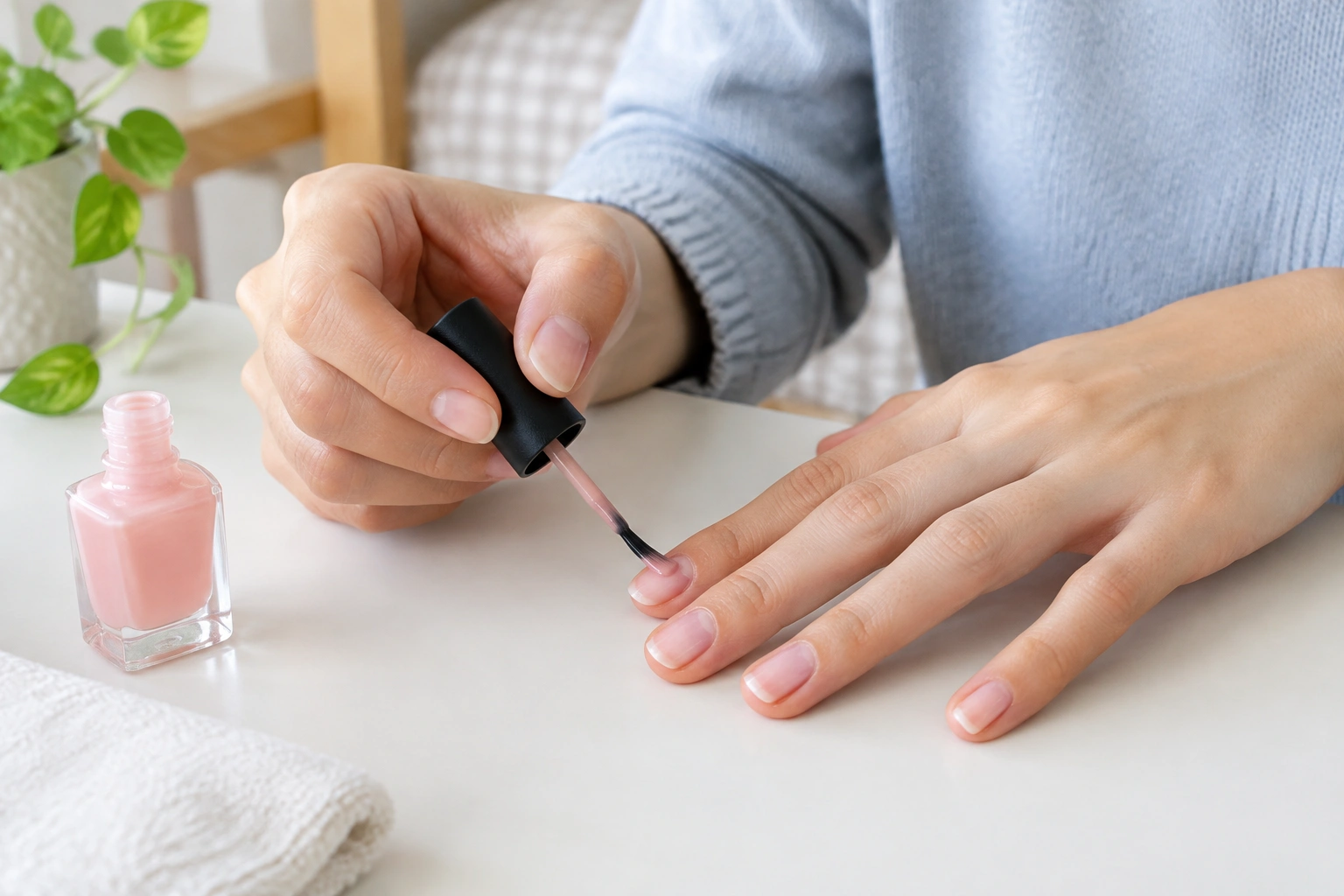
If you are trying to figure out why nail polish is streaky, start with this simple order: check the polish age and texture first, then nail prep, then brush technique, then coat thickness and drying time. That sequence will usually point you to the real problem faster than guessing.
Why Nail Polish Looks Streaky
Streakiness happens when polish does not spread and cover the nail evenly. Sometimes that means the formula is naturally sheer or low in pigment. Other times, the polish is fine, but the application technique is pulling color around instead of laying it down smoothly.
A useful way to think about it is this:
- Formula problem: the polish itself is thin, sheer, old, or thickened
- Application problem: the coat is too thick, too rushed, or overworked with the brush
That distinction matters because the fix is different. If the polish is the issue, more careful brushing may only help a little. If the technique is the issue, the same bottle can look much better with a cleaner application.
The Most Common Causes of Streaky Polish
1. The formula is sheer or low in pigment
Some colors, especially pale pinks, pastels, and translucent shades, are meant to be lighter. They often need more than one coat to look even. That does not mean the polish is bad. It may simply be a formula that builds coverage slowly.
A sheer polish can look streaky on the first coat and then smooth out on the second or third thin coat. That is normal. What you want to watch for is whether the polish improves with layering or stays patchy no matter what you do.
2. The polish has thickened or aged
Old polish often stops flowing the way it should. It may drag, clump, or leave visible lines because it is no longer spreading evenly across the nail.
If the bottle looks stringy, gooey, or hard to move, the formula may be too thick to apply cleanly. In that case, a proper polish thinner may help if the product is still usable. If the polish has separated badly or changed in a way that does not improve after gentle mixing, it may be time to replace it.
3. The brush is leaving marks
Brush strokes become visible when the brush is dragged over the same area too many times. This happens a lot when beginners try to “fix” a coat while it is already starting to set.
A few passes are fine. Repeated brushing is not. Once the polish starts to get tacky, going back over it can pull color away from one side and leave streaks behind.
4. The nail surface was not prepped well
Oil, dust, lotion, or leftover remover can keep polish from gripping evenly. When the nail surface is not clean and dry, polish may slide around or appear patchy.
Prep does not have to be complicated. Clean nails usually give better results than polished nails with product buildup. A base coat can also help create a smoother starting point, but it will not fully rescue a formula that is already weak.
5. The coats are too thick or too rushed
A thick coat may look like it should cover better, but it often creates more problems. Thick layers can streak, drag, wrinkle, or dry unevenly.
Thin coats may look a little see-through at first, but they usually level out better. As a simple rule, thin is thin enough when the polish lays down as a light, even film without pooling at the cuticle or dragging when you move the brush. For most opaque cream formulas, that usually means 2 thin coats. Sheer or pastel shades may need 3 or more thin coats to look even.
How to Tell Whether It’s the Polish or Your Technique
Use this quick troubleshooting order for streaky nail polish:
-
Check the polish first.
Look at the bottle and the first coat. If the polish is stringy, clumpy, or separating, the formula may be too old or too thick. -
Check nail prep next.
If the nail still has oil, lotion, dust, or leftover remover, the polish may not spread evenly. Wiping the nail with alcohol or remover before painting can help remove surface oil and improve grip. -
Check your brush technique third.
If the streaks follow your brush strokes, you may be pressing too hard, overworking the coat, or going back over semi-dry polish. -
Check coat thickness and drying time last.
If the polish is applied too thickly or the next coat goes on too soon, streaking and wrinkling become more likely.
A simple way to test the problem is to change only one thing at a time. For example, keep the same polish but use thinner coats on the next nail. If the result improves, you have likely found the main issue.
What to Do While Painting: Brush Technique, Coat Thickness, and Dry Time
Use thin coats instead of one heavy coat
Thin coats are easier to control and usually dry more evenly. They may not look perfect immediately, but they are less likely to streak or wrinkle.
A practical way to apply polish is to load the brush lightly, then place the polish near the center of the nail and guide it outward. If the brush starts to feel dry, reload it instead of pressing harder.
Keep your brush strokes gentle
Use enough pressure to move the polish, not enough to scrape it back off the nail. If you keep brushing the same area, the coat can become thinner in some spots and thicker in others.
A better approach is to make a few smooth passes, then stop. If a spot still looks uneven, wait for the layer to dry and correct it with the next coat.
Let each coat settle before adding another
If the previous coat is still too wet, the next one can drag through it and create more streaks. If it is too dry and you press hard, you can also leave lines behind.
The goal is a coat that is dry enough to handle the next layer without being disturbed. You do not need to rush this step.
Should You Shake or Roll the Bottle?
This is a small step, but it matters.
Rolling the bottle gently between your hands is usually the safer choice because it helps mix the polish without making as many bubbles. Shaking can mix pigment faster, but it may introduce air bubbles that show up on the nail or make the formula less smooth.
If the polish has been sitting for a while, rolling it first is a simple habit that can help. If the product still seems uneven after that, the issue may be thicker polish or a formula that needs replacing.
How Nail Prep and Base Coat Affect Streakiness
Clean nails help polish spread more evenly. If your nails have lotion, oil, or dust on them, the polish may not glide on smoothly.
A base coat can help in two ways:
- It gives polish a more even surface to grip
- It can make the first color coat look smoother
That said, a base coat is not a magic fix. If the polish is sheer, old, or badly applied, the base coat will not make it fully opaque.
A simple prep routine is usually enough for beginners:
1. Remove old product
2. Clean the nail surface
3. Let nails dry fully
4. Apply base coat
5. Use thin color coats
How Many Coats You Usually Need
There is no single number that works for every polish, but here are realistic expectations:
- Most opaque cream formulas: usually need 2 thin coats
- Sheer, pastel, or lightly pigmented shades: often need 3 or more thin coats
- Very light colors: may show brush marks more easily, so thin coats matter even more
The key is to stop thinking of the first coat as the final result. For many polishes, the first coat is just the base layer that helps the next one sit smoothly.
If a second thin coat improves the look, you are on track. If the third coat still looks patchy or thick, the formula may not be ideal for you.
How to Rescue a Streaky Manicure Without Starting Over
If the streaking is mild, a careful second coat often helps. Keep it thin and avoid pressing hard with the brush.
A top coat can also soften the look of slight unevenness by adding shine and helping the surface look more unified. But it has limits. A top coat can smooth the finish when the streakiness is minor; it cannot fix dragging, clumping, or wrinkling. If the manicure is doing any of those things, it is better to remove it and start again.
A simple rule:
– Mild streaks: try one more thin coat or a smoothing top coat
– Dragging, clumps, wrinkles, or obvious bald spots: remove and restart
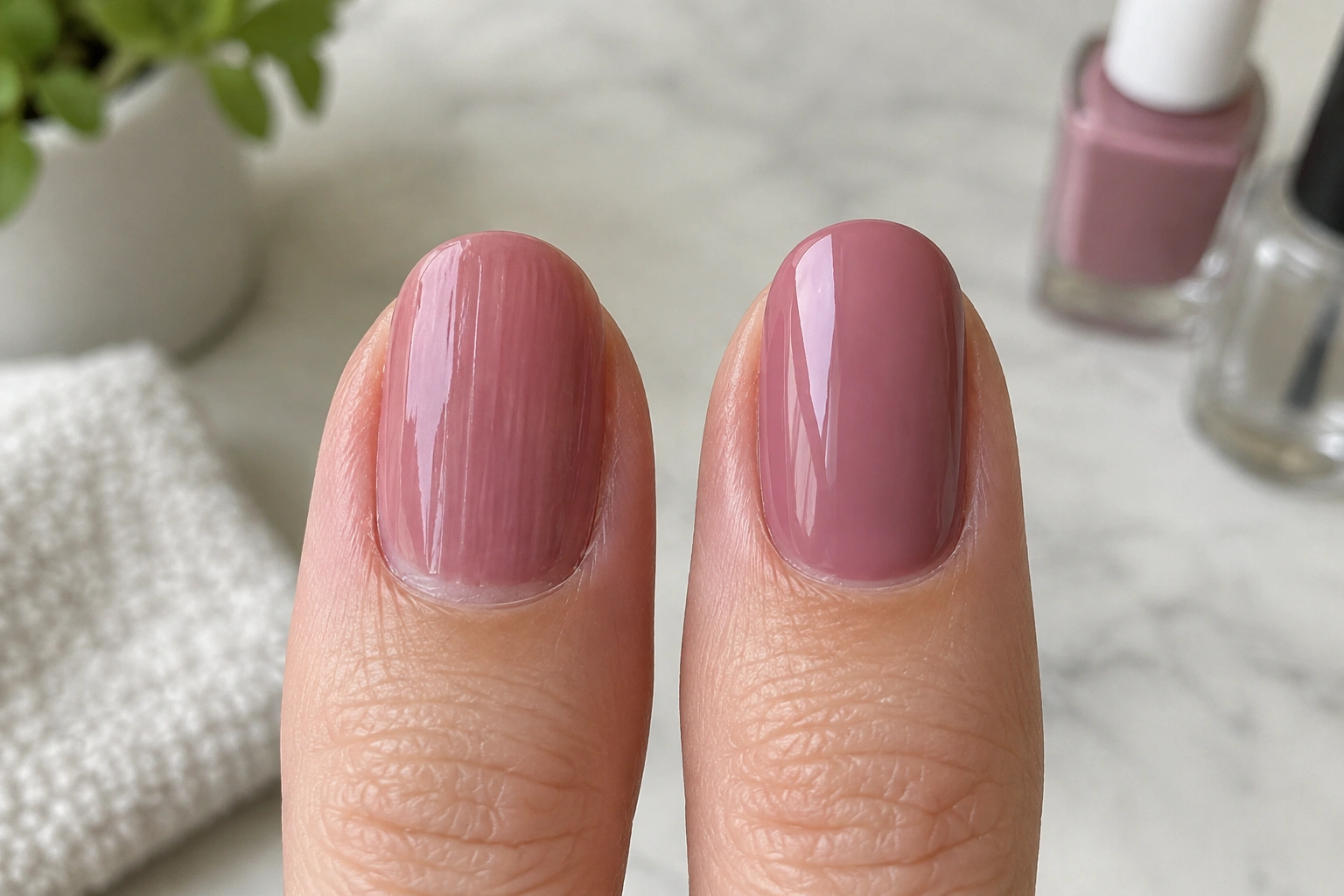
If the polish looks worse after you add more product, stop layering. More coats will not fix a base that is already uneven.
When Polish Is Too Thick, Old, or Separated
Polish that has changed too much in the bottle often becomes hard to apply neatly. Common warning signs include:
- It pulls in strings when you lift the brush
- It feels gummy or heavy
- It leaves ridges instead of flowing out
- It separates and does not mix back together smoothly
A little polish thinner may help if the product is simply thickened. Use only a thinner made for nail polish and follow the product directions. Random solvents are not a good substitute.
If the polish has clearly gone past its useful stage, replacing it is the better choice. A bottle that fights you every time will keep giving streaky results.
When to Remove It and Start Fresh
Sometimes the cleanest fix is a reset.
Remove the manicure and start over if you see:
– heavy brush marks
– clumping
– wrinkling
– dragging that gets worse with each coat
– patchiness that does not improve after careful layering
Trying to rescue a manicure that is already breaking down usually makes it look messier. Starting fresh saves time in the long run.
Simple Prevention Tips for a Smoother Next Manicure
These small habits prevent a lot of streaking:
- Clean nails before painting
- Roll the bottle gently before use
- Use thin coats
- Avoid overworking the brush
- Let each layer settle before adding the next
- Expect sheer or light shades to need extra coats
- Replace polish that has thickened beyond easy use
If you make those steps part of your routine, your polish will usually look smoother and more even.
When to See a Nail Technician or Dermatologist
If your nails are constantly difficult to paint because the surface is peeling, lifting, or changing in a way that is not normal for you, a nail technician can help with application technique and product choice. If you notice ongoing nail changes, pain, or signs that seem medical rather than cosmetic, a dermatologist is the right professional to ask.
FAQs
Why does my nail polish look streaky on the first coat?
That is often normal, especially with sheer, pastel, or lightly pigmented formulas. A second thin coat usually improves the look.
Is my polish too thick or too thin?
If it drags, clumps, or leaves ridges, it may be too thick. If it runs around the nail and does not stay where you place it, it may be too thin.
Should I shake or roll nail polish?
Rolling is usually the gentler choice because it mixes the bottle without adding as many bubbles. Shaking can work, but it is more likely to create air bubbles.
Can a top coat fix streaky polish?
A top coat can make mild unevenness look smoother and glossier, but it will not fully hide severe streaks or patchy coverage.
How many coats do I need?
Most opaque cream polishes usually need 2 thin coats. Sheer, pastel, or lightly pigmented shades often need 3 or more.
When should I start over instead of adding another coat?
If the polish is clumping, dragging, or wrinkling, more layers usually make it worse. Remove it and begin again.
Does base coat help with streakiness?
Yes, it can help polish grip and spread more evenly. It improves the starting surface, but it cannot fully fix a poor formula.
Can old polish still be used?
Sometimes, if it only needs a little thinning. But if it has changed texture a lot or no longer applies smoothly, replacing it is usually the better option.

