
Why Is My Toenail Changing Shape? Common Causes and What to Do

If you look down and suddenly think, Why is my toenail changing shape?, it is understandable to feel concerned. Maybe your big toenail is becoming more curved, thicker than usual, uneven at the edge, or slightly lifted from the skin underneath.
Toenail shape can change for simple reasons such as tight shoes, repeated pressure, an old injury, or normal aging. But fungal infections, psoriasis, ingrown toenails, and certain health conditions can also affect how a toenail grows.
The important thing is not to panic—or immediately try to file the nail back into its old shape. Instead, look at what else has changed. Color, thickness, pain, swelling, texture, and how quickly the change developed can provide useful clues.
Below, we will look at the most common reasons toenails change shape, what you can safely do at home, how nail files fit into your care routine, and when the change deserves professional attention.
Quick Answer
Why is my toenail changing shape? Common causes include repeated shoe pressure, injury, fungal infection, aging, psoriasis, improper trimming, or an ingrown nail. Minor changes may improve as the nail grows, but unexplained shape changes combined with pain, swelling, discoloration, thickening, or lifting should be checked by a healthcare professional.
What Does a Toenail Shape Change Look Like?
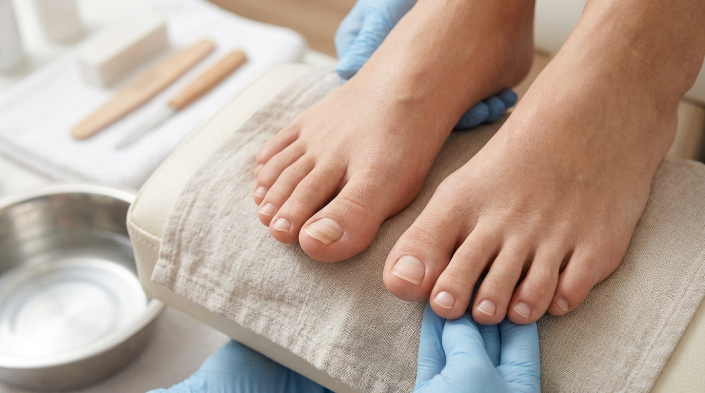
A shape change does not always mean your toenail suddenly looks completely different. It can begin gradually.
You might notice:
- The nail becoming more curved from side to side
- One corner growing downward into the skin
- The nail getting thicker or bulkier
- A wavy or uneven surface
- A spoon-like dip in the center
- The nail becoming unusually flat
- The edges becoming distorted or crumbly
- The nail lifting away from the nail bed
- A new ridge or groove
- One side growing differently from the other
The nail bed is the skin beneath the hard nail plate. The nail matrix, located near the base of the nail, produces new nail cells. If the matrix is injured or affected by disease, the new nail may grow with a different shape.
The American Academy of Dermatology explains that changes in nail color, texture, or shape can sometimes be harmless but can also signal a condition that deserves evaluation. Its guidance on nail changes that should be examined includes lifting, deep grooves, unusual curvature, thick overgrowth, and spoon-shaped nails.
1. Repeated Pressure From Shoes
One of the simplest explanations is repeated pressure against the toenail.
Shoes that are too short, narrow, or tight around the toes can repeatedly push on the nail. Running, hiking, dancing, or working long hours in restrictive footwear can make the problem more noticeable.
Over time, pressure may cause a toenail to:
- Thicken
- Curve differently
- Develop ridges
- Become tender
- Lift slightly
- Grow unevenly
The big toenail is especially vulnerable because it often takes the most pressure at the front of the shoe.
Check your footwear before blaming your nail file, polish, or pedicure. You should have enough room to move your toes comfortably without the nail constantly hitting the shoe.
2. An Old or Recent Toenail Injury
Toenail injuries are another common cause of altered growth.
You may clearly remember dropping something on your toe, but smaller repeated injuries are easy to overlook. Running shoes, kicking furniture, tight heels, and sports can repeatedly traumatize the nail without one dramatic accident.
Damage near the nail matrix can temporarily change how the new nail grows.
The nail may develop:
- A horizontal groove
- An uneven surface
- Extra thickness
- A crooked edge
- Temporary discoloration
- Partial lifting
Because toenails grow slowly, an injury can remain visible for months.
Do not aggressively buff or file away deep grooves. A groove may be part of the nail itself rather than something sitting on top of it.
3. Fungal Nail Infection
A fungal nail infection, called onychomycosis, can change both the appearance and shape of a toenail.
The nail may become:
- Yellow, white, or brown
- Thickened
- Brittle
- Crumbly around the edge
- Rough
- Distorted
- Partially separated from the nail bed
According to Mayo Clinic’s overview of nail fungus, fungal infections can cause toenails to discolor, thicken, crumble, and separate from the nail bed.
A nail file can make a thick nail feel temporarily smoother, but filing does not cure a fungal infection.
Avoid sharing nail files, clippers, or pedicure tools when fungus is suspected. Disposable emery boards should generally not be passed between people.
4. Improper Toenail Trimming
The way you trim your toenails can influence how the edges interact with the surrounding skin.
Cutting deeply into the corners may encourage the nail edge to press into the skin as it grows. This can contribute to an ingrown toenail.
For most people, toenails are best trimmed straight across rather than dramatically rounded at the corners.
The American Academy of Dermatology’s toenail trimming recommendations advise cutting toenails straight across and smoothing rough edges with a nail file or emery board. Dermatologists also recommend filing in one direction rather than repeatedly sawing back and forth.
If a corner already feels embedded in the skin, do not dig underneath it with a metal file, cuticle tool, or pointed scissors.
5. Ingrown Toenail Changes
An ingrown toenail develops when an edge of the nail presses or grows into surrounding skin.
You may notice:
- Increasing curvature at one side
- Tenderness
- Redness
- Swelling
- Pain when wearing shoes
- Skin growing around the nail edge
Sometimes the nail itself has not dramatically changed shape. Instead, swelling around it makes the nail appear narrower or more curved.
Do not try to reshape a painful ingrown toenail by aggressively filing the sides. Filing too deeply can make the nail thinner, create sharp edges, or injure the surrounding skin.
If you notice drainage, increasing redness, warmth, or significant pain, professional care is safer than DIY correction.
6. Normal Aging
Toenails commonly become thicker and somewhat more difficult to trim as people get older.
Mayo Clinic notes that aging is a common cause of thickened toenails because nail growth slows over time. Other possible causes include injury, psoriasis, tight footwear, and fungal infection.
Even in younger adults, different toenails do not always grow with identical thickness or curvature.
A gradual, painless change that has been stable for a long time may be less concerning than a sudden change. Still, unexplained changes should not automatically be dismissed as normal aging.
7. Psoriasis and Other Skin Conditions
Psoriasis can affect the nails as well as the skin.
Nail psoriasis may cause:
- Pits or tiny dents
- Thickening
- Crumbling
- Separation from the nail bed
- Changes in color
- Irregular shape
Trying to buff pits or file the surface perfectly flat can make the nail thinner without addressing the underlying problem.
If you already have psoriasis—or develop repeated unusual changes in several nails—consider speaking with a dermatologist.
8. Less Common Health-Related Nail Changes
Sometimes toenail shape changes are associated with a broader health issue.
For example, nails can occasionally become unusually spoon-shaped, curved, or distorted in connection with medical conditions. However, you cannot diagnose a medical problem simply by looking at a nail.
The NHS advises seeking medical advice when a nail changes shape or color without a clear reason. It also notes that nail problems may sometimes occur with conditions such as psoriasis, iron-deficiency anemia, thyroid disorders, diabetes, and heart, lung, or liver disease. The NHS nail-problem guide explains these warning signs in more detail.
A single shape change does not mean you have any of these conditions. It simply means persistent or unexplained changes deserve more attention than a cosmetic fix.
How to Tell Whether the Change May Need Attention
Use the surrounding symptoms as your guide.
| Toenail Change | Possible Explanation | Best Next Step |
|---|---|---|
| Slight curve with no pain | Natural shape or shoe pressure | Monitor and check footwear |
| Thick, yellow, crumbly nail | Possible fungal infection | Consider professional evaluation |
| Painful curved edge | Possible ingrown toenail | Avoid digging; seek care if worsening |
| Groove after an injury | Temporary growth disruption | Let it grow out |
| Sudden unexplained distortion | Several possible causes | Consider dermatologist or doctor |
| Red, swollen skin | Irritation or infection | Stop DIY treatment |
| Nail lifting from the skin | Injury, fungus, psoriasis, other causes | Have it evaluated if persistent |
| Dark new streak or unusual pigment | Requires proper assessment | See a dermatologist |
This table is a guide, not a diagnosis.
Can a Nail File Fix a Toenail That Changed Shape?
Sometimes—but only cosmetically.
A nail file is useful for:
- Smoothing a rough free edge
- Removing a sharp corner that catches on socks
- Refining the edge after clipping
- Gently reducing minor surface roughness
- Maintaining a comfortable length between trims
A nail file cannot correct the cause of:
- Fungal infection
- Significant thickening
- Nail psoriasis
- Nail-matrix damage
- Severe ingrown nails
- Infection
- Unexplained curvature
Do not treat a medical nail change as a shaping problem.
Which Type of File Is Best?
For routine toenail maintenance, choose a file that gives you good control.
Common options include:
Emery board: Affordable and beginner-friendly, but difficult to disinfect thoroughly. Consider replacing it regularly.
Glass file: Smooth, washable, and useful for refining edges. It may feel gentler than a very coarse file.
Metal file: Durable and easy to clean, but coarse versions can remove nail material quickly. Use light pressure.
Electric nail file: Useful for specialized nail work, but it can overthin the nail or injure the surrounding skin when used incorrectly. Thick or medically abnormal toenails are better assessed before aggressive electric filing.
A basic manual file may cost only a few dollars, while quality glass files and electric devices can cost more. Price matters less than using the correct grit, gentle pressure, and clean technique.
Expert Tip: If you keep filing the same area because the toenail repeatedly grows back distorted, stop trying to “correct” the shape. The problem may be coming from the nail matrix, pressure, or an underlying condition rather than the edge itself.
How to File a Changing Toenail Safely

If the nail is not painful, infected, severely thickened, or lifting, light filing may be reasonable.
- Wash and dry your feet.
Make sure the nail and surrounding skin are clean. - Use your own clean file.
Do not share personal nail tools. - Trim first if needed.
Cut the toenail straight across using a clean toenail clipper. - File only the free edge.
Smooth rough areas without digging down the sides. - Use gentle strokes.
Avoid forceful back-and-forth sawing. - Stop if you feel pain.
Filing the hard free edge should not injure living skin. - Clean reusable tools.
Follow the tool manufacturer’s cleaning directions before storing it.
The CDC recommends cleaning nail grooming tools before use and keeping nails clean to reduce infection risk. CDC nail hygiene guidance also advises against cutting cuticles because they help act as a barrier against infection.
Hygiene Matters More Than Most People Think
Toenail files can collect nail dust, skin debris, and moisture.
For safer home care:
- Do not share files or clippers.
- Replace worn disposable files.
- Allow washable files to dry completely.
- Keep tools in a clean, dry container.
- Do not file directly over infected, bleeding, or inflamed skin.
- Wash your hands after working on a suspicious nail.
- Avoid using the same uncleaned file on a healthy nail after filing an abnormal one.
If you visit a salon, pay attention to whether reusable tools are properly cleaned between clients.
Sensitive Skin and Toenail Care
If your skin becomes irritated easily, use even more caution around the nail folds.
Filing too close to the skin can create microscopic scratches. Strong pedicure chemicals, aggressive cuticle removal, or repeated scraping can make irritated skin feel worse.
Stop and reassess if you develop:
- Burning
- Stinging
- Bleeding
- Persistent redness
- Swelling
- Rash-like irritation
Never keep filing simply because you want the nail to look symmetrical.
DIY Care vs. Professional Help
DIY grooming makes sense when the issue is limited to a rough or slightly uneven edge.
A licensed nail technician can help with cosmetic shaping and routine pedicure care, but nail technicians are not there to diagnose fungal infections or medical nail disorders.
A dermatologist, podiatrist, or other healthcare professional is a better choice when there is persistent pain, unusual discoloration, infection, major thickening, or unexplained distortion.
Professional care may cost more than doing your own pedicure, but continuing to cut or file a painful abnormal nail can create a bigger problem.
Common Mistakes to Avoid
- Filing deeply into both sides of the toenail. This may leave sharp edges and increase irritation.
- Trying to grind away a thick nail in one session. Removing too much can weaken the nail or expose sensitive tissue.
- Sharing nail files. This creates unnecessary hygiene risks.
- Assuming every yellow or thick nail is fungus. Several conditions can look similar.
- Ignoring pain because the nail still looks “mostly normal.” Pain is useful information.
- Cutting toenails extremely short. Leave enough nail to protect the end of the toe.
- Digging under an ingrown nail with sharp tools. This can damage skin and introduce germs.
- Covering an unexplained change with polish for months. Cosmetic coverage can make it harder to monitor the nail.
- Using an electric file aggressively on a damaged nail. Speed does not make the process safer.
When to See a Nail Technician or Dermatologist
A nail technician can be helpful when your nail is healthy but needs routine trimming, cosmetic shaping, polish removal, or a gentle pedicure.
A dermatologist, podiatrist, or healthcare provider is more appropriate when the shape change may be medical.
Seek professional advice if:
- The nail changes shape for no obvious reason.
- The change is getting progressively worse.
- The nail becomes very thick or difficult to cut.
- The nail turns yellow, brown, black, or another unusual color.
- A new or changing dark streak appears.
- The nail begins lifting from the nail bed.
- You have redness, warmth, swelling, pus, or drainage.
- Walking or wearing shoes becomes painful.
- Several nails begin changing at the same time.
- The problem keeps returning despite careful grooming.
If you have diabetes, poor circulation, reduced sensation in your feet, or another condition that makes foot injuries more serious, seek professional guidance before performing aggressive DIY toenail care.
FAQs
Why is my big toenail changing shape?
The big toenail receives a lot of pressure from shoes and daily movement, so injury and repeated friction are common causes. Fungal infection, an ingrown nail, psoriasis, or other conditions can also alter its shape.
Can tight shoes permanently change toenail shape?
Repeated pressure can affect how a toenail looks and grows, particularly if the nail matrix is repeatedly injured. Changing to properly fitting footwear may prevent further trauma, but a damaged nail can take many months to grow out.
Why is my toenail getting more curved?
Some people naturally have curved toenails. Increasing curvature can also be related to pressure, thickening, injury, or other nail changes. New or unexplained curvature is worth monitoring and discussing with a healthcare professional if it persists.
Can I file a thick toenail thinner?
Very gentle filing may smooth a thick toenail, but aggressive thinning is risky. Thickening may be caused by fungus, injury, psoriasis, or aging, so persistent thickening should be evaluated rather than repeatedly ground down.
Will a damaged toenail return to its old shape?
It depends on where the damage occurred. Minor damage may gradually disappear as the nail grows. Damage involving the nail matrix can sometimes affect the shape of future nail growth.
How long should I watch a toenail shape change?
Toenails grow slowly, so harmless changes can take months to move toward the tip. However, you should not simply wait if the change is unexplained, rapidly worsening, painful, discolored, swollen, infected-looking, or associated with nail lifting.
Should I go to a salon for a misshapen toenail?
A salon can help with routine cosmetic shaping when the nail and surrounding skin appear healthy. If the nail is painful, infected, unusually thick, significantly discolored, or changing for no clear reason, see a healthcare professional instead.
Conclusion
If you have been wondering, “Why is my toenail changing shape?”, start by looking beyond the shape itself. Shoe pressure, trimming habits, previous injuries, aging, fungal infections, ingrown nails, and skin conditions can all affect the way a toenail grows.
For a healthy nail with only a rough edge, a clean nail file and careful straight-across trimming may be all you need. But filing should never be used to hide or “fix” persistent thickening, unusual curvature, discoloration, lifting, swelling, or pain.
Keep the nail clean, avoid aggressive DIY work, wear comfortable shoes, and monitor how the nail changes as it grows.
When you cannot explain the change—or the nail looks painful, infected, or increasingly distorted—the safest next step is to have it properly examined rather than filing it more aggressively.

